


Blog
Getting the Most Out of Your Cleaning Equipment Investment

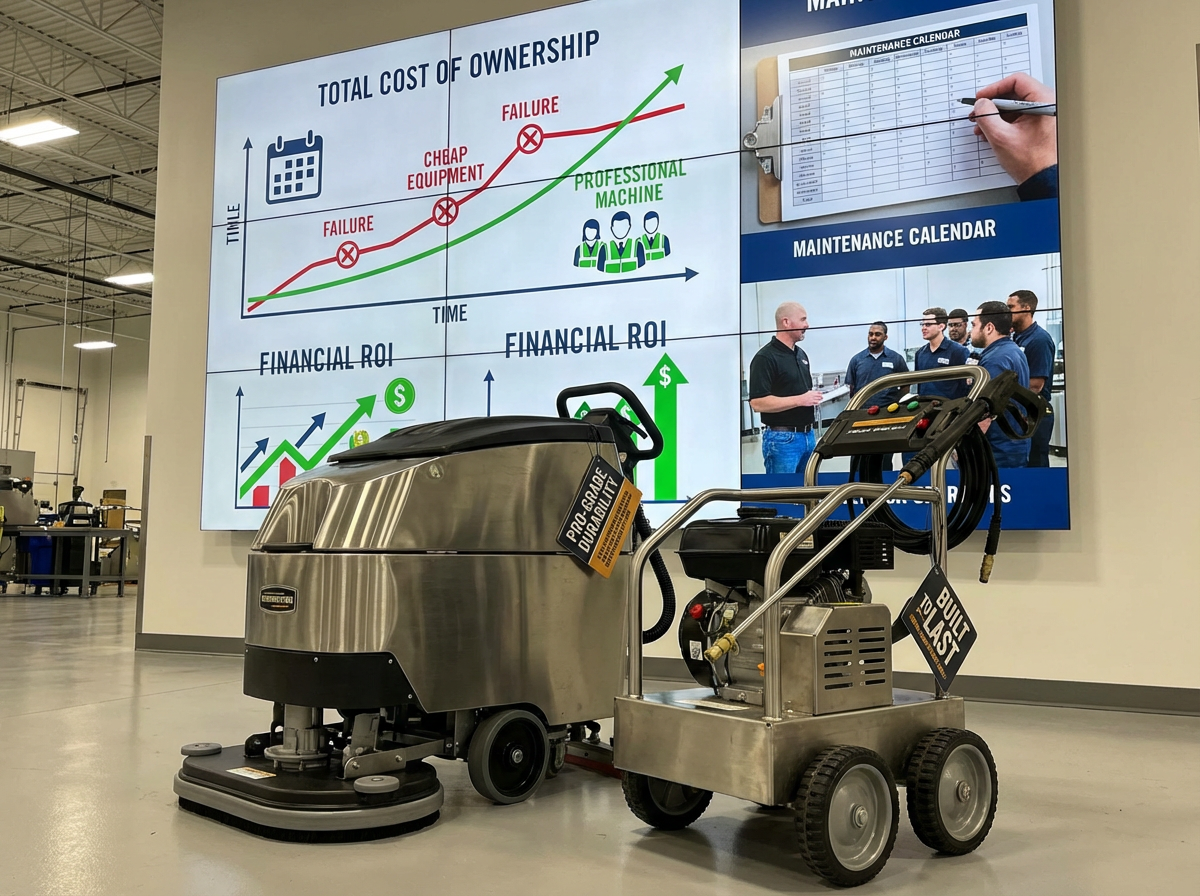
Professional cleaning equipment represents a serious financial commitment, whether you manage a facility or run a commercial cleaning business. The difference between equipment that pays for itself and gear that drains your budget often comes down to how you approach the purchase, use, and maintenance of your tools.
Many businesses initially hesitate at the cost of professional-grade machines, only to find that their cheaper alternatives cost more in the long run through frequent replacements, downtime, and poor results. The true value of a cleaning equipment investment is not just in the purchase price; it is in understanding total cost of ownership and making decisions that support long-term efficiency and reliability.
Understanding True Equipment Value
Most buyers focus heavily on upfront costs, which is where many cleaning operations go wrong.
A £300 floor scrubber may seem like a bargain compared to a £1,200 model, but if the cheaper unit fails after 18 months while the professional-grade machine performs reliably for seven years, the maths tells a different story. Facilities often end up spending more than double replacing consumer-grade machines over time.
Build quality and components define value more than the sticker price. Professional machines use continuous-duty motors, durable housings, and metal gears designed to withstand commercial use. Duty cycle ratings are particularly important – a vacuum rated for continuous operation can handle a full shift, while one limited to 30 minutes per hour will fail quickly under daily demand.
Matching Equipment to Operational Needs
The right machine balances power, practicality, and cost. The most expensive model is not always the best choice, but neither is the cheapest.
For example, a small café with 80 square metres of flooring does not need an industrial ride-on scrubber. It is excessive, hard to store, and financially unjustifiable. However, a lightweight mop will not remove built-up grease effectively. The Polystar Orbital Floor Scrubber from Weskleen Supplies offers the perfect middle ground – compact, powerful, and purpose-built for smaller commercial areas.
A facilities manager once shared how their staff avoided using bulky vacuums across multiple floors because they were too heavy to move. Switching to the Pacvac Superpro 700 Backpack Vacuum transformed efficiency, not through raw power but by making the job physically easier. The result: consistent use, cleaner results, and happier staff.
Calculating Real Operating Costs
The true cost of ownership includes far more than the purchase price. Every machine carries running costs in:
- Consumables (pads, brushes, squeegees)
- Energy usage
- Maintenance and repairs
- Labour time
- Operator training
A machine that cleans faster or requires fewer passes saves labour costs. One that uses less chemical or water per square metre reduces consumable expenses.
When evaluating battery-powered machines such as the Pacvac Superpro 700 Battery Kit, factor in battery lifespan – quality lithium-ion packs typically last 500 to 1000 charge cycles. The productivity gains from cordless operation often outweigh replacement costs, but it is essential to include them in your budget forecasts.
Proper Operation Extends Equipment Life
Even premium machines fail early when used incorrectly. Pre-operation checks prevent most avoidable failures:
- Confirm tanks and filters are clean and correctly installed
- Inspect hoses and cords for wear
- Ensure correct chemical dilution ratios
The relationship between equipment and chemicals is often underestimated. Using the wrong chemical can corrode seals, clog jets, and void warranties. Always use approved solutions such as Comet Foaming Cleaner & Sanitiser for hygiene-critical areas or Mr. Bean 5L All-Purpose Cleaner for general cleaning. These products are engineered for compatibility and effectiveness.
Operating Within Design Parameters
Every machine is designed for specific surfaces and loads. Overstressing it shortens its life and risks safety issues.
A floor scrubber built for smooth concrete should not be forced to clean textured tile. A carpet extractor without the proper upholstery attachment can cause over-wetting and electrical damage.
A contractor we worked with replaced scrubber brushes every three weeks – ten times faster than expected. The issue was not quality; the operator was applying excessive downward pressure. Once trained properly, brush life returned to three months, saving hundreds annually.
Preventive Maintenance That Works
Reactive maintenance (fixing after failure) costs about three times more than regular preventive maintenance. Building a simple maintenance schedule protects your investment.
Daily: Empty tanks, rinse, and check for visible damage.
Weekly: Clean or replace filters, inspect connections, and check belts or squeegee blades.
Monthly: Deep clean the machine, lubricate moving parts, and tighten fittings.
The goal is to catch small issues before they become major failures. Preventive maintenance not only extends lifespan but ensures consistent cleaning results shift after shift.
Keeping Accurate Maintenance Records
Documenting maintenance might seem tedious, but it is invaluable for tracking performance and cost efficiency.
Keep a simple log including:
- Date and type of maintenance performed
- Operator name and issues reported
- Parts replaced or serviced
- Hours of operation (if applicable)
- Chemicals used
Maintenance records support warranty claims, forecast parts replacement, and help calculate true cost per hour of operation, guiding smarter purchasing decisions in the future.
Training Staff for Long-Term Savings
Operator error causes more breakdowns than manufacturing faults. Proper training protects both the equipment and your investment.
Effective training covers:
- Setup and shutdown procedures
- Correct operating technique for different surfaces
- Chemical safety and dilution
- Routine maintenance
- Basic troubleshooting
A hotel group we advised cut equipment repair costs by 60 percent simply by introducing practical training sessions and short competency assessments. The small investment in time paid off within months.
Clear Operating Procedures
Written procedures ensure consistency, especially in larger teams. Simple laminated guides attached directly to the machine work better than lengthy manuals.
Include key safety steps, cleaning methods, and post-use maintenance. Consistency in operation reduces wear, extends service intervals, and ensures all staff handle equipment correctly regardless of experience level.
Managing Spare Parts Inventory
Downtime is costly. A small stock of critical spare parts prevents service disruptions and lost revenue.
Recommended inventory:
- Filters and squeegee blades
- Brushes or pads
- Seals, gaskets, and belts
These parts are inexpensive but critical. Seasonal demand can cause shortages, so stock up before your peak period begins.
For quick access to replacement parts and accessories, Weskleen Supplies maintains a full range of compatible consumables and components for all major cleaning brands.
Knowing When to Repair or Replace
Every machine eventually reaches the point where repair no longer makes sense. As a rule of thumb:
- If a repair exceeds 50 percent of the replacement cost and the unit is past its expected lifespan, replacement is often the better choice.
Consider the machine’s overall condition – frame, tanks, wheels, and wiring. A motor replacement might not be worth it if the structure is already failing.
Understanding Warranty and Service Agreements
Always review warranty coverage closely. Most warranties exclude damage caused by misuse, chemical incompatibility, or unapproved repairs. Using genuine parts and following manufacturer maintenance schedules preserves coverage.
For operations without in-house maintenance teams, service agreements provide peace of mind. These contracts usually include routine maintenance, priority servicing, and sometimes replacement parts.
Weskleen Supplies offers support to customers on warranty management and sourcing genuine parts quickly to minimise downtime.
Optimising Chemical and Consumable Use
Using the right dilution systems saves money and prevents damage. Over-concentrating wastes product and damages seals; under-diluting reduces cleaning effectiveness.
The Mr. Bean 5L All-Purpose Cleaner delivers excellent results when diluted correctly. Investing in proper dilution control ensures consistent performance and prevents waste.
A restaurant client once doubled their chemical usage because staff filled scrubber tanks with undiluted cleaner. The residue made floors harder to maintain and doubled costs. Training staff in proper dilution solved the issue immediately.
Selecting the Right Pads and Brushes
Different pads and brushes serve distinct purposes. The wrong match can scratch surfaces or reduce efficiency.
- Black or brown pads: Heavy stripping and deep cleaning
- Green pads: General scrubbing
- Red pads: Light cleaning and buffing
- White or beige pads: Polishing and finishing
For brushes, match bristle type to flooring: soft nylon for delicate surfaces, stiffer polypropylene for industrial areas.
Adapting Equipment to Environments
The same machine performs differently in various environments.
- Warehouses: Manage oil residues and large debris.
- Retail or hospitality: Focus on appearance and hygiene.
- Healthcare: Require disinfection protocols and dedicated tools to prevent cross-contamination.
Customising procedures to site conditions ensures both effective cleaning and equipment protection.
Environmental Storage and Care
Environmental conditions affect longevity. Store battery-powered machines away from temperature extremes. Humidity accelerates rust and mould growth inside tanks and hoses. Always dry machines fully before storage and keep them in well-ventilated spaces.
Upgrading Strategically
Technology evolves rapidly, especially in battery systems and ergonomics. The Medusa Battery-Powered Sweeper shows how modern lithium-ion equipment improves runtime, reduces weight, and enhances usability compared to older models.
Ergonomic improvements also reduce staff fatigue and injury risk, improving productivity and retention.
Evaluating New Features
Not every innovation adds value. Before upgrading, ask:
- Does it solve a real operational problem?
- Will it reduce labour or maintenance costs?
- Is staff training required to use it properly?
- What are the long-term servicing implications?
Features like automatic chemical dosing or usage tracking meters often deliver strong ROI, but always balance benefits against added complexity.
Maximising Resale and Trade-In Value
Well-maintained equipment holds significant resale value. Keep maintenance records, store manuals, and clean machines before resale.
Suppliers like Weskleen Supplies offer trade-in options, making upgrades straightforward and ensuring your equipment is responsibly recycled or refurbished for secondary use.
Building Long-Term Supplier Relationships
A trusted supplier relationship extends beyond transactions. Reliable after-sales support, parts availability, and product advice make a measurable difference to your operation’s efficiency.
Weskleen Supplies partners with commercial cleaners across Australia, providing ongoing support for product selection, maintenance, and replacement planning. Establishing that connection ensures your cleaning operation runs smoothly year-round.
To discuss equipment recommendations or maintenance strategies, contact us today.
The Bottom Line
A well-planned cleaning equipment investment saves money, reduces downtime, and enhances results for years to come. Whether you are upgrading machinery, improving maintenance procedures, or training your team, focusing on equipment quality and care delivers long-term value far beyond the initial purchase price.Partnering with trusted suppliers like Weskleen Supplies ensures you are backed by expertise, support, and access to the best professional-grade cleaning solutions available.