


Blog
How Preventative Maintenance Can Save You Thousands

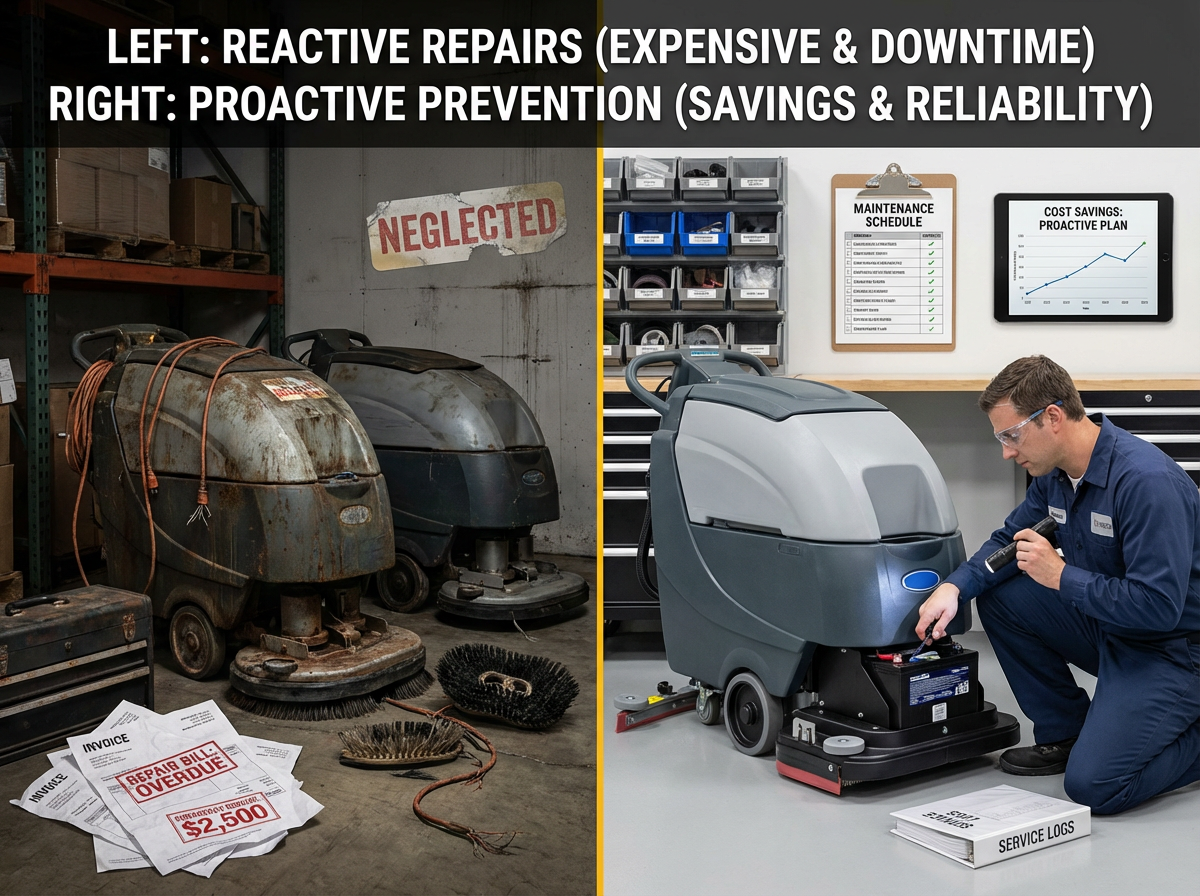
A commercial floor scrubber sits unused in a storage room, unserviced for eighteen months. The operator notices reduced suction but continues using it. Three weeks later, the motor fails. The replacement cost totals £3,200, including hire charges while awaiting repairs.
This situation occurs regularly across commercial facilities, yet it is preventable. Preventative maintenance cleaning equipment focuses on understanding how machines deteriorate and addressing issues before they escalate into costly failures. Structured maintenance programs can reduce equipment replacement costs by up to 60%, extending lifespan and ensuring consistent cleaning quality.
Preventative maintenance not only avoids breakdowns but also maximises the return on investment in existing assets. Well-maintained machines operate efficiently, consume fewer resources, and deliver professional results with reduced operator effort.
The Real Cost of Equipment Failure
When cleaning machinery fails, the repair invoice reflects only part of the financial impact. In one commercial facility, a floor scrubber repair costing £1,800 resulted in three days of manual mopping, overtime payments, and tenant complaints.
Unplanned downtime disrupts operations and damages reputation. Hiring replacement machines can cost £150 to £300 daily. Manual cleaning takes three times longer and often produces inferior results. These indirect costs frequently exceed the initial repair bill.
Planned maintenance avoids such disruption. Scheduled servicing allows downtime to be controlled, ensuring equipment remains operational when needed most. A routine belt replacement for a vacuum cleaner might take fifteen minutes and cost £25, compared with hours of lost labour when the same belt fails unexpectedly.
Common Wear Points in Cleaning Equipment
Professional cleaning machines experience predictable wear patterns. Understanding these helps prevent major failures.
- Seals and gaskets deteriorate through exposure to heat and chemicals. Replacing squeegee blades every 200 operating hours costs about £40, compared with £600 for a failed vacuum motor.
- Filters clog over time, reducing airflow and increasing motor strain. A blocked HEPA filter can raise operating temperature by 15–20°C, halving motor life. Replacing a £35 filter prevents £400–£800 repairs.
- Batteries degrade with poor charging habits. Leaving units on charge indefinitely or running them to complete depletion shortens service life. The Pacvac Superpro 700 Battery Kit typically lasts 800–1000 cycles when maintained correctly but may halve in lifespan if neglected.
- Brushes, belts, and bearings wear gradually. Minor leaks or friction issues, if left unchecked, can escalate from a £15 seal replacement to a £500 pump assembly failure.
Consistent inspections and prompt replacement of inexpensive parts prevent these common failures from escalating into major expenses.
Structuring a Maintenance Schedule
Effective maintenance schedules should be based on operating hours rather than arbitrary calendar dates. Machines used intensively require more frequent servicing than those used occasionally.
Daily tasks:
- Empty and rinse tanks after each use.
- Wipe down external surfaces to prevent chemical corrosion.
- Check squeegee blades, filters, and cables for visible wear.
Weekly tasks:
- Deep-clean filters and inspect hoses for cracks.
- Tighten loose fasteners and examine belts for signs of fraying.
- Test electrical safety features.
Monthly tasks:
- Lubricate moving parts as per manufacturer guidance.
- Inspect electrical terminals for corrosion.
- Test battery performance.
Quarterly or bi-annual tasks:
- Replace brushes, belts, and seals before failure occurs.
- Deep-clean internal components and motors.
- Have qualified technicians perform detailed inspections.
Tracking equipment usage through hour meters, such as those fitted to the Polystar Orbital Floor Scrubber, ensures maintenance is aligned with actual workload.
Commonly Overlooked Tasks
Some tasks are consistently neglected, yet they prevent some of the most expensive failures.
- Descaling systems: Run descaling solution through water-fed equipment every three months in hard water areas. The cost is less than £10, compared with £200–£350 for replacing scaled heating elements.
- Adjusting brush height: Incorrect brush settings increase motor strain and wear. Adjusting height monthly maintains cleaning efficiency and extends component life.
- Checking carbon brushes: Replace worn carbon brushes in motors before they fail entirely. A £40 replacement can prevent a £400 motor repair.
Simple, routine inspections can extend the lifespan of expensive assets significantly.
Chemical Selection and Equipment Longevity
Cleaning chemicals directly affect the durability of equipment. The wrong product or dilution ratio can cause serious damage.
- pH extremes degrade seals and plastic components. Equipment should always be rinsed with clean water after use.
- Solvent products such as Goof Off Adhesive Remover should not contact sensitive materials.
- Concentration accuracy matters. Products like the Mr. Bean 5L All-Purpose Cleaner should be diluted as instructed. Overly strong mixtures increase wear without improving cleaning results.
- Water quality influences maintenance needs. Hard water causes limescale buildup, while very soft water may contribute to metal corrosion. Adjust descaling frequency accordingly.
Proper chemical management is an integral part of preventative maintenance.
Operator Awareness and Training
Operators are essential to successful maintenance programs. Staff should be trained to recognise early signs of malfunction, such as unusual sounds, vibration, or reduced suction.
Encourage immediate reporting through a simple, accessible system such as a maintenance log kept near storage areas. For instance, a technician using a Pacvac Superpro 700 Backpack Vacuum should be able to note suction loss immediately for review.
Provide practical demonstrations comparing worn and new components to reinforce the value of routine maintenance. Visual examples communicate the cost implications more effectively than written policies.
Maintenance Records and Tracking
Accurate records improve accountability and enable proactive servicing.
Each equipment log should include:
- Operating hours since last service
- Maintenance tasks completed
- Parts replaced and dates
- Operator comments on performance
A consistent record reveals wear patterns, helps forecast part replacements, and ensures compliance with safety standards. Even a simple paper log, if maintained regularly, is sufficient for smaller operations.
Repair vs Replacement: Economic Considerations
Preventative maintenance delays replacement, but every machine eventually reaches an uneconomical point.
A practical guideline is to consider replacement when annual repair costs exceed 40–50% of replacement value. However, if repairs provide multiple additional years of reliable service, they remain cost-effective.
Reliability, technology improvements, and part availability should all factor into the decision. Modern equipment such as the Medusa Battery-Powered Sweeper offers improved efficiency, reduced energy use, and lower running costs.
For high-use machines like floor scrubbers, reliability outweighs repair cost savings. Backup or secondary units used infrequently can justify continued repair for longer periods.
Seasonal Maintenance Planning
Environmental conditions and seasonal usage patterns influence maintenance requirements.
- Winter: Cold temperatures reduce battery efficiency and thicken lubricants. Store batteries indoors and allow machines to reach room temperature before use.
- Summer: Excess heat accelerates seal deterioration and battery wear. Ensure ventilation in storage areas.
- Busy periods: Schedule servicing before seasonal demand peaks to prevent downtime during critical cleaning operations.
Adapting maintenance routines to environmental conditions maintains consistent performance year-round.
Long-Term Benefits of Preventative Maintenance
Preventative maintenance cleaning equipment practices can double operational lifespan. Well-maintained vacuums and scrubbers consistently outperform neglected counterparts, saving thousands in premature replacements.
Consistent maintenance reduces breakdowns, stabilises cleaning quality, and supports compliance with workplace safety regulations. Reliable machines demonstrate professionalism and strengthen client trust by ensuring uninterrupted service.
Investment in regular maintenance yields measurable long-term financial and operational advantages.
Take Action
Implementing structured preventative maintenance delivers measurable cost control and operational stability.
For professional maintenance products, replacement components, or expert equipment guidance, explore Weskleen Supplies.
To arrange tailored recommendations or technical assistance, reach out through the contact team.
Effective maintenance safeguards assets, improves safety, and protects profitability across every stage of operation.