


Blog
Lease vs. Buy: Pros and Cons for Small Cleaning Operations

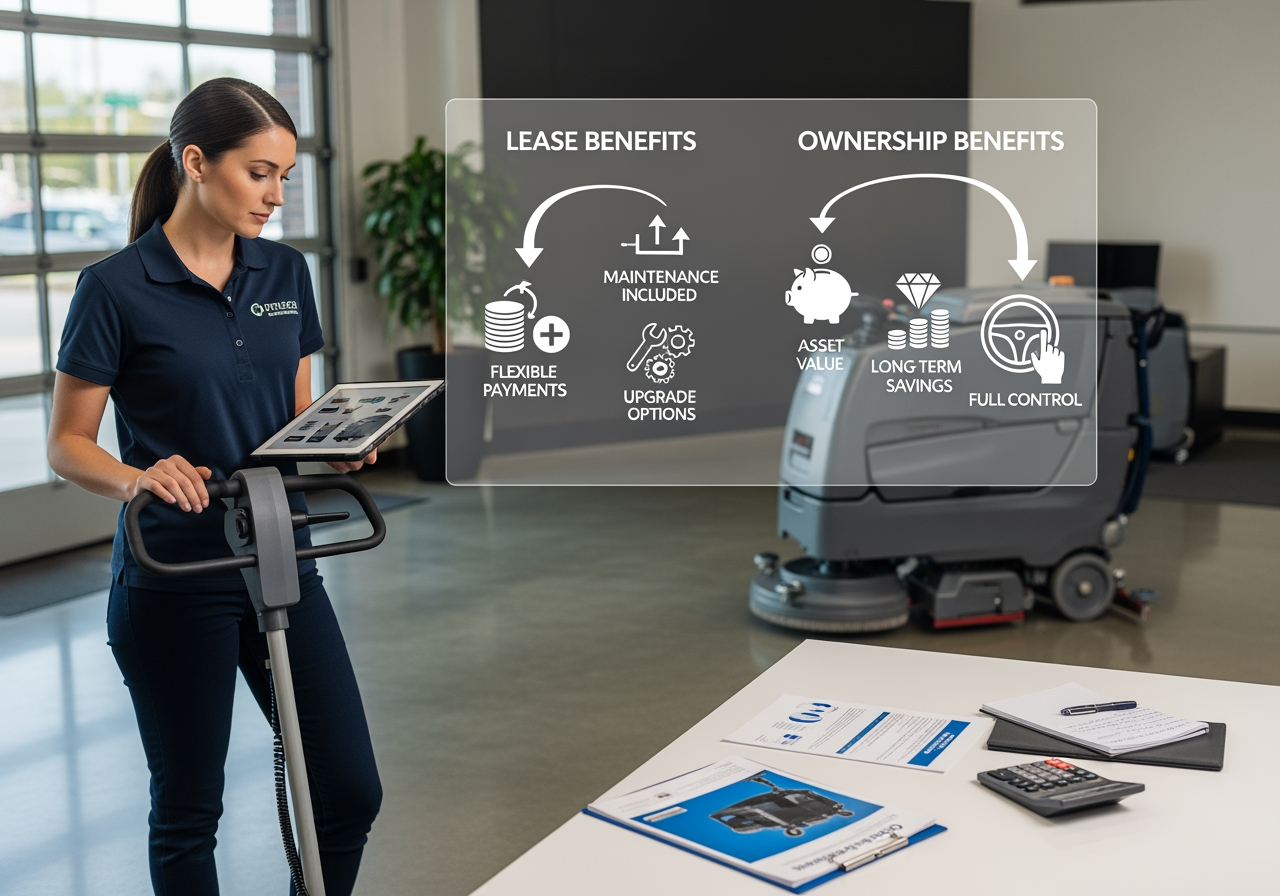
Running a small cleaning operation means every equipment decision directly affects your service reliability, reputation, and profitability. Choosing between leasing and buying isn’t only about comparing monthly payments. It’s about protecting your ability to deliver consistent results, keeping cash available for emergencies, and making sure your equipment strategy aligns with your long-term growth.
Cleaning equipment leasing has become increasingly popular among professional cleaning businesses across Australia. For some operators, it’s a practical way to manage cash flow and keep equipment up to date. For others, ownership provides more freedom and better long-term value. The right decision depends entirely on your operation’s structure, client base, and financial goals.
How Cleaning Equipment Leasing Works
Leasing operates much like a structured rental agreement with fixed terms, typically between 12 and 60 months. During that time, you make monthly payments in exchange for using the equipment. At the end of the lease, you can either:
- Return the equipment
- Purchase it for a predetermined residual value
- Roll into a new lease for upgraded machinery
Many leasing contracts include maintenance and repair coverage. The extent of this coverage varies widely between providers, so read the terms carefully. A maintenance-inclusive lease can save you thousands in unexpected repair costs and downtime.
Approval for leasing usually involves a review of your business’s financials and credit history. Because the lessor owns the equipment during the lease, approval rates are often higher than traditional business loans.
The Financial Reality of Ownership
Buying equipment outright means investing a substantial amount upfront, but you’re also gaining a long-term asset. A Polystar Orbital Floor Scrubber from Weskleen Supplies might cost several thousand dollars depending on the model, but once purchased, it’s fully yours. You can operate it without contractual limits, modify it for specific applications, and use it as intensely as your contracts require.
Ownership also offers long-term cost benefits. While you pay more initially, you avoid recurring lease payments. For small businesses with stable cash flow, this can mean significant savings over time. You’ll also be able to take advantage of depreciation or instant asset write-off provisions under Australian tax law, depending on eligibility.
When Leasing Makes Strategic Sense
For new or rapidly growing cleaning operations, leasing offers flexibility that ownership can’t match. Many small operators begin by leasing core machines such as floor scrubbers, carpet cleaning machines, and battery-powered vacuums to avoid depleting their working capital.
Leasing is especially useful in these scenarios:
- Starting a new service line – For example, a cleaning contractor might lease a Steamvac HP Auto 2 Carpet Steamer for six months to trial carpet cleaning services before committing to ownership.
- Adapting to fast-changing technology – Battery-powered equipment like the Pacvac Superpro 700 Battery Kit evolves quickly. Leasing helps you upgrade without worrying about resale value.
- Seasonal operations – Businesses servicing holiday parks or agricultural sites benefit from predictable monthly costs even during off-peak seasons.
By maintaining cash reserves, you can handle delayed client payments, cover staff costs, or seize unexpected opportunities, all without compromising your operational efficiency.
The True Cost of Ownership
Owning equipment has hidden costs beyond the purchase price. Consider these ongoing expenses:
- Maintenance – Regular servicing, brush replacements, squeegee blades, and motor upkeep can add up to 15-25% of the equipment’s purchase price annually.
- Storage and insurance – You’ll need secure space for storage and must account for higher insurance premiums due to increased asset value.
- Resale value – Even high-quality gear from trusted brands like Weskleen Supplies depreciates 40-60% in the first three years.
- Downtime – If a machine breaks down, repairs fall entirely on you. Leasing agreements often include backup units to minimise disruption.
These factors highlight why total ownership costs often exceed initial expectations, particularly for smaller operations with limited maintenance capacity.
Understanding Lease Types
There are several common lease structures, each designed for different business needs:
- Operating Lease – Shorter term, lower payments, no ownership at the end. Ideal for short contracts or rapidly advancing technology.
- Finance (Capital) Lease – Functions like instalment ownership. You usually take ownership at the end, with higher monthly costs.
- Residual Value – This determines the final purchase amount if you decide to keep the equipment. A higher residual reduces monthly payments but requires a larger final payment.
Carefully consider early termination clauses. Ending a lease early can be costly, often requiring payment of most remaining instalments plus penalties.
Flexibility Considerations
Owning equipment gives you complete freedom to modify, resell, or use it however you wish. A maintenance contractor might, for instance, retrofit owned scrubbers with custom tanks for industrial cleaning, a move not allowed under most lease contracts.
Leasing, however, offers operational flexibility of a different kind. You can align lease terms with contract durations, scaling up when needed and avoiding surplus machinery later. For example, you might lease an additional Medusa Battery-Powered Sweeper to handle a three-year facilities contract, then return it when the project ends.
Cash Flow and Capital Management
One of the biggest advantages of cleaning equipment leasing is predictable cash flow. You know exactly what your monthly equipment costs will be, which simplifies quoting and profitability analysis.
However, this predictability can also become a burden during slow months, as payments continue whether or not revenue does. Businesses that own equipment don’t face these fixed costs once the asset is paid off.
The opportunity cost of tied-up capital is equally important. Money spent on equipment ownership can’t be used for expansion or emergencies. One cleaning business in Perth grew rapidly by leasing its first fleet of machines through Weskleen Supplies, keeping capital available for payroll and emergency jobs. When a major flood restoration contract appeared, their liquidity allowed them to respond instantly, and that single job covered more than a year of leasing costs.
Maintenance and Reliability
Maintenance is often where leasing proves its worth. Many agreements include comprehensive servicing, parts replacement, and even temporary loan machines during repairs. This removes the logistical burden from your team and ensures consistent uptime.
For example:
- Carpet cleaning machines and auto scrubbers benefit significantly from maintenance-inclusive leases.
- Simpler tools like squeegees and mops such as Weskleen’s Dust Control Mops rarely justify leasing due to their low maintenance needs.
Ownership, on the other hand, gives you control over service quality. Preventative maintenance can extend machine lifespan and sustain performance, but it requires time, expertise, and discipline, resources many small operators lack.
Tax Implications to Consider
In Australia, lease payments are typically fully deductible as business expenses in the financial year they’re paid. This can provide immediate tax relief for profitable operators.
Owned assets, meanwhile, depreciate over time. Depending on cost thresholds, you might qualify for instant asset write-offs under Australian Taxation Office rules. These change periodically, so always consult your accountant for current thresholds and eligibility.
While tax treatment can influence your decision, it shouldn’t dictate it. The total financial impact depends on lease terms, ownership period, and resale value. Your accountant can model both scenarios to determine which delivers better after-tax results for your situation.
Building Credit and Long-Term Value
Owning equipment builds tangible business value. Assets like the Pacvac Superpro 700 Backpack Vacuum hold residual worth even after full depreciation, adding strength to your balance sheet. They also enhance business valuations if you’re seeking investors or preparing for a sale.
Leasing can help establish credit if your provider reports payment history to credit bureaus. However, this isn’t always guaranteed. Ownership more reliably contributes to your company’s financial standing by increasing total asset value and demonstrating self-sufficiency.
The Hybrid Approach
Many successful cleaning businesses combine both models. They own low-cost essentials such as Enduro Microfibre Mop Heads, 16L Mop Buckets, and Cleaning Hand Caddies, and lease high-value machines like scrubbers or carpet steamers.
This balanced approach provides flexibility without compromising long-term value. The trade-off is management complexity, as you’ll need to track both ownership records and lease terms. But for small-to-medium cleaning operations, it’s often the most efficient way to scale.
Key Questions Before You Decide
- How stable are your contracts?
Leasing suits predictable or long-term work, while ownership provides safety during uncertain periods. - How intensive is your equipment usage?
High-usage machines wear faster, and leasing can protect you with scheduled upgrades. - Do you have sufficient capital reserves?
Leasing preserves liquidity, allowing you to handle emergencies or new opportunities without delay. - How quickly does your equipment category evolve?
Static tools like toilet brushes or mop systems don’t benefit from leasing, but battery and motorised systems evolve rapidly.
Making the Right Choice
The best decision depends on your goals. If you prioritise cash flexibility and reduced maintenance risk, cleaning equipment leasing is the practical route. If you value long-term savings and total control, ownership delivers more stability.
Whichever option you choose:
- Review agreements carefully and clarify maintenance clauses.
- Establish proactive maintenance schedules for owned assets.
- Reassess your strategy yearly to align with changing business conditions.
Weskleen Supplies provides a wide selection of commercial-grade cleaning equipment and can guide you in identifying the best products for either leasing or purchase. Whether you’re fitting out a new operation or upgrading your existing fleet, our team can help you find the most reliable and cost-effective solutions.
If you’d like expert advice tailored to your business, get in touch with our specialists today.
The Long-Term Perspective
Your equipment decisions shape your operation’s resilience. A well-planned strategy ensures you’re prepared for growth, downturns, and the everyday realities of professional cleaning. Whether you lease or buy, investing in high-quality, reliable machines keeps your business efficient, competitive, and ready for whatever comes next.