


Blog
Planning Ahead: Budget-Friendly Tips for Equipment Replacement Cycles

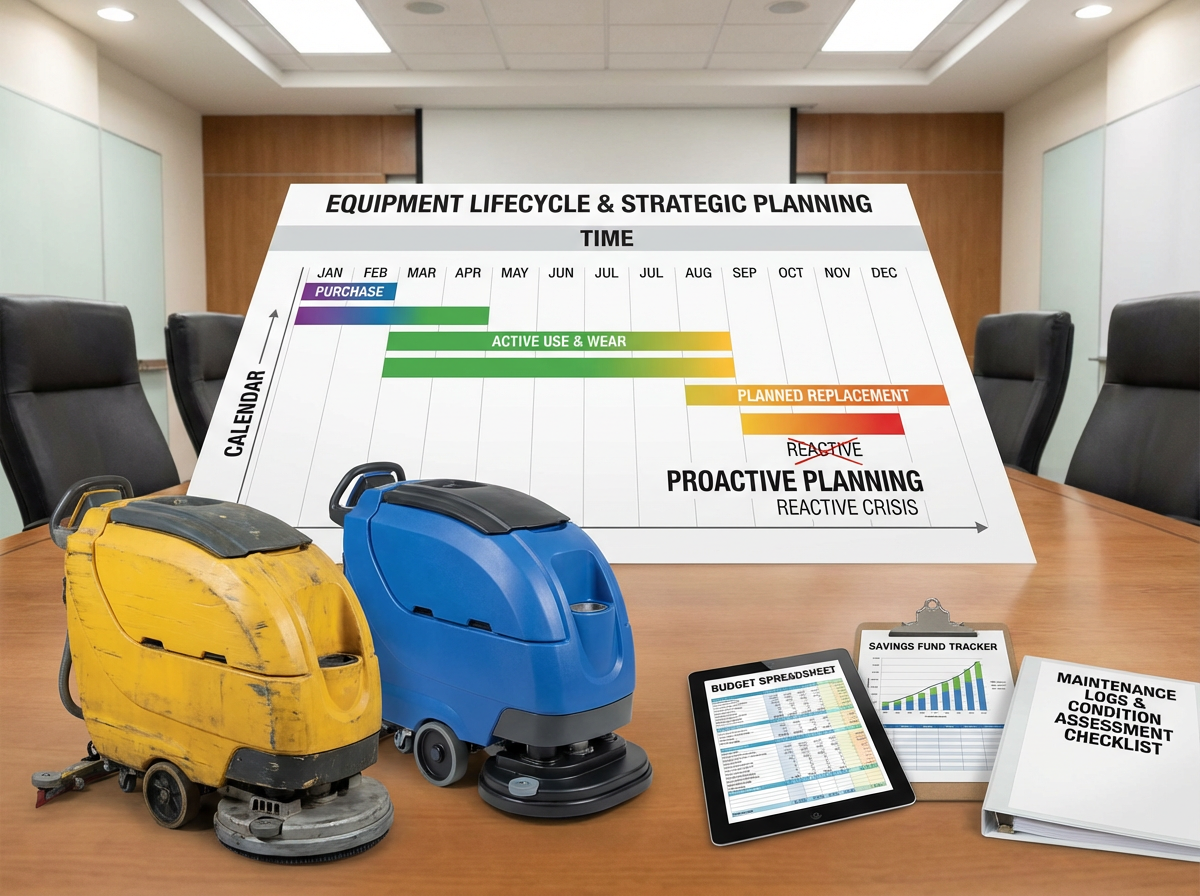
Commercial cleaning equipment does not last forever, no matter how well you maintain it. A floor scrubber that has served you faithfully for seven years will eventually lose efficiency, and a backpack vacuum that has cleaned hundreds of offices will one day need replacing. The real question is not if you will need to replace your equipment, but when and how to do it without disrupting your operations.
We have seen too many cleaning businesses scramble when a critical machine breaks down unexpectedly. One facility manager we worked with had to rent a carpet cleaner at triple the usual cost because their main unit failed mid-contract. The three-week rental cost more than a full replacement would have. That is the price of reactive planning.
Equipment replacement planning helps you anticipate when replacements will be needed, understand true lifespans, and prepare financially before failures occur. It is not glamorous work, but it is the difference between managing your costs proactively and being caught off guard when equipment fails.
Know What You Actually Own
Many operations underestimate how much equipment they truly have. Beyond the obvious floor scrubbers and vacuums, there are mops, squeegees, extension poles, and buckets that all contribute to operational performance.
Start by creating a detailed inventory. Record every piece of equipment, when it was purchased, what it cost, and its current condition. This process is not just paperwork – it provides a clear picture of your actual assets.
A simple spreadsheet works well. Include columns for:
- Equipment type
- Purchase date and cost
- Expected lifespan
- Replacement cost
- Current condition
Include both large and small items, from the Polystar Orbital Floor Scrubber to a 16L Mop Bucket. Smaller tools often fail first and disrupt workflow when overlooked.
Be honest about condition. “Works fine” is not specific enough. A vacuum that runs but has reduced suction is already costing you extra labour and time.
Understand Real-World Equipment Lifespans
Manufacturer claims about lifespan assume ideal conditions. Real-world use is often tougher.
A floor scrubber rated for ten years may only last six in a high-traffic shopping centre, or twelve if it is used twice a week in a small office. Professional-grade machines consistently outperform consumer models. For example, the Pacvac Superpro 700 Backpack Vacuum can last five to seven years under daily commercial use, while a domestic vacuum would likely fail within eighteen months.
Usage intensity matters more than age. Machines used daily wear out much faster than those used occasionally. Tracking operating hours, if available, gives a clearer picture of wear.
Environmental conditions also make a difference. Equipment exposed to dust, humidity, or chemicals will degrade faster. Think of it like car mileage: two identical models can have very different values depending on how they were used and maintained.
Calculate True Replacement Costs
Replacement costs go beyond the purchase price. Factor in:
- Shipping and delivery fees
- Assembly or setup
- Staff training on new models
- Downtime during transition
- Disposal or recycling of old units
The true cost is usually 15-25 percent higher than the purchase price once these factors are included.
Do not overlook accessories and consumables. A new Steamvac HP Auto 2 Carpet Steamer may require specific chemicals or pads different from your existing setup. Plan for these extras early.
Include inflation in your forecasts too. Equipment costs typically rise by 3-5 percent annually, so a floor scrubber that costs $2,800 today could be $3,100 in three years.
Build a Replacement Schedule
Once you know what you own, map out when each item will likely need replacing.
Group equipment into:
- Short-term – needs replacing within 12 months
- Medium-term – replace within 1 to 3 years
- Long-term – replace in 3 or more years
This approach highlights upcoming expenses and helps you prioritise replacements based on urgency and impact.
Stagger replacements to avoid large one-time costs. If you purchased three vacuums at once, do not replace them all in the same year. Replace one per year instead. This spreads the expense and maintains continuity if one fails unexpectedly.
Prioritise by business impact. Equipment critical to operations should come first. Review your plan quarterly and adjust as performance or budgets change.
Set Aside Funds Systematically
Even the best replacement plan fails without funding. Treat equipment replacement as an ongoing operating expense, not a surprise capital cost.
If your 12-month replacement schedule totals $8,400, divide it by 12 and set aside $700 each month in a separate account. This prevents sudden cash flow pressure when replacements are due.
Alternatively, set aside 5-8 percent of your total equipment value annually. If you have $50,000 in assets, budget $2,500 to $4,000 per year. For smaller operations, even saving $100-200 monthly builds valuable reserves over time.
Keep this money in a dedicated account so it is not accidentally spent elsewhere. Separation creates financial discipline.
Extend Lifespan Through Proper Maintenance
The cheapest replacement is the one you do not have to make yet. Good maintenance extends equipment life by up to 50 percent.
Daily maintenance:
- Empty vacuum bags and tanks
- Rinse and wipe down surfaces
- Remove debris from brushes and squeegees
Weekly checks:
- Inspect hoses, cords, and seals
- Test batteries on cordless machines
- Check for leaks or abnormal noises
Annual servicing:
Professional maintenance is essential for high-value equipment such as floor scrubbers in Perth and carpet cleaning machines. Like a vehicle service, it identifies wear early and prevents expensive breakdowns later.
Keep maintenance logs to record service dates, replaced parts, and observations. These records support warranty claims, guide replacement timing, and improve resale value.
Know When Repair is No Longer Worth It
Sometimes replacement is more cost-effective than another repair.
Use the 50 percent rule: if repair costs exceed half of replacement value, replacement is the better option. A scrubber needing a $1,500 repair when a new one costs $2,800 might still be worth fixing, but repeated breakdowns or costly downtime change the calculation quickly.
Parts availability also signals end-of-life. If parts are discontinued or take weeks to arrive, the equipment is already obsolete.
Consider efficiency too. Older machines often consume more power, water, or chemicals. Over time, these higher operating costs exceed the savings from delaying replacement.
Consider Refurbished or Demonstrator Equipment
Not every replacement must be brand new. Refurbished and demonstrator models offer excellent value for smaller budgets.
Refurbished equipment has been professionally restored and tested. At Weskleen Supplies, refurbished scrubbers often sell for 40-60 percent of new prices and still include limited warranties.
Demonstrator models are nearly new machines used only for showroom demonstrations. They may have minor cosmetic marks but perform like new, typically discounted by 15-30 percent.
Ex-rental machines from reputable fleets can also be cost-effective, particularly for backup equipment. Always confirm which components were refurbished, warranty coverage, and service history before buying.
Plan for Technology Improvements
Replacement cycles are also opportunities to upgrade efficiency.
Modern battery-powered equipment, such as the Pacvac Superpro 700 Battery Kit, now matches the performance of corded machines while improving mobility and safety.
New floor scrubbers use up to 40 percent less water and chemical, lowering operating costs and drying times. Ergonomic designs reduce strain and improve productivity, which directly benefits staff wellbeing.
Automation features such as auto-fill, brush pressure adjustment, and battery management are becoming more common, making machines easier to operate and maintain.
Align with Your Budget Cycle
Coordinate your replacement planning with your business’s financial year. If your annual budget is prepared each October, have your replacement schedule ready in September so funds can be allocated proactively.
Support budget requests with data: document age, maintenance history, repair costs, and performance impact. Showing tangible numbers makes approvals easier.
Suppliers often offer discounts near quarter-end or financial year-end. Purchasing strategically during these periods can save 10-15 percent.
For large organisations, allow several months for procurement approvals. Plan ahead to avoid being caught waiting for funds when a machine fails.
Manage Unexpected Failures
Even the best plans cannot prevent every failure. Build flexibility into your system.
- Maintain a small emergency fund of at least $500-1,000.
- Know which suppliers rent equipment similar to your own.
- Keep one refurbished or secondary machine as a backup for critical tasks such as carpet cleaning or floor scrubbing.
When breakdowns occur, communicate promptly with clients. Transparency and a clear contingency plan maintain trust and professionalism.
Leverage Supplier Relationships
Strong supplier relationships provide ongoing value. Trusted suppliers offer price insights, early notice of model changes, and preferential pricing for loyal customers.
Weskleen Supplies supports businesses with equipment replacement planning, product advice, and trade-in options to simplify upgrades. A reliable supplier is more than a vendor – it is a partner that helps you maintain uptime, manage budgets, and plan for the future.
To speak with an equipment specialist or request assistance with your next replacement plan, contact us.
The Long-Term View
Proactive equipment replacement planning keeps your cleaning operation resilient and financially stable. By tracking assets, maintaining equipment, setting aside funds, and working with trusted suppliers, you stay ahead of costly surprises and maintain consistent service quality.
The goal is simple: keep your business running efficiently, your staff equipped, and your clients satisfied – without breaking your budget.Partnering with Weskleen Supplies ensures you have expert guidance, reliable products, and ongoing support to make every investment count.