


Blog
Best Practices for Safe Handling of PPE and Infectious Control Supplies

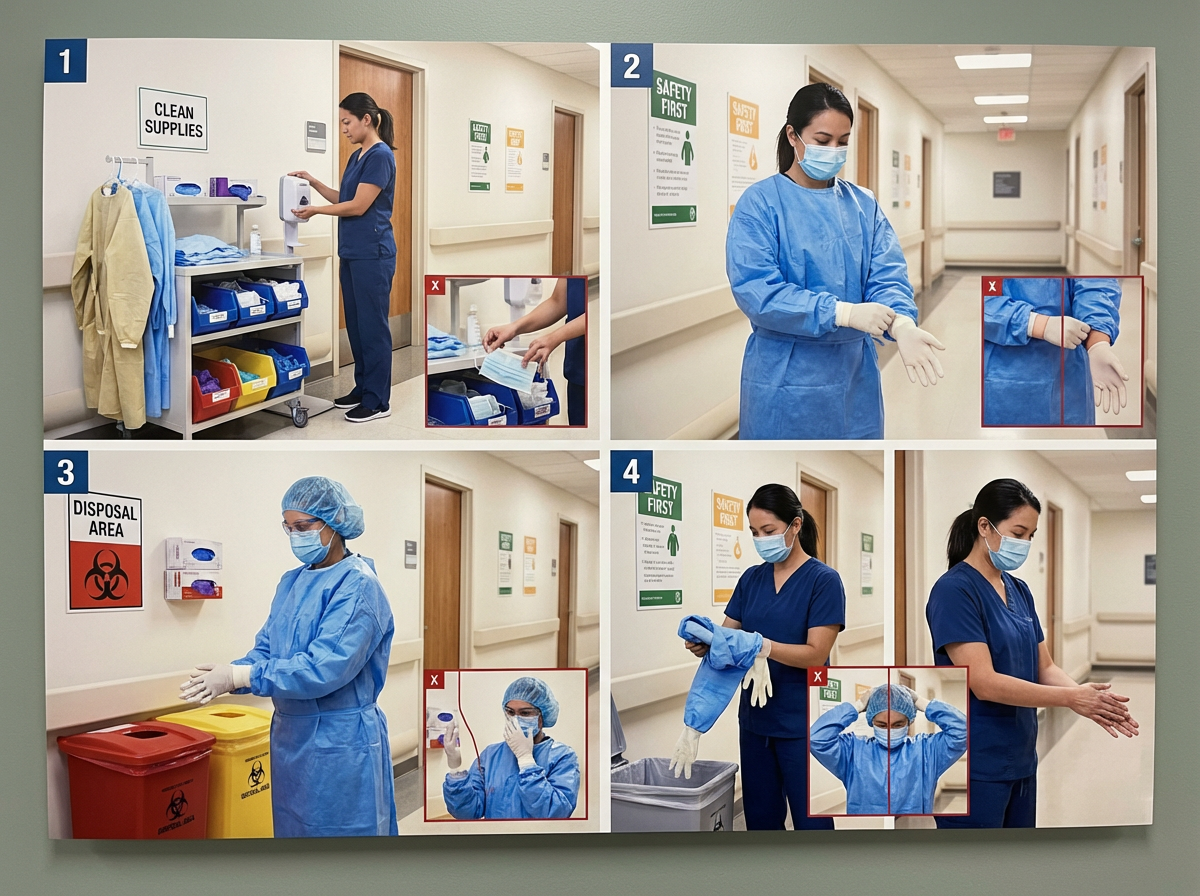
Effective PPE handling safety matters as much as the quality of the equipment itself. Poor donning, doffing, storage, or disposal turns protective barriers into contamination risks. Structured protocols reduce cross-contamination, protect staff, and maintain professional standards across aged care, healthcare-adjacent facilities, and commercial environments.
PPE becomes a concentrated source of contaminants after use. Gloves, masks, and gowns must be removed in the correct sequence, with hand hygiene at critical moments. Consistent training and clear reference materials keep teams compliant, efficient, and safe.
Why PPE Handling Deserves Strict Attention
PPE creates a barrier only when used and removed correctly. Once work is complete, contaminated surfaces on gloves, masks, and face shields can transfer pathogens to skin, clothing, and high-touch points.
Common failure points include touching the front of masks, removing gloves incorrectly, and skipping hand hygiene between steps. These errors spread pathogens across work areas and into staff rooms, vehicles, and homes.
Categorising PPE by Risk
Different items carry different contamination profiles. Handling protocols should reflect that variation.
- High risk: Gloves, fluid-resistant gowns, and face shields used near bodily fluids or high-touch contaminated surfaces.
- Moderate risk: Surgical masks and goggles used in routine cleaning where aerosols may be present.
- Lower risk: Hairnets, shoe covers, and general aprons. These still require clean storage and correct disposal.
Organised carriage reduces accidental mix-ups. A compact cleaning hand caddy keeps clean items separate from used PPE and other tools.
Correct Donning Sequence
Putting PPE on correctly sets up safe removal later.
- Hand hygiene – wash or sanitise thoroughly.
- Gown or apron – fully fasten for complete torso coverage.
- Mask or respirator – ensure a good seal over nose and mouth.
- Eye protection – goggles or face shield fitted securely.
- Gloves – cuffs over sleeves to create a seal.
Check sizing and integrity before work begins. Replace any item that is torn, loose, or visibly compromised.
Correct Doffing Sequence
Removal order limits self-contamination. Perform each step slowly and deliberately.
- Gloves first:
- Pinch the outside near the wrist, peel off inside-out.
- Slide fingers under the remaining glove cuff, peel off from the inside.
- Contaminated surfaces remain contained.
- Pinch the outside near the wrist, peel off inside-out.
- Gown or apron:
- Unfasten ties, pull away from the body, only touching the inside.
- Roll inward so the contaminated exterior is contained.
- Unfasten ties, pull away from the body, only touching the inside.
- Eye protection:
- Remove by straps or earpieces, not the front.
- Tilt head forward so debris falls away.
- Remove by straps or earpieces, not the front.
- Mask or respirator:
- Remove by straps or loops only.
- Avoid touching the front at any time.
- Remove by straps or loops only.
- Hand hygiene:
- Wash with soap and water for 20 seconds or use alcohol hand rub.
- Repeat after all PPE is removed and before touching personal items.
- Wash with soap and water for 20 seconds or use alcohol hand rub.
Hand Hygiene at Critical Moments
Hand cleaning prevents transfer during the riskiest transitions.
- Immediately after glove removal.
- After all PPE is removed and before leaving the area.
- Before eating, drinking, or touching the face.
Technique matters: cover all hand surfaces, scrub for at least 20 seconds, and dry thoroughly. Use sanitiser where sinks are not available.
Storage and Organisation That Protects Staff
Clean stock should never be exposed to contaminated waste or damp conditions.
- Dedicated clean storage: dry, ventilated, and separate from used PPE.
- Original packaging: keep sealed until needed, then reseal or use covered containers.
- First-in, first-out: rotate stock to avoid expired materials.
- Mobile setups: use caddies or trolleys so clean PPE travels separately from waste.
- Environmental control: avoid hot vehicles and humid rooms that degrade elastic and filtration layers.
Disposal Protocols That Prevent Re-Exposure
Waste handling must be as disciplined as donning and doffing.
- Segregate streams: infectious or fluid-exposed PPE into designated clinical waste where required.
- Hands-free bins: foot-pedal lids reduce contact.
- Right capacity: prevent overfilling.
- Clear responsibilities: specify who ties bags, frequency of removal, and final handling steps.
- Secondary containment: use rigid containers for transporting sealed high-risk waste.
Practical Training That Sticks
Written protocols succeed when paired with hands-on learning.
- Demonstrations: show each donning and doffing step.
- Supervised practice: correct technique until movement is automatic.
- Refresher sessions: brief, quarterly drills to prevent shortcuts becoming habits.
- Visual reminders: place laminated cards near bins and storage.
- Scenario-based walk-throughs: adapt PPE choices for gastro outbreaks, flu seasons, or biohazard clean-ups.
For organisations building out training packs, short, visual guides paired with QR-linked videos are highly effective. Pair chemical safety with application tools such as Comet Foaming Cleaner & Sanitiser and long-reach tools like the Oates Ergo Extra-Long Toilet Brush to reduce splash risk.
Equipment-Specific Considerations
- Respirators: conduct fit checks and re-check after facial changes or strap wear. Replace if seal is compromised.
- Reusable eye protection: wash, then disinfect as per manufacturer guidance. Do not share without full decontamination.
- Chemical tasks: match PPE to product risk. For splashing and aerosols, add eye protection and fluid-resistant gowns.
- Surface tools: select the right mop and pad system to minimise agitation aerosols. Explore dust control fringe mops for dry capture before wet processes.
Common Errors and How to Prevent Them
- Touching mask fronts: train to adjust only via straps.
- Glove removal errors: drill the inside-out technique until consistent.
- Skipping interim hand hygiene: mark critical points in SOPs.
- Mixed storage: separate clean stock from used PPE at all times.
- Overflowing bins: match bin sizes to usage patterns and empty on schedule.
Building a Culture of PPE Handling Safety
Culture transforms checklists into habits.
- Emphasise that safety steps are non-negotiable.
- Provide the right sizes and stock so staff can comply.
- Encourage near-miss reporting without blame.
- Audit storage, disposal points, and technique routinely.
- Update SOPs when incidents reveal gaps.
Consistent, visual documentation reduces ambiguity. Pair quick-reference cards with clear SOPs and product-specific notes. For a curated set of professional solutions, explore the full range of cleaning systems from Weskleen Supplies. For tailored PPE setup, training aids, or compliance guidance, feel free to get in touch with the Weskleen team.