


Blog
Troubleshooting 101: Helping Your Staff Solve Common Cleaning Equipment Issues

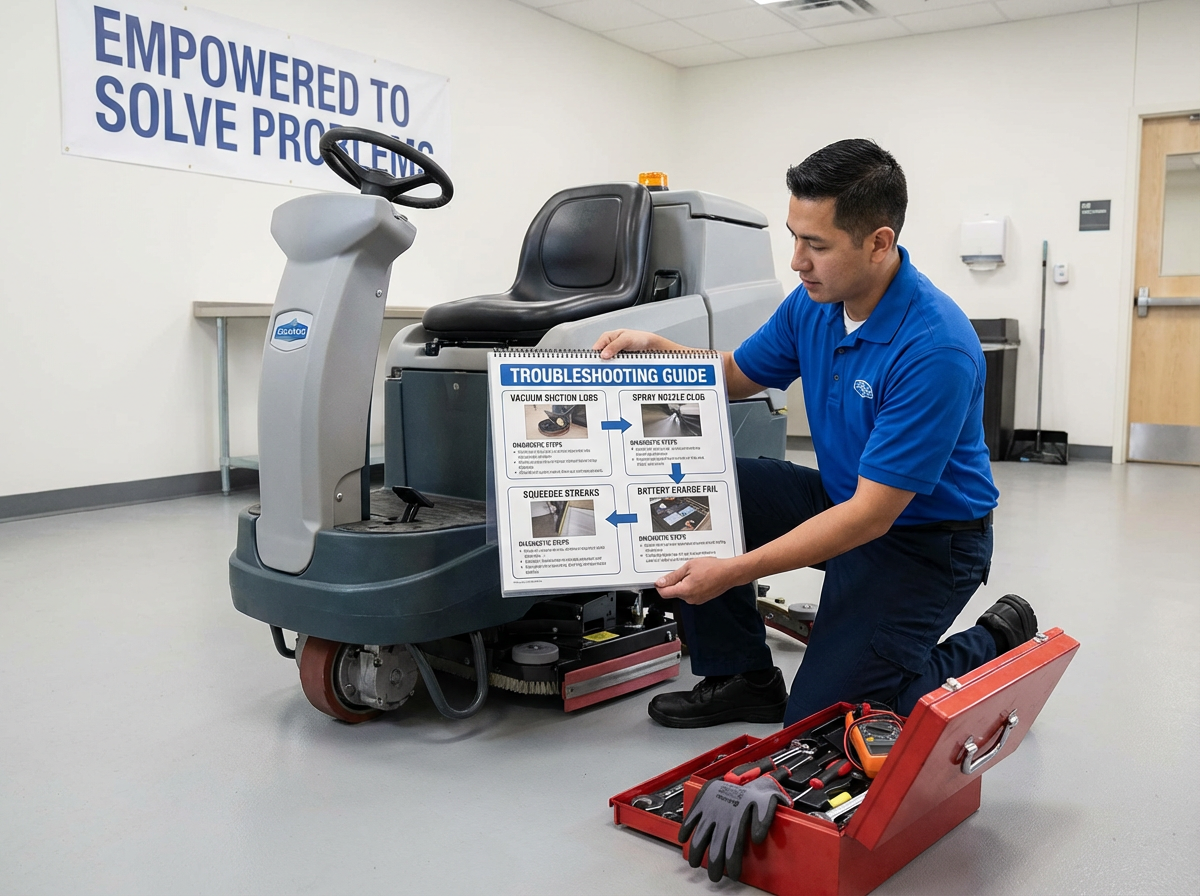
When cleaning equipment fails mid-shift, downtime can quickly disrupt operations. Professional cleaning environments depend on reliable tools, and staff must be prepared to identify and resolve common issues without waiting for technicians. Cleaning equipment troubleshooting skills transform employees from equipment operators into problem solvers, reducing costs and maintaining consistent performance.
The difference between minor interruptions and serious downtime often lies in what the team checks first. Even durable, professional-grade equipment requires basic maintenance and systematic troubleshooting to perform at its best.
Floor Scrubber Not Starting
Dead batteries are frequently blamed, but they are rarely the real cause. Loose charger connections often go unnoticed, especially where vibration gradually loosens plugs at both the wall and machine end. Always check connections before assuming battery failure.
Safety interlocks on commercial scrubbers prevent dry operation. Machines will not start unless the squeegee is lowered and the solution tank contains water. These are protective design features rather than faults. Staff should understand sensor locations and the conditions that trigger them.
Circuit breakers protect components from overloads. If a breaker repeatedly trips after resetting, debris may be jamming the brush deck or the motor may be overloading. Continuing to operate under these conditions risks expensive repairs.
Vacuum Cleaner Losing Suction
The Pacvac Superpro 700 Backpack Vacuum maintains strong performance when airflow remains unobstructed. Suction loss occurs when the air path from floor tool to exhaust becomes restricted.
Full or compacted collection bags are the most common cause. Empty the bag or canister when it reaches 60–70% capacity to prevent blockages. Filter maintenance is equally important: foam pre-filters should be washed weekly with mild detergent, fully dried, and reinstalled. HEPA filters should be cleaned daily and replaced at scheduled intervals, not only when visibly dirty.
Inspect hoses for cracks or small tears that may leak air. Run a hand along the hose while the vacuum operates to feel for escaping air. Minor damage can be sealed temporarily, but the hose should be replaced as soon as possible.
Mop Bucket Systems Failing to Wring
Wringer mechanisms jam when grit or residue accumulates in the gears or plates. This issue often arises when dust control mops and wet mopping systems are not separated. Fine particles combine with moisture to form abrasive sludge within the mechanism.
Proper daily rinsing prevents jamming. Operate the wringer under running water to remove trapped debris before it hardens overnight. Worn springs gradually reduce wringing efficiency; compare with a newer model if additional effort becomes noticeable. Replacement springs are inexpensive and quick to install.
The 16L Mop Bucket performs optimally when the mop head matches the wringer size. Oversized heads hold excess water, creating slip hazards and longer drying times.
Spray Bottles Failing to Spray
Trigger sprayers often fail due to chemical residue or worn seals. Preventive maintenance is simple: flush each bottle with clean water at the end of every shift. This step prevents residue from hardening within the mechanism.
Incorrect dilution ratios cause crystallisation in spray heads. Crystals scratch internal components and jam pistons, leading to leaks or failure. Accurate dilution not only preserves cleaning performance but also protects the spray mechanism.
The dip tube must reach the bottom of the bottle and connect firmly to the pump. A loose or cracked tube allows air intake, interrupting spray flow. For harsh or concentrated chemicals, always use chemical-resistant spray bottles to prevent material degradation and seal failure.
Carpet Cleaning Machines with Poor Water Flow
Airlocks within solution tanks restrict water flow to the spray jets. Tilting the machine forward while running allows trapped air to escape, restoring proper flow.
Spray jets clog easily with mineral deposits or debris. Remove and soak jets in white vinegar for one hour, then flush with clean water. Keeping spare jets on hand prevents downtime.
The Steamvac HP Auto 2 Carpet Steamer relies on consistent water temperature. Weak heating reduces extraction efficiency and cleaning quality. If performance drops, inspect the heating element before assuming pump failure.
Pump screens at the tank outlet should be cleaned regularly. A blocked screen restricts flow and mimics pump failure but can be cleared within minutes.
Extension Poles That Fail to Lock
Twist-lock mechanisms can seize due to dirt or thread wear. The Ettore 5.5m Extension Pole features a reliable locking system but still requires cleaning after use. Wipe down sections thoroughly, especially after outdoor work.
Avoid lubricants unless designed for telescopic poles, as most attract dust that creates abrasive buildup. Bent pole sections also cause jamming and should be replaced promptly. Always align threads carefully when connecting sections to prevent cross-threading and permanent damage.
Microfibre Mops Losing Effectiveness
Fabric softeners destroy microfibre performance by coating fibres and neutralising static attraction. Once treated, the material cannot be restored. Wash microfibre mop heads separately with mild detergent in warm water only.
Avoid overloading washing machines, as crowded loads prevent proper cleaning. Wash smaller batches with ample water flow. High temperatures melt microfibre strands, shrinking the fabric and reducing absorbency. Always wash in warm water and air-dry or use low heat.
Bleach and strong chemicals degrade microfibre rapidly. Use pH-neutral cleaners designed for the material to extend its lifespan.
Floor Polishers Vibrating Excessively
Unbalanced pad assemblies or worn brushes cause vibration and excessive motor wear. The Polystar Orbital Floor Scrubber uses multi-directional force intentionally, but vibration beyond normal operation indicates imbalance.
Brush bristles wear unevenly over time. Rotate brushes regularly and replace them once the variation exceeds a few millimetres. Remove debris from around brush shafts weekly to prevent imbalance. Loose mounting bolts should be tightened to manufacturer specifications to maintain stability.
Squeegees Leaving Streaks
Nicks, tears, or hard spots on squeegee blades cause streaking. Run a finger along the edge to detect imperfections and replace damaged blades immediately.
Blade angle affects contact pressure. Maintain approximately a 45-degree angle for optimal wiping performance. Dirty blades transfer grit onto surfaces and should be cleaned thoroughly after each use.
Avoid window cleaning in direct sunlight, as rapid drying causes streaking unrelated to equipment condition. Working in shaded or cooler conditions produces the best results.
Battery-Powered Equipment Not Holding Charge
Modern lithium batteries, such as those in the Pacvac Superpro 700 Battery Kit, avoid traditional memory effects but still require proper care. Rotate batteries between uses to prevent deep discharge.
Remove batteries from chargers once fully charged. Long-term overcharging or storing completely depleted batteries reduces lifespan. When stored for extended periods, maintain a partial charge of 40–60%.
Temperature extremes accelerate degradation. The Medusa Battery-Powered Sweeper performs best when batteries are kept within recommended temperature ranges. Clean terminals monthly with a dry cloth to prevent corrosion and ensure consistent contact.
Chemical Dispensers Measuring Incorrectly
Clogged dispenser tips disrupt flow and alter dilution ratios. Flush with clean water daily and soak tips in vinegar weekly to remove mineral buildup.
Air bubbles in chemical lines create irregular flow; prime the system until consistent output is achieved. Position chemical supply containers at the manufacturer’s recommended height to maintain proper siphon pressure.
Replace worn metering tips according to maintenance schedules, as wear causes inaccurate dispensing long before visible damage occurs.
Creating a Quick Reference System
Laminated troubleshooting cards attached to equipment or stored in caddies improve response time and prevent misplaced instructions. Each card should cover five key problems and concise solutions, supported by clear images.
Onboarding training that includes equipment-specific demonstrations prevents recurring faults. Structured sessions showing common issues and resolutions reduce downtime significantly.
Maintenance logs track performance patterns, revealing trends such as recurring filter clogs or blade replacements. Recording these details ensures timely intervention.
Short instructional videos stored on shared devices support visual learners. Demonstrations covering vacuum maintenance, spray jet cleaning, or squeegee blade replacement can clarify procedures effectively.
When to Call for Professional Help
Certain issues require professional servicing. Electrical faults, motor damage, or structural issues must be handled by qualified technicians to ensure safety and preserve equipment warranties. Attempting unauthorised repairs may void warranty coverage.Recurring equipment failures despite proper maintenance suggest deeper mechanical or operational issues. Document these occurrences and contact the Weskleen team for expert technical support.