


Blog
The Evolution of Vacuum Technology: What to Expect in Modern Models

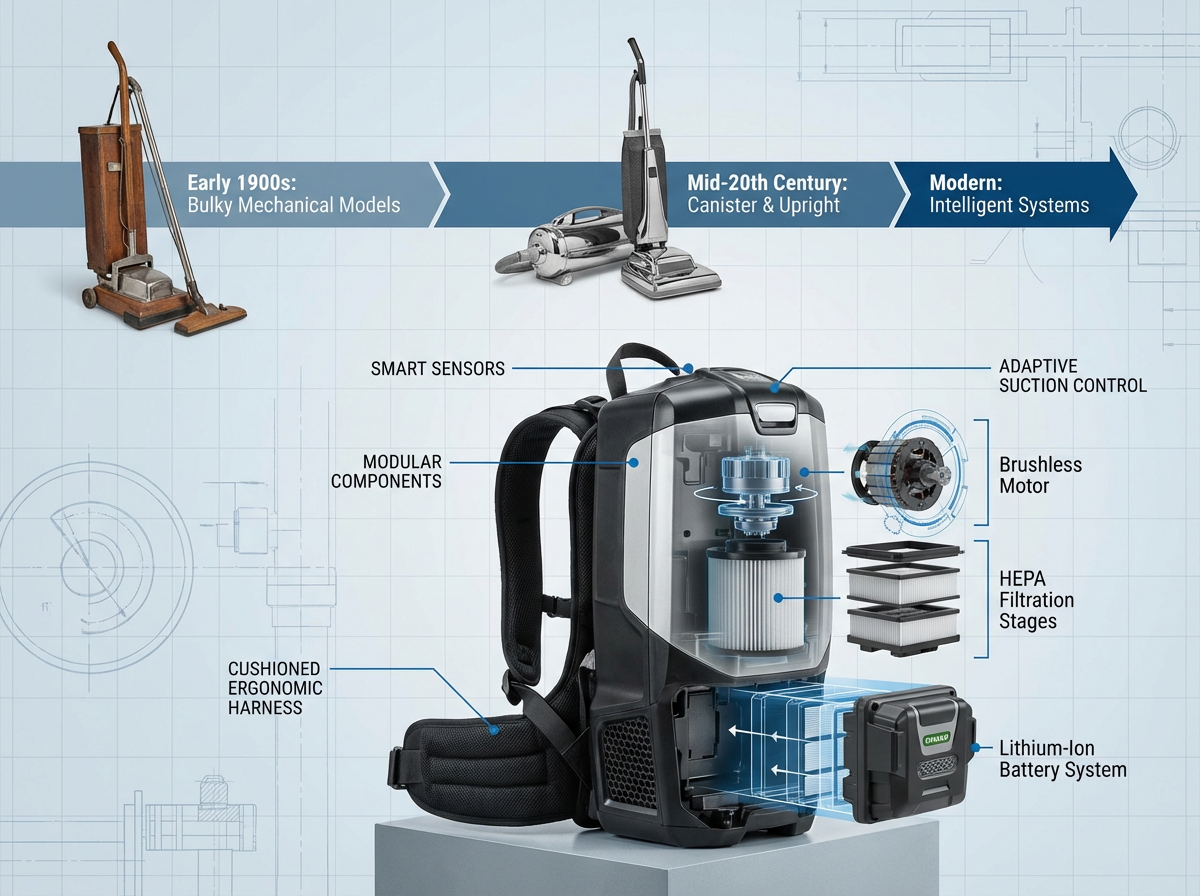
Vacuum cleaners have evolved from bulky, inefficient machines into highly specialised equipment designed to meet the demands of commercial, industrial, and professional cleaning environments. What began as simple suction devices has become a field defined by precision engineering and continuous vacuum technology advancements that improve efficiency, ergonomics, and reliability.
For facilities managers, contractors, and cleaning professionals, the transformation is about more than suction power. It is about achieving consistent results, minimising fatigue, and extending equipment life. Modern vacuum design focuses on efficiency across every detail, from motor technology to filtration and maintenance accessibility.
Understanding these developments ensures equipment investment that performs reliably for years rather than months. Professional-grade vacuums are not just higher-priced consumer models – they are engineered with entirely different standards, materials, and mechanical principles that directly influence long-term productivity and costs.
From Mechanical Suction to Intelligent Systems
Early vacuums relied purely on mechanical suction from basic fans and motors. They worked, but offered little control or adaptability. Operators had a single setting: on.
Modern professional models use sensors and automated systems that adapt to their environment. Advanced controllers monitor surface type, suction level, and filter status, automatically adjusting output for optimal efficiency. This adaptive design eliminates unnecessary energy use and improves cleaning consistency.
The Pacvac Superpro 700 Backpack Vacuum demonstrates this shift. It features a four-stage filtration system that maintains steady suction even as the collection chamber fills. The motor dynamically regulates airflow to preserve performance, preventing loss of suction during use.
Filtration Systems That Improve Air Quality
One of the most critical vacuum technology advancements concerns air filtration. Older vacuums often released fine dust and allergens back into the environment. In modern cleaning standards, that is unacceptable.
High-Efficiency Particulate Air (HEPA) filtration now captures 99.97% of particles as small as 0.3 microns – smaller than many bacteria. However, efficiency depends on proper system sealing. In low-cost vacuums, air often bypasses the filter through gaps, undermining the system’s purpose.
Professional equipment ensures sealed airflow paths, forcing air entirely through the filtration media. This engineering difference explains why genuine commercial machines deliver measurable improvements in air quality, making them essential for healthcare, hospitality, and educational environments.
Cordless Technology That Changed the Game
Battery power has redefined cleaning mobility. Earlier battery vacuums lacked runtime and strength, limiting their use. Today’s lithium-ion systems deliver sustained power with lightweight efficiency.
The Pacvac Superpro 700 Battery Kit includes four interchangeable batteries and a charger, allowing continuous operation. This eliminates the downtime and hazards of extension cords while enhancing productivity in large facilities.
Cordless operation also improves safety and workflow. Without cords to manage, cleaners work faster, reduce trip risks, and move freely across different rooms and surfaces. The higher initial investment quickly pays off through reduced downtime and greater operational flexibility.
Understanding Runtime and Battery Management
Battery performance depends on real-world conditions. Manufacturers may list long runtimes, but actual cleaning typically requires higher power settings. Commercial-grade battery systems average 30 to 45 minutes of consistent operation per charge, making multi-battery rotation systems ideal for continuous work.
Modern battery management systems prevent over-discharge and overheating, extending lifespan significantly. With quality lithium-ion batteries, users can expect three to five years of reliable service before replacement becomes necessary.
Ergonomics Driven by Biomechanics
Professional vacuums are now designed around the human body. Older upright or canister models often forced unnatural postures and repetitive strain. Today, ergonomics influence every element from harness design to wand grip.
Modern backpack vacuums use padded harnesses that distribute weight evenly across the hips and shoulders. This reduces back strain and increases comfort across long shifts. Even minor ergonomic details, like adjustable handles and flexible joints, make a measurable difference in reducing fatigue and preventing injuries over time.
Surface-Specific Attachments
Professional cleaning now requires more than a single all-purpose tool. Attachments are designed specifically for hard floors, carpets, upholstery, and edges.
- Hard floor tools use soft bristles or felt strips to protect surfaces while maintaining suction.
- Carpet heads use mechanical agitation and height adjustment to extract deeper debris.
- Upholstery and crevice tools employ anti-static materials and reinforced housings for daily commercial use.
These refinements reduce time per task and extend equipment life by preventing misuse across incompatible surfaces.
Maintenance Indicators That Prevent Downtime
Modern vacuums include intelligent indicators that notify users when filters, belts, or brushes require attention. This predictive maintenance approach ensures consistent performance and prevents unexpected failures.
By basing maintenance on actual usage rather than fixed schedules, cleaning operations reduce unnecessary servicing and extend component lifespan. This approach mirrors best practices seen in modern facility management systems.
Motor Efficiency and Power Control
The move from traditional brush motors to brushless systems marks a major milestone in vacuum technology advancements. Brushless motors operate with less friction, produce less heat, and last up to five times longer. They also maintain consistent suction while consuming less power.
Adaptive motor controllers adjust speed based on surface resistance, ensuring optimal efficiency. This means less wear, lower noise, and reduced energy consumption across all cleaning conditions.
Noise Reduction for Sensitive Environments
Older vacuums often operated above 80 decibels – loud enough to require hearing protection. Modern machines now run between 60 and 70 decibels, comparable to normal conversation levels. The improvement comes from better airflow design, acoustic insulation, and quieter motor systems.
Lower noise levels allow cleaning teams to operate during working hours without disruption, making vacuuming viable in offices, hotels, and healthcare settings. Additionally, modern vacuums are engineered to produce lower-frequency sound, which is less fatiguing for operators over long shifts.
Durability for Professional Demands
Professional cleaning equipment must withstand years of continuous use. Consumer vacuums are designed for a few hundred operating hours, whereas commercial models are built for thousands.
Durability enhancements include:
- Reinforced housings made from impact-resistant polymers
- Metal components in high-stress areas
- Industrial-grade bearings, switches, and controls rated for continuous duty
These features ensure equipment survives demanding use, reducing replacement frequency and total cost of ownership.
Filtration Beyond HEPA
While HEPA filtration remains a standard, some environments require more advanced air purification. Ultra-Low Penetration Air (ULPA) filters capture even finer particles, suitable for cleanrooms and laboratories. Activated carbon filters neutralise odours and chemical vapours, improving air quality in specialised facilities.
The correct filtration system depends on the environment. Over-specifying filtration increases costs without added benefit, while under-specifying risks air contamination and compliance issues.
Smart Systems and Automation
Connectivity features are becoming increasingly common in professional equipment. Usage tracking logs operational hours, helping managers schedule maintenance precisely. Performance data identifies efficiency losses before they affect productivity.
Some advanced models integrate with facility management systems, providing automated maintenance alerts or cleaning verification through digital logs. This level of automation is particularly valuable for large facilities requiring compliance documentation.
Modular Design for Easy Servicing
Modern professional vacuums are often modular. Components such as motors, filters, or power modules can be replaced individually, reducing downtime and waste. This design supports sustainability by allowing partial repairs instead of full replacements.
Modular systems also enable adaptability. Businesses can switch between battery and corded modules or different filtration assemblies depending on job requirements. This flexibility enhances operational efficiency across varied environments.
Surface Detection and Automatic Adjustment
Top-tier vacuums now detect flooring types automatically, adjusting suction, brush speed, and height accordingly. These systems use sensors to measure resistance, surface texture, and tool position in real-time. Operators move seamlessly between surfaces without manual changes, maintaining optimal performance and protecting delicate flooring.
This automation is particularly beneficial for hotels, airports, and commercial buildings with mixed flooring, where efficiency and precision are equally important.
Battery Chemistry and Fast Charging
Battery chemistry continues to improve. Modern lithium-ion cells offer higher energy density and longer life. Fast charging enables 80% capacity in as little as 45 minutes and full charge within 90 minutes, allowing rotation through multiple shifts without interruption.
Battery management systems protect against overcharging, overheating, and deep discharge, ensuring maximum reliability and longevity.
Airflow Engineering and Suction Performance
Effective cleaning depends on airflow efficiency, not just suction power. Modern vacuums feature optimised air paths with smooth internal contours that minimise turbulence and prevent suction loss. Multi-stage cyclonic separation captures debris before it reaches filters, preserving suction for longer periods.
Variable suction controls also give operators greater flexibility. This enables precise power adjustment when cleaning delicate fabrics or high-resistance carpets, improving both efficiency and safety.
Final Thoughts
The evolution of vacuum technology reflects a broader trend in professional cleaning – smarter, safer, and more efficient equipment that enhances every aspect of performance. From intelligent motors and advanced filtration to modular components and ergonomic designs, vacuum technology advancements continue to set new standards for reliability and comfort in commercial cleaning.To explore the latest innovations in professional cleaning equipment, browse the full range at Weskleen Supplies. For expert support or tailored product recommendations, feel free to get in touch with the Weskleen team.