


Blog
The Future of Floor Pads: Safer, Quieter, More Efficient Options

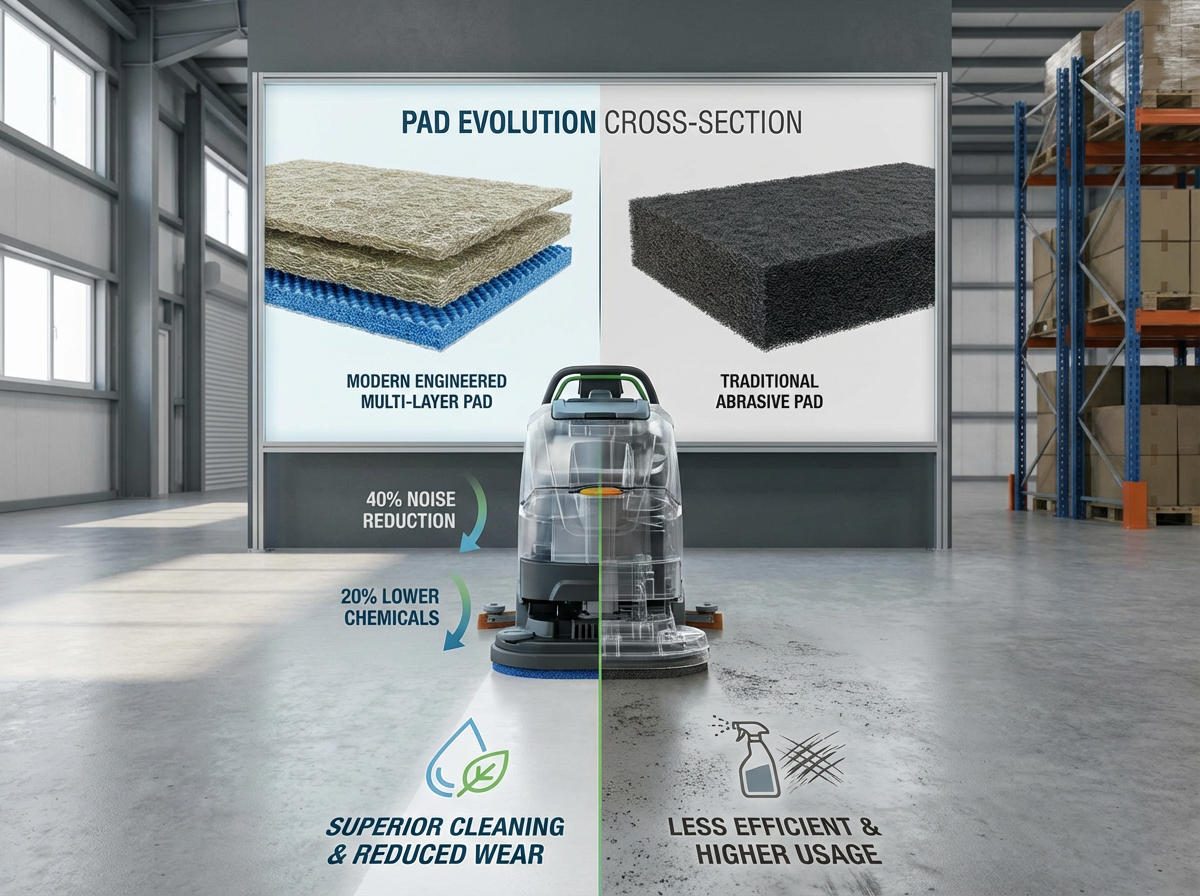
Floor pad technology has evolved considerably over the past decade, moving beyond simple abrasive discs to sophisticated cleaning tools that protect surfaces whilst delivering professional results. The shift reflects a broader understanding that effective cleaning shouldn’t mean compromising on safety, noise levels, or environmental impact.
Facilities managers have often struggled with traditional pads that wear out quickly, generate excessive noise, and sometimes damage the very floors they’re meant to protect. Modern alternatives address these concerns through material science innovations and design improvements that make commercial cleaning more efficient and less disruptive. The difference isn’t just theoretical – it’s measurable in reduced replacement costs, fewer workplace complaints, and longer floor life.
For cleaning professionals and facility managers, understanding these advancements means making smarter purchasing decisions. The right floor pad technology can cut maintenance time, reduce chemical usage, and create a quieter working environment without sacrificing cleaning power. At WesKleen Supplies, we provide equipment and accessories built to match modern standards of durability, efficiency, and professional performance.
What’s Actually Changed in Floor Pad Design
Traditional floor pads relied heavily on aggressive abrasives to achieve cleaning results. This approach worked but came with significant trade-offs: shortened floor finish life, inconsistent results across surfaces, and pads that wore down unevenly.
Modern floor pad technology incorporates engineered fibres that clean through mechanical action rather than pure abrasion. These fibres are designed at specific densities and lengths to lift dirt without damaging floor finishes. The result is more consistent cleaning performance across the pad’s entire lifespan.
Material composition has also evolved. Older pads used a single fibre type, whereas newer designs layer materials for distinct functions. A high-performance pad may feature a softer outer layer for initial dirt capture, a mid-layer for scrubbing action, and a reinforced base for structural integrity.
Improved adhesive systems now hold these fibres securely, preventing delamination or shedding when exposed to chemicals or high-speed machines. Current bonding technologies allow pads to maintain structure under demanding conditions – critical when cleaning large commercial areas where pad changes disrupt workflow.
Noise Reduction Through Material Science
Anyone who’s operated a floor scrubber in Perth in an occupied building knows the noise challenge. Traditional pads created significant friction noise, particularly on hard surfaces such as polished concrete or terrazzo. In hospitals, schools, or offices, this became a major operational limitation.
Recent innovations reduce operational noise by 15-30% compared with conventional pads. The improvement stems from multiple factors working together. Fibre length variation helps minimise resonance; irregular fibre patterns interrupt harmonic frequencies, similar to how varied tyre treads reduce road noise.
Material density plays a key role too. Pads that are too rigid create more impact noise when encountering uneven surfaces. Newer designs incorporate controlled flexibility, allowing pads to conform slightly to the floor while maintaining cleaning power and reducing vibration.
In spaces like airports, shopping centres, and 24-hour healthcare facilities, this quieter operation has transformed daytime cleaning possibilities. Crews can work during occupied hours without disturbing staff or visitors, improving scheduling flexibility and lowering costs associated with overnight shifts.
Chemical Efficiency and Environmental Impact
Pad design directly affects chemical usage, costs, and environmental footprint. Traditional pads often needed generous chemical application because their fibre structures couldn’t evenly distribute or retain solution. This caused dry zones with poor cleaning coverage and wet patches where chemicals pooled.
Advanced pad designs now feature internal solution distribution channels that spread cleaning agents evenly across the pad surface. This uniform coverage achieves consistent cleaning results with up to 40% less chemical use.
Longevity also matters. Longer-lasting pads reduce waste, an important consideration for sustainability. A facility using 200 pads annually can cut that number in half simply by switching to premium pads that last 50% longer. That’s 100 fewer pads heading to landfill and tangible progress toward environmental targets.
Some manufacturers now incorporate recycled content into pad materials. These are not inferior products – they perform as well as traditional options while reducing environmental impact. The Polystar Orbital Floor Scrubber works exceptionally well with these sustainable pads, maintaining consistent cleaning across various surfaces.
Colour-Coded Systems That Actually Make Sense
Colour-coded systems have been part of the cleaning industry for decades, but modern iterations go beyond simple aggressiveness ratings. Traditional colour ranges – black to white – offered limited guidance. Today’s systems introduce new colours that designate specific performance characteristics such as compatibility with certain chemicals or suitability for different finishes.
This precision prevents common errors, such as using overly aggressive pads on delicate coatings. Consistent colour coding also simplifies training: when staff know that each colour corresponds to a particular function, they spend less time checking specifications and more time cleaning efficiently.
For multi-site operations or teams with frequent staff changes, the colour system offers instant visual cues, reducing the risk of mistakes and improving workflow consistency.
Speed and Efficiency Gains
The link between pad technology and operational efficiency becomes clear once measured. A facility manager at a large retail complex reported a 30% reduction in floor maintenance time after switching to advanced pads. The gain came not from working faster but from pads that cleaned effectively in fewer passes.
Modern designs achieve better soil removal per machine revolution through optimised fibre orientation and pressure distribution. Where older pads needed four passes to remove embedded dirt, newer versions often do it in two.
This compounds across large sites. In a shopping centre with 50,000 square metres of flooring, even a 20% time saving translates into major labour cost reductions. Improved edge performance also reduces the need for manual detailing, saving additional hours.
For battery-powered equipment, efficient pads draw less power, extending runtime by up to 25%. That difference can mean completing a full shift on a single charge instead of pausing mid-task for recharging. Tools like the Medusa Battery Powered Sweeper further enhance efficiency across commercial sites.
Matching Pads to Modern Floor Finishes
Floor finishes have advanced alongside pad design. Modern coatings use harder polymers and complex cross-linking chemistry for durability, but they respond differently to friction and pressure. Using outdated floor pads can strip protective layers prematurely or fail to clean adequately.
Matching pad abrasiveness and fibre type to the finish system is essential. Facilities unsure of their coating composition should test small sections using various pad types. Signs of excessive finish wear or persistent soil indicate a mismatch.
A healthcare facility once facing costly recoating every four months extended its maintenance interval to nine months simply by switching to appropriately matched pads. The result: consistent cleanliness and significantly lower material and labour costs.
Safety Features in Modern Pad Design
Workplace safety influences every stage of pad development. Early pads often shed fibres or left residue that created slip hazards. Modern engineering resolves this through improved fibre retention systems and bonding methods that eliminate shedding.
Pad release mechanisms have also evolved. Modern hook-and-loop or twist-lock attachments allow secure fit during operation yet easy removal when changing pads, reducing strain injuries. Some pads incorporate antimicrobial additives that inhibit bacterial growth between uses, enhancing hygiene in sensitive environments such as healthcare and food service.
Reducing chemical dependency also contributes to safety. Less chemical usage means less handling and lower exposure risks for both staff and occupants. Pairing these with reliable accessories like the Cleaning Hand Caddy keeps supplies organised and secure, reducing clutter-related hazards.
Cost Analysis Beyond Purchase Price
Assessing value by initial price alone overlooks the broader economics of pad performance. A pad costing 30% more but lasting twice as long and reducing chemical usage provides better value overall.
Consider a facility using 500 pads per year at £3 each (£1,500 total). Switching to pads costing £4.50 but lasting 60% longer cuts total annual pad consumption to around 313 units, saving roughly £90 before factoring in chemical and labour efficiencies. Once these are included, the savings multiply.
Better pads also preserve floor finishes longer, halving recoating frequency and saving thousands annually in materials and downtime. In large operations, these cumulative efficiencies make premium pad technology a strategic investment rather than a discretionary expense.
Integration With Equipment Technology
Pad performance depends heavily on machine compatibility. As modern floor scrubbers gain features like adjustable pressure and variable speed controls, pad manufacturers have tailored designs to match.
Adjustable pressure allows a single pad type to perform multiple cleaning tasks simply by altering contact force. High-end pads respond predictably to these variations, maintaining consistent performance across different settings. Variable speed functionality offers similar versatility, letting operators optimise results without constant pad changes.
The WesKleen Supplies range includes machines engineered to complement current pad technology, ensuring equipment and pad operate at peak efficiency together. This integration prevents the mismatch issues that occur when old equipment limits the benefits of advanced pad systems.
For battery-powered machines, energy-efficient pads extend runtime and overall productivity, maximising each charge cycle.
Specialised Applications and Niche Solutions
Beyond general maintenance, certain environments require specialised pad technology. Stone and concrete restoration demand diamond-impregnated pads that polish and clean simultaneously. Escalator and travelator maintenance needs pads that conform to grooves without tearing. Grout line cleaning benefits from shaped pads or hybrid brush-pad systems that reach into recesses more effectively.
Industrial and food service operations benefit from pads formulated for oil or grease removal, ensuring optimal results in specialised soil conditions. Selecting purpose-designed pads prevents premature wear and achieves the best results for each unique challenge.
Training and Implementation Considerations
Introducing new pad systems successfully depends on proper training. Operators must understand that modern floor pads may require different speeds, pressures, or chemical dilutions than older ones. Updated training prevents underperformance and ensures return on investment.
Staff should also learn how to identify wear in advanced pads, as they degrade differently from traditional versions. Updating standard operating procedures ensures consistency and prevents confusion during changeovers.
Some facilities prefer phased rollouts, testing new pads in high-traffic zones before expanding site-wide. This approach allows data collection and refinements before full implementation, reducing operational risk.
Measuring Performance and Making Adjustments
Quantifying benefits validates investment and guides continuous improvement. Track pad lifespan, chemical usage, and labour time before and after implementation. Measure floor finish longevity and note any improvement in air quality or user feedback due to quieter operation.
Collecting and analysing this data provides a clear picture of how the new floor pad technology impacts both costs and performance. For large facilities, this data-driven approach supports ongoing optimisation and better purchasing decisions.
Emerging Technologies and Future Directions
The next generation of floor pad development shows promise in several areas:
Nanotechnology fibres that interact with soil on a molecular level for improved cleaning efficiency.
Smart pads with embedded sensors that track wear and alert users when replacements are due.
Biodegradable materials engineered for strength and longevity comparable to traditional pads.
Custom-engineered pads tailored to the exact cleaning demands of individual facilities.
As cleaning equipment continues to evolve, pad technology will remain central to achieving professional, sustainable, and cost-effective results. For organisations seeking efficiency, safety, and performance, modern pad systems represent one of the most impactful upgrades available today.For expert advice on choosing the right solutions for your facility, contact us today.