


Blog
Time-Saving Tips for Large Facility Cleaning Teams

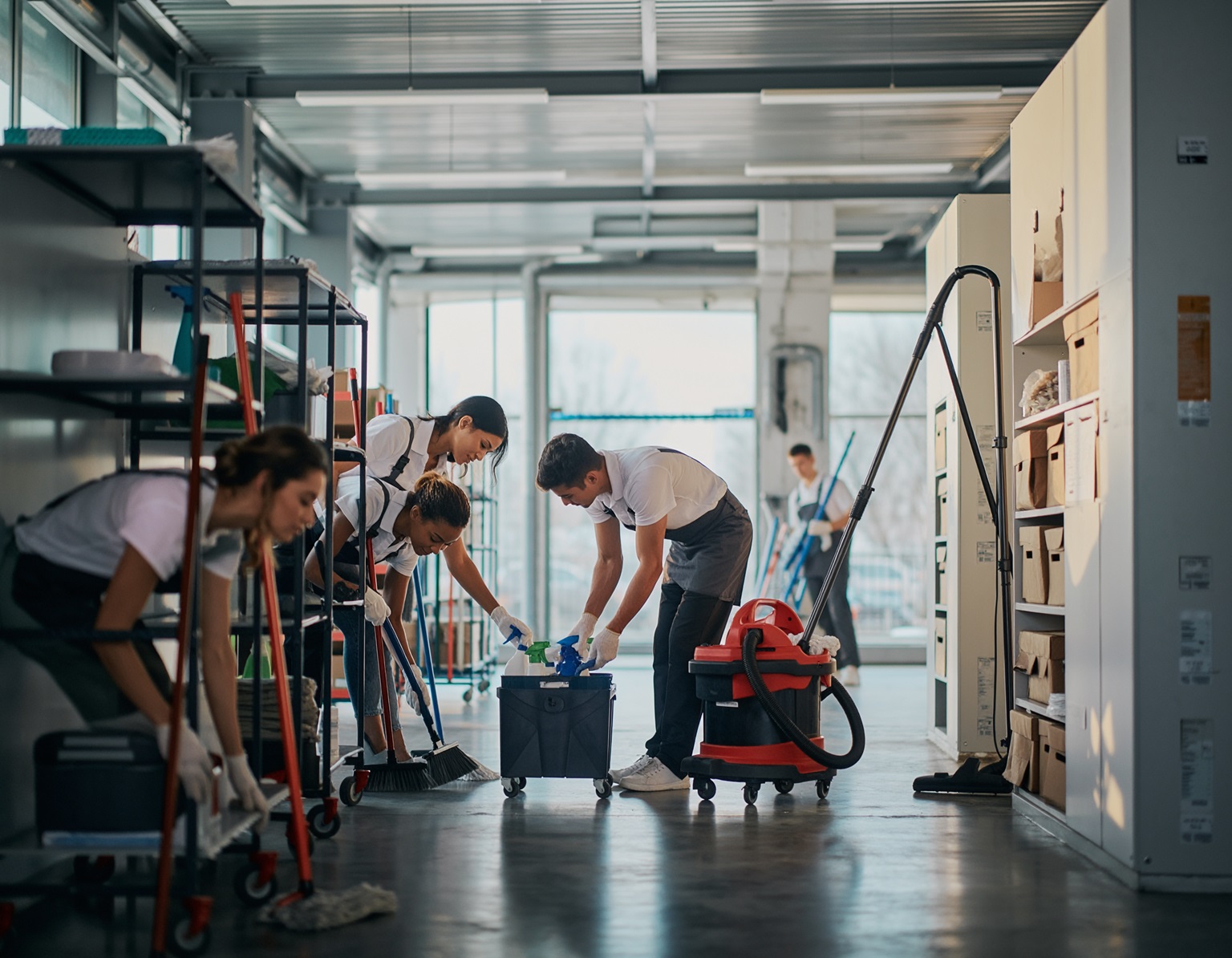
Managing a large facility cleaning operation means every minute counts. When responsible for thousands of square metres across multiple zones, efficiency depends on systems, equipment, and workflows designed to save time without compromising quality.
Teams maintaining shopping centres, hospitals, and office complexes often experience the same pattern. The difference between a productive team and a constantly overwhelmed one usually comes down to a few critical practices. These proven large facility cleaning tips have helped reduce cleaning times by up to 40% while maintaining professional standards.
Zone-Based Cleaning Reduces Wasted Movement
Assigning specific zones to individual cleaners or small teams eliminates back-and-forth inefficiency. When a cleaner owns a defined section such as the eastern wing or floors three to five of a building, they develop familiarity with that area. They learn where dirt accumulates, which surfaces need more frequent attention, and the fastest cleaning sequence.
When a 15,000-square-metre retail complex implemented a zone-based system, cleaners stopped crossing paths, equipment stayed in position, and shifts finished 45 minutes earlier on average. This gain came purely from reduced walking and better resource allocation.
Create a clear map of each zone with task lists tailored to its requirements. The cleaning needs of a food court differ from administrative offices. Customising responsibilities and equipment saves time and energy while improving accountability.
Standardised Caddies Cut Preparation Time
A disorganised supply process drains productivity. Searching for microfibre cloths or the correct spray bottle before each shift consumes valuable minutes that multiply across teams.
Standardised cleaning caddies solve this problem. Each one carries a fixed set of supplies specific to task type: bathroom sanitation, surface cleaning, or glass maintenance. A well-organised Cleaning Hand Caddy keeps everything portable and accessible.
Recommended caddy setups:
- Bathroom caddy: Toilet cleaner, disinfectant, brushes, gloves, and microfibre cloths
- General surface caddy: All-purpose cleaner, glass cleaner, dusters, and cloths
- Deep-clean caddy: Degreasers, spot removers, and protective gear
Restock weekly and issue one per cleaner. Preparation time drops instantly and productivity rises without additional effort.
The Right Equipment Improves Speed and Quality
Cleaning performance depends on equipment quality. Using consumer-grade machines in commercial settings reduces output and increases fatigue. Professional-grade machines operate faster and last longer, making them vital for large-scale operations.
The Pacvac Superpro 700 Backpack Vacuum provides exceptional mobility, ideal for facilities with stairs or furniture-dense areas. Staff can move efficiently without dragging heavy cables or canisters.
For hard floors, the Polystar Orbital Floor Scrubber transforms output by cleaning, scrubbing, and polishing in a single pass. A 500-square-metre lobby that requires 40 minutes with a mop can be completed in 15 minutes using a scrubber, with better results.
Battery-powered models offer even greater flexibility. The Pacvac Superpro 700 Battery Kit provides continuous operation through interchangeable batteries, reducing downtime during long shifts.
Microfibre Technology Accelerates Surface Cleaning
Microfibre products outperform traditional cotton materials in both speed and hygiene. The fibres capture dirt and bacteria instead of spreading them, requiring fewer passes to achieve the same result.
Switching to the Enduro Microfibre Mop Head can cut mopping time by up to 45% while delivering a streak-free finish. Microfibre cloths also clean glass and stainless steel faster using less chemical product.
A facility manager who converted fully to microfibre cleaning recorded a 40% drop in chemical usage and improved visual cleanliness based on tenant feedback. The fibres deliver mechanical efficiency that chemicals once compensated for.
Pre-Treat Problem Areas for Faster Results
Pre-treatment allows cleaning agents to work while staff handle other zones, significantly reducing scrubbing time.
When entering a restroom, a cleaner can apply disinfectant and toilet cleaner, move to the next restroom, and return once the product has broken down grime. The Comet Foaming Cleaner & Sanitiser is ideal for this approach, as its foam clings to surfaces and extends contact time.
Applying degreasers, stain treatments, or adhesive removers like Goof Off Adhesive Remover ahead of time multiplies productivity by letting chemistry handle the toughest residue.
Scheduled Deep Cleaning Prevents Emergency Callouts
Unplanned deep cleans disrupt workflow and inflate labour hours. Implementing a structured rotation for deep-clean tasks keeps surfaces under control.
For instance, dedicate Monday to carpet spot treatment, Tuesday to high dusting, Wednesday to lobby floors, and so on. One retail complex using this rotation removed the need for quarterly crisis cleans and reduced overtime significantly.
The Steamvac HP Auto 2 Carpet Steamer supports this system by allowing powerful, regular deep cleans in high-traffic carpet zones without shutting down operations.
Colour-Coded Systems Prevent Cross-Contamination
Colour-coded cleaning is both a hygiene safeguard and a time-saver. Misused tools cause rework, and cross-contamination requires complete re-cleaning.
Assign colours by area: red for bathrooms, blue for surfaces, green for kitchens, and yellow for high-risk zones. The 16L Mop Bucket and microfibre mop heads are available in various colours to reinforce these distinctions visually.
Clear coding shortens training time for new staff and prevents costly mistakes. Teams become faster and more confident once equipment colours guide their workflow.
High-Access Tools Reduce Setup Time
Cleaning vents, light fixtures, and ceilings typically involves ladders, safety gear, and repositioning. Extension poles eliminate these steps.
The Ettore 5.5m Extension Pole reaches ceiling height in most commercial environments, cutting setup and climb time. For mid-height areas, the Ettore 3.6m Extension Pole covers standard offices and corridors.
One warehouse calculated annual savings of over 600 labour hours after switching from ladders to poles for high cleaning.
Centralised Supply Stations Boost Efficiency
Scattered supplies waste movement. Establishing centralised supply stations throughout the building provides immediate access to essentials such as Mr. Bean 5L All-Purpose Cleaner, cloths, bin liners, and gloves.
Stations should be no more than 100 metres apart, allowing restocking within minutes. A designated team member can inspect and replenish stations at shift start, ensuring consistency and preventing interruptions.
In one 20,000-square-metre facility, introducing local supply hubs recovered over two hours of staff time daily.
Task Batching Improves Focus and Speed
Switching between unrelated tasks—vacuuming, wiping, emptying bins—creates cognitive friction that slows workflow. Task batching keeps focus on a single task type for longer stretches.
Cleaners complete all vacuuming before moving on to surface cleaning and bin emptying. The Pacvac Superpro 700 Backpack Vacuum enables continuous, efficient floor work before switching to other duties.
This rhythm reduces downtime from equipment changes and increases consistency across large zones.
Spot Cleaning Maintains Presentation Between Deep Cleans
Regular spot cleaning prevents small issues from becoming major jobs. Equipping cleaners with compact kits containing degreasers, cloths, and stain removers like Goof Off allows immediate action.
Quick responses eliminate buildup, reduce deep-clean frequency, and preserve the appearance of high-traffic areas.
Smarter Bin Management Saves Time
Inefficient bin emptying consumes hours. Using a mobile collection bin allows cleaners to consolidate waste from multiple small bins before one disposal trip.
Intermediate disposal points within large zones further reduce walking time. Teams that shifted to mobile systems typically saved 60–70% of bin-emptying time. Timing disposal near the end of routes also prevents hauling full bins through cleaned areas.
Communication Systems Eliminate Duplicated Effort
Clear communication ensures every cleaner knows completed and pending tasks. Digital checklists, logbooks, or two-way radios prevent duplication and idle time.
A hospital team that introduced real-time progress tracking cut overtime by 25% in the first month. Coordination replaces guesswork, turning teamwork into measurable productivity.
Floor Maintenance Shortens Future Cleaning Time
Well-maintained floors clean faster. Damaged or neglected surfaces trap dirt and require extra labour. Regular polishing and sealing reduce resistance and preserve hygiene.
Applying Long Life Timber Floor Polish creates a durable protective layer that repels grime and liquids, allowing quicker cleaning cycles.
For hard surfaces, regular use of the Polystar Orbital Floor Scrubber lifts ingrained dirt with minimal effort. Carpets benefit from consistent vacuuming using high-efficiency units such as the Pacvac Superpro 700 to prevent embedded debris.
By applying these large facility cleaning tips, teams reduce wasted motion, improve coordination, and sustain higher hygiene standards. The combination of intelligent systems, reliable equipment, and practical habits transforms daily operations into efficient, predictable workflows. For professional-grade cleaning products and equipment designed for large-scale facilities, explore the complete range fromWeskleen Supplies orget in touch with the Weskleen team for tailored operational support.