


Blog
How to Transition to Green Cleaning Solutions in Your Business

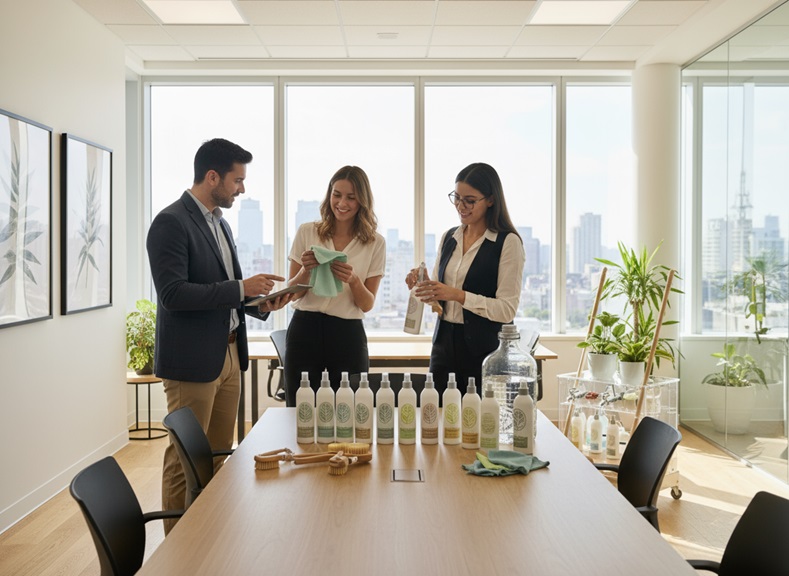
The professional cleaning industry has entered a period of rapid transformation. Sustainable practices, once optional, are now considered standard in many facilities. The demand for commercial green cleaning has risen sharply as businesses recognise that healthier environments, safer products, and efficient processes bring measurable advantages.
The transition to green cleaning is not just about compliance with environmental policies. It reflects a wider responsibility: protecting staff, safeguarding customers, reducing waste, and supporting sustainable operations without compromising the quality of cleaning results.
This guide provides a structured approach to ensure your organisation can make the transition effectively and sustainably, while maintaining the high standards required in professional environments.
Why Go Green?
The case for adopting commercial green cleaning practices is grounded in three major areas: environmental responsibility, human wellbeing, and business performance.
Environmental Responsibility
Traditional cleaning products often contain phosphates, chlorine, and volatile organic compounds (VOCs). These substances accumulate in waterways and harm aquatic life. Green-certified alternatives reduce or eliminate these components, lowering ecological damage.
Facilities using concentrated, biodegradable cleaning agents contribute to national and global sustainability goals. By switching to certified eco-products, businesses actively support a healthier planet.
Human Wellbeing
Chemical-heavy cleaning routines contribute to respiratory irritation, skin conditions, and allergy flare-ups. For staff working with products daily, these risks are magnified. For customers or building occupants, lingering chemical odours create an unpleasant and sometimes unsafe environment.
Adopting a transition to green cleaning ensures that staff and visitors are less exposed to irritants, providing cleaner air quality and a healthier space overall.
Business Performance
Sustainability is now a market differentiator. Customers and clients judge businesses by their environmental and social responsibility. A cleaning contractor advertising eco-friendly practices is more likely to win tenders, particularly in healthcare, hospitality, and corporate environments where sustainability reporting is required.
Green practices also reduce long-term costs. Concentrated formulas cut down on transport and packaging. Energy-efficient equipment extends lifespan and lowers power consumption. The result is a leaner operation that saves money while building a stronger brand image.
Step 1: Assess Your Current Cleaning Practices
The transition to green cleaning starts with a baseline audit. Without knowing what products, methods, and costs are already in place, there is no way to measure improvement.
Inventory
Create a complete product inventory. Record:
- Product name and brand.
- Main ingredients.
- Surfaces or areas where it is applied.
- Frequency of use.
- Average monthly or annual cost.
A spreadsheet or digital inventory management system works well here.
Usage Patterns
Evaluate where products are being overused or misused. Dilution ratios are often ignored, leading to waste. A professional assessment highlights areas where training will later be essential.
Cost Analysis
Calculate how much money is being spent on consumables, replacements, and equipment repairs caused by chemical damage. For example, a traditional high-alkaline degreaser may be cheap per litre, but if it erodes floor finishes or equipment seals, it increases maintenance costs significantly.
Problem Areas
Identify spaces where cleaning is most intensive. Restrooms, kitchens, healthcare facilities, and high-traffic flooring are typically priority zones. These areas will be the first test grounds during the implementation phase.
Step 2: Research and Identify Green Cleaning Products
Product research forms the backbone of a sustainable program. Not every ecologically labeled cleaner is suitable for commercial green cleaning. The aim is to select products that meet sustainability criteria without compromising professional results.
Certifications
Look for trustedecolabels:
- AustralianEcolabel – Confirms compliance with national standards for environmental performance.
- Green Seal – A globally recognised certification ensuring safety, health, and efficiency benchmarks.
Concentrated Products
Concentrates reduce packaging, storage, and transport requirements. For example, Mr. Bean 5L All-Purpose Cleaner offers versatility, efficiency, and sustainability in one professional-grade product.
Multi-Purpose Solutions
Using fewer, broader-spectrum cleaners simplifies inventory and training. Staff need fewer chemicals, which improves efficiency and reduces the risk of cross-contamination.
Specialist Products
Certain areas demand targeted cleaning. The Comet Foaming Cleaner & Sanitiser is ideal for restrooms and food-handling areas requiring both cleaning and disinfection in one step.
Equipment Options
Pairing products with efficient machinery ensures superior outcomes. Orbital scrubbers such as the Polystar Orbital Floor Scrubber deliver deep cleans while using less chemical and water, a hallmark of commercial green cleaning practices.
Step 3: Test and Implement Green Cleaning Solutions
Switching overnight is rarely effective. Pilot testing provides feedback and confidence before scaling up.
Pilot Testing
Introduce green alternatives in high-priority areas first, such as restrooms, food preparation zones, or high-traffic flooring. Compare results against traditional methods.
Staff Feedback
Cleaning staff are the frontline experts. Their feedback reveals whether new products clean as effectively, how easy they are to use, and whether there are any issues with storage or application.
Gradual Rollout
Roll out successful products site by site, or task by task. Phased implementation reduces disruption and ensures smoother training.
Anecdote
A café owner in Perth once struggled with recurring coffee stains on her tiled floors. Standard degreasers were effective but left strong odours that customers disliked. After adopting a certified green cleaner, stains were removed more easily, the odour disappeared, and customers even commented on the fresher atmosphere. This minor adjustment reinforced her reputation for quality and responsibility.
Stories like this illustrate how the transition to green cleaning brings tangible results in both cleanliness and customer satisfaction.
Step 4: Train Your Staff on Green Cleaning Practices
Products are only as effective as the people using them. A structured training program ensures that green products are used correctly and consistently.
Correct Usage
- Dilution ratios – Using more product than required does not improve cleaning. It wastes resources and can leave residue.
- Application tools – Match microfibre mops, scrubbers, and dispensers to product requirements. The Enduro Microfibre Mop Head supports streak-free cleaning when paired with eco-friendly solutions.
Disposal and Recycling
Train staff to recycle containers and dispose of residues responsibly. Provide accessible recycling stations to reinforce good practice.
Organisation
Using a Cleaning Hand Caddy keeps supplies accessible, preventing wasted time and unnecessary product use.
Best Practices
Include modules on:
- Spot cleaning to reduce full-room chemical use.
- Energy-efficient machine operation.
- Preventive maintenance to extend equipment lifespan.
Staff training transforms a transition to green cleaning from a policy change into a culture shift within the business.
Step 5: Monitor and Evaluate Your Green Cleaning Program
The transition requires ongoing measurement. Success is determined not only by environmental outcomes but also by operational improvements.
Tracking Systems
Develop a system to record:
- Product usage rates.
- Cleaning times per task.
- Equipment maintenance schedules.
Feedback Collection
Regularly gather input from cleaning staff and building occupants. If complaints about odours decrease, or if cleaning times improve, the impact of commercial green cleaning becomes clear.
Adjustments
Not all products will suit every environment. Be prepared to replace underperforming solutions. Continuous improvement ensures that sustainability is balanced with performance.
Tools for Monitoring
Equipment such as the Medusa Battery-Powered Sweeper simplifies daily cleaning, reduces reliance on chemicals, and lowers operating costs. Monitoring its performance compared with manual methods highlights measurable savings.
Key Takeaways
A structured transition to green cleaning offers multiple advantages:
- Lower ecological impact and reduced pollution.
- Safer spaces for staff and customers.
- Enhanced brand reputation.
- Improved operational efficiency and long-term cost savings.
The essential roadmap is simple:
- Audit existing practices.
- Select eco-certified products.
- Test in pilot areas.
- Train staff comprehensively.
- Monitor progress and refine as needed.
What Next?
The transition to green cleaning is achievable with the right tools, products, and guidance. Weskleen Supplies provides a comprehensive range of commercial green cleaning products and professional-grade equipment designed to meet sustainability standards while delivering results.
Our range includes:
- Carpet cleaning machines for deep fibre restoration.
- Dust control mops to trap fine particles efficiently.
- Floor scrubbers in Perth for commercial-scale maintenance.
For direct enquiries or tailored consultation, get in touch with our expert team.