


Blog
How to Train Staff to Use New Cleaning Chemicals Safely and Effectively

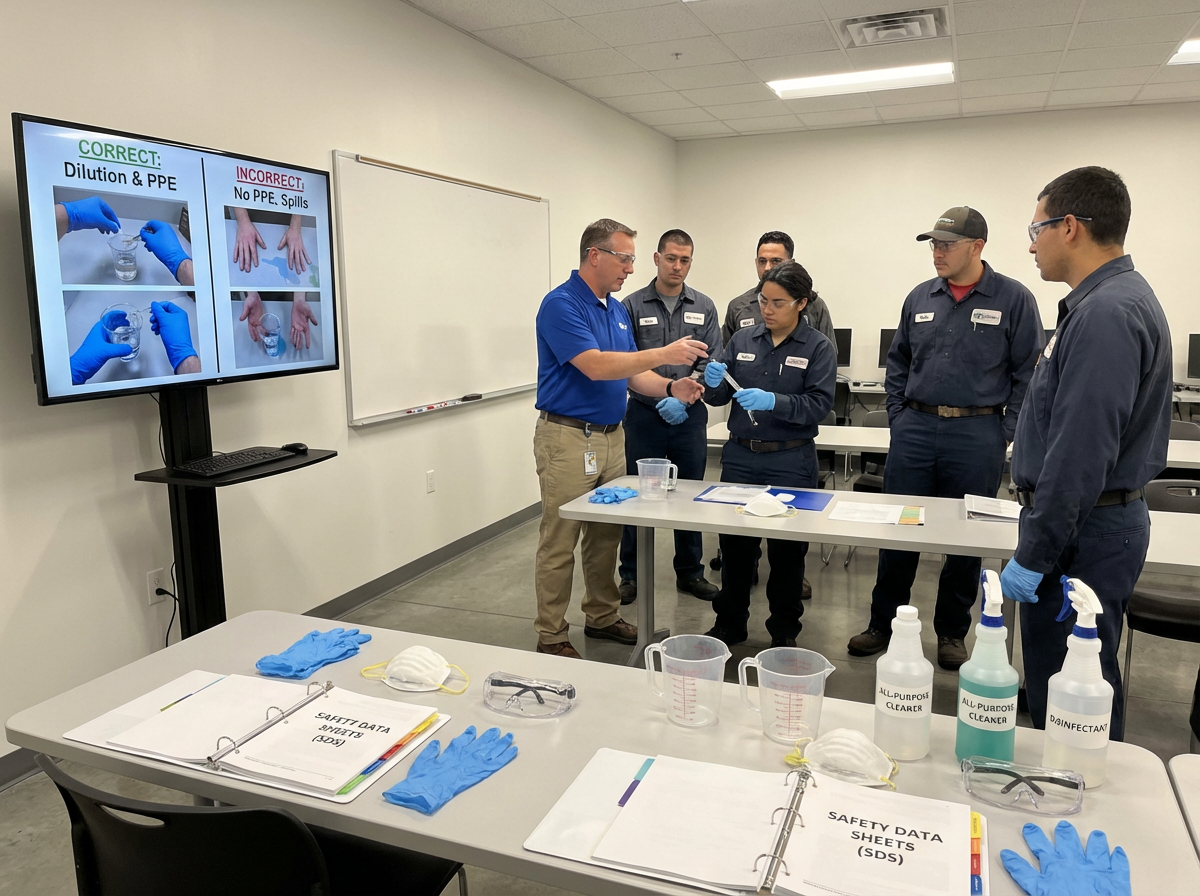
When a new cleaning chemical is introduced to a facility, it brings both potential benefits and risks. Without proper training, staff may misuse products, mix incompatible substances, or apply incorrect dilution ratios. These mistakes can lead to surface damage, operational delays, or even serious health incidents.
Cleaning chemical safety training ensures staff understand not only what to use, but how and why to use it safely. Proper instruction builds confidence, consistency, and compliance, while reducing accidents and costly errors.
Why Chemical Safety Training Often Fails
Many workplaces treat chemical safety training as a one-time event rather than an ongoing process. Simply providing a Safety Data Sheet and assuming employees will retain the information months later is rarely effective.
Relying solely on written documents creates barriers for multilingual teams or those with varying literacy levels. Technical language, chemical terminology, and complex PPE instructions can easily cause confusion.
Effective training combines clear instruction, visual demonstrations, and regular refreshers. Repetition and practical experience ensure staff develop genuine competence rather than short-term familiarity.
Understanding Chemical Hazards
Before training begins, employees must understand what makes cleaning chemicals hazardous.
- Corrosive products such as strong degreasers or acid-based cleaners can burn skin or eyes on contact.
- Toxic vapours released from some sanitisers can cause respiratory irritation in poorly ventilated areas.
- Chemical reactions between incompatible products can produce dangerous gases, such as chlorine when bleach is mixed with acidic cleaners.
Staff must learn that using the right product correctly is far safer and more effective than mixing or overusing chemicals in pursuit of “extra cleaning power”.
Building a Comprehensive Training Programme
A structured chemical safety programme should follow three stages: Preparation, Instruction, and Verification.
Preparation
Gather Safety Data Sheets (SDS) for every product used. Simplify the information into plain, actionable language. For example, replace “avoid dermal contact with concentrated solution” with “do not let undiluted product touch your skin”. Include clear visual guides showing dilution ratios, PPE, and correct handling.
Instruction
Provide hands-on demonstrations using actual products. Show staff how to measure, dilute, and apply chemicals such as Comet Foaming Cleaner & Sanitiser. Emphasise correct PPE use, surface compatibility, and proper disposal of residual chemicals.
Verification
Have each trainee repeat the process under supervision. Observation identifies misunderstandings early, preventing unsafe practices from becoming habits.
Demonstrating Proper Dilution Techniques
Incorrect dilution is one of the most common causes of chemical misuse. Excessive concentration can damage surfaces and increase health risks, while under-dilution leads to ineffective cleaning.
The “measure, pour, label” method ensures accuracy:
- Measure the concentrate precisely.
- Add it to the correct volume of water.
- Label containers clearly with product name and dilution ratio.
A cleaning hand caddy with marked measuring tools helps staff maintain accuracy. Using colour-coded spray bottles or buckets further reduces mix-ups across multiple products.
Selecting and Using PPE Correctly
Personal Protective Equipment (PPE) must match the risk level of each chemical. Incorrect use or poor fit compromises protection.
- A mild cleaner such as Mr. Bean 5L All-Purpose Cleaner typically requires gloves.
- A stronger sanitiser like Comet Foaming Cleaner & Sanitiser may require gloves, goggles, and a mask for enclosed spaces.
Train staff to inspect PPE for damage before use, ensure correct sizing, and replace disposable items after each session. Demonstrate fitting and removal procedures to avoid contamination.
Safe Storage of Cleaning Chemicals
Improper storage can create hazards before cleaning even begins. Training should include:
- Segregation: Keep acids and alkalis separate to prevent reactions if containers leak.
- Positioning: Store heavy or corrosive chemicals below shoulder height to reduce spill risk.
- Ventilation: Ensure storage areas have adequate airflow and stable temperatures.
Staff should know the correct storage location for each product and report any damaged or leaking containers immediately.
Responding to Chemical Emergencies
Every employee must know how to act during a chemical incident.
- Skin contact: Flush with water for at least 15 minutes and remove contaminated clothing.
- Eye contact: Use an eyewash station for 20 minutes, keeping eyelids open.
- Inhalation: Move to fresh air and seek assistance immediately.
Keep Safety Data Sheets accessible both physically and digitally near all storage areas. This ensures medical staff have the correct product information if treatment is required.
Practical Training and Simulated Scenarios
Reading safety instructions differs from applying them in real conditions. Conduct supervised practice sessions replicating typical tasks.
For example, have trainees clean a restroom using Comet Foaming Cleaner & Sanitiser and the Oates Ergo Extra-Long Toilet Brush. Evaluate PPE selection, dilution accuracy, and surface application techniques.
Controlled exercises help reinforce knowledge and reveal gaps before real-world work begins.
Overcoming Language and Literacy Barriers
Visual learning tools are invaluable for multilingual teams. Use photographs or icons to illustrate key steps. Short training videos in multiple languages provide easy reference.
Pair new employees with experienced mentors who can demonstrate procedures clearly. Encourage a culture where asking safety-related questions is seen as responsible, not inconvenient.
Refresher Training and Continuous Reinforcement
Safety training must be continuous. Conduct refresher sessions quarterly for high-risk chemicals and annually for lower-risk products.
Focus on common issues identified through observations or incident logs, such as incorrect dilution or missing PPE. Reintroduce procedures for products used seasonally to ensure staff remain confident and compliant.
Measuring and Maintaining Training Effectiveness
Training is successful only when it translates into safe, consistent behaviour. Evaluate outcomes through:
- Direct observation of cleaning practices.
- Incident tracking to identify recurring problems.
- Storage audits to ensure products remain organised and compliant.
Encourage staff to explain procedures during assessments to confirm understanding rather than memorisation.
Record Keeping and Compliance
Maintain detailed records of all chemical safety training. Each file should include:
- Dates and topics covered
- Products discussed
- Trainer and participant signatures
- Copies of reference materials used
Store Safety Data Sheets near chemical storage areas and within cleaning stations. Replace outdated SDS versions promptly when products or formulations change.
Integrating Training into Daily Operations
Embedding safety into everyday practice ensures long-term compliance. Position PPE, dilution tools, and quick-reference guides close to work areas.
For example, keeping gloves, measuring jugs, and products like Goof Off Adhesive Remover within reach prevents shortcuts and misuse. Encourage positive reinforcement—acknowledge staff who consistently follow safety procedures correctly.
Linking Chemical Use with Equipment Training
Chemical handling knowledge must align with proper equipment use.
- The Steamvac HP Auto 2 Carpet Steamer requires compatible detergents only.
- The Polystar Orbital Floor Scrubber demands correct product matching based on floor type and finish.
Training should cover dilution for machine applications, tank cleaning, and residue prevention to protect both equipment and results.
Promoting a Safety-First Workplace Culture
Training works best within a culture that values safety over convenience. Leadership must reinforce that proper chemical handling is non-negotiable, even when under time pressure.
Provide necessary equipment and encourage open reporting of near misses. When incidents occur, investigate root causes and implement system-level improvements rather than assigning blame.
Business Benefits of Chemical Safety Training
Strong chemical safety training reduces waste, prevents costly accidents, and safeguards staff health. It also improves cleaning quality and customer satisfaction.
Operations with structured training programmes report lower product consumption, fewer injuries, and longer equipment life. These outcomes protect profitability and strengthen a company’s professional reputation.For expert advice on safe chemical handling and professional-grade cleaning products, explore the full range of solutions from Weskleen Supplies.
If your facility requires tailored product guidance or assistance with compliance procedures, feel free to get in touch with the Weskleen team for expert support.