


Blog
Why Product Knowledge Matters: Empowering Your Cleaning Team

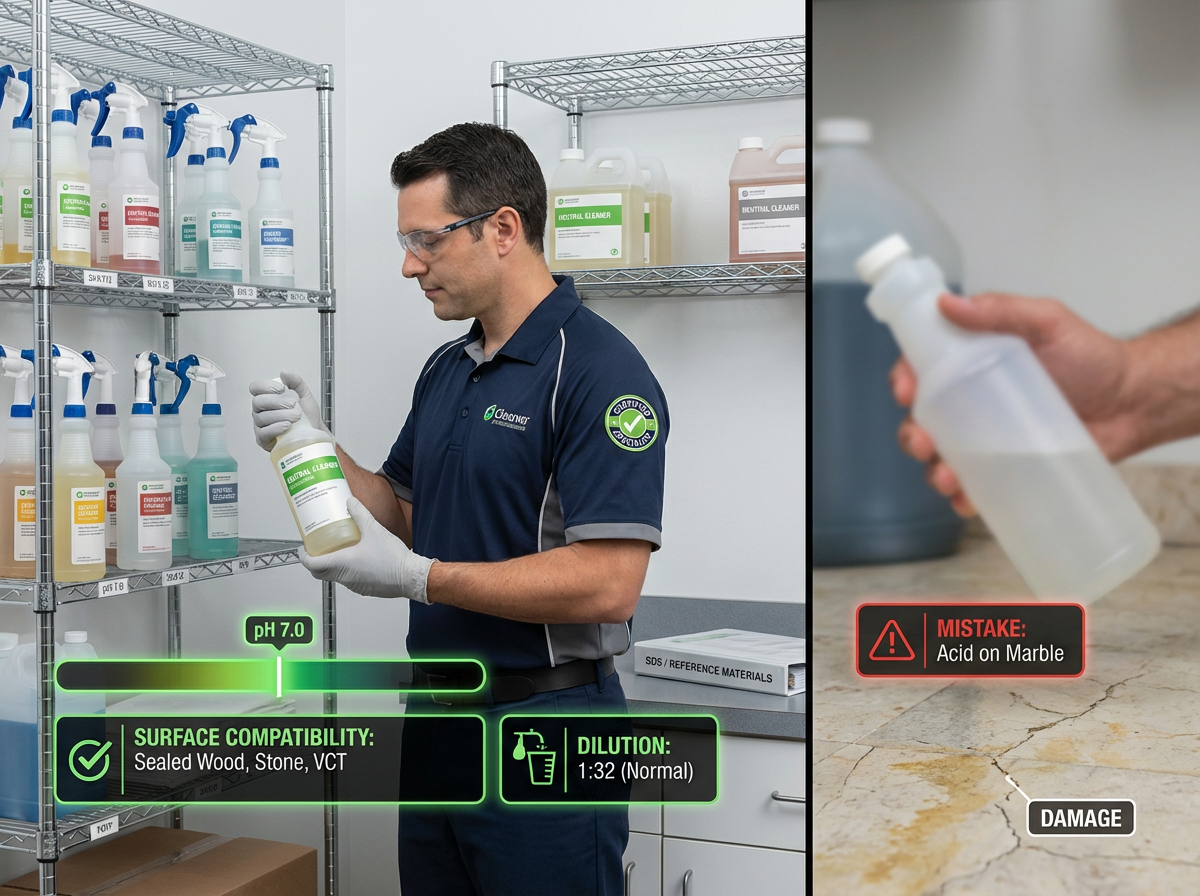
When a cleaner walks into a bathroom with the wrong chemical, they are not just wasting time – they are risking damage to surfaces, compromising hygiene standards, and potentially creating safety hazards. Commercial kitchens have experienced permanent surface etching after acidic toilet cleaners were mistakenly used on stainless steel benches, resulting in costly repairs. These incidents rarely stem from poor effort but from insufficient cleaning product knowledge.
Training cleaning teams on the products they use daily is not simply about compliance. It equips them to work safely, efficiently, and confidently. A cleaner who understands why a pH-neutral floor cleaner is preferable to a degreaser can make informed decisions when faced with unexpected challenges. They can identify when a surface needs a different approach, when to escalate a problem, and how to deliver professional results consistently.
The difference between an informed cleaning team and an untrained one is visible in every space they maintain. One delivers cleanliness and safety; the other leaves streaks, residue, and unseen bacteria. Weskleen Supplies supports facilities across Perth where this difference often determines whether cleaning contracts are renewed or terminated.
The Cost of Inadequate Training
A lack of product understanding frequently leads to errors with significant consequences. In one recorded case, bleach was mixed with an ammonia-based cleaner in a confined area, creating toxic chloramine gas and leading to hospitalisation. Such outcomes arise not from carelessness but from inadequate knowledge.
Everyday misuse has lasting effects. Cleaners unaware of proper dilution ratios often use excessive product quantities, assuming stronger means cleaner. This wastes chemicals, leaves residue that attracts dirt, and damages surfaces. A commercial-grade degreaser applied undiluted to vinyl flooring strips its protective layer, causing staining and requiring costly repairs.
Timber floors have been dulled by alkaline cleaners designed for concrete. Glass cleaners used on digital displays have damaged anti-glare coatings. These examples highlight the risks of insufficient product understanding.
The financial impact is also considerable. Incorrect dilution can cause a 5-litre container of Mr. Bean All-Purpose Cleaner to be consumed in a week instead of a month. Scaled across multiple staff, this waste represents thousands in annual losses.
The Science Behind Cleaning Products
Professional cleaning teams should grasp the basics of pH and its effect on cleaning performance. The pH scale ranges from 0 to 14, with 7 being neutral. Substances below 7 are acidic, while those above are alkaline.
- Acidic cleaners (pH 0–6) dissolve mineral deposits, rust, soap scum, and limescale. They are ideal for bathroom maintenance where hard water leaves residue. Acids work by breaking down mineral compounds that water cannot dissolve. However, when used on sensitive surfaces such as marble or grout, they can cause irreversible etching.
- Alkaline cleaners (pH 8–14) are effective against organic materials like grease, oil, and food residue. They are essential in kitchens but can damage metals such as aluminium if used incorrectly.
- Neutral cleaners (pH 6–8) are suitable for general maintenance. They clean effectively without damaging most surfaces and are ideal for daily use.
For example, a cleaner removing stains from polished concrete must know that the surface is sensitive to high-pH products. The correct choice is a neutral or mildly acidic cleaner, applied carefully and rinsed thoroughly to preserve the finish.
Surface-Specific Knowledge Prevents Damage
Each surface requires specific handling to avoid damage and achieve optimal results.
- Vinyl flooring should never be cleaned with high-pH stripping agents intended for vinyl composite tile.
- Natural stone such as marble or limestone must be cleaned using pH-neutral products to prevent dulling and etching.
- Stainless steel should be cleaned using neutral detergents or specialist stainless steel products, with wiping done in the direction of the grain.
- Glass and mirrors with coatings should be cleaned using ammonia-free cleaners or microfibre cloths.
- Timber floors require minimal moisture and pH-neutral cleaners before applying Long Life Timber Floor Polish to maintain their natural shine and protection.
Equipment Knowledge Enhances Chemical Performance
Understanding equipment operation is an essential component of cleaning product knowledge.
The Polystar Orbital Floor Scrubber uses multi-directional action for deep cleaning textured surfaces. Proper pad selection ensures efficiency and surface safety:
- Black pads for stripping
- Green pads for scrubbing
- Red pads for light cleaning
- White pads for polishing
Carpet extraction equipment such as the Steamvac HP Auto 2 Carpet Steamer requires understanding of temperature, dilution, and suction. Over-wetting carpets or using excess detergent can lead to residue build-up and premature soiling.
Even compact tools such as the Pacvac Superpro 700 Backpack Vacuum perform optimally only when properly maintained. Emptying dust bags and cleaning filters regularly extends equipment life and maintains suction strength.
Developing an Effective Training Framework
Long-term competence relies on structured, practical training rather than written instruction alone.
1. Demonstration and explanation
Staff should be shown how to read labels, interpret dilution ratios, and match products to surfaces. A ratio of “1:10” means one part chemical to ten parts water. Practical demonstrations using measuring tools help reinforce this.
Common cleaning allocations include:
- Acidic toilet cleaner for porcelain
- pH-neutral spray for benchtops
- Glass cleaner for mirrors (check coating compatibility)
- Disinfectant for high-touch points with adequate contact time
A disinfectant such as Comet Foaming Cleaner & Sanitiser requires a minimum of five minutes’ wet contact to work effectively. Wiping immediately after application renders the product ineffective.
2. Supervised practice
Hands-on observation allows managers to identify and correct errors early, preventing unsafe or inefficient habits from forming.
Providing Reference Tools for Daily Decision-Making
Practical resources support consistency and confidence in daily operations.
Recommended materials include:
- Product quick-reference cards listing applications and safety notes
- Surface-specific cleaning guides with visual examples
- Troubleshooting charts for issues such as streaks or sticky floors
- Safety information sheets covering emergency procedures and spill response
A Cleaning Hand Caddy is ideal for storing laminated reference cards and essential supplies, ensuring that guidance and products remain accessible at all times.
Safety Through Knowledge
Safe chemical use depends on understanding potential hazards. Under the Control of Substances Hazardous to Health (COSHH) regulations in the UK, exposure to hazardous substances must be controlled, but compliance requires comprehension.
Essential knowledge includes:
- Reading Safety Data Sheets (SDS) for hazard symbols and emergency actions
- Identifying hazard pictograms such as corrosive, toxic, or flammable
- Selecting appropriate PPE for each product
Neutral cleaners may require only gloves, whereas stronger degreasers demand eye and respiratory protection in ventilated environments.
Safe storage is equally critical. Acids and alkalis must be stored separately, and chlorine-based cleaners should never be near ammonia products. Facilities often implement colour-coded systems (red for acids, blue for alkalis, green for neutrals) to maintain safe segregation.
Measuring the Benefits of Better Training
Training outcomes are measurable and directly influence operational success:
- Lower chemical usage due to correct dilution
- Fewer cases of surface damage
- Improved hygiene results and reduced client complaints
- Reduced staff injury and illness rates
- Increased staff retention through improved confidence and competence
Continuous Learning as Standards Change
Cleaning technologies and chemical formulations evolve rapidly. Continuous education ensures safe, efficient practices remain up to date.
- Schedule refresher training every six to twelve months
- Provide instruction for any new product or equipment
- Encourage experienced staff to mentor new team members
- Keep up to date with Standards Australia and Safe Work Australia guidance
Regular reinforcement maintains consistent results and promotes a culture of safety and professionalism.
The Business Value of Knowledgeable Cleaning Teams
In a competitive cleaning industry, technical expertise distinguishes professional operations. Facility managers value teams who understand surfaces, product compatibility, and safe working methods.
Well-trained cleaning professionals reflect reliability and accountability. Their product knowledge enables them to identify additional service opportunities, such as timber floor maintenance with Long Life Timber Floor Polish or deep carpet extraction using the Steamvac HP Auto 2 Carpet Steamer.
Such capability improves outcomes, supports long-term client partnerships, and enhances the overall reputation of the cleaning operation.
Building a Foundation for Continuous Improvement
Identifying and addressing gaps in product understanding should be a structured process. Observation, knowledge assessments, and targeted training allow teams to develop progressively.
Visual training materials, regular follow-up, and consistent reinforcement of best practices transform cleaning teams into skilled professionals who maintain efficiency, safety, and quality.For more information on maintaining professional standards, explore the complete range of cleaning systems and supplies available through Weskleen Supplies or get in touch with the Weskleen team for tailored assistance.