


Blog
Commercial vs. Household Cleaners: What’s the Difference for Your Business?

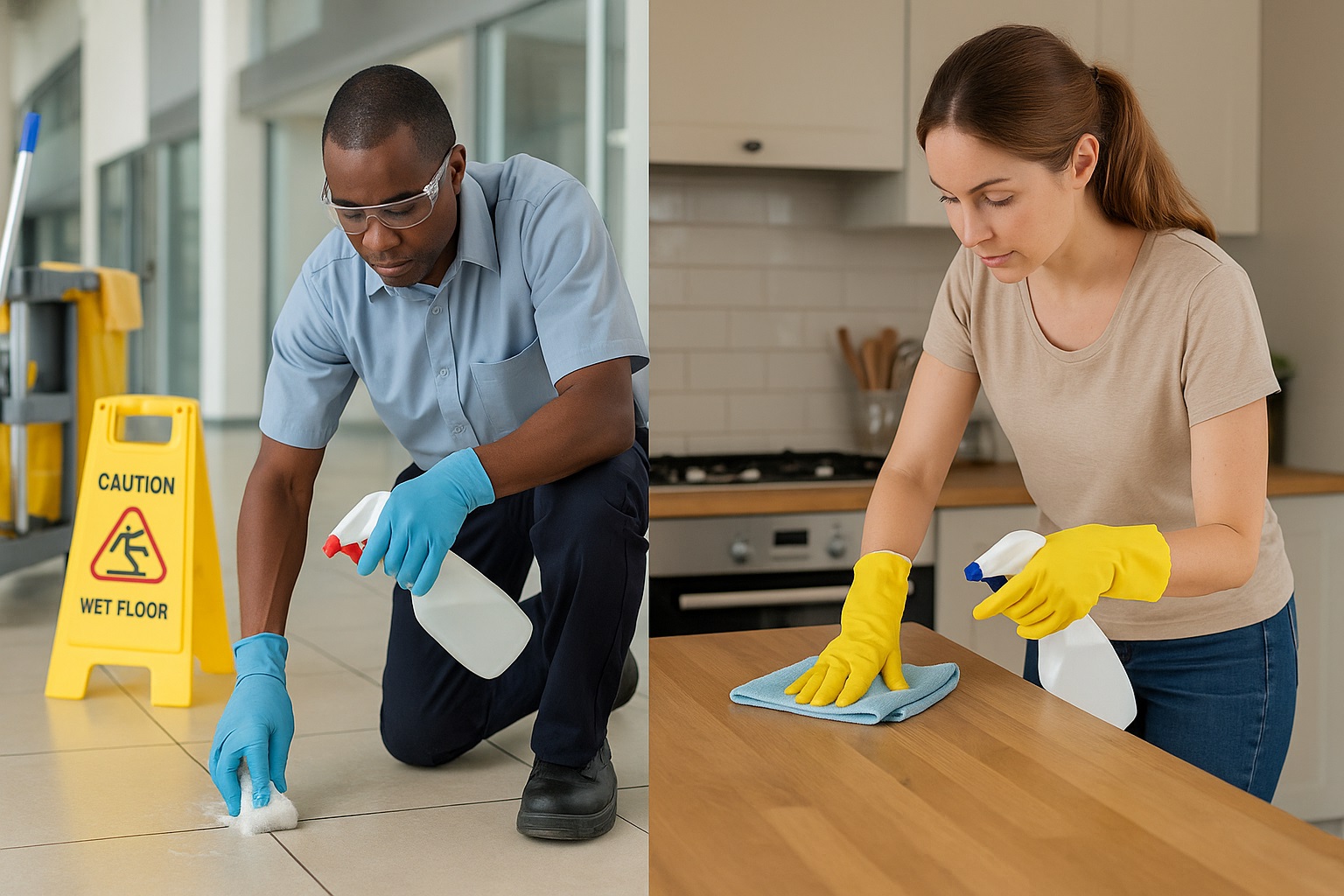
When it comes to cleaning, not all products are created equal. Many businesses, especially small start-ups or independent cafés, often begin with supermarket products because they’re familiar and cheap. They might work for a little while, but eventually, problems surface: streaky floors, stubborn odours, or worse, failed hygiene inspections. That’s the difference between household cleaning products and the commercial cleaners Perth businesses rely on.
Household products are designed for occasional use around the home, where spills and messes are lighter and less frequent. Commercial cleaners, on the other hand, are engineered for heavy-duty, daily use. They’re stronger, more efficient, and safer for professional environments when used correctly.
Understanding the difference is critical for business owners. It affects not only cleanliness but also compliance, reputation, and even staff efficiency.
What Are Household Cleaning Products?
The household cleaners are conveniently designed. They are ready to use; in many cases, they are pre-diluted and are designed to do quick jobs. The recipes are less aggressive, where fragrance and convenience are given more importance than power.
- The places where household cleaners perform efficiently include:
- Home kitchens have small spills that can easily be handled.
- In the residential areas, where not so much traffic, in the bathrooms.
- Light cleaning, polishing, and fast cleaning.
Limitations in business settings:
- Struggle with heavy grease or constant foot traffic.
- Not concentrated enough for large areas.
- May not meet commercial hygiene or safety standards.
It’s a bit like using a domestic toaster in a busy café kitchen. It works in the short term but isn’t built for the demands of daily business.
What Are Commercial Cleaners?
Commercial cleaners are professional-grade agents that are used on a regular and intensive basis. They are stronger, more concentrated and are usually designed to carry out particular jobs such as sanitising bathrooms, cleaning of kitchens or polishing of timber floors.
Businesses across Perth rely on commercial cleaners because they deliver consistent results under pressure. They cut through stubborn dirt, sanitise effectively, and protect surfaces from long-term wear.
Examples include:
- Multi-purpose solutions like Mr Bean 5L All-Purpose Cleaner are versatile enough for daily use in commercial environments.
- Sanitisers such as Comet Foaming Cleaner & Sanitiser, which disinfect high-risk areas.
- Equipment cleaners are designed to extend the life of machinery and floors.
The takeaway: commercial cleaners don’t just clean: they safeguard business operations.
The Key Differences That Matter to Businesses
1. Strength and Concentration
Household cleaners are pre-diluted, or in other words, weak. Commercial cleaners are available in concentrated forms that can be customised according to the work. This will make them stronger and cost-effective in the long term.
2. Efficiency
The use of commercial products in cleaning staff saves time in completing jobs. The less scrubbing is used, the fewer times it is repeated, and the longer-lasting the clean-up of surfaces. Time saved is money saved.
3. Safety and Compliance
Hygiene rules are very rigid in many industries, including hospitality, healthcare and childcare. Household products do not satisfy these standards quite often. Commercial solutions are compliance-based.
4. Durability of Equipment
Business floors, fixtures, and furniture are constantly worn. Commercial products are designed in such a way that they protect these investments, but household products can strip finishes or be damaged with misuse after some time.
When Household Products Are Enough
Not every situation calls for commercial-grade solutions. Household products are fine for:
- Quick cleans in low-traffic office spaces.
- Touch-ups in breakrooms or staff kitchens.
- Residential-style business settings, like small home offices.
For businesses that see minimal customer foot traffic, household products can play a minor role. But as operations grow, their limitations become clear.
When Commercial Cleaners Are Essential
For businesses serving the public or managing larger facilities, commercial cleaners are non-negotiable.
Examples include:
- Restaurants and cafés: Heavy grease in kitchens and strict food safety requirements demand stronger solutions.
- Offices: High-touch areas like desks, door handles, and lifts need proper disinfection.
- Healthcare and childcare: Compliance with hygiene standards requires proven sanitisers.
- Retail: Floors and customer areas must present a polished, professional appearance.
For these situations, relying on commercial cleaners Perth suppliers provide is the only way to maintain both hygiene and reputation.
Risks of Using Household Products in Business Settings
Relying on domestic products in professional environments carries risks that many businesses underestimate.
Potential issues include:
- Compliance failures: Supermarket sprays won’t always pass health inspections.
- Inefficiency: Staff spend longer scrubbing without achieving results.
- Damage: Mild household products may seem safe, but can erode finishes over time.
- Poor impressions: Customers notice streaky floors and lingering odours.
Anecdote: A small café in Perth used only supermarket cleaning sprays to cut costs. Their benches looked fine, but inspections flagged bacteria levels above safe standards. The café switched to a structured system using commercial sanitisers and immediately passed their next check.
Examples of Commercial-Grade Solutions
When businesses invest in commercial-grade, the difference is visible and measurable.
- Daily cleaning: Mr Bean All-Purpose Cleaner is ideal for general surfaces.
- High-hygiene areas: Comet Foaming Cleaner & Sanitiser keeps bathrooms and kitchens disinfected.
- Vacuuming: The Pacvac Superpro 700 Backpack Vacuum is built for commercial use, ergonomic and robust.
- Floor care: For large spaces, the Polystar Orbital Floor Scrubber provides deep cleaning and polishing power.
These are not luxury upgrades: they’re essential tools for professional results.
Relatable Analogy
Using household products in a business is like trying to run a delivery service with a small family car. It may handle a few runs, but it isn’t built for the workload. The strain shows quickly, and costs spiral when breakdowns occur. Commercial-grade tools are the delivery van: built for purpose, reliable under pressure, and ultimately more cost-effective.
Tips for Business Owners Choosing Between the Two
- Assess cleaning frequency. Daily heavy use calls for commercial products.
- Identify critical areas. Kitchens, bathrooms, and high-traffic floors require professional solutions.
- Think long term. Commercial cleaners may cost more upfront, but save money in labour and asset protection.
- Train staff. Ensure everyone understands where household products may suffice and where commercial solutions are essential.
- Seek advice. The team at WesKleen Supplies can help tailor recommendations for your business.
Conclusion
Household products serve their purpose in homes and light-use settings, but they cannot meet the demands of most businesses. Commercial cleaners Perth businesses depend on are stronger, safer, and ultimately more cost-effective. They keep spaces hygienic, protect assets, and maintain professional standards.
For businesses serious about growth and reputation, the choice is clear. Invest in commercial-grade solutions and pair them with staff training to ensure consistent results. Whether it’s an everyday cleaner like Mr Bean All-Purpose Cleaner, a sanitiser such as Comet Foaming Cleaner & Sanitiser, or equipment like the Pacvac Superpro 700 Backpack Vacuum, choosing commercial-grade is a decision that pays off every day.
For tailored advice on upgrading from household cleaning products to commercial-grade solutions, get in touch with WesKleen Supplies today.