


Blog
Polishing Natural Stone vs. Vinyl: Choosing the Right Pad for Your Polystar Machine

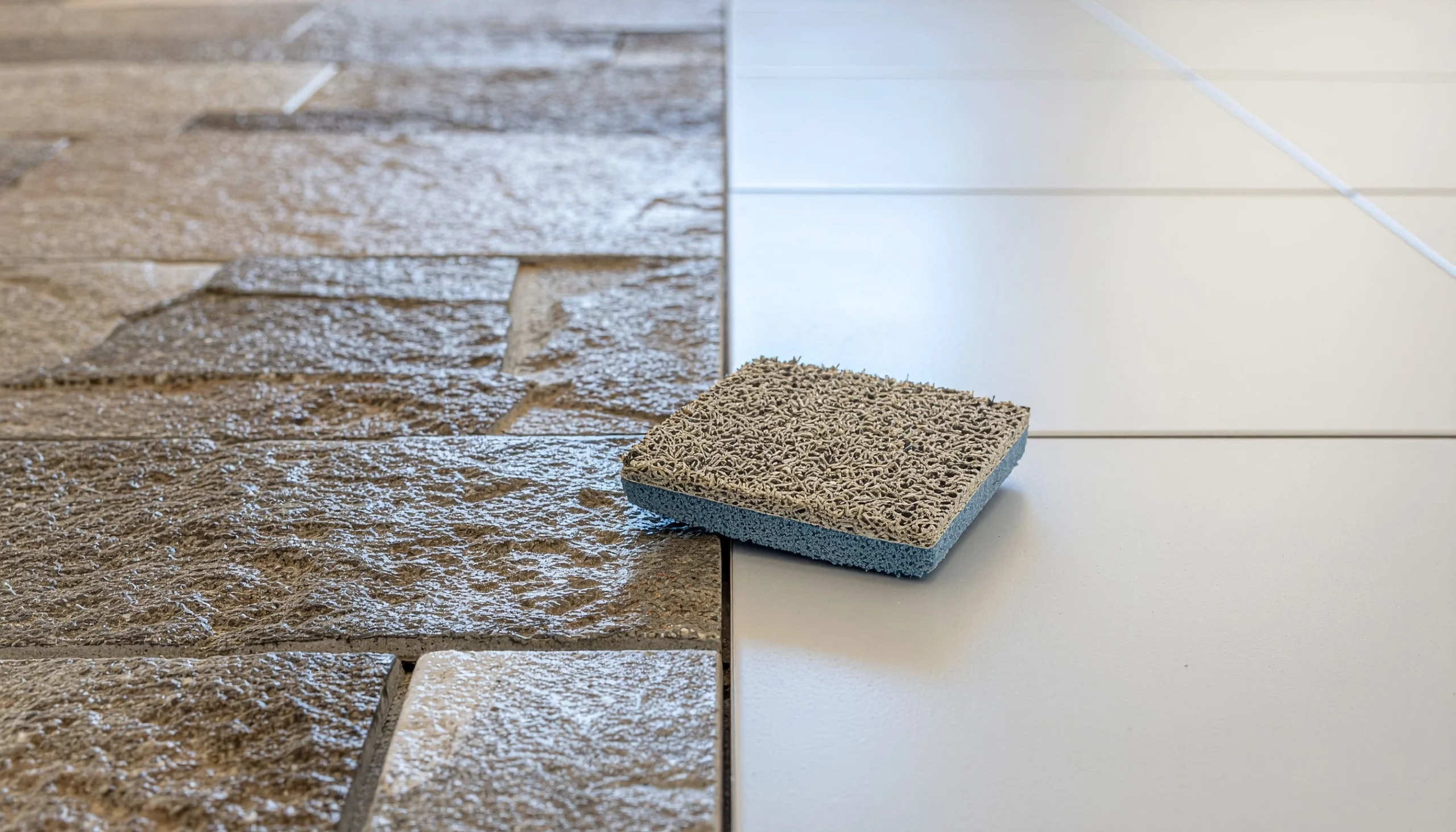
Natural stone and vinyl couldn’t be more different underfoot. One’s a dense, crystalline surface formed over millennia; the other’s a synthetic composite engineered for durability and ease of maintenance. Yet both end up in commercial spaces-hotel lobbies, retail floors, healthcare facilities-where they face the same daily assault of foot traffic, spills, and grime.
Orbital floor scrubbers handle both surfaces effectively, but only if you’re using the right pad. Get it wrong, and you’ll either scratch expensive marble or waste time buffing vinyl that never quite shines. The orbital floor scrubber delivers the mechanical action; the pad determines whether that action helps or harms.
Why Floor Scrubber Pads Matter More Than You Think
Walk into any commercial cleaning supply room, and you’ll find a stack of coloured pads that all look vaguely similar. Red, green, black, white, tan-each one represents a different level of abrasiveness, measured by the grit embedded in the synthetic fibres. This isn’t arbitrary colour-coding; it’s a standardised system that tells you exactly how aggressive each pad will be on your floor surface. Combined with quality squeegees and mops, you have complete floor care solutions.
Natural stone responds to polishing like metal responds to sanding. You start with a more aggressive pad to remove surface damage and scratches, then progressively move to finer pads that create a mirror-like finish by smoothing the microscopic surface texture. The crystalline structure of marble, granite, or travertine allows this process to work because you’re literally refining the stone’s surface at a microscopic level.
Vinyl flooring doesn’t work that way. It’s a composite material with a wear layer designed to resist abrasion, not to be polished into a glossy finish. Use too aggressive a pad, and you’ll wear through that protective layer prematurely. Use too light a pad, and you won’t remove the scuff marks and embedded dirt that make the floor look tired. The goal isn’t to polish vinyl-it’s to clean and restore the existing finish without damaging it.
Think of it like skincare. Natural stone needs exfoliation and buffing to reveal its best surface. Vinyl needs gentle cleaning that preserves the protective barrier already in place. The Polystar machine delivers the mechanical action; the pad determines whether that action helps or harms.
Understanding Pad Colours and Abrasiveness Levels
The industry-standard colour system for floor scrubber pads ranges from ultra-aggressive black to ultra-gentle white, with several gradations in between. Here’s how they break down:
Black pads are the most aggressive option, designed for heavy stripping and paint removal. You’d rarely use these on finished floors-they’re for removing old finishes completely or tackling industrial buildup. On natural stone, a black pad would scratch most surfaces. On vinyl, it would strip away the wear layer in minutes.
Brown and green pads sit in the medium-to-aggressive range. They’re useful for scrubbing heavily soiled floors or removing stubborn marks, but they’re not appropriate for regular maintenance on either natural stone or vinyl. These are your problem-solving pads-you bring them out when normal cleaning hasn’t worked.
Red and tan pads occupy the sweet spot for vinyl maintenance. They provide enough abrasion to remove scuff marks and surface dirt without damaging the wear layer. A tan pad paired with the right cleaning solution will restore vinyl’s appearance without shortening its lifespan. For natural stone, these pads might be used in the early stages of restoration, but never for regular maintenance.
White and beige pads are the gentlest options, designed for buffing and light cleaning. On vinyl, a white pad with a neutral cleaner maintains the surface between deeper cleanings. On polished natural stone, these pads are your daily maintenance tools-they remove light soil and restore shine without scratching the surface.
The colour system isn’t perfect-different manufacturers use slightly different formulations-but it’s consistent enough to guide your selection. When in doubt, start with a less aggressive pad and test a small area before committing to the full floor.
Polishing Natural Stone: The Multi-Stage Approach
Natural stone floors in commercial settings cost anywhere from $50 to $200 per square metre installed. That investment deserves maintenance that preserves the surface rather than slowly degrading it. The challenge is that stone shows wear differently than vinyl-it loses its polish, develops a hazy appearance, and eventually shows scratches that dull the entire surface.
Professional stone restoration involves diamond-embedded pads in progressively finer grits, starting at 100 or 200 grit and working up to 3,000 grit or higher. That’s beyond what most in-house cleaning teams need or can justify. But understanding the principle helps you maintain stone between professional restorations.
For routine maintenance of polished marble, granite, or travertine, you’ll want a white or ultra-fine beige pad paired with a pH-neutral cleaner. The Polystar’s orbital action provides enough mechanical energy to lift dirt without requiring aggressive abrasion. The pad should glide smoothly across the surface, removing soil without creating friction that generates heat or scratches.
Here’s what that looks like in practice: A hotel lobby with polished marble floors sees 2,000 people daily. The cleaning team runs the Polystar with a white pad and neutral cleaner every night, focusing on high-traffic lanes. This removes the day’s accumulation of dirt, body oils, and environmental grime before it can bond to the stone’s surface. Once weekly, they use a slightly more aggressive beige pad to address scuff marks near the entrance. Twice yearly, they bring in a stone restoration specialist for a full polish using diamond pads.
Limestone and travertine are softer than granite or marble, which means they scratch more easily but also polish more readily. The same white pad approach works, but you need to be even more careful about grit in your cleaning solution-a single grain of sand caught under the pad can create a scratch that requires professional repair.
Honed stone (with a matte finish rather than a glossy polish) can tolerate slightly more aggressive pads because you’re not trying to maintain a mirror shine. A beige or light tan pad works well for honed surfaces, providing enough scrubbing action to remove embedded dirt from the stone’s texture without damaging the finish.
The biggest mistake cleaning teams make with natural stone is using the same pad they use on vinyl. That red or tan pad that works perfectly on VCT will slowly etch and scratch marble, creating a dull, damaged surface that eventually requires expensive restoration. The cost difference between a white pad and a red pad is negligible; the restoration cost difference is thousands of dollars.
Maintaining Vinyl and Resilient Flooring: The Balance Between Cleaning and Preservation
Vinyl flooring-whether VCT (vinyl composition tile), LVT (luxury vinyl tile), or sheet vinyl-dominates commercial spaces because it’s durable, affordable, and relatively easy to maintain. But “easy to maintain” doesn’t mean “impossible to damage.” The wear layer that protects vinyl is typically only 0.3 to 0.7mm thick on commercial products. Aggressive scrubbing wears through that layer, exposing the softer material underneath and accelerating deterioration.
For routine scrubbing of vinyl floors, a red or tan pad paired with a neutral or slightly alkaline cleaner delivers the best results. The pad needs enough abrasion to remove scuff marks-those black streaks from rubber soles that plague retail and healthcare environments-without grinding away the wear layer. The Polystar’s orbital motion helps here because it distributes the abrasive action across multiple vectors rather than creating linear scratch patterns like a traditional rotary scrubber.
Think of a busy medical clinic with LVT flooring throughout the patient areas. The cleaning team runs the Polystar with a tan pad and a pH-neutral cleaner every evening after the last patient leaves. This removes the day’s foot traffic, occasional spills, and the inevitable scuff marks near the reception desk. The tan pad is aggressive enough to lift embedded dirt but gentle enough that the floor’s finish lasts three to five years before needing refinishing.
High-traffic areas like building entrances, corridors, and cafeterias need more frequent attention with slightly more aggressive pads. A red pad used once or twice weekly in these zones prevents the buildup of soil that makes the entire floor look dingy. The key is limiting this aggressive scrubbing to the areas that truly need it-running a red pad across the entire floor weekly will shorten its lifespan unnecessarily.
Waxed or finished vinyl requires a different approach. If your vinyl has a sacrificial finish (a wax or acrylic coating designed to be stripped and reapplied periodically), you can use more aggressive pads during stripping but should stick to white or beige pads for maintenance cleaning. The goal is to preserve the finish, not to constantly remove and reapply it. A white pad with a neutral cleaner maintains the finish between strip-and-wax cycles, which should only be necessary once or twice yearly in most commercial settings.
The environmental impact matters too. Aggressive pads require more frequent replacement, generating more waste. They also typically require stronger cleaning solutions to prevent the pad from simply redistributing dirt rather than removing it. A properly matched pad and cleaner combination-like a tan pad with a quality neutral cleaner-extends pad life, reduces chemical usage, and delivers better results.
Practical Pad Selection Guide for Your Polystar Machine
You’re standing in the supply room with a Polystar machine and a floor that needs attention. Here’s how to choose the right pad without overthinking it:
POLISHED MARBLE/GRANITE/TRAVERTINE:
- Daily maintenance: White pad + pH-neutral stone cleaner
- Weekly deep clean: Beige pad + pH-neutral stone cleaner
- Problem areas (scuffs, stains): Consult a stone specialist before using anything more aggressive
HONED STONE:
- Daily maintenance: Beige pad + pH-neutral stone cleaner
- Weekly deep clean: Tan pad + pH-neutral stone cleaner
- Avoid aggressive pads that can alter the surface texture
VINYL FLOORING (VCT/LVT):
- Daily maintenance: Tan pad + neutral cleaner
- Weekly deep clean: Red pad + neutral or slightly alkaline cleaner
- High-traffic zones: Red pad as needed, but limit to problem areas
- Daily preparation: Dust control mops remove loose soil before wet cleaning
SHEET VINYL/LUXURY VINYL:
- Daily maintenance: Tan or beige pad + neutral cleaner
- Weekly deep clean: Tan pad + neutral cleaner
- Use less aggressive pads than standard VCT to preserve the wear layer
WAXED/FINISHED VINYL:
- Maintenance between refinishing: White pad + neutral cleaner
- Pre-refinishing scrub: Red or brown pad + appropriate stripper
- Never use aggressive pads on the finish you’re trying to preserve
The pattern is clear: natural stone demands gentler pads than you’d instinctively reach for, while vinyl can tolerate more aggression, but that doesn’t mean it benefits from it. When in doubt, test a small, inconspicuous area first. A 10-minute test can prevent hours of regret.
Chemical Compatibility and Pad Performance
The pad is only half the equation. Pair a tan pad with a highly alkaline stripper, and you’ll get different results than pairing that same pad with a neutral cleaner. The chemical solution affects how the pad interacts with the floor surface, either enhancing cleaning power or creating problems.
For natural stone, pH-neutral cleaners are non-negotiable. Acidic cleaners etch the surface, creating dull spots that require professional restoration. Alkaline cleaners can damage certain stones and often leave residue that dulls the finish. A neutral cleaner (pH 7-9) paired with a white or beige pad provides enough cleaning power for daily maintenance without risking chemical damage. Weskleen Supplies offers pH-neutral options specifically formulated for stone surfaces.
For vinyl flooring, you have more flexibility. Neutral cleaners work well for daily maintenance, providing enough cleaning power without leaving residue or damaging the wear layer. Slightly alkaline cleaners (pH 9-11) can be used with red pads for deeper cleaning or problem areas, but they should be thoroughly rinsed to prevent buildup. Avoid highly alkaline strippers unless you’re intentionally removing finish-they’re too aggressive for routine cleaning.
The Polystar’s solution tank capacity means you’re not constantly refilling, but that also means you need to get the dilution ratio right from the start. Too concentrated, and you’ll leave residue that attracts dirt. Too diluted, and you’re just pushing dirty water around. Follow the manufacturer’s dilution recommendations, then adjust based on your results. If you’re seeing residue or the floor feels sticky after cleaning, you’re probably using too much chemical.
Real-World Scenario: The Café Floor That Taught Us Everything
A café owner contacted us after spending thousands on new LVT flooring that looked worn after just six months. The high-gloss finish that had sold him on the product was gone, replaced by a dull, scratched appearance concentrated in the service area behind the counter. He assumed the flooring was defective and wanted to file a warranty claim.
One look at his cleaning setup told the story. His team was using a black pad-designed for heavy stripping-with an alkaline degreaser on the LVT every single night. They’d been trained on VCT in a previous job and assumed all vinyl was the same. Six months of aggressive nightly scrubbing had worn through the wear layer in the highest-traffic areas, exposing the softer backing material that couldn’t hold up to continued abuse.
We switched them to a tan pad with a neutral cleaner for nightly cleaning and a red pad with the same cleaner for weekly deep cleaning. The undamaged areas of the floor responded immediately-the finish returned, scuff marks came up easily, and the floor stopped looking progressively worse each week. The damaged areas behind the counter required replacement, but the rest of the floor has now lasted three years and counting with no additional wear.
That’s a $15,000 lesson in pad selection. The black pads cost $8 each; the tan pads cost $7 each. The difference wasn’t the price-it was understanding what the floor needed.
Extending Pad Life and Maintaining Performance
Floor scrubber pads aren’t particularly expensive-typically $5 to $15 each depending on size and quality-but they’re not disposable either. A pad that’s properly maintained and used for the right application should last through multiple cleaning sessions before needing replacement.
Rinse pads thoroughly after each use. The dirt and chemical residue trapped in the pad’s fibres will harden if left to dry, reducing the pad’s effectiveness and potentially scratching floors on the next use. A quick rinse under running water takes 30 seconds and extends pad life significantly. For efficient cleaning workflows, pair orbital scrubbers with quality mop buckets for solution preparation.
Rotate pads based on the surface you’re cleaning. Mark pads designated for natural stone and never use them on vinyl. Cross-contamination is a real issue-grit picked up from vinyl can scratch stone; aggressive cleaning chemicals absorbed by a pad used on vinyl can damage stone if the pad is later used there.
Replace pads when they lose effectiveness, not on a predetermined schedule. A pad that’s no longer removing scuff marks or that’s leaving visible scratches is past its useful life. Trying to squeeze extra sessions out of a worn pad usually means you’ll need to re-clean the floor, wasting more in labour than you saved on the pad.
Store pads properly to prevent contamination and damage. Hanging them allows air circulation and prevents the growth of bacteria and mould that can develop in damp synthetic fibres. Keep them away from harsh chemicals that might degrade the pad material or leave residue that transfers to floors.
The Polystar’s pad attachment system makes changing pads quick and tool-free, which means there’s no excuse for using the wrong pad because changing it would be inconvenient. Keep a selection of appropriate pads on hand-white and beige for stone, tan and red for vinyl-and match the pad to the task rather than using whatever’s already attached to the machine.
When to Call for Professional Help
Some floor issues can’t be solved with better pad selection. If your natural stone has lost its polish completely, shows visible scratches, or has etching from acidic spills, you need professional stone restoration with diamond pads and specialised equipment. The Polystar with appropriate pads can maintain a polished surface, but it can’t restore a damaged one.
Similarly, if your vinyl flooring has worn through the wear layer, no amount of careful pad selection will restore its appearance. You’re looking at refinishing (if it’s VCT) or replacement (if it’s LVT or sheet vinyl without a wear layer thick enough to sand and refinish).
The key is catching problems early. Regular maintenance with the right pads prevents the deterioration that leads to expensive restoration or replacement. A white pad used consistently on marble prevents the gradual dulling that eventually requires diamond polishing. A tan pad used appropriately on vinyl prevents the aggressive scrubbing that wears through the protective layer.
If you’re unsure whether your floor needs professional attention or just better maintenance, contact us for an assessment. Sometimes the answer is as simple as switching from a red pad to a tan pad; other times, the floor needs intervention beyond what routine maintenance can provide. For reaching difficult areas, extension poles enable comprehensive facility cleaning.
Making the Right Choice for Long-Term Floor Performance
The Polystar Orbital Floor Scrubber is a versatile machine capable of maintaining virtually any hard floor surface in a commercial environment. But versatility requires judgment-the machine will do whatever you tell it to do, whether that’s gently maintaining polished marble or aggressively stripping vinyl. The pad you choose determines which of those outcomes you get. Weskleen Supplies provides the expertise and equipment needed for informed decisions.
Natural stone demands gentler pads than most cleaning teams instinctively reach for. White and beige pads paired with pH-neutral cleaners preserve the surface while removing soil. Vinyl can tolerate more aggression, but that doesn’t mean it benefits from it-tan and red pads provide enough scrubbing power for most applications without prematurely wearing the protective layer.
The cost difference between pad types is negligible. The performance difference is dramatic. The long-term impact on your floor’s appearance and lifespan is worth far more than the few dollars you might save by using whatever pad is already attached to the machine.
Stock your supply room with appropriate pads for each surface type in your facility. Train your cleaning team to match pads to surfaces, not just to grab whatever’s convenient. Test new cleaning protocols on small areas before committing to full floors. These simple practices prevent the expensive mistakes that turn routine maintenance into emergency restoration.
Your floors are likely the single largest visible surface in your facility. They set the tone for cleanliness, professionalism, and attention to detail. The right pad on your Polystar machine-matched to the specific surface you’re maintaining-ensures those floors continue to make the right impression year after year.