


Blog
Floor Scrubber User Review: What Matters Most

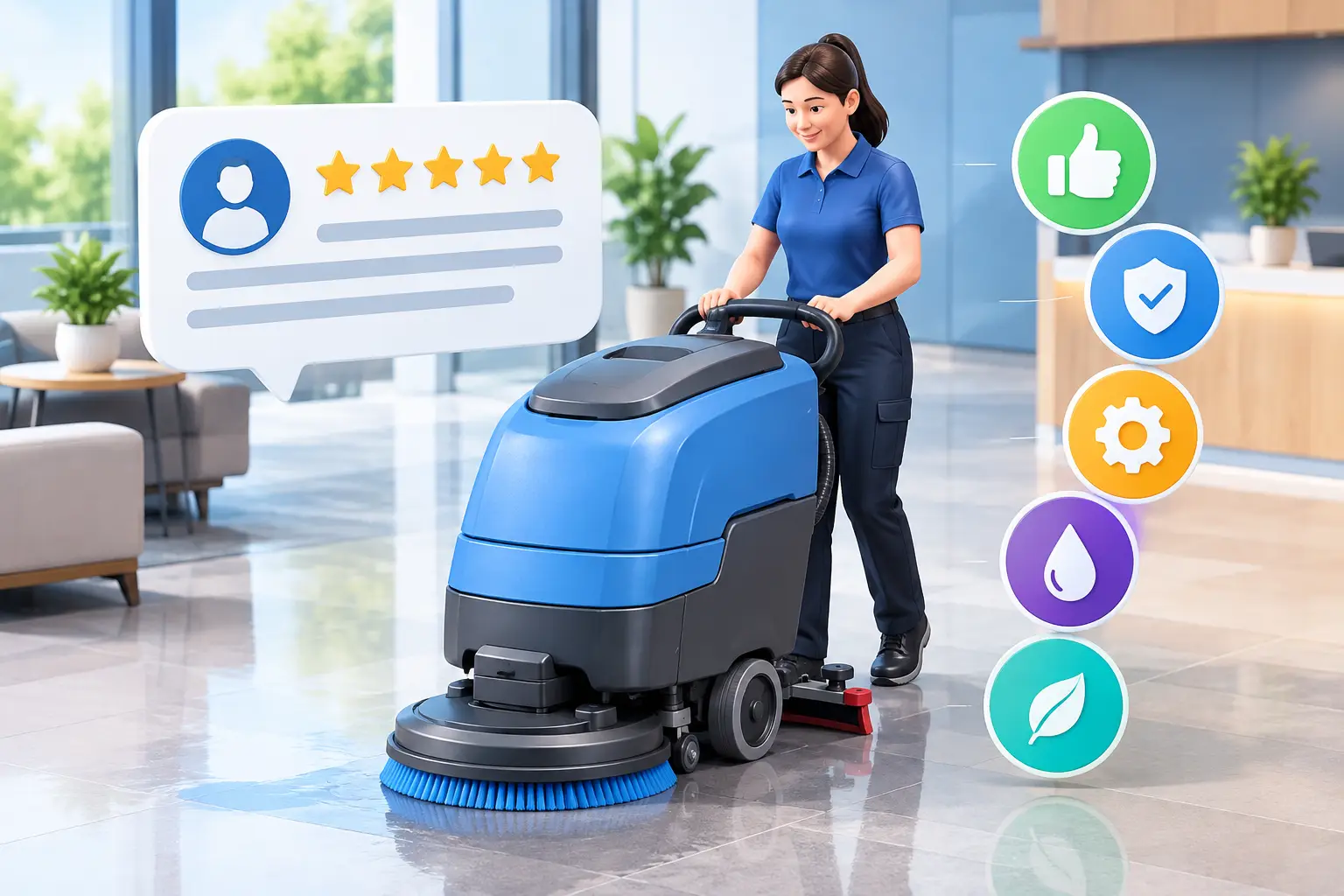
A worthwhile floor scrubber user review rarely comes down to whether a machine leaves a floor looking clean on day one. For Perth cleaners, facility managers and practical household buyers, the real test is whether it saves time across a busy week, handles the site’s floor type, and remains easy to operate and maintain. A scrubber that looks impressive in a showroom can quickly become an expensive inconvenience if it is too large for the job, difficult to refill or unable to reach the areas that need attention.
What Users Value in a Floor Scrubber
The strongest feedback from regular users usually centres on productivity. Compared with a mop and bucket, a properly matched floor scrubber applies solution, agitates the surface and recovers dirty water in one pass. That means fewer wet-floor risks, less time spent changing water and a more consistent finish across larger areas.
This is particularly valuable in offices, medical practices, hospitality venues, schools, workshops and retail spaces, where clean floors need to be maintained without closing off the area for long. Users often notice that floors dry faster after machine scrubbing because the recovery system removes most of the dirty water. In practical terms, that can mean less disruption around entrances, corridors and service counters.
For home users, the appeal is slightly different. A compact scrubber can make hard-floor maintenance far less physical, especially in larger homes, garages, covered outdoor areas or rental properties between tenants. However, it is not automatically the best choice for every household. Small rooms with plenty of furniture may still be quicker to clean with a quality mop and suitable floor chemical.
Floor Scrubber User Review: The Details That Change the Verdict
When reading a floor scrubber user review, look beyond broad statements such as “works well” or “great machine”. The useful details are usually about the floor, the job size and how often the scrubber is used. A machine that earns high praise in a smooth, open supermarket aisle may not suit a café with tight tables, uneven thresholds and greasy kitchen-adjacent tiles.
Cleaning performance depends on the surface
Most users are pleased with the improvement in appearance on sealed concrete, vinyl, ceramic tile, epoxy and other hard commercial surfaces. The brush or pad breaks up soil more evenly than manual mopping, while the squeegee and vacuum pick up the slurry rather than spreading it around.
But scrubbing power is only one part of the result. Pad selection, brush type and chemical choice matter just as much. A red pad may be suitable for regular maintenance cleaning, while a more aggressive pad may be needed for periodic deep cleaning or restoration work. Use too much chemical, and the machine may leave residue or produce excess foam. Use the wrong chemical on a delicate surface, and you can dull the finish or shorten the life of the floor.
Users also point out that a scrubber will not correct every problem. Deep scratches, failed coatings, heavy grout staining and ingrained grease may need specialised treatment before routine scrubbing can keep the surface looking its best.
Machine size is a major trade-off
Walk-behind scrubbers are a popular choice for small to medium commercial sites because they offer a strong balance of cleaning width, manoeuvrability and cost. They are generally easier to store than ride-on models and can work well in offices, shops, gyms, childcare centres and common areas.
Ride-on scrubbers make more sense where there is substantial open floor space to cover repeatedly, such as warehouses, shopping centres, large retail floors or distribution facilities. Users value the speed and reduced operator fatigue, but they also mention the larger upfront investment, storage requirements and need for proper operator training.
Compact scrubbers can be the right answer for narrow aisles, washrooms, smaller cafés and residential use. Their limitation is capacity. Smaller solution and recovery tanks mean more refill and emptying stops, which can reduce the advantage on a large site. The best machine is not the biggest one. It is the one that can complete the required area efficiently without creating access or storage problems.
Battery life affects the working day
Cordless battery scrubbers are widely appreciated because they remove the trip hazard and inconvenience of trailing leads. For sites with frequent cleaning needs, users often favour battery-powered units that can cover a planned run without stopping halfway through.
The catch is that battery runtime needs to match the actual task, not just the advertised maximum. Floor condition, brush pressure, water use, gradients and battery age all influence operating time. If a machine is expected to clean several hundred square metres during one shift, allow a sensible buffer rather than choosing a model that only just meets the calculation.
Charging arrangements deserve the same attention. A secure, ventilated storage point and a clear charging routine help avoid flat batteries when the next clean is due. For some smaller jobs, a corded machine can still be a sensible, lower-cost option where power points are accessible and cable management is safe.
Ease of use matters more than extra features
A floor scrubber only saves labour if staff are comfortable using it correctly. Reviews often favour machines with straightforward controls, visible water levels, easy squeegee access and tanks that can be emptied without awkward lifting. These features sound basic, but they directly affect whether daily cleaning is completed properly.
Operators should be able to fill the solution tank, fit the correct pad or brush, lower the scrub deck, make consistent passes and empty the recovery tank without guessing. If several people will use the machine, simple controls are usually more valuable than a long list of settings that nobody uses.
Weight and manoeuvrability are also worth considering. A heavier scrubber may feel stable and deliver more pressure on open floors, yet be frustrating around doorways or tight corners. Before buying, measure the narrowest access point, check ramps and thresholds, and think about where the machine will be parked between shifts.
The Running Costs Users Sometimes Miss
The purchase price is only part of the cost. Consumables and maintenance have a direct effect on long-term value. Pads, brushes, squeegee blades, batteries, cleaning chemicals and replacement parts all need to be factored into the decision.
Experienced users tend to get better results from a simple care routine. Empty and rinse the recovery tank after each use, clean debris from the squeegee, rinse pads or brushes where appropriate, and leave tanks open to dry. This helps prevent odours, poor water recovery and avoidable wear. A dirty recovery system is one of the most common reasons a scrubber starts leaving streaks or water trails.
Training also saves money. Running the brush too aggressively, using unsuitable chemicals or turning sharply with the squeegee down can wear parts faster and leave a poorer finish. A few minutes spent showing operators the right procedure can prevent a great deal of wasted product and downtime.
Questions to Ask Before You Buy
Instead of choosing solely by tank capacity or price, start with the cleaning task. How many square metres need to be cleaned? Is the floor open or broken up by furniture, displays and doorways? What surface are you maintaining, and is the soil mostly dust, tracked-in dirt, food residue, grease or workshop grime?
Then consider the working routine. If cleaning happens during business hours, low noise, quick drying and manoeuvrability may be priorities. If the work is done after hours on a large, open floor, wider cleaning paths and longer battery runtime may deliver better value. For occasional intensive cleaning, hiring or arranging periodic machine use may be more sensible than owning a large unit.
It is also wise to confirm local support for parts, pads, chemicals and practical advice. A floor scrubber is a working asset, not a set-and-forget purchase. Access to the right consumables makes it easier to keep performance consistent rather than relying on improvised substitutes.
Choosing With Confidence
For many commercial sites, the best user feedback comes from machines that are dependable rather than overcomplicated. They remove dirty water effectively, fit through the necessary access points, have enough runtime for the job and are easy for staff to maintain. That combination is what turns a floor scrubber from a costly piece of equipment into a genuine time-saver.
If you are comparing options, bring your floor type, approximate area and cleaning schedule to the conversation. The team at WesKleen Supplies can help match the machine, pads and chemicals to the work at hand, so your cleaning routine stays practical, affordable and ready for the next shift.