


Blog
A Practical Warehouse Cleaning Example for Perth

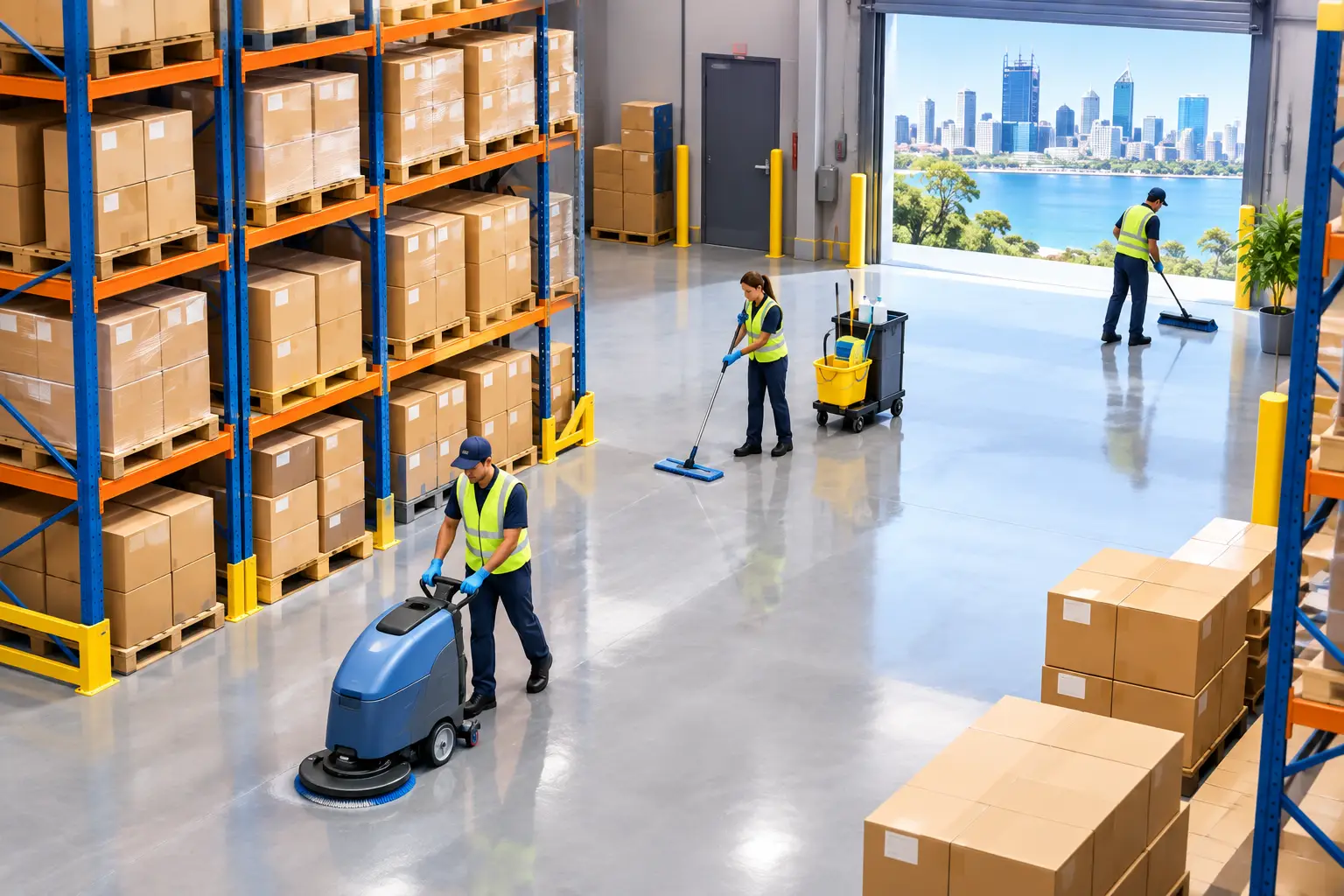
A forklift can carry fine dust from the loading dock across a warehouse floor in a single shift. Add pallet fragments, stretch-wrap offcuts, leaking cartons and boot traffic, and a quick sweep at knock-off is no longer enough. This warehouse cleaning example shows how a practical routine can protect staff, improve presentation and keep day-to-day operations moving without wasting labour or product.
The right approach depends on your stock, traffic levels, floor finish and safety requirements. A dry-goods warehouse has different risks from a food, chemical or cold-storage facility. Still, every site benefits from a clear plan that assigns tasks, uses suitable equipment and deals with spills before they become a slip hazard or a bigger clean-up job.
Start with zones, not one big cleaning task
Warehouses are easier to maintain when they are split into zones with their own cleaning frequency. Treating the whole building as one job often means visible areas receive attention while hard-to-reach dust, amenities and loading zones fall behind.
A typical warehouse can be divided into receiving and dispatch, storage aisles, picking and packing stations, offices and amenities, external entry points, and waste or chemical storage areas. Walk the site at the beginning and end of a shift to identify where dirt enters, where it gathers and where staff or visitors are most likely to notice it.
For example, a loading dock may need several spot cleans each day because tyres, rainwater and packaging debris come through constantly. High-bay racking may only need a scheduled inspection and dust removal every month or quarter, depending on stock movement and ventilation. The key is to match the task to the risk rather than applying the same routine everywhere.
Warehouse cleaning example: a working weekly plan
Consider a Perth distribution warehouse with concrete floors, pallet racking, two loading docks, a packing bench, staff amenities and a small office. It runs Monday to Friday, with forklifts operating throughout the day. The cleaning plan below is realistic for an in-house team or a commercial cleaner working around operations.
Every shift: keep traffic areas safe
Before work begins, the cleaner or designated team member checks entryways, dock doors, walkways and forklift lanes for loose wrap, timber splinters, damaged pallets, leaks and rubbish. Remove debris by sweeping or vacuuming, then use a wet floor sign whenever mopping or machine scrubbing is required.
Packing benches should be cleared of cardboard dust, tape backing and product residue at the end of each shift. Wipe frequently touched surfaces such as scanner cradles, shared keyboards, door handles and lunchroom tables with a suitable cleaner or disinfectant where hygiene procedures call for it.
Amenities need a daily clean, not just a restock. Clean toilets, basins, taps, mirrors and floors, then replenish toilet paper, hand towels, soap and bin liners. Poorly maintained washrooms are one of the fastest ways for an otherwise organised workplace to feel neglected.
Two to three times a week: clean the working floor
For most concrete warehouse floors, dry soil removal comes first. Sweep large debris with an industrial broom, or use a commercial vacuum where dust control matters. Mopping a dusty floor simply creates dirty slurry, spreads grime and uses more chemical than necessary.
Follow with a scrubber dryer or a mop-and-bucket system suited to the size of the site. A machine is generally the better choice for broad, high-traffic areas because it applies solution, agitates the surface and recovers dirty water in one pass. For smaller warehouses, corners and narrow aisles, a quality flat mop system and neutral floor cleaner can be more economical.
Use the chemical dilution recommended for the product and soil level. Stronger is not automatically better. Overdosing can leave a sticky film that attracts more dirt, creates slip issues or interferes with floor coatings. If tyre marks, oil or greasy residue persist, use a degreaser that is compatible with the floor and follow the product directions carefully.
Weekly: deal with build-up before it becomes a problem
A weekly clean should reach beyond the main travel paths. Move light mobile equipment where safe, clean beneath packing benches, wipe pallet-jack handles and remove rubbish from behind bins, printers and workstations. Check emergency exits and fire equipment access points so they remain clear and visible.
Inspect floor edges, dock plates and corners for grime that standard cleaning misses. These areas can become slippery after rain, particularly near roller doors. A targeted scrub with the right brush, pad and cleaner is often more effective than repeatedly going over the whole floor.
Waste areas also deserve attention. Clean and deodorise bins as required, replace liners before they split, and remove cardboard build-up that may attract pests or create a fire risk. Keep recycling streams clearly separated so the area stays workable for staff and collection contractors.
Monthly and quarterly: clean above floor level
Dust does not stay on the floor. It settles on racking beams, ledges, light fittings, air vents, safety barriers and the tops of stored cartons. If it is left there, forklift movement and airflow can return it to stock and work areas.
Schedule high-level cleaning during quieter periods and use trained staff or a specialist contractor where access equipment is needed. Never climb racking to clean it. Inspect for damaged stock, leaks or pest activity while the area is accessible, then record any maintenance issues for follow-up.
This is also a good time to assess the condition of floor pads, squeegees, mop heads, vacuum filters and machine batteries. Worn consumables make cleaning slower and can leave poorer results even when the operator is doing everything correctly.
Choose products and equipment for the job
Buying the cheapest chemical or mop can be a false economy in a warehouse. The best setup is one that removes the soil present, suits the surface and helps staff complete the task consistently.
For daily dirt and general marks, a neutral floor cleaner is often appropriate for sealed concrete, vinyl and many coated surfaces. Use a heavier-duty degreaser only where grease, oil or loading-area grime requires it. Toilet cleaner, hand soap, paper products and reliable bin liners keep amenities functioning properly, while disinfectant should be selected according to the hygiene risk and the surface being treated.
Equipment choice comes down to floor area and access. A commercial vacuum helps control fine dust in offices, packing areas and edges. A pressure washer can be useful for external hard surfaces, docks or wash-down areas, but it should not be used where runoff, electrical equipment, stock or slippery conditions create a risk. For large internal floors, a scrubber dryer can save considerable time and reduce water left underfoot.
Always store chemicals in labelled containers, keep safety data sheets accessible and train staff on dilution, personal protective equipment and spill response. Never decant chemicals into an unlabelled bottle or mix products unless the manufacturer specifically instructs it. Some combinations can release harmful fumes or damage surfaces.
Build cleaning around warehouse operations
The most effective plan is one that staff can actually follow. Cleaning forklift lanes while forklifts are active creates disruption and unnecessary risk, so schedule machine scrubbing before shifts, after dispatch or within agreed low-traffic windows. Use barriers or signage to keep people away from wet floors, and tell supervisors when a zone is temporarily unavailable.
A simple cleaning log is worth keeping. Record the date, area, task completed, chemical or equipment used, and any issue found, such as a leaking pallet or cracked floor coating. This provides accountability, helps managers spot recurring problems and gives contractors a clear handover point.
If the warehouse stores food, pharmaceuticals, hazardous goods or sensitive electronics, your routine may need additional controls. Hygiene specifications, contamination risks and audit requirements can change the products, frequency and documentation needed. In these settings, it pays to confirm procedures with the relevant site manager and safety requirements rather than relying on a general checklist.
Make the routine easier to maintain
A cleaning plan only works when supplies are easy to access. Keep a stocked cleaning station near the work area, with labelled chemicals, refillable dispensers, mops, brushes, gloves, caution signs, bin liners and replacement consumables. Staff are far more likely to deal with a spill promptly when they do not need to walk across the building to find a mop head or floor cleaner.
WesKleen Supplies can help Perth businesses choose practical commercial cleaning chemicals, floor-care equipment, washroom consumables and janitorial tools that suit their site and budget. The aim is not to buy more product than you need, but to use the right combination of supplies and equipment for a safer, cleaner workplace.
A warehouse will never stay spotless for long, and it does not need to. What matters is that floors remain safe, amenities stay presentable, stock areas are controlled and small issues are handled before they interrupt the working day.