


Blog
Hotel Lobby Cleaning Case Study for Better First Impressions

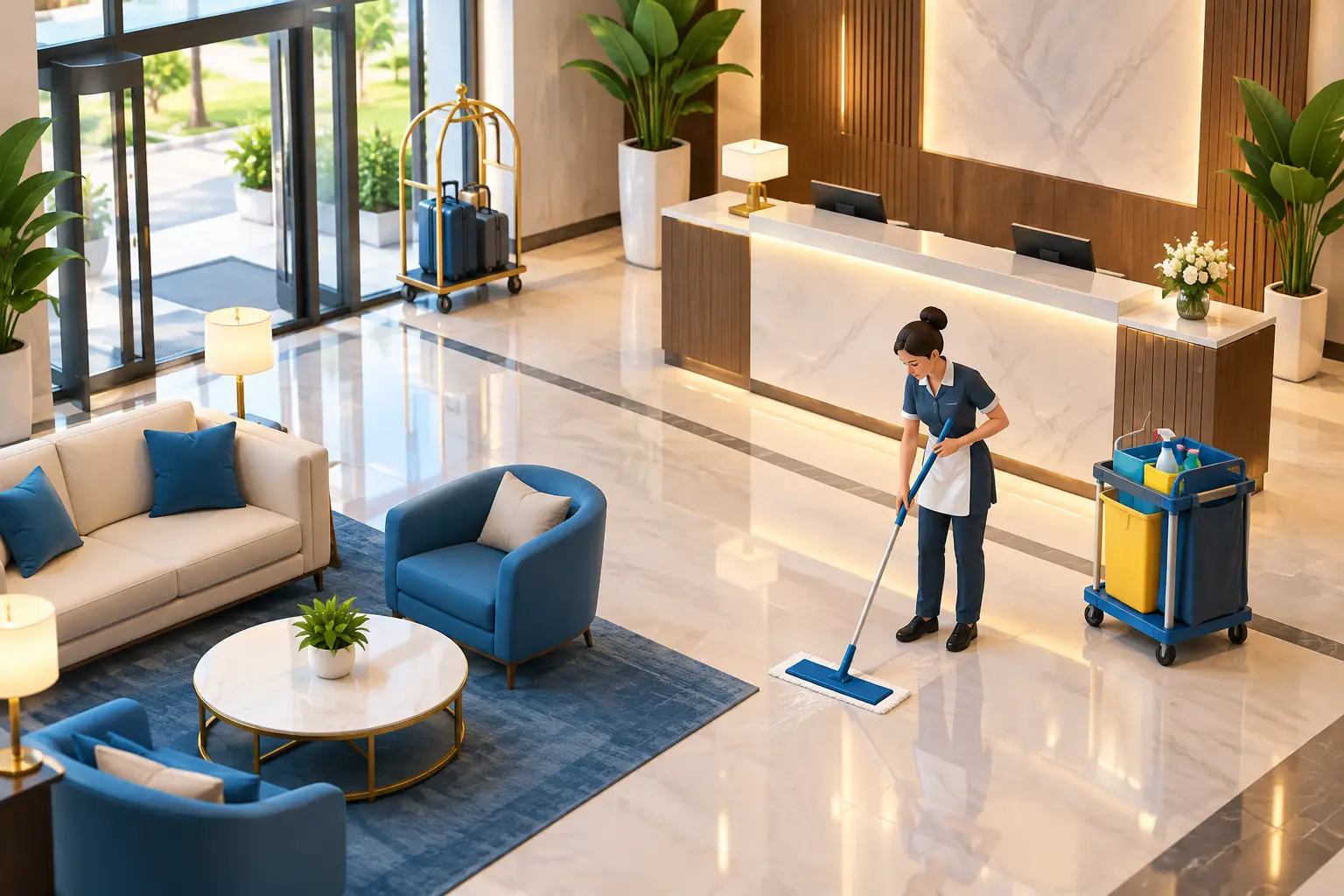
A guest can overlook a scuff in a back corridor. They will notice dusty entry glass, sticky tiles or a tired-looking lounge floor before they reach reception. This hotel lobby cleaning case study looks at a typical high-traffic hotel environment and the practical changes that help a cleaning team protect first impressions without turning the lobby into a work site during peak check-in periods.
The scenario is based on common issues seen in hospitality venues: wet-weather foot traffic, marks around automatic doors, fingerprints on glass, overflowing rubbish bins at busy times and floors that lose their finish long before their expected replacement date. The aim was not to use more chemicals or add unnecessary labour. It was to organise the right products, equipment and cleaning frequencies around how the lobby was actually used.
The cleaning problem: a lobby that looked untidy too quickly
The property had a polished tile entry, carpeted seating areas, glass doors, lift surrounds and public washrooms off the main lobby. Housekeeping staff completed a full early-morning clean, but the space often looked below standard again by mid-afternoon.
The biggest issue was not poor effort. The team was relying on one general routine for very different surfaces and traffic conditions. A damp mop was being used across the tiled entry several times a day, but soil was being moved rather than removed. Entry mats were vacuumed in the morning but not serviced after wet weather or large arrivals. Glass cleaning was handled only when marks became obvious, which meant staff were reacting to complaints rather than maintaining presentation.
There was also a safety consideration. During rain, water tracked in from the footpath created a slip risk around the doorway. Placing a wet floor sign after the floor became slippery was necessary, but it did not solve the cause. The hotel needed a quicker response process and better soil control at the entrance.
Hotel lobby cleaning case study: the practical reset
The cleaning plan was rebuilt around three zones: the entry and hard floors, the guest-facing touchpoints, and the soft furnishings and washrooms. This made it easier for staff to choose the correct tool for the task and for supervisors to check standards during a shift.
Zone one: stopping soil at the door
The entry was the highest-value area to improve because it affected both appearance and floor life. The team added a longer matting run where space allowed, with a scraper-style mat at the external entry and an absorbent mat inside. The exact mat configuration depends on the doorway, local weather and whether wheelchair access or fire egress limits placement, but the principle is consistent: capture grit and moisture before it reaches the main floor.
Instead of waiting for the scheduled afternoon clean, staff checked the matting and tiled entry at set intervals, with extra checks during rain and group arrivals. Loose grit was removed with a lobby pan and brush or vacuum before mopping. This small change prevented abrasive particles from being worked into the tiles and grout.
For the hard floor, the team used a neutral cleaner suited to the finish and a clean microfibre mop system. Too much chemical can leave residue that attracts more dirt, particularly on glossy tile. Correct dilution mattered as much as the product choice. The mop heads were changed regularly rather than being used until they were visibly dirty, reducing the chance of reapplying soil across the entry.
Zone two: making touchpoints look cared for
Guests judge cleanliness through the things they touch or see at close range. Door handles, lift buttons, reception counters, brochure stands, glass panels and luggage trolley handles needed more frequent attention than skirting boards or low-traffic corners.
The revised routine included a short presentation pass before expected busy periods. A staff member wiped high-touch points with a suitable cleaner and disinfectant where required, cleaned glass with a streak-free glass cleaner and lint-free cloth, and checked bins for liners, odour and visible rubbish. This was a quick task, not a full clean, but it stopped small defects building into a poor overall impression.
Product selection required some judgement. A disinfectant may be appropriate for touchpoints and washroom surfaces, but it is not automatically the best option for every lobby surface. Using a product that leaves haze on glass or residue on a polished counter can create another presentation problem. Staff were given simple product instructions covering dilution, dwell time, compatible surfaces and safe storage.
Zone three: protecting carpets, seating and washrooms
The carpeted lounge area looked acceptable at a glance, yet closer inspection showed flattened pile near chairs and dark traffic lanes from the entrance to reception. Daily vacuuming was already in place, but slow, overlapping passes in the traffic lanes were added to lift dry soil more effectively. Spot cleaning was addressed straight away, particularly around coffee tables and the bar service route.
Deep carpet cleaning was scheduled according to occupancy and soil levels rather than a fixed calendar alone. A quieter property may need periodic extraction cleaning, while a busy city hotel may benefit from interim encapsulation cleaning between deeper services. The trade-off is drying time and disruption. Any wet process needs to be planned around guest traffic, ventilation and the risk of leaving damp carpet in a prominent space.
In the public washrooms, presentation checks focused on soap, paper, toilet tissue, sanitary bins, odour and dry floors. A washroom can be technically cleaned but still feel neglected if a dispenser is empty or water is sitting around the basin. Consumables were stored close enough for efficient replenishment, while chemical concentrates and safety items remained secured in the cleaner’s store.
What changed after the new routine
The most immediate result was consistency. Instead of a lobby looking excellent after the morning clean and declining through the day, staff had clear triggers for short corrective tasks. The entrance remained drier in wet conditions, glass stayed clearer and bins were less likely to become a guest complaint.
The floor also benefited from reduced grit exposure and more appropriate maintenance. Regular removal of dry soil is generally more economical than trying to restore a dulled finish later with aggressive chemicals or machinery. That said, a maintenance plan cannot repair a floor that has already been damaged by unsuitable products, heavy abrasion or years of missed periodic care. In those cases, a deeper restoration assessment may be needed.
From a management perspective, the plan made supply ordering easier. The team could forecast demand for bin liners, paper products, hand soap, microfibre cloths, mop heads, neutral floor cleaner, glass cleaner and washroom chemicals based on set checks and shift patterns. Keeping compatible consumables on hand reduced last-minute substitutions, which are often where cleaning quality slips.
The supplies that made the difference
This was not about buying the most expensive item in every category. It was about choosing dependable commercial products that matched the surface, soil type and frequency of use. A practical hotel lobby kit should cover dry soil removal, damp mopping, glass care, touchpoint cleaning, washroom replenishment, spill response and safe waste handling.
For a Perth hotel, local availability is especially useful when occupancy changes suddenly, weather turns or a large event increases foot traffic. WesKleen Supplies can help cleaning teams and facility managers select compatible chemicals, floor pads, vacuum consumables, bin liners and washroom essentials without guessing at what suits the job.
Training matters just as much as the supply cupboard. Staff should know why entry mats need attention, how to avoid cross-contamination between washrooms and guest areas, when to change a cloth or mop head, and who to notify if they see damaged flooring, leaks or recurring odours. A simple checklist is useful, but only when it reflects the real layout and busy periods of the property.
Build the routine around guest movement
The useful lesson from this hotel lobby cleaning case study is that lobby cleaning is not a once-a-day task. It is a presentation and safety routine that follows guest movement, weather and occupancy. A quiet weekday, a wet Friday afternoon and a conference check-in will all need slightly different responses.
Start with the entrance, watch where soil and moisture travel, and set short checks before the times guests are most likely to arrive. When the right supplies are close at hand and staff understand the reason behind each step, keeping the lobby clean becomes less stressful and far more reliable.