


Blog
Best Commercial Mop Buckets for Busy Floors

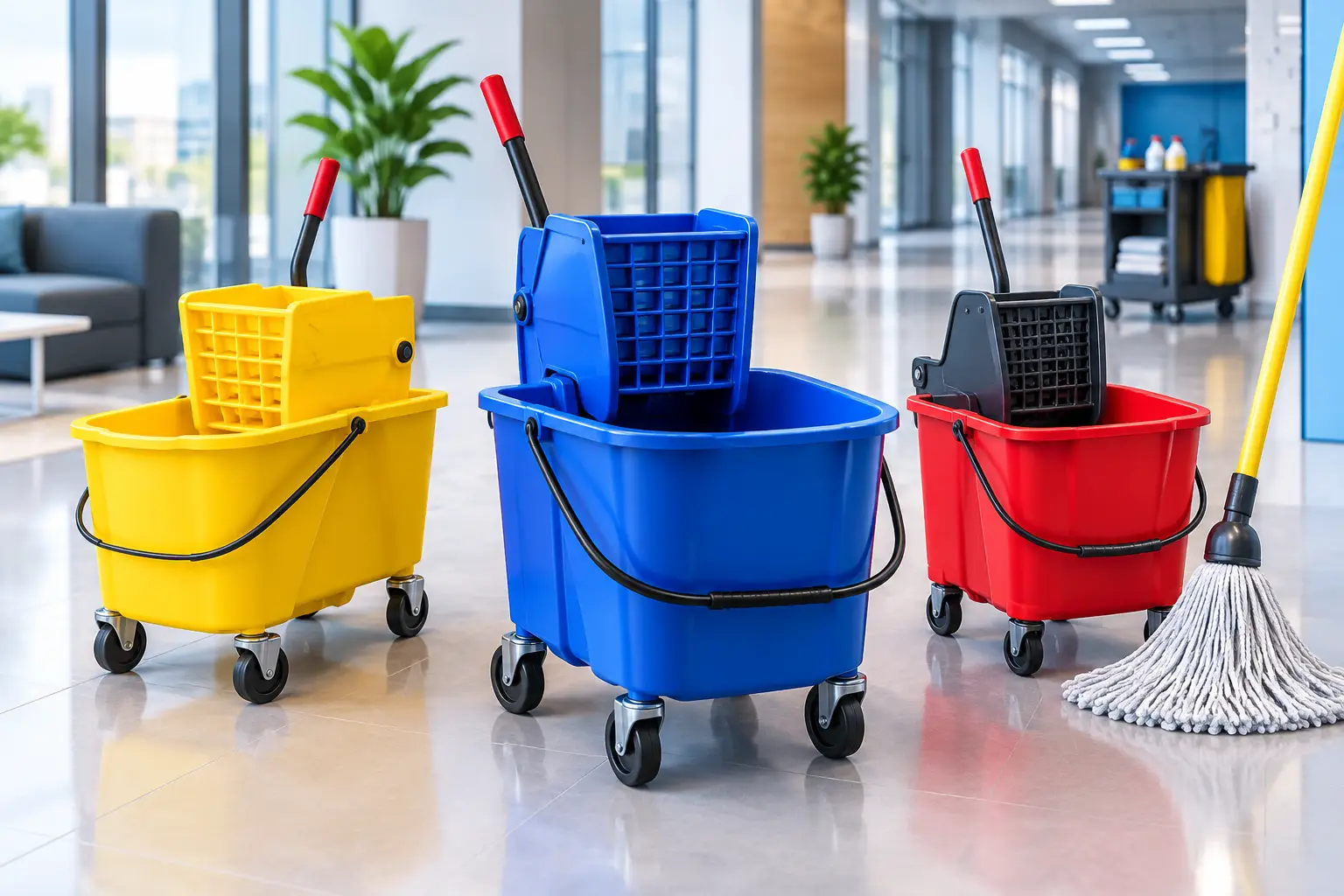
A mop bucket looks simple until it becomes the reason a cleaning shift runs late. The best commercial mop buckets make a noticeable difference to water control, staff comfort, floor drying time and the standard of the finished clean. For Perth cleaners, facility teams and business owners, choosing the right bucket is less about buying the biggest option and more about matching the equipment to the floor, mop system and volume of work.
A lightweight bucket may suit a small café or home laundry, while a busy school, medical practice or shopping area needs a stable, high-capacity unit that can handle repeated use. The right choice reduces unnecessary refills, helps prevent over-wet floors and gives your team a practical setup they will actually use correctly.
What makes a commercial mop bucket worth buying?
Commercial mop buckets are built for regular use in places where floors need to be cleaned efficiently and consistently. Compared with a basic household bucket, they generally offer a larger water capacity, a purpose-built wringer, smoother castors and tougher construction. These details matter when you are moving from room to room, cleaning large hard-floor areas or working through several shifts.
The best setup is not always the largest or most expensive one. A bucket that is too large can be difficult to manoeuvre through narrow hallways, around tables or in compact washrooms. One that is too small can mean constant trips to the cleaner’s sink and may encourage staff to keep using dirty water for too long. The practical answer depends on the site.
A good commercial bucket should feel stable when the wringer is used, roll without wobbling, hold water without flexing and be easy to empty at the end of the job. It should also suit the mop head you already use, or the mop system you plan to introduce.
Choose capacity for the job, not the shelf
Capacity is usually the first decision. Smaller buckets are easier to store and transport, making them a sensible choice for cleaners servicing offices, small retail spaces, apartments and hospitality venues with limited back-of-house room. They are also easier to lift and empty when filled responsibly.
Mid-size buckets suit many routine commercial applications. They carry enough solution for several rooms or a moderate open floor area without becoming too difficult to control. For general daily cleaning in offices, classrooms, clinics and shared amenities, this is often the most practical category.
Larger commercial mop buckets are best reserved for broad, open spaces such as halls, warehouses, larger retail floors and busy common areas. They reduce refill time, but only if the site has clear pathways and suitable storage. Consider the route from the cleaner’s sink to the work area, including doorways, ramps and lifts. A large bucket is not efficient if it cannot move easily where the work needs to happen.
It is also worth remembering that full buckets are heavy. Capacity should support productivity without creating unnecessary manual-handling risk for staff.
The two-bucket advantage
Where hygiene standards are higher, a twin-bucket or divided system can be a smarter investment than one large bucket. These setups separate clean solution from recovered dirty water, helping maintain a cleaner wash solution throughout the task. They are particularly useful in healthcare-related settings, food areas, gyms, childcare centres and washrooms.
For routine maintenance, colour-coded buckets can also support clearer cleaning processes. Assigning different colours to washroom and general-floor equipment helps reduce cross-contamination and makes training simpler for new staff.
The wringer is where efficiency is won or lost
A commercial wringer should remove enough water to leave the mop damp, not dripping. Floors that are too wet take longer to dry, increase slip risk and can leave streaks or dull patches on some finishes. Floors that are too dry may not lift soil effectively. The goal is controlled moisture.
Side-press wringers are a familiar option for many cleaners and work well with traditional string mops. They are straightforward, affordable and suitable for general-purpose cleaning. Down-press wringers may be preferred where higher extraction is needed, as they can create stronger pressure with less twisting and strain. The best option depends on the mop style and the people using it every day.
Before replacing a bucket, check the size and type of the existing mop head. A wringer designed for a smaller mop may not handle a heavy-duty head comfortably. Conversely, an oversized wringer can be awkward for lighter mops and smaller jobs. Compatibility is not a minor detail – it affects cleaning speed and how well the floor dries.
For teams cleaning for long periods, test the action where possible. A wringer that feels stiff or unstable may slow staff down over an entire shift. Durable parts and simple operation are usually better value than features that look impressive but are hard to maintain.
Wheels, handles and drainage matter more than they seem
Castors are one of the most overlooked features when comparing commercial mop buckets. Smooth, non-marking wheels help staff move safely across vinyl, tiles, sealed concrete and other hard floors. Look for a wide wheelbase that keeps the bucket stable when turning corners or moving over uneven thresholds.
A sturdy handle gives better control when pulling the bucket behind you, while a comfortable grip is useful for shorter moves. The bucket should feel balanced rather than top-heavy, especially when the wringer is fitted and the tank is partly full.
A drainage plug can be a valuable feature on larger buckets. It makes emptying easier without requiring staff to lift the full weight of the water. However, the plug needs to be secure and easy to clean. For smaller buckets, a well-shaped pouring lip may be all that is needed.
Think about storage as well. Measure the cleaner’s cupboard, utility room or vehicle before ordering. Equipment that does not fit neatly is more likely to be left in corridors, knocked over or damaged between jobs.
Material and build quality affect the long-term cost
Most commercial mop buckets use heavy-duty plastic because it is practical, corrosion-resistant and easy to clean. What separates a good bucket from a short-lived one is the thickness of the plastic, the strength of the handle fittings, the quality of the castors and the durability of the wringer mechanism.
For a low-traffic site, an economical model can be the right decision. There is no need to over-specify equipment that will only be used occasionally. But cleaning contractors, schools, aged care facilities, hospitality venues and property managers usually benefit from a tougher bucket designed for repeated daily use. Replacing cheap equipment often costs more in downtime and frustration than purchasing a dependable unit from the start.
Consider the chemicals used on site, too. Use floor-cleaning products at the recommended dilution and rinse equipment after use where required. This protects the bucket, helps prevent residue build-up and keeps the wringer operating properly.
Best commercial mop buckets for different workplaces
The best commercial mop buckets are those that suit the work rather than a one-size-fits-all checklist. A small office may need a compact bucket and side-press wringer that stores under a bench. A restaurant may benefit from a mobile unit with strong extraction to manage spills and frequent floor cleaning. A school or medical practice may need colour-coded equipment and separate clean-water capacity to support hygiene procedures.
For high-traffic public areas, prioritise stability, large castors and a wringer that removes water effectively. In venues with tight spaces, choose manoeuvrability over maximum capacity. For contractors moving equipment between multiple locations, consider bucket weight, vehicle storage and the availability of replacement parts.
Microfibre flat-mop systems are also worth considering for some sites. They often use less water and can be quicker for light daily maintenance, particularly in offices, retail spaces and healthcare environments. Traditional mop buckets remain highly useful for heavier soil, textured floors and larger wet-cleaning jobs. Many professional teams keep both systems available and use each one where it performs best.
A practical buying checklist
Before purchasing, assess the floor area, cleaning frequency, mop type, access to water and storage space. Then consider whether one bucket will be used by several staff members, as this increases the need for durable wheels and a dependable wringer.
Ask whether the site has hygiene zones that require separate equipment, whether wet-floor signage will be used during cleaning, and how the bucket will be emptied safely. These operational details are often more important than the bucket’s advertised litre capacity.
At WesKleen Supplies, Perth customers can choose from commercial cleaning equipment suited to routine maintenance, professional cleaning contracts and tougher facility work. A knowledgeable supplier can help match your bucket, mop head and cleaning chemical so the whole system works together rather than creating extra effort on site.
A well-chosen mop bucket will not make dirty floors disappear on its own, but it will make daily cleaning safer, faster and easier to manage. Start with the conditions your team faces each shift, then choose equipment that supports a cleaner result without getting in the way.