


Blog
Single Disc Versus Scrubber Dryers: Which Fits?

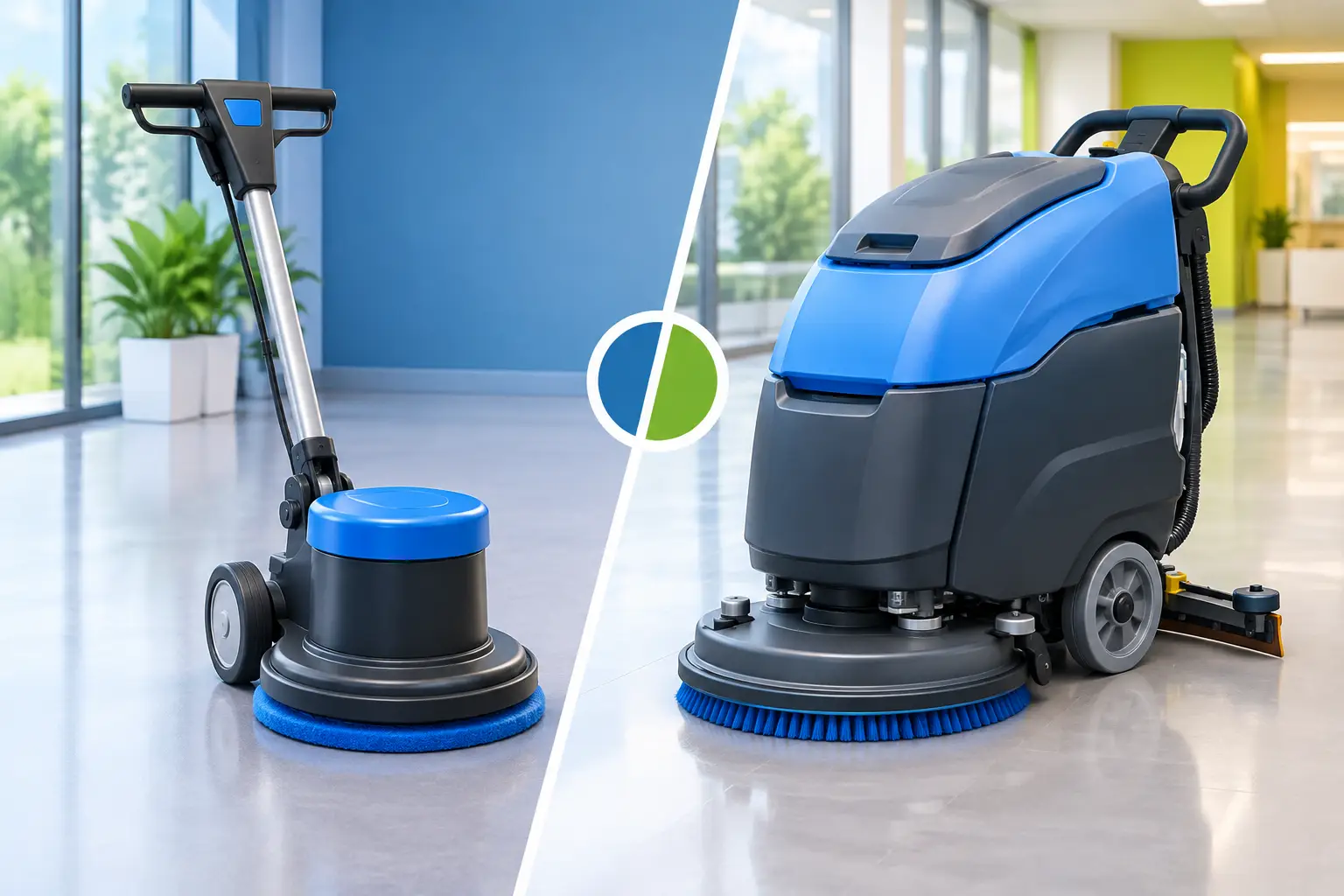
A machine that leaves a wet floor after every pass can slow down an office clean, create a slip risk in a busy foyer and add hours to a contractor’s shift. That is why the choice of single disc versus scrubber dryers matters well beyond the purchase price. Both machines can deliver excellent floor care, but they perform very different jobs.
For Perth cleaners, facility managers and business owners, the right option depends on the floor type, the amount of traffic, the soil load and how quickly the area needs to be back in use. A single disc machine is one of the most flexible tools in professional floor maintenance. A scrubber dryer is built to clean larger hard-floor areas quickly while recovering dirty water in the same pass.
Single disc versus scrubber dryers: the practical difference
A single disc machine uses a rotating pad or brush beneath the machine. Depending on the pad, brush, chemical and speed, it can scrub, polish, buff, strip old floor finish, clean grout lines or help restore a tired-looking surface. The operator applies solution as needed, works the floor, then removes the slurry or dirty water separately, usually with a wet vacuum or mop system.
A scrubber dryer applies cleaning solution, agitates the floor with a brush or pad, then uses a squeegee and vacuum motor to collect the dirty water into a recovery tank. The floor is left substantially drier straight away. This makes it a strong choice for routine cleaning in supermarkets, schools, medical practices, warehouses, shopping areas and larger office spaces.
The key distinction is simple: a single disc is a versatile floor treatment machine, while a scrubber dryer is a productivity-focused wash-and-recover machine. There is overlap, but neither is a direct replacement for every task.
When a single disc machine is the better choice
Single disc machines earn their place because they can handle work that a standard scrubber dryer is not designed to do. If you are stripping and recoating vinyl floors, removing built-up grime from textured tiles, scrubbing concrete, polishing stone or carrying out periodic restoration work, the correct single disc machine and pad system can produce a far more effective result.
They are particularly useful where the condition of the floor changes from one job to the next. A cleaning contractor may use a stripping pad and suitable floor stripper for a vinyl restoration project, then fit a brush for hard scrubbing an entry area, or a polishing pad for maintaining a high-shine finish. That flexibility can make a single disc a sensible investment for businesses offering specialised floor care.
The trade-off is labour. A single disc requires more operator control and a little more training. It can pull to one side if used incorrectly, and it is not the fastest option for a new team member cleaning a large open floor. Because dirty solution must be recovered separately, there are also more steps involved in completing the job safely.
Single discs are often best suited to deep cleaning and periodic maintenance rather than a quick daily clean. They work well in smaller areas, around detailed flooring problems and on surfaces where a more aggressive pad or brush action is required.
Pads, brushes and chemicals make the difference
A single disc machine is only as effective as the accessories chosen for the surface. A soft pad may be right for routine polishing, while a more abrasive pad can damage a delicate floor if used without care. Similarly, a brush that works well on uneven tiles may be unsuitable for polished vinyl.
Always match the pad, brush and chemical to the floor manufacturer’s recommendations. Test a small inconspicuous section when treating an unfamiliar surface, especially on natural stone, coated timber-look floors or older vinyl. A practical equipment supplier can help identify compatible pads, chemicals and replacement parts before a job becomes more expensive than expected.
Where scrubber dryers save time and labour
If your team cleans the same hard-floor areas every day or several times a week, a scrubber dryer is usually the more efficient choice. It washes and dries in one operation, reducing the need for a separate wet vacuum and helping staff move through larger areas with fewer passes.
The immediate benefit is a cleaner, drier floor. In a café, retail shop, school corridor or medical centre, that matters. Staff can reopen an area sooner, and customers or employees are less likely to walk through wet cleaning solution. Good recovery also prevents dirty water from being spread across the floor after it has been lifted.
Walk-behind scrubber dryers are practical for many commercial sites. They suit offices, gyms, showrooms, common areas and medium-sized warehouses. Ride-on machines are better suited to very large, open spaces where walking behind a machine would consume too much labour time. For tight areas, compact scrubber dryers can reach between fixtures and work in smaller rooms where a larger machine is awkward.
A scrubber dryer can also produce more consistent results across broad areas. The solution flow, brush pressure and recovery process are controlled, so operators are less likely to overwet the floor or leave inconsistent patches. This is valuable for sites with multiple cleaners, rotating staff or strict presentation standards.
The limitations to allow for
Scrubber dryers are not the answer to every floor problem. They are excellent for regular maintenance cleaning, but they may not remove heavy old coatings, deep staining or embedded soil as effectively as a single disc with the right pad and chemical. Squeegee blades and recovery systems also need routine attention. If blades are worn or debris is caught in the vacuum path, the machine may leave water behind.
They also need a clear operating path. A cluttered storeroom, narrow bathroom or heavily furnished office can make a scrubber dryer less practical than a mop, compact machine or targeted single-disc clean. Before buying, measure doorways, lifts, aisles and storage areas. Check whether the machine can be filled, emptied and charged conveniently at your site.
How to choose the right machine for your site
Start with the job, not the machine. Ask what is happening on the floor every week, not only what happens during a once-a-year restoration. If the main challenge is daily soil from shoes, trolleys and spills across a large vinyl, tile or sealed concrete area, a scrubber dryer will normally provide the best return through faster cleaning and drier floors.
If your work involves restoring neglected floors, stripping polish, cleaning uneven surfaces or changing between scrubbing and polishing tasks, a single disc offers greater capability. Many professional cleaning businesses eventually use both: a scrubber dryer for regular maintenance and a single disc for corrective work and finish care.
Consider these operational questions before making a decision:
- How many square metres of hard flooring need cleaning per shift?
- Is the floor heavily soiled every day, or does it need periodic deep treatment?
- How quickly must the area be dry and available for foot traffic?
- Can staff safely operate the machine and complete its daily maintenance?
- Do you have room for charging, storing chemicals and emptying recovery tanks?
- Will you need pads, brushes, squeegee blades, batteries or other consumables on hand?
Cost should be assessed over the working life of the machine, not just at the counter. A lower-cost single disc may be ideal for occasional work, but the labour needed to wash and recover a large floor can add up quickly. A scrubber dryer has more components and may cost more initially, yet it can reduce cleaning time substantially on the right site.
Don’t overlook operator technique and maintenance
Even the right machine will disappoint if it is poorly maintained. Empty and rinse scrubber dryer tanks after use, clean the recovery system, inspect squeegee blades and charge batteries according to the manufacturer’s instructions. For single discs, check the drive board, pad condition, cable or battery components, and ensure the machine is cleaned before storage.
Training matters too. Staff need to understand solution dilution, pad selection, slow and controlled movement, wet-floor signage and safe recovery of dirty water. Overusing chemical will not improve results. It can leave residue, make floors tacky and reduce the performance of the machine.
The best buying decision comes from matching equipment to the work your team actually performs. For dependable advice on machines, floor pads, chemicals and replacement accessories, WesKleen Supplies can help Perth customers build a practical floor-care setup that keeps cleaning efficient without paying for capability they will not use.