


Blog
Strata Carpet Cleaning Example for Perth Buildings

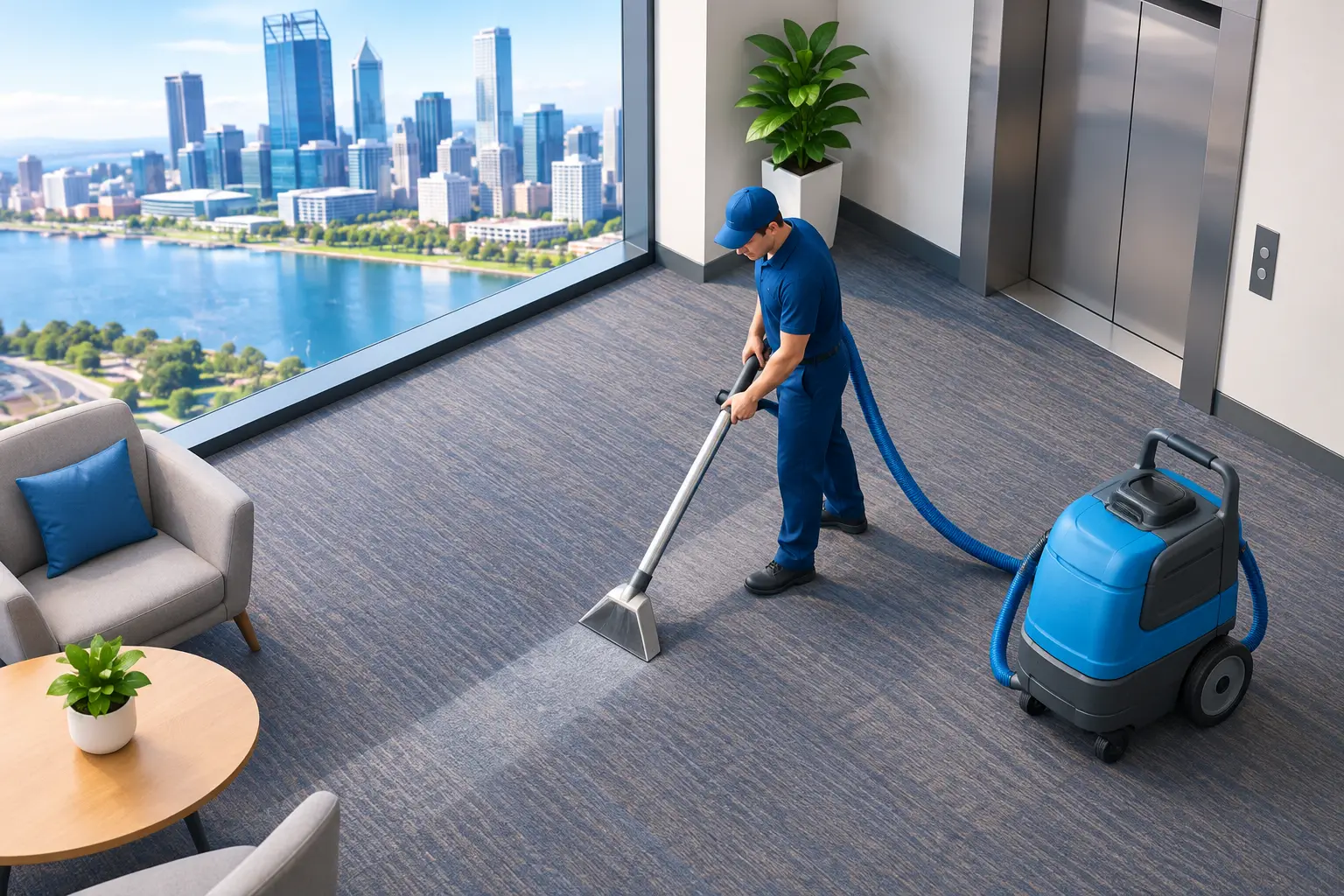
A strata carpet cleaning example is useful because common-area carpets are rarely just dirty in one way. A Perth apartment foyer may have sand and grit tracked in from outside, lift lobbies may carry oily marks from wheels and shoes, and corridors can develop dark traffic lanes long before the rest of the carpet looks untidy. The right result comes from matching the method, equipment and chemical to the carpet condition – not simply booking a machine and hoping for the best.
For strata managers, building caretakers and cleaning contractors, the job also has to work around resident access, drying times, noise and the building’s budget. Here is a realistic example of how a planned clean can be organised.
Strata carpet cleaning example: a 24-unit complex
Consider a three-storey, 24-unit apartment building in Perth. The common carpeted areas include the ground-floor entry foyer, three lift landings, two internal stairwells and the corridors on each level. The carpet is commercial loop pile, approximately five years old, with moderate overall soil and heavier staining at the entrance and near lift doors.
The strata company has received a few comments from residents about the appearance of the hallway carpet. There is no major flood damage or mould issue, but the carpet looks flat in the walking paths and has a few drink spills, scuff marks and greasy spots. A cleaner who begins with a proper inspection can separate those issues rather than treating the whole building as one problem.
The inspection identifies four key needs: dry soil removal, traffic-lane treatment, spot treatment and a low-residue deep clean. It also confirms the carpet is colourfast and that the backing is suitable for hot-water extraction with controlled moisture. This check matters. Excess water, harsh alkaline chemicals or poor extraction can lead to wicking, slow drying and unhappy residents.
Step 1: Plan access and resident communication
Cleaning common areas affects everyone using the building. The strata manager sends a notice at least several days before the work, advising the date, expected work hours and that each level will remain accessible with care. Residents are asked to keep prams, shoes, mats and other personal items out of corridors on the day.
The cleaner schedules the job from the top floor down, finishing at the main entry. This reduces the chance of walking cleaned carpet dirty again. Warning signs are placed at both ends of each corridor, near stairwells and at lift exits. If the complex has one lift, cleaning lift landings in stages avoids cutting off access for residents with mobility needs.
This part of the job can seem administrative, but it protects the cleaning result. A freshly cleaned corridor can be marked within minutes if trades, pets or residents cross it repeatedly while it is still damp.
Step 2: Remove dry soil before adding moisture
A commercial upright vacuum or quality backpack vacuum is used first, with extra passes along edges, lift thresholds and traffic lanes. This is one of the most valuable stages of the process. Much of the dirt in common-area carpet is dry particulate soil: dust, sand, hair and fine grit that settles deep into the pile.
In Perth, grit can be particularly hard on carpet fibres. It behaves like an abrasive under foot traffic, dulling the carpet’s appearance and accelerating wear. Vacuuming before pre-spray treatment means the chemical can work on bonded soil rather than turning loose debris into mud.
Corners and skirting edges are checked with a crevice tool. Any loose rubbish, staples or sharp objects are removed safely before machinery is used. If there are gum deposits or adhesive marks, these are treated separately with the appropriate spot-removal product rather than aggressively scraping at the fibres.
Step 3: Treat traffic lanes and spots separately
The entrance foyer and lift landing traffic lanes receive a suitable low-foaming carpet pre-spray. The cleaner applies it evenly, paying close attention to the darkest walking paths without soaking the carpet. A short dwell time allows the product to break down oily soil, body oils and grime transferred from shoes.
Individual spots are assessed before treatment. A coffee spill, greasy food mark and ink mark do not respond to the same chemistry. A general carpet spotter may be enough for everyday spills, while tannin, protein or solvent-based stains can need a dedicated treatment. The safest approach is to test a small hidden area first and use the mildest effective product.
Mechanical agitation is then used on the dirtiest lanes. Depending on the carpet type and condition, this could be a carpet grooming brush or a counter-rotating brush machine. Agitation lifts the pile and helps distribute the pre-spray through the soiled fibres. It should be controlled, particularly on older carpet, seams and areas with loose edges.
Step 4: Deep clean with controlled extraction
For this building, hot-water extraction is the most appropriate deep-cleaning method. The cleaner uses an extraction machine with strong recovery, clean water and a rinse agent designed to leave minimal residue. The machine passes slowly over each section, with extra dry passes to remove as much moisture as possible.
The goal is not to flood the carpet. Good extraction uses enough solution to rinse soil away, then recovers it efficiently. Over-wetting is a common cause of complaints because it extends drying time and can allow stains from the backing to wick back to the surface.
The technician works from the farthest point toward the exit, overlapping passes for an even finish. Stairs are cleaned carefully using a hand tool or stair tool, while lift thresholds receive detailed attention because these areas trap soil. A final pile grooming pass gives the carpet a more even appearance and helps it dry consistently.
Step 5: Support drying and protect the finished work
Air movers are positioned in the foyer, enclosed corridors and other slow-drying locations. In Perth’s warmer weather, open ventilation may assist where building security and weather conditions allow. In winter or in buildings with limited airflow, drying equipment becomes more important.
Residents are advised that the carpet may feel slightly damp for several hours and that footwear should be clean and dry when walking through the area. Temporary protection may be used at key entrances if trades or deliveries are expected that day. The cleaner conducts a final walkthrough with the caretaker or strata representative, noting any permanent stains that improved but could not be fully removed.
This is a realistic point to manage expectations. Cleaning can greatly improve appearance and hygiene, but it cannot repair worn fibres, bleach damage, burns, old dye stains or carpet that has reached the end of its service life. Clear reporting avoids confusion between a cleaning result and a replacement issue.
Products and equipment that support the job
A reliable strata carpet-cleaning setup needs more than an extractor. For recurring maintenance, a contractor or building team should have dependable vacuum equipment, carpet pre-spray, rinse solution, spotters, deodoriser where needed, grooming tools, wet-floor signs and air movers. Personal protective equipment is also essential when handling chemicals and operating machinery.
Product choice should follow the manufacturer’s directions and the carpet manufacturer’s care recommendations. Stronger chemistry is not always better. A low-residue product, correctly diluted and thoroughly extracted, is generally a better fit for shared residential areas than a heavily perfumed or overly aggressive solution.
WesKleen Supplies can help Perth cleaners and facility teams source practical carpet-care chemicals, vacuums, accessories, safety signage and everyday janitorial consumables from one local supplier. Having the right equipment on hand also makes it easier to respond quickly when a spill occurs between scheduled cleans.
Set the maintenance cycle around actual use
For this 24-unit building, a full extraction clean every six to 12 months may be suitable, depending on foot traffic, weather exposure and the number of pets or short-stay residents. Buildings close to the beach, busy roads or construction activity may need more frequent attention. Light interim cleaning of entrance lanes can keep the carpet presentable between major services.
Regular vacuuming is the backbone of the programme. In a high-use foyer, daily vacuuming may be justified. Less-used upper-floor corridors may only need attention two or three times a week. Prompt spot removal is equally valuable, as fresh spills are usually easier and cheaper to remove than stains left to set.
A simple maintenance record helps the strata company see what is working. Note cleaning dates, products used, areas of concern, recurring stains and any damage observed. Over time, this record supports better budget decisions and gives cleaners clear instructions for the next visit.
The best common-area carpets do not stay clean by accident. Start with routine vacuuming, act quickly on spills and schedule deep cleaning before traffic lanes become a costly restoration job.