


Blog
Floor Scrubber Review for Perth Workplaces

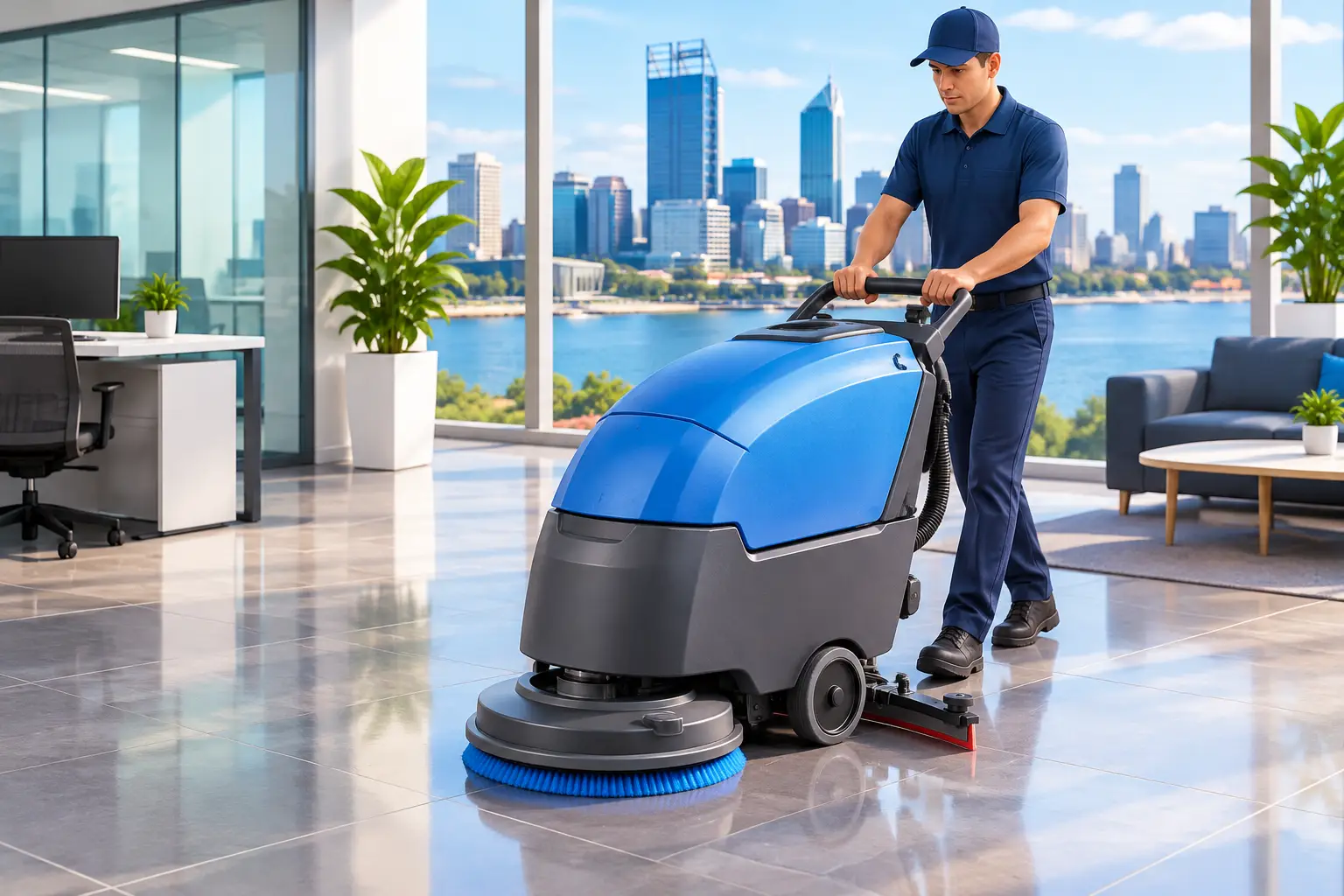
A wet foyer after a busy service, tyre marks across a warehouse aisle, or greasy kitchen tiles at close can make mopping feel like a job that never ends. This floor scrubber review focuses on the buying factors that actually affect results: the floor you have, the area you need to cover, and whether the machine will keep working reliably through your shift.
A floor scrubber can reduce labour, improve drying times and leave a more consistent finish than a mop and bucket. But the biggest or most expensive machine is not automatically the best choice. The right unit should suit your site’s access, traffic, soil load and cleaning routine without adding unnecessary running costs.
Floor scrubber review: start with the floor, not the machine
Before comparing tanks, batteries and productivity figures, look closely at the surface. A smooth sealed concrete floor in a warehouse needs a different set-up from textured safety vinyl in a medical centre, polished tiles in a retail shop or epoxy flooring in a workshop.
For smooth hard floors, a scrubber fitted with the correct pad can remove fine dust, scuffing and day-to-day grime efficiently. Textured flooring usually needs a brush that can reach into the surface profile, while commercial kitchens and workshop areas may need more agitation and a suitable degreaser. Using an aggressive pad or brush just to chase a quicker result can dull finishes, wear protective coatings and create avoidable replacement costs.
Also consider the soil coming through the door. Perth sites often deal with dry dust, sand, leaf litter and moisture brought in during winter. A scrubber is not a replacement for dry sweeping or vacuuming. Large debris should be removed first, otherwise it can block the recovery system, reduce pickup and leave grit under the machine.
Match the machine to your work area
The most useful way to assess a scrubber is to think about the complete cleaning route, not just the floor area on a plan. A 1,000 square metre open warehouse and a 1,000 square metre site divided by doorways, shelving, tables and narrow corridors need very different equipment.
Compact scrubbers for tight daily cleaning
Small walk-behind scrubbers work well in cafés, clinics, change rooms, amenities, small retail spaces and office corridors. They are easier to store, simpler to move between rooms and can get closer to walls and fixtures. For a site where staff clean little and often, manoeuvrability can be more valuable than a large solution tank.
The trade-off is productivity. A compact machine may take longer to clean a broad open floor and will need refilling more often. Check that it fits through the narrowest door or access point before buying. It is a straightforward detail that can determine whether the machine is used every day or left in the storeroom.
Walk-behind scrubbers for practical commercial coverage
For medium-sized retail floors, school buildings, halls, workshops and warehouse sections, a walk-behind auto scrubber is often the sensible middle ground. It offers stronger productivity than a compact unit while remaining easy to control around racking, displays and pedestrians.
Look at the scrub path width, solution and recovery tank capacity, and practical runtime together. A wider scrub path does not help much if the machine must stop repeatedly for water, charging or emptying. The best fit is generally the machine that completes your normal cleaning zone in one efficient run with some battery capacity to spare.
Ride-on scrubbers for large, open sites
Ride-on scrubbers earn their place in large warehouses, shopping centres, distribution areas, car parks and major facilities with long, open lanes. They can cover substantial areas quickly and reduce operator fatigue, especially where cleaning is performed daily or across multiple shifts.
They do need space to turn, a secure charging location and trained operators. Consider visibility, slopes, pedestrian traffic and where the unit will be parked for filling and emptying. A ride-on model may be excellent for a distribution centre but inefficient in a crowded venue with frequent obstacles.
The cleaning result depends on more than scrub width
A machine’s headline productivity rate is useful, but it assumes uninterrupted travel on an open floor. Real performance comes down to water control, brush pressure, detergent choice and recovery.
Good water pickup is particularly important in public-facing sites. Floors should be left clean and close to dry, not streaky or slippery. Inspect the squeegee design and ensure replacement rubbers are readily available. Worn squeegee blades are a common reason a scrubber leaves trails behind, yet they are often overlooked until the result becomes obvious.
Brushes and pads need the same attention. Softer pads suit routine cleaning and polished surfaces, while more abrasive options can tackle marks and heavier soil where the floor manufacturer allows it. A brush can be the better choice for uneven or textured flooring. The goal is controlled agitation, not maximum aggression.
Chemicals matter as well. Too much detergent can create foam in the recovery tank, leave residue and make floors resoil faster. Too little may not lift grease or traffic film. Use a low-foam commercial floor cleaner matched to the surface and dilution system, and follow the chemical directions. This protects both the floor and the machine’s vacuum performance.
Battery choice, charging and water access
Battery-powered floor scrubbers are convenient because they avoid a trailing lead across busy areas. Their limitations are runtime, charging time and battery care. Lead-acid batteries are a proven, cost-conscious option, but they need regular charging and maintenance. Lithium batteries generally charge faster, offer consistent performance and reduce maintenance, though the upfront price is higher.
For small premises, overnight charging may be entirely adequate. For contractors, hospitals, transport facilities or sites with consecutive cleaning shifts, fast charging or a spare battery arrangement may be worth the investment. Never assume the advertised runtime will match your heaviest cleaning day. Battery performance changes with brush pressure, floor condition, water use and operator habits.
Plan the service area too. Your team needs access to clean water, a suitable drain for dirty recovery water and a ventilated, secure charging point. If the filling point is on the other side of a building, lost walking time can quickly erode the productivity a larger machine promises.
Ownership costs are part of any honest floor scrubber review
The purchase price matters, but it is only one part of the cost. Budget for pads or brushes, squeegee blades, batteries, cleaning chemical, routine servicing and any replacement parts. A cheaper unit can become costly if consumables are difficult to source or downtime leaves your team back on manual mops.
Local product support is especially valuable for commercial operators. Ask whether common wear items are available, how simple daily maintenance is, and who can help if the machine loses suction or develops an error. WesKleen Supplies can help Perth buyers select compatible pads, brushes, chemicals and everyday consumables so the machine is supported beyond the initial purchase.
A scrubber should be cleaned after every use. Empty and rinse the recovery tank, flush the system where required, clean the squeegee, inspect the vacuum hose and remove debris from brushes or pads. These small tasks take minutes and prevent odours, poor water recovery and premature wear.
When a scrubber is not the right answer
Not every floor needs a machine. A small home entry, a cramped storeroom or a space with many fixed obstacles may be faster to clean with quality manual tools. Likewise, a scrubber will not fix damaged coatings, deep staining, loose tiles or a floor that needs restoration rather than routine maintenance.
For residential buyers, a compact scrubber can be useful for large tiled areas, garages or home workshops, but storage and water disposal should be considered first. For commercial sites, a scrubber makes the strongest business case when there is enough regular hard-floor area to save labour and improve presentation consistently.
The right machine is the one your team can move easily, operate safely and maintain without fuss. Measure the access points, identify the toughest part of the floor, and choose the pads, brushes and chemistry that suit the job. That approach keeps cleaning practical, protects your flooring and gives every shift a better starting point.