


Blog
How to Sanitise Shared Touchpoints Properly

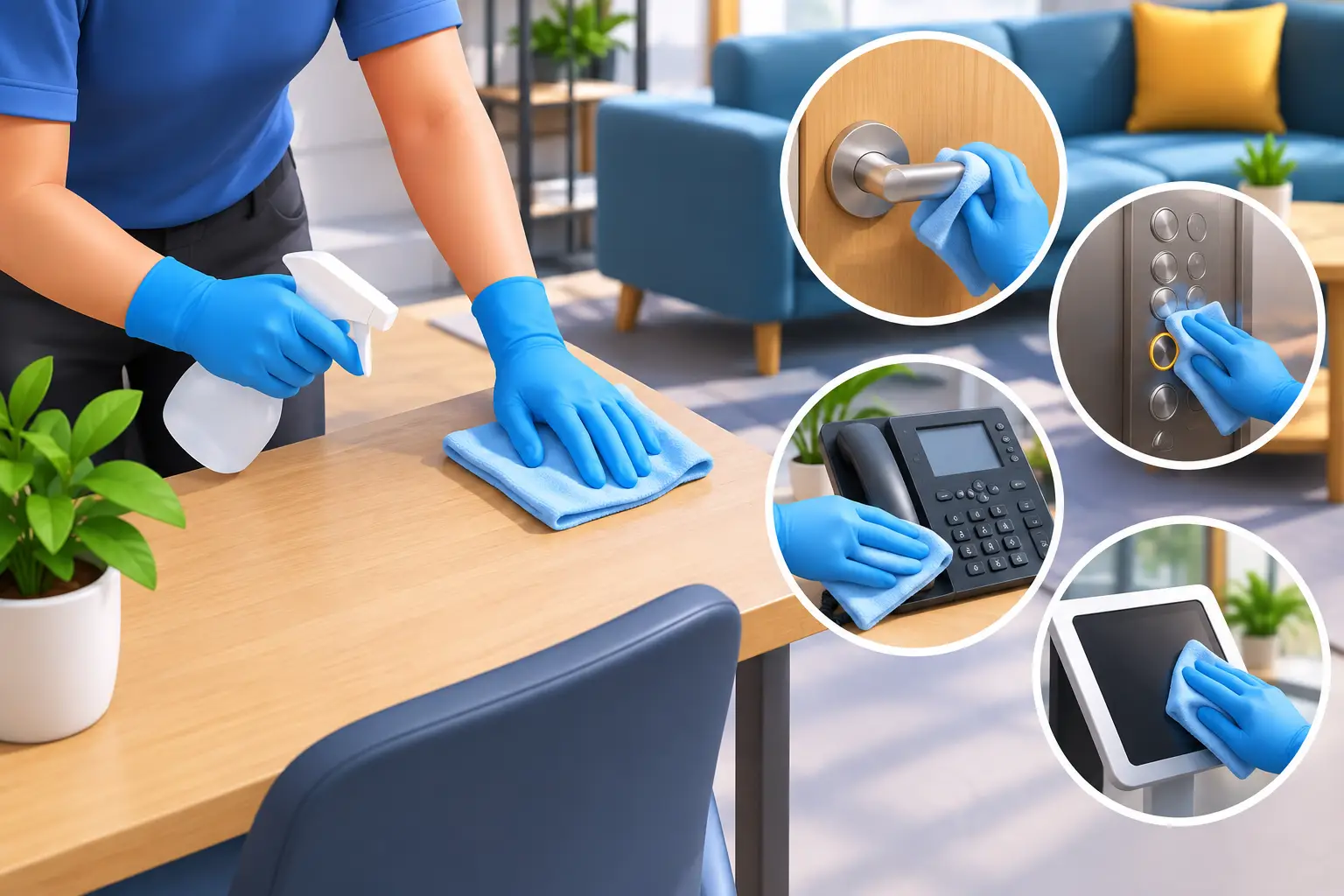
A door handle can be touched dozens of times before morning tea. Add light switches, EFTPOS terminals, lift buttons, shared keyboards and washroom fittings, and it is easy to see why high-touch areas need more than an occasional wipe. Knowing how to sanitise shared touchpoints properly helps Perth workplaces, venues and households maintain a cleaner, more reassuring space for staff, customers and visitors.
The aim is not to spray every surface constantly. It is to identify where hands repeatedly land, use the right product in the right way, and build the task into a routine that your team can actually maintain.
Start with the touchpoints people use most
Shared touchpoints vary by site. In an office, they often include entry doors, desk phones, printer controls, kitchen taps, fridge handles, keyboards and meeting-room remotes. In hospitality and retail, look at menus, counter surfaces, payment terminals, chair backs, condiment stations and toilet doors. At home, focus on kitchen handles, remotes, bathroom taps, light switches and mobile devices shared between family members.
Walk through the area at its busiest time and watch the natural flow of people. This is usually more useful than relying on a generic checklist. A push plate at a back entrance may receive far more contact than a front-door handle, while a shared tablet may need attention several times a day.
Create a simple schedule based on traffic. Low-use areas may only need routine daily attention, while busy counters, washrooms and shared equipment can need cleaning between shifts, after peak periods or whenever visibly soiled. During a known illness outbreak, increase the frequency for the surfaces used by affected people and common areas.
Clean first, then sanitise or disinfect
Cleaning and sanitising are related, but they are not the same job. Cleaning removes dirt, grease, crumbs and other visible soil. Sanitising reduces the number of germs on a surface to a safer level. Disinfecting is intended to kill or inactivate a wider range of microorganisms, depending on the product and its label claims.
For most shared touchpoints, the first step is always to remove soil. A disinfectant applied over grime may not contact the surface evenly, which reduces its effectiveness. Use a suitable neutral cleaner or detergent and a clean cloth, then apply the sanitiser or disinfectant according to the manufacturer’s directions.
The right choice depends on the setting and the risk. A busy washroom, medical-adjacent space or area affected by gastro or respiratory illness may require a disinfectant suitable for the task. A routine office touchpoint may only need a quality sanitising product as part of a regular cleaning programme. Do not assume one chemical suits every material or situation.
Choose products that suit the surface and task
A product needs to be effective without damaging what you are cleaning. Alcohol-based surface sanitisers can be useful for compatible hard surfaces and electronics when used carefully, but they may affect some plastics, coatings and screens. Quaternary ammonium products are common for general hard-surface sanitising, while chlorine-based disinfectants can be appropriate for specific high-risk tasks. Each has handling, dilution and compatibility requirements.
Read the label before use. Check what the product is designed to treat, whether it needs dilution, its required contact time, and whether rinsing is needed for food-contact surfaces. If a product is not approved for a particular surface, test it on a discreet area first or choose an alternative.
Avoid mixing cleaning chemicals. Combining products can create hazardous fumes or make them less effective. Keep chemicals in clearly labelled containers, follow the safety data sheet, and use suitable personal protective equipment such as gloves and eye protection where required.
For commercial sites, ready-to-use products can reduce dilution mistakes and save time on fast-moving touchpoint rounds. Concentrated chemicals can be more economical for larger facilities, provided staff have access to the correct dosing equipment and training. The cheapest option on the shelf is not always the most cost-effective if it is difficult to use correctly or causes surface damage.
The correct method for sanitising shared touchpoints
A reliable process is straightforward, but the detail matters. Prepare your supplies before you start so you are not moving back and forth between clean and dirty areas. Use colour-coded cloths where your cleaning system calls for them, particularly to keep washroom cloths separate from kitchen or desk areas.
- Remove visible dirt with the appropriate cleaner and a clean cloth.
- Apply the sanitiser or disinfectant so the entire touchpoint is wet, not just lightly misted.
- Leave it wet for the contact time stated on the label. This may be seconds or several minutes.
- Wipe or allow the surface to air-dry as directed. Rinse food-contact surfaces if the label requires it.
- Change cloths when they become soiled and between different zones to avoid spreading contamination.
Contact time is where many otherwise careful routines fall short. If a product needs five minutes of wet time but is wiped away after ten seconds, it has not been used as intended. For vertical handles and rails, apply enough solution to keep the area wet without overspraying nearby flooring or electronics.
For keyboards, card terminals, touchscreens and other sensitive equipment, never spray directly into openings. Apply a compatible product to a lint-free cloth first, then wipe gently. Switch equipment off where practical and follow the manufacturer’s cleaning guidance. Excess liquid can cause expensive faults, so this is one area where a cautious approach pays off.
Build touchpoint cleaning into the working day
The best sanitising plan is the one staff can repeat when the site is busy. Place supplies where the work happens: near reception, in cleaners’ cupboards, at staff kitchens and close to washrooms. A mobile cleaning caddy is useful for larger premises because it keeps cloths, gloves, chemicals and rubbish bags together.
Assign responsibility clearly. In a small business, a shift supervisor may complete a quick counter and handle round. In a larger building, cleaners may carry out scheduled service while staff manage their own shared equipment between cleans. The key is making sure no one assumes somebody else has done it.
A simple log can help for high-traffic or regulated environments. Record the area, time, product used and staff member responsible. It supports consistency, makes handovers easier and highlights when a schedule is unrealistic. If touchpoints are repeatedly dirty before the next planned clean, adjust the frequency rather than asking staff to work faster.
Hand hygiene supports the whole process. Make hand sanitiser available at entry points, near payment areas and in shared kitchens, but do not treat it as a substitute for surface cleaning. Encourage staff to wash or sanitise hands after handling rubbish, cleaning washrooms or using shared equipment.
Common mistakes that waste time and product
Over-spraying is a common one. More chemical does not automatically mean better sanitising, and wet floors or pooled liquid can create slip hazards. Apply only the amount needed to cover the surface for the required contact time.
Another mistake is using one cloth across the entire site. A cloth used on a washroom door should not then be used on a lunchroom bench. Use separate cloths by zone, launder reusable microfibre cloths properly, and replace disposable wipes once they are dry or visibly dirty.
Finally, do not overlook the tools used to clean. Spray bottle triggers, caddy handles, vacuum controls, mop handles and cloth dispensers are shared touchpoints too. Include them in the routine, especially when multiple cleaners work across the same site.
Make the routine practical for your premises
There is no need to turn every cleaning shift into a chemical-heavy process. Match the product, method and frequency to the amount of use, the type of occupants and the surfaces on site. Good routine cleaning, targeted sanitising and correct staff practices will usually deliver a better result than random, excessive spraying.
For help selecting suitable chemicals, cloths, dispensers and washroom consumables for your site, WesKleen Supplies can help you source practical cleaning products that fit the job and the budget. A well-stocked cleaning station and a clear routine make it much easier to keep the surfaces people rely on looking clean and cared for.