


Blog
The Science of Orbital Scrubbing: Why 15-Inch Machines Clean Deeper with Less Water

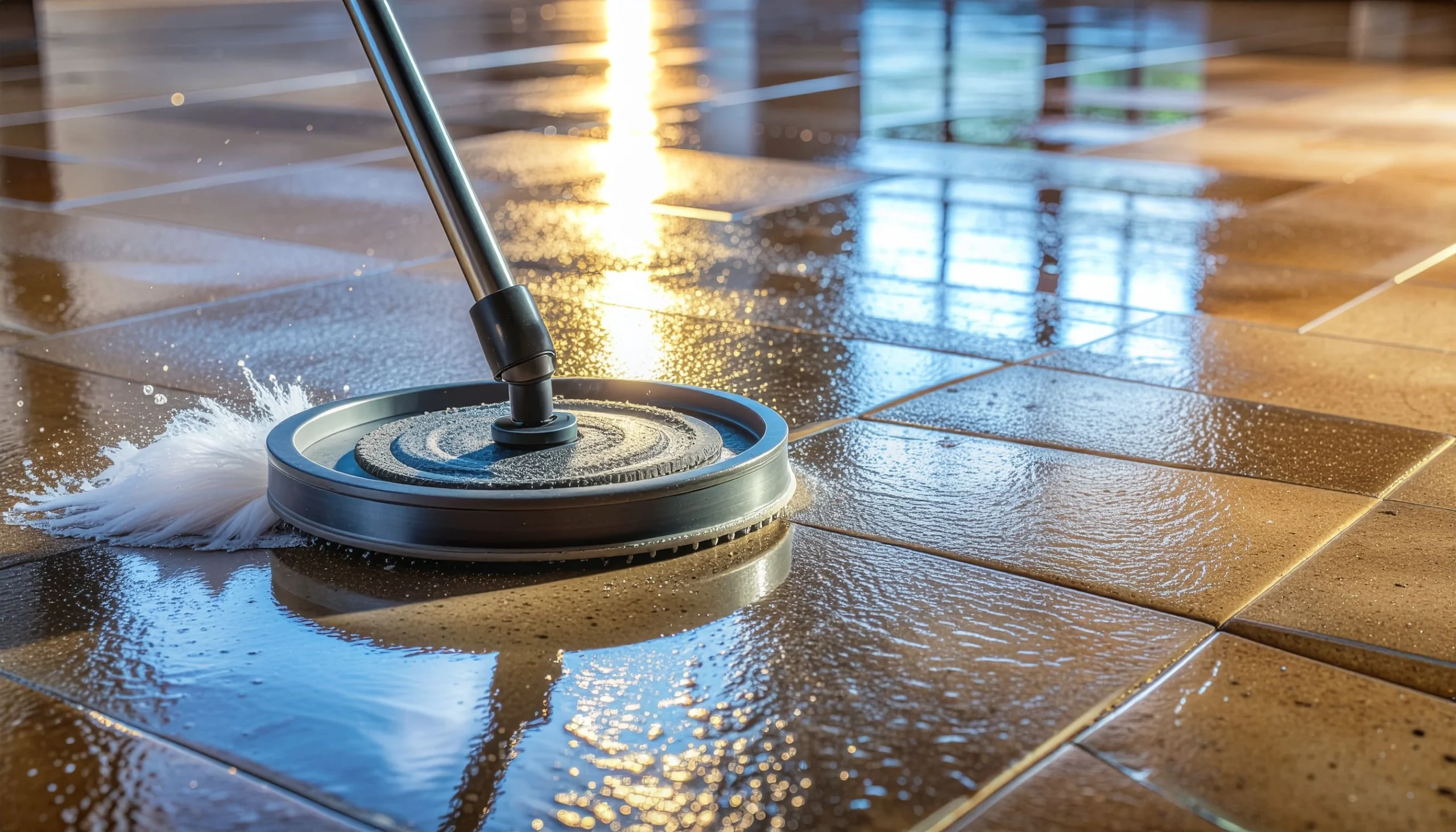
The quest for operational efficiency in commercial cleaning often leads to a critical examination of floor maintenance technology. For decades, the standard approach to hard floor care relied on manual labour or basic rotational machinery, both of which present distinct limitations in consistency and water usage. As modern facilities demand higher standards of hygiene alongside stricter environmental compliance, traditional methods are proving increasingly inadequate. The introduction of high-frequency vibrational floor care represents a major technological leap forward, offering a more precise and effective way to maintain varied surfaces.
At the core of this advancement is a physical process that shifts the focus from aggressive chemical intervention to high-speed mechanical agitation. Traditional floor cleaning methods often rely on flooding surfaces with water and strong chemical detergents, which then require extensive extraction and drying times. This excessive water usage not only increases the risk of slips and falls in busy commercial environments but can also lead to long-term structural damage on sensitive flooring materials. By understanding the physics behind surface friction and soil release, businesses can achieve a deeper clean while dramatically reducing their consumption of natural resources.
Selecting the optimal equipment size and movement profile is a crucial decision for any facility manager looking to improve their maintenance outcomes. A fifteen-inch operational footprint has emerged as a particularly effective platform, balancing the requirements of physical pressure and operator maneuverability. When this specific physical size is paired with a multi-directional vibrational movement, the results are far superior to those achieved by traditional rotary systems. Understanding the science of this technology allows cleaning professionals to optimise their daily operations, protect valuable flooring assets, and meet the growing demand for sustainable maintenance protocols.
Traditional Rotary vs. Orbital Scrubbing Mechanics
Understanding the difference between rotary scrubbing and orbital scrubbing requires a basic examination of kinetic energy transfer. Traditional rotary floor buffers operate by spinning a single pad or brush in a continuous, high-torque circle, usually at speeds between 150 and 300 revolutions per minute. While this circular motion is highly effective for tasks like high-speed burnishing or heavy-duty stripping on flat surfaces, it is fundamentally inefficient for deep cleaning. The continuous single-direction rotation creates a centripetal force that flings water and cleaning solution outward, away from the centre of the pad, leading to uneven distribution and excessive liquid waste on the floor.
Furthermore, a rotary machine applies its physical force in only one direction per pass. If soil is embedded within the microscopic crevices or texture of a floor tile, a rotary pad simply glides over the top of the ridges or pushes the dirt deeper into the valleys. This unidirectional movement often fails to break the mechanical bond between the dirt particles and the floor surface. To compensate for this mechanical limitation, operators are forced to use stronger chemical solutions and larger volumes of water to dissolve the soil, which increases both operating costs and chemical runoff.
In contrast, orbital scrubbing utilises high-speed, multi-directional micro-agitation. Instead of a single spinning disc, the cleaning head of these modern floor scrubbing machines vibrates in a random orbital pattern at thousands of orbits per minute. This motion means the cleaning pad is constantly changing direction, applying mechanical force from every possible angle during a single pass. This multi-directional movement acts like a high-frequency whisk, agitating the cleaning solution directly against the floor and dislodging embedded soil without the need for high rotational speed or excessive water.
Why the 15-Inch Platform Is the Sweet Spot for Floor Care
When evaluating floor scrubbing machines, size is a primary determinant of both physical pressure and operational efficiency. While larger walk-behind or ride-on machines are excellent for expansive, unobstructed warehouse floors, they lack the agility needed to clean tighter commercial spaces like school classrooms, commercial kitchens, and office corridors. Conversely, smaller machines often lack the physical weight and surface area required to tackle heavy, ground-in soil effectively. The fifteen-inch platform represents the ideal structural balance, offering maximum versatility across a wide range of commercial applications.
The physics of cleaning relies heavily on the down-pressure exerted by the machine onto the floor surface. A fifteen-inch plate provides an optimal weight-to-surface-area ratio, distributing the machine’s physical mass evenly across a thirty-eight-centimetre cleaning path. This even distribution is critical because it ensures that every square centimetre of the cleaning pad is actively working against the floor. In traditional rotary systems, the center of the pad often does very little work, while the outer edge bears the brunt of the friction, leading to uneven wear and wasted pad material.
For local business owners seeking to optimise their cleaning routines, the Weskleen Supplies range of products includes specialised equipment designed around this highly efficient fifteen-inch footprint. This size is large enough to cover significant square meterage quickly, yet compact enough to manoeuvre around furniture, fit into standard elevators, and clean tight corners that larger machines must bypass. By selecting a machine that matches the physical layout of modern commercial facilities, cleaning teams can increase their productivity while maintaining a consistent and professional standard of care across all surface types.
The Physics of Water and Chemical Reduction
The environmental and financial costs of water usage in the cleaning industry have prompted a shift toward high-efficiency technologies. Traditional floor cleaning methods are notoriously water-intensive, often requiring multiple passes to flood, scrub, and rinse a surface. This process not only wastes a valuable natural resource but also increases the time required for floors to dry, creating potential hazards in high-traffic commercial environments. The science of orbital scrubbing addresses this challenge by utilising mechanical energy to replace liquid volume.
Water possesses a natural surface tension that must be broken before it can effectively wet a surface and dissolve soil. Traditional methods rely on heavy doses of high-quality cleaning chemicals to lower this surface tension and break down dirt. However, the high-frequency vibration of an orbital machine achieves a similar result through physical energy. The rapid micro-orbits agitate the water molecules directly against the floor, breaking the surface tension mechanically and allowing the cleaning solution to penetrate porous surfaces with a fraction of the liquid volume.
Because the orbital motion does not fling water outward like a rotary disc, the cleaning solution remains contained directly under the pad where the cleaning action is occurring. This containment means the liquid dwells on the surface longer, giving the chemistry more time to work without evaporating or spreading into unwanted areas. The practical outcome of this physical containment is a reduction in water consumption of up to seventy percent compared to traditional rotary machines. This significant saving not only reduces the environmental footprint of daily operations, but also lowers the costs associated with chemical purchasing and waste disposal.
Deeper Cleaning on Textured and Porous Surfaces
Commercial flooring materials are increasingly designed with textures and slip-resistant profiles to ensure public safety, particularly in wet areas like kitchens, bathrooms, and entryways. While these textured tiles and safety vinyls are excellent for preventing slips, they present a major challenge for traditional cleaning equipment. Dirt, grease, and microscopic pathogens quickly settle into the tiny valleys and textured patterns of the floor, where they are protected from the flat sweep of standard mops and rotary pads.
Traditional rotary machines glide over the high points of these textured surfaces, failing to reach the embedded soil beneath. This limitation often results in a gradual buildup of grime, leading to discoloured grout lines and a progressive decline in the appearance of the floor. To solve this problem, facility managers are increasingly turning to advanced floor scrubbing machines that utilise high-frequency multi-directional agitation. The micro-vibrations of an orbital pad allow the cleaning fibers to reach deep into the microscopic crevices of the floor, dislodging the dirt from multiple angles in a single pass.
By physically reaching into the texture of the material, orbital technology removes the soil that traditional methods leave behind. This deep-cleaning capability is essential for maintaining strict hygiene standards in sensitive environments like healthcare facilities, schools, and food preparation areas. Utilising professional floor scrubbing machines designed for textured surfaces ensures that your facility remains both safe and visually impressive, without the need for manual scrub brushes or harsh abrasive chemicals that can degrade the flooring material over time.
Reducing Chemical and Consumable Waste in Daily Operations
Beyond water savings, the reduction of chemical usage and consumable waste is a primary objective for modern facility managers. When cleaning operations rely on excessive chemical volumes, they not only increase material costs but also contribute to a buildup of chemical residue on the floor. This residue acts like a magnet for dirt, causing the floor to re-soil faster and requiring more frequent deep-cleaning cycles. By utilising mechanical energy to break down soil, orbital technology allows for the effective use of eco-friendly cleaning products that are safer for both the environment and the cleaning staff.
The even pressure distribution of modern floor scrubbing machines also has a direct impact on the lifespan of your cleaning pads. In a rotary machine, the outer edge of the pad experiences higher velocity and friction than the center, leading to rapid wear on the perimeter while the center remains unused. This uneven friction forces cleaners to discard pads long before the entire material is worn out. An orbital machine, however, vibrates the entire pad surface uniformly, ensuring even wear and extending the useful life of each pad by up to fifty percent, significantly reducing consumable waste and ongoing operational costs.
Operational Versatility: From Wax Stripping to Dry Carpet Care
The versatility of orbital technology is another major advantage for commercial cleaning teams. Traditional rotary machines are often highly specialised; a high-speed burnisher cannot be used for heavy-duty stripping, and a low-speed scrubber is unsuitable for carpet care. This specialisation forces businesses to invest in multiple machines, increasing capital expenditure and storage requirements. A fifteen-inch orbital scrubber, however, can handle a wide variety of maintenance tasks simply by changing the pad.
With the appropriate pad attached, an orbital machine can chemical-free strip old floor polish using only water and friction, wash tiled grouts, polish timber floors, and even dry-clean commercial carpets. This multi-surface capability is highly valuable for facilities with diverse flooring types, allowing a single operator to transition from hard floors to carpeted office areas without switching machines. This versatility maximizes equipment utilisation and simplifies staff training, as team members only need to master one piece of equipment to maintain the entire facility.
Ergonomics, Operator Safety, and Torque Elimination
Operating traditional rotary floor buffers is a physically demanding task that requires significant strength and training. The spinning motion of the pad creates a strong rotational force, known as operator torque, which constantly pulls the machine to one side. To maintain a straight path, the operator must continuously resist this pull, which can lead to rapid physical fatigue, muscle strain, and long-term repetitive strain injuries over extended shifts. This torque can also cause the machine to “run away” if the operator loses their grip momentarily, creating a safety hazard for nearby walls, furniture, and other staff members.
In contrast, orbital scrubbing completely eliminates this rotational torque, making the machine incredibly easy and safe to guide. Because the cleaning head vibrates in high-speed, multi-directional micro-orbits rather than spinning in a single direction, there is no physical pull to either side. The machine tracks straight naturally, requiring minimal effort to guide. Operators can steer the machine with a light touch, significantly reducing the physical strain on their hands, wrists, shoulders, and back. This torque-free operation is particularly beneficial for diverse cleaning teams, as it allows individuals of any physical strength to operate the machine safely and effectively without fatigue.
By reducing operator fatigue, facilities can improve both staff safety and cleaning productivity. When physical strain is minimised, operators can maintain a consistent cleaning pace throughout their shift, leading to more thorough results and fewer missed areas. Additionally, the elimination of rotational torque reduces the risk of accidental damage to baseboards, door frames, and glass partitions, protecting the facility’s physical assets while ensuring a safer and more comfortable working environment for the janitorial team.
Operational Efficiency and Time Savings for Janitorial Teams
In commercial facility management, labour represents the single largest expense, often accounting for eighty percent of the total cleaning budget. Any technology that reduces the time required to complete a task has a direct and immediate impact on profitability. Traditional floor scrubbing methods are historically slow and repetitive, requiring the operator to work carefully to ensure even results. Furthermore, high water usage means the machine’s water tank must be emptied and refilled frequently, adding non-productive time to the cleaning routine.
A fifteen-inch orbital machine addresses this efficiency bottleneck in two distinct ways. First, the high-frequency micro-agitation cleans the floor up to fifteen percent faster than traditional rotary methods. Because the mechanical action is so concentrated, the pad does not need to dwell on a spot as long to release soil, allowing the operator to maintain a faster walking pace. Second, because the machine uses up to seventy percent less water, the onboard tank lasts significantly longer. Operators can cover more ground without stopping to dump and refill their tanks, reducing downtime and increasing overall efficiency.
The time saved by using these advanced machines can be redirected toward other critical facility maintenance tasks, such as high-touch sanitisation, window washing, or waste management. This redistribution of labour allows facilities to maintain higher overall standards of hygiene without increasing their headcount. For commercial cleaning businesses in Perth, this operational efficiency is a primary driver of higher profit margins, as it allows them to service more clients in less time while maintaining a consistent and professional result on every surface.
Choosing the Right Pads and Chemicals for Your Machine
Achieving optimal results with a fifteen-inch orbital machine requires a careful pairing of the machine with the right floor pad and chemical solution. While the mechanical action of orbital technology does the heavy lifting, the consumable accessories are what actually contact the floor surface, making their selection a primary factor in the cleaning outcome. Using specialised cleaning accessories ensures that your machine operates at peak efficiency.
The standard industry colour-coding system for floor pads applies directly to orbital systems. Red pads are designed for daily spray buffing and light cleaning on hard floors, offering gentle agitation that removes surface dirt without scratching delicate finishes. Black pads are much more aggressive and are used primarily for wet stripping of floor sealers and wax, utilising high friction to peel away old layers without chemical strippers. Microfibre pads are the best choice for delicate natural stone or for dry carpet cleaning, as their fine fibers trap particulate soil without causing abrasion.
Pairing these pads with the correct chemical is equally critical. For high-traffic tiled floors, a pH-neutral cleaner maintains shine while preventing residue buildup. When dealing with grease in food-service environments, a heavy-duty degreaser breaks down organic fats, allowing the orbital pad to lift them from the surface effortlessly. Matching the chemistry to the mechanical action ensures a safe, consistent clean across all surface types.
Integrating Orbital Technology into Your Maintenance Protocol
Transitioning your commercial facility to orbital technology is a straightforward process that begins with auditing your current flooring types and cleaning challenges. Rather than managing multiple machines, one orbital scrubber can replace several specialised tools, simplifying storage and reducing equipment costs. Training your staff is the next step. Because these machines eliminate rotational pull, training takes minutes, and operators feel confident quickly.
To maximise your return on investment, integrate orbital scrubbing into a scheduled maintenance plan. Use your fifteen-inch machine for daily light cleans, weekly spray-buffing, and quarterly deep restoration scrubs. By scheduling these tasks, you can extend the lifespan of your flooring assets and maintain a high standard of hygiene. This systematic approach ensures that your facility remains a safe and professional environment for everyone.
Conclusion
For professional floor care, the science of orbital scrubbing offers unmatched efficiency. Clean deeper while protecting the environment. To learn more about advanced floor care, browse the range at WWeskleen Supplies or call 1800 728 926 for expert advice today.