


Blog
Meeting Current WA Healthcare Hygiene Standards With Foaming Disinfectants

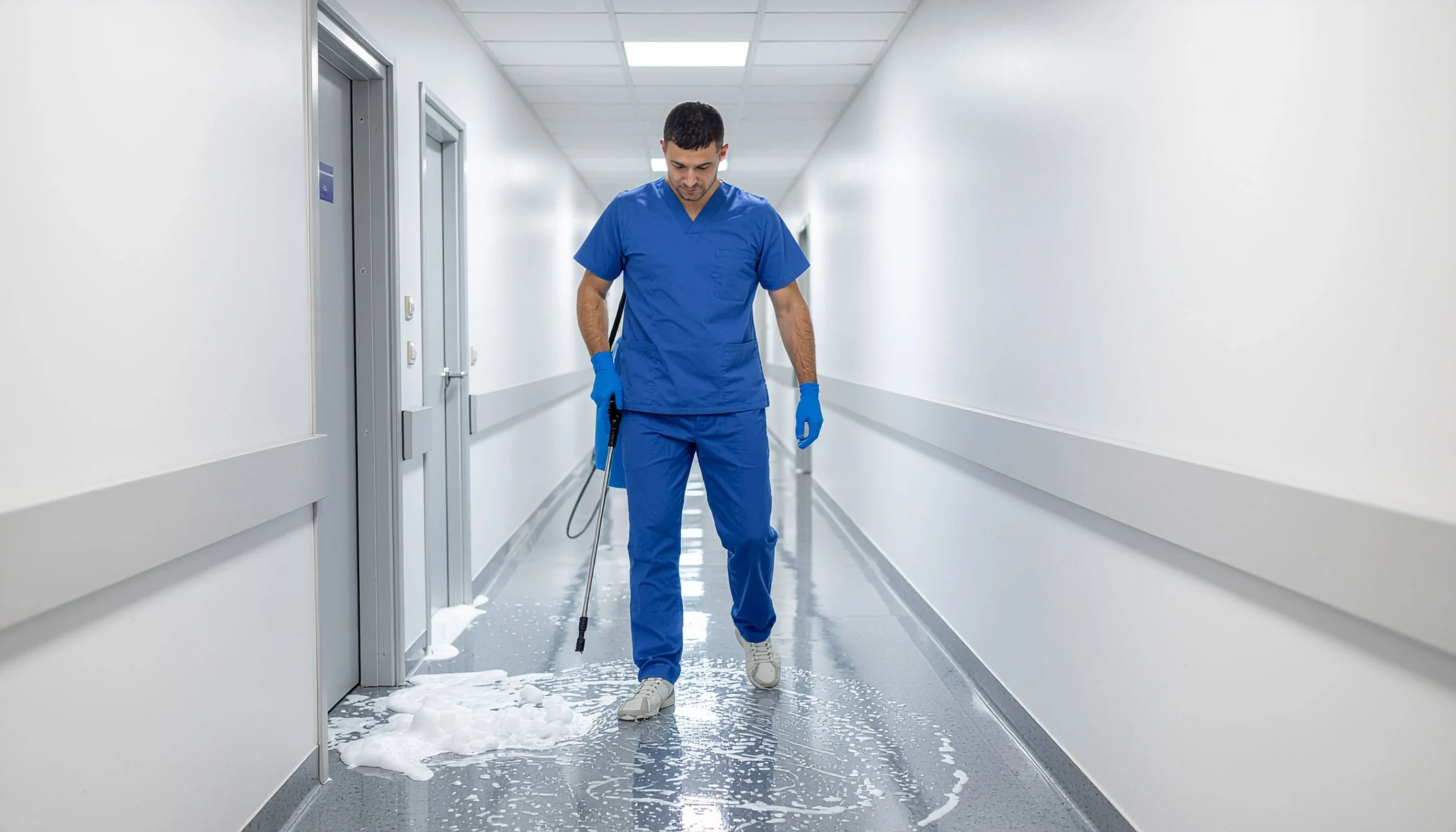
Western Australia’s healthcare facilities operate under some of the strictest healthcare disinfectant standards in the country, and for good reason. The Australian Guidelines for the Prevention and Control of Infection in Healthcare set clear expectations: environmental surfaces in clinical settings must be cleaned and disinfected to prevent healthcare-associated infections (HAIs). In a recent report, the Australian Commission on Safety and Quality in Health Care noted that approximately 165,000 HAIs occur annually across Australia, with environmental contamination playing a significant role in transmission.
The choice of disinfectant isn’t just about ticking compliance boxes. It is about selecting a product that actually works in the real-world conditions of a busy healthcare environment where time is limited, surfaces vary, and the margin for error is zero. But how do you guarantee consistent compliance when time is scarce and staff are stretched thin?
Why Foaming Disinfectants Have Become the Professional Standard
Traditional spray-and-wipe disinfectants have served healthcare facilities for decades, but they come with inherent limitations. The product runs off vertical surfaces before achieving adequate contact time. Overspray creates waste and potential respiratory irritation for staff. Coverage is inconsistent, leaving gaps in disinfection.
Foaming disinfectants solve these problems through basic physics. The foam clings to surfaces like walls, equipment, and fixtures, providing visible confirmation of coverage and maintaining contact long enough for the active ingredients to do their work. You can see exactly where you have applied it, which matters immensely when you are cleaning twenty patient rooms in a single shift.
A facility manager at a Perth aged care home shared this with Weskleen Supplies: “We switched from spray bottles to foaming sanitiser after a norovirus outbreak two years ago. The difference was immediate, as staff could actually see they had covered door handles, bed rails, and bathroom fixtures completely. Our infection rates dropped by 40% in the following quarter.”
Understanding WA’s Healthcare Disinfectant Standards
The Western Australian Department of Health mandates specific protocols for environmental cleaning in healthcare settings. These align with the National Safety and Quality Health Service Standards, particularly Standard 3 (Preventing and Controlling Healthcare-Associated Infection).
Key requirements include contact time compliance, where disinfectants must remain wet on surfaces for the manufacturer’s specified contact time. Products must demonstrate an effective spectrum of activity against bacteria, viruses, and fungi relevant to healthcare settings. Therapeutic Goods Administration (TGA) registration ensures products meet safety and efficacy standards. Furthermore, material compatibility ensures disinfectants do not damage medical equipment or building surfaces with repeated use, while staff safety protocols dictate that products must minimise respiratory and dermal exposure risks.
A high-quality comet cleaner meets these criteria through a hospital-grade disinfectant formulation designed specifically for high-hygiene areas. When sourcing commercial cleaning supplies perth, facility managers understand that general-purpose chemicals cannot do a specialist medical job.
How Foaming Technology Delivers Superior Contact Time
Contact time is where most disinfection protocols fail in practice. The label might say “10 minutes wet contact time,” but a thin spray evaporates in three minutes on a warm surface. Staff either do not know this matters, or they are too pressed for time to reapply.
Foam changes the equation entirely. The dense foam structure holds moisture against the surface, dramatically extending wet contact time without requiring reapplication. Think of it like the difference between splashing water on a window versus applying shaving cream; one runs off immediately, while the other stays exactly where you put it.
We have tested this in real conditions. A standard quaternary ammonium spray applied to a stainless steel bed rail at 22°C room temperature evaporates to dryness in approximately 4 minutes. The same active ingredient in foam formulation maintains wet contact for 8-12 minutes under identical conditions. That is the exact difference between meeting the contact time requirement and falling dangerously short.
The Science Behind Effective Healthcare Disinfection
Not all products meet the requirements of a hospital-grade disinfectant, and understanding the mechanism helps explain why foaming formulations outperform traditional sprays for certain applications.
Quaternary ammonium compounds (quats) disrupt microbial cell membranes, causing leakage and cell death. They are effective against a broad spectrum of bacteria and enveloped viruses, but they need time to work, typically 5-10 minutes of wet contact. Foaming delivery systems ensure this contact time is actually achieved.
Alcohol-based disinfectants work faster (30 seconds to 2 minutes) but evaporate rapidly and are not effective against spores or non-enveloped viruses. They have their place for quick disinfection of small items, but they are not suitable for large surface areas in patient rooms.
Oxidising agents like hydrogen peroxide work through oxidation, damaging cellular components. They are highly effective but can be corrosive to certain materials and require careful handling.
But what happens if the best disinfectant isn’t used correctly? A highly effective chemical that evaporates before achieving contact time delivers zero disinfection. Foaming products remove the guesswork from proper application.
Practical Application in Different Healthcare Settings
Different healthcare environments demand different approaches, but the underlying hygiene standards remain constant.
Acute Care Hospitals
High patient turnover and diverse pathogen exposure require rapid, reliable disinfection between patients. Operating theatres, emergency departments, and intensive care units cannot afford gaps in environmental hygiene. Foaming disinfectants excel here because they provide visual confirmation of complete coverage on complex equipment like ventilators, infusion pumps, and monitoring devices. A nurse can quickly foam-clean a cardiac monitor between patients using their commercial cleaning equipment, confident that all surfaces have been treated without the overspray concerns of aerosol products.
Aged Care Facilities
Residents in aged care have compromised immune systems and extended stays, making environmental hygiene critical for infection prevention. Bathrooms, dining areas, and shared spaces require frequent disinfection. A cleaning hand caddy loaded with foaming disinfectant and microfibre cloths becomes a mobile hygiene station, allowing staff to maintain standards room-to-room efficiently. The foam’s extended contact time means staff can apply it, complete other tasks, then wipe, maximising productivity without compromising efficacy. When facility managers source commercial cleaning supplies, convenience directly impacts compliance.
General Practice and Allied Health
Smaller healthcare settings often lack dedicated cleaning staff, with nurses or administration handling environmental hygiene between clinical duties. Simple, effective protocols matter immensely here. Foaming products simplify training. “Apply foam, wait for it to begin breaking down, then wipe clean” is easier to teach and verify than complex spray-and-wipe techniques requiring precise timing and multiple applications.
Comparing Foaming Disinfectants to Alternative Methods
Every disinfection method has trade-offs. Understanding them helps you choose the right tool for each situation.
Spray-and-wipe disinfectants work well for small, horizontal surfaces where pooling is not an issue. They are fast for spot cleaning but struggle with vertical surfaces and complex equipment. Overspray creates waste and potential respiratory exposure.
Wipes (pre-saturated disinfectant cloths) offer convenience and portion control. They are excellent for equipment disinfection in clinical settings but generate significant waste and can be cost-prohibitive for large surface areas. The wipe itself can also redistribute soil if not used correctly.
Electrostatic sprayers provide excellent coverage and are ideal for terminal cleaning of entire rooms. They require significant capital investment, training, and dedicated time, making it not practical for routine between-patient cleaning.
Foaming disinfectants bridge the gap between convenience and effectiveness. They cost more than basic spray cleaners but less than pre-saturated wipes for equivalent coverage. They require minimal equipment, just the product and standard cleaning cloths, and deliver reliable results with straightforward application.
The Economic Reality of Compliance
Healthcare facilities face constant pressure to reduce costs, but infection control is not an area where shortcuts pay off. A single HAI costs the Australian healthcare system an average of $18,000 in additional treatment, extended stays, and complications.
Foaming disinfectants deliver value through reduced product waste: foam stays where applied, unlike sprays that overshoot or run off surfaces. They lower labour costs: visual confirmation of coverage reduces time spent on reapplication and verification. They offer extended surface compatibility: non-corrosive formulations protect expensive medical equipment from damage. Ultimately, they decrease infection rates: proper disinfection prevents costly HAI incidents and associated regulatory scrutiny.
A Perth private hospital calculated their true cost per patient room disinfection using different methods. Traditional spray-and-wipe came to $3.20 per room in product and labour. Pre-saturated wipes cost $7.50 per room. Foaming disinfectant cost $2.80 per room. The foam’s superior coverage and extended contact time meant staff completed the task faster with better outcomes, a major win for those investing in reliable commercial cleaning supplies perth.
Integration With Broader Cleaning Protocols
Disinfection doesn’t happen in isolation. It is part of a comprehensive environmental hygiene program that includes mechanical cleaning, appropriate equipment, and trained staff.
The two-step cleaning process, mechanical cleaning followed by disinfection, remains the gold standard. Organic matter (blood, body fluids, soil) interferes with disinfectant activity, so surfaces must be cleaned before disinfection. However, many modern foaming disinfectants, including a professional comet cleaner, combine cleaning surfactants with antimicrobial actives, allowing single-step cleaning and disinfection on surfaces with light soiling.
This is where products like the Mr. Bean 5L All-Purpose Cleaner for general environmental cleaning and a foaming hospital-grade disinfectant for high-touch surfaces work seamlessly together. Use the appropriate tool for each task rather than trying to make one product do everything.
Microfibre technology significantly improves both cleaning and disinfection outcomes alongside your commercial cleaning equipment. An Enduro Microfibre Mop Head used with foaming disinfectant on floors removes 99% of surface bacteria, compared to 30% removal with traditional cotton mops. The microfibre physically removes organisms while the disinfectant kills them.
Staff Training and Protocol Development
The best disinfectant fails if staff don’t use it correctly. Effective training covers not just the “how” but the “why” behind protocols.
Essential training elements include contact time requirements, ensuring staff understand that disinfectants need to remain wet for a specified period to work. Surface preparation is critical; visible soil must be removed before disinfection. Personal protective equipment protocols dictate that even low-toxicity disinfectants require gloves and eye protection. Product-specific instructions are necessary because different formulations have different requirements. Finally, quality verification teaches staff how to confirm adequate coverage.
We have developed training protocols alongside several WA healthcare facilities using a reliable comet cleaner. The most effective approach combines initial hands-on training with visual job aids posted in cleaning storage areas. A simple laminated card showing “Apply foam → Wait for foam to begin breaking down → Wipe clean → Dispose of cloth” prevents shortcuts and maintains consistency across shifts.
Addressing Common Implementation Challenges
Real-world implementation always reveals gaps between theory and practice. Here is what actually comes up when facilities switch to foaming disinfectants.
“The foam leaves residue on surfaces.” This usually indicates over-application or insufficient wiping. Foam should be applied as a thin, even layer, not piled on. A final wipe with a clean, damp microfibre cloth removes any residue while ensuring complete coverage.
“Staff say it takes longer than spray bottles.” Initial resistance is normal with any process change. Time studies consistently show that foaming products reduce total cleaning time because staff don’t need to reapply product or second-guess coverage. The learning curve is typically 2-3 cleaning cycles.
“We are getting through product faster than expected.” Check application technique. Most foam dispensers are designed for optimal dilution; staff manually pumping product into cloths or buckets bypass this metering and waste product. Use the dispenser exactly as designed.
“It doesn’t work on a specific surface.” Material compatibility matters. Some foaming disinfectants aren’t suitable for certain plastics or metals. Always test on an inconspicuous area first and consult the manufacturer’s technical data sheet for approved surfaces.
The Future of Healthcare Hygiene in WA
Infection prevention continues to evolve, driven by emerging pathogens, antimicrobial resistance, and new technologies. Western Australia’s healthcare facilities are increasingly adopting evidence-based protocols that prioritise both efficacy and practicality.
Automated monitoring systems using ATP (adenosine triphosphate) testing provide objective verification of cleaning and disinfection effectiveness. These systems complement foaming disinfectants by confirming that protocols actually achieve the intended results.
Sustainable formulations address environmental concerns without compromising antimicrobial activity, ensuring compliance with strict healthcare disinfectant standards.
Integrated cleaning systems combine appropriate tools. Consolidating everything from a commercial dust control fringe mop for dry soil removal to specialised disinfectants for high-risk areas into comprehensive protocols addresses the full spectrum of healthcare environmental hygiene. The healthcare facilities achieving the best infection control outcomes are not necessarily those with the most expensive commercial cleaning equipment. They are the ones that match the right tools to specific tasks, train staff thoroughly, and verify that protocols are followed consistently using professional commercial cleaning supplies.
Making the Switch: Practical Implementation Steps
If you are considering foaming disinfectants for your healthcare facility, a structured implementation approach prevents common pitfalls.
Start with a pilot program in one department or area. This allows you to refine protocols, identify training needs, and demonstrate results before facility-wide rollout. Choose a high-visibility area where improvements will be noticed. Engage frontline staff in protocol development. The people actually doing the cleaning know where current methods fail and what practical constraints exist. Their input creates buy-in and identifies real-world challenges before they become problems.
Establish clear success metrics. What does success look like? Reduced infection rates, improved ATP testing scores, decreased product costs, or positive staff feedback? Define measurable outcomes from the start.
Source from reliable suppliers who understand healthcare requirements. Professional suppliers specialise in commercial cleaning supplies perth that meet Australian healthcare standards. The best partners do not just sell products, they help facilities develop effective hygiene protocols that work in practice, not just on paper.
Conclusion
Meeting Western Australia’s healthcare hygiene standards requires more than good intentions. It demands products and protocols that actually work in the demanding conditions of clinical environments. Foaming disinfectants have emerged as a professional standard because they solve real problems: inconsistent coverage, inadequate contact time, and verification challenges that plague traditional spray-and-wipe methods.
The facilities achieving the best infection control outcomes understand that effective disinfection is a system, not just a product. It combines appropriate chemicals, proper equipment, thorough training, and consistent verification. Foaming disinfectants are a critical component of that system, providing visible confirmation of coverage and extended contact time that ensures antimicrobial actives actually do their work.
If you are ready to upgrade your facility’s disinfection protocols or need guidance on meeting current WA healthcare disinfectant standards, contact us on 1800 728 926 for expert advice tailored to your specific environment. As a trusted partner, Weskleen Supplies has helped healthcare facilities access premium commercial cleaning supplies perth to develop practical, effective hygiene programs that protect patients, staff, and reputations.