


Blog
Goo Off vs Generic Adhesive Remover: Which Works Better for Perth Commercial Cleaners

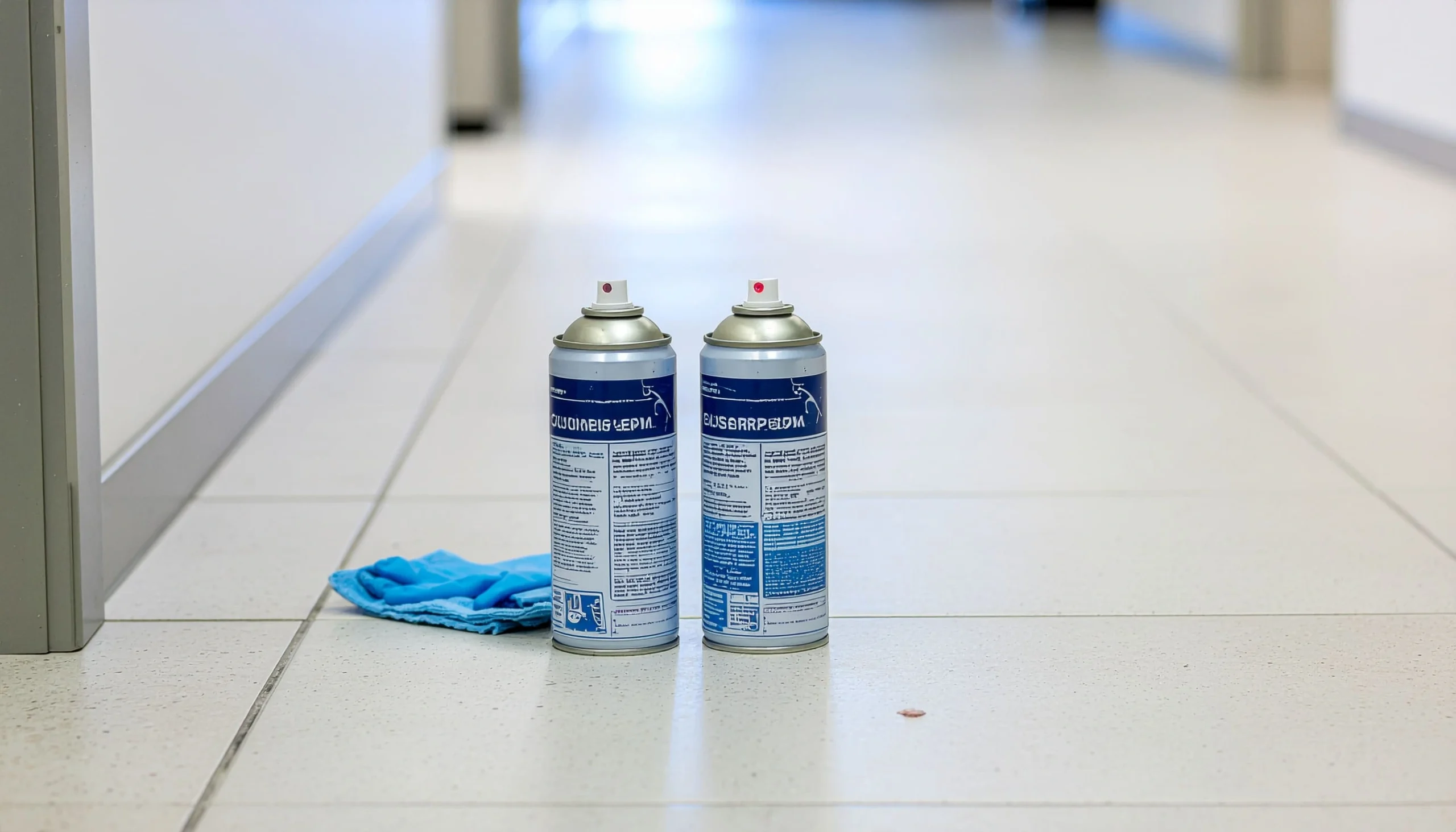
When a Perth cafe owner peeled back old promotional vinyl from their front window, they discovered something frustrating: a sticky, grey residue that wouldn’t budge with standard cleaners. After 20 minutes of scrubbing with a generic sticky residue cleaner, the film remained. They switched to a commercial adhesive remover and watched the residue dissolve in under two minutes. That is the difference between products designed for consumer use and those built for professional results.
For commercial cleaners operating across Perth’s hospitality venues, retail spaces, and office buildings, adhesive removal isn’t occasional work; it is a recurring challenge. Sticker residue, tape marks, label glue, and construction adhesive appear on glass, metal, plastic, and painted surfaces. The wrong product wastes time, damages surfaces, and costs money. The right one cuts through the mess efficiently whilst protecting the substrate underneath. But how much is inefficient cleaning really costing your business?
Why Generic Adhesive Removers Fall Short in Commercial Settings
Generic adhesive removers, such as the ones you will find in supermarkets and hardware stores, are formulated for light household tasks. They’re designed for occasional use: removing a price tag from a gift, cleaning up craft glue, or tackling a single stubborn sticker. Their solvent strength is deliberately limited to reduce liability and accommodate untrained users.
Reputable vendors like Weskleen Supplies note that volume and concentration matter. Most generic products contain diluted solvents like d-limonene or weak petroleum distillates. They work slowly, requiring multiple applications and significant elbow grease. For a commercial cleaner facing dozens of adhesive spots across a retail fitout or post-event venue cleanup, this approach simply isn’t viable.
For operations upgrading their commercial cleaning supplies perth, surface compatibility is another limitation. Generic removers often lack the chemical precision needed to dissolve industrial adhesives without attacking the surface beneath. They might soften paint, cloud plastics, or leave an oily residue that attracts dirt. Professional-grade formulations are engineered to target specific adhesive chemistries whilst remaining inert to common commercial substrates.
Consider the difference like comparing household bleach to hospital-grade disinfectant. Both kill germs, but one is calibrated for efficiency, safety protocols, and consistent results across demanding environments.
What Makes Goo Off a Professional-Grade Solution
The goof off adhesive remover is formulated specifically for commercial and industrial adhesive challenges. It is not a consumer product scaled up; it is a different chemical approach entirely.
The solvent blend is aggressive and targeted. Goo Off uses a combination of acetone, toluene, and petroleum distillates to break down the polymer chains in adhesives, labels, tapes, and glues. This isn’t about dissolving slowly; it’s about penetrating the adhesive layer and disrupting its bond with the surface in seconds.
Application speed transforms productivity. Where a generic remover might require five minutes of contact time plus scrubbing, Goo Off works in 30-60 seconds, typically. For a commercial cleaner billing by the hour or working on fixed-price contracts, that time difference is the margin between profit and loss.
For facility managers auditing their commercial cleaning supplies, the aerosol format matters more than you might think. Goo Off’s 340ml aerosol delivers precise application without waste; you are not pouring liquid onto a cloth and hoping it penetrates. You are spraying a controlled amount directly onto the adhesive. The propellant helps drive the solvent into the residue, improving contact and effectiveness.
Real-World Performance: Adhesive Types and Removal Scenarios
Not all adhesives are created equal, and removal difficulty varies dramatically based on chemistry and substrate.
Pressure-sensitive adhesives (the kind used in tapes, labels, and vinyl graphics) are the most common challenge. These are designed to create strong bonds without curing, which makes them removable, but only with the right solvent. A generic sticky residue cleaner struggles because it doesn’t penetrate the adhesive layer quickly enough. The goof off adhesive remover‘s solvent blend dissolves these adhesives rapidly, leaving minimal residue.
Construction adhesives and silicone require more aggressive chemistry. These are cured or cross-linked polymers that won’t respond to weak solvents used alongside standard commercial cleaning equipment. We’ve seen commercial cleaners spend 30 minutes trying to remove silicone caulk residue with generic products, only to achieve partial success. Goo Off handles these materials because its solvent strength is calibrated specifically for industrial adhesives.
Aged adhesive presents unique challenges. When tape or labels sit on a surface for months or years, UV exposure and oxidation change the adhesive chemistry. It becomes harder, more brittle, and more resistant to removal. Generic removers lack the solvent power to rehydrate and dissolve these aged residues. Professional-grade products maintain effectiveness even on long-term adhesive contamination.
A Perth property manager once described cleaning up after a tenant who had used double-sided tape to mount dozens of posters across painted walls. Generic remover softened the adhesive but smeared it, creating a worse mess. Goo Off dissolved each spot cleanly, preserving the paint underneath.
Surface Safety and Compatibility Considerations
The most powerful solvent is useless if it damages the surface you’re cleaning. This is where formulation expertise separates professional products from generic alternatives when sourcing commercial cleaning supplies perth.
Goo Off is tested on multiple substrates. It’s safe for glass, metal, most plastics, sealed wood, and cured paint. The formulation includes additives that moderate evaporation rate and reduce surface interaction time, minimising the risk of damage. Generic removers often lack this precision, leading to clouding on plastics or softening of painted surfaces.
Pre-testing remains essential. Even professional-grade products require spot testing on inconspicuous areas, especially on sensitive materials like acrylic, polycarbonate, or fresh paint. We recommend applying a small amount to a hidden section and checking for discolouration, softening, or texture changes after 60 seconds.
Residue management differs between products. Generic removers often leave an oily film that requires secondary cleaning with detergent. Goo Off evaporates more completely, though we still recommend wiping treated areas with a clean cloth or microfibre mop head dampened with all-purpose cleaner to remove any remaining solvent or dissolved adhesive.
Think of it like pH-neutral cleaners versus harsh degreasers. Both remove soil, but one is calibrated to protect the surface whilst delivering results. Professional adhesive removers follow the same principle.
Cost Analysis for Commercial Cleaning Operations
When evaluating commercial cleaning supplies, generic adhesive removers appear cheaper at the shelf, but cost-per-job tells a different story entirely.
A 340ml aerosol of goof off adhesive remover typically treats 40-60 adhesive removal tasks depending on residue severity. A generic 250ml bottle might handle 15-20 jobs before running out, but at what cost? You’re using more product per application and spending more time scrubbing.
Labour cost is the hidden factor. If a commercial cleaner earns $35 per hour and a generic remover adds five extra minutes per adhesive spot compared to professional options, that’s $2.92 in labour cost per spot. Across ten spots, the “cheaper” product costs $29.20 more in time alone.
Damage risk carries financial weight. One instance of clouded acrylic signage or softened paint from an aggressive generic remover can cost hundreds in replacement or repair. Professional-grade products reduce this risk through better formulation and testing.
For operations running multiple crews or maintaining fleets of commercial cleaning equipment, this difference compounds quickly. We’ve calculated that commercial adhesive remover products deliver 3-5 times better cost-efficiency than generic alternatives when labour and risk factors are included.
Application Techniques for Maximum Effectiveness
Before adding a new sticky residue cleaner to your commercial cleaning supplies perth, remember that even the best product delivers poor results if applied incorrectly. Professional cleaners use specific techniques to optimise adhesive removal.
Start with dry removal. Before applying any solvent, scrape away as much bulk adhesive as possible using a plastic scraper or razor blade (on appropriate surfaces). This reduces the amount of material the solvent needs to dissolve and prevents smearing.
Apply solvent directly to the adhesive. Hold the aerosol 10-15cm from the surface and spray enough to saturate the residue without over-wetting surrounding areas. The solvent needs contact time, typically 30-60 seconds, to penetrate and break down the adhesive.
Use appropriate tools for removal. A plastic scraper, non-abrasive pad, or clean cloth works for most applications. Avoid steel wool or abrasive pads that might scratch surfaces. For textured surfaces like concrete or rough metal, a stiff nylon brush helps work the dissolved adhesive out of surface irregularities.
Wipe clean and follow up. After the adhesive is removed, wipe the area with a clean cloth to remove dissolved residue. Follow with a damp cloth dampened with an all-purpose cleaner to remove any remaining solvent film.
Ventilation is non-negotiable. Goo Off contains volatile organic compounds that require adequate airflow. Work in well-ventilated areas, use exhaust fans when working indoors, and consider respiratory protection for extended use in confined spaces.
Safety Protocols for Commercial Use
Professional-grade solvents and commercial cleaning supplies demand professional handling practices. Commercial cleaners should implement specific safety measures when using heavy-duty chemical products.
Personal protective equipment is mandatory. Nitrile gloves protect skin from prolonged solvent contact. Safety glasses prevent accidental eye exposure during spray application. In poorly ventilated areas or during extended use, respiratory protection rated for organic vapours is essential.
Storage requirements matter. Keep aerosol cans away from heat sources, direct sunlight, and ignition sources. Store in cool, dry locations below 50°C. Never puncture or incinerate cans, even when empty.
Material Safety Data Sheets should be accessible. Every crew member using these solvents should understand the hazards, first aid measures, and emergency procedures outlined in the MSDS. This isn’t bureaucracy; it is liability protection and worker safety.
Disposal follows environmental regulations. Used cloths contaminated with solvent should be stored in sealed metal containers and disposed of according to local hazardous waste guidelines. Empty aerosol cans should be completely depressurised before recycling.
When Generic Products Make Sense (and When They Don’t)
Not every adhesive removal task justifies professional-grade solvents. Understanding when to use each product type optimises both cost and results.
Generic removers work adequately for fresh adhesive residue from masking tape or painter’s tape, light label residue on non-porous surfaces, and occasional small-scale tasks where time isn’t critical. For a homeowner removing a single price sticker, generic products are perfectly reasonable.
Professional products are essential for aged or weathered adhesive, industrial tapes and construction adhesives, high-volume commercial cleaning where time equals money, and situations where surface damage risk must be minimised. Any commercial operation handling adhesive removal regularly should use professional-grade products.
The decision parallels choosing between a household mop and a professional floor scrubber. Both clean floors, but one is built for efficiency, durability, and consistent results alongside other heavy-duty commercial cleaning equipment.
What Perth Commercial Cleaners Should Look For in Adhesive Removers
Beyond brand names, specific product characteristics determine real-world performance for commercial cleaning operations.
Solvent strength and formulation chemistry should target the adhesive types you encounter most. Products containing acetone, toluene, or strong petroleum distillates handle industrial adhesives. Citrus-based solvents (d-limonene) work well for lighter residues whilst offering lower toxicity.
Delivery format affects application efficiency. Aerosol sprays provide precise application and better penetration. Liquid formulations work for large-area treatments but require more careful application to prevent drips and waste.
Surface compatibility testing separates professional products from consumer-grade alternatives. Look for products that specify tested substrates and provide clear guidance on materials to avoid.
For commercial cleaners building their cleaning supply kit, a commercial adhesive remover should be selected with the same care as commercial carpet cleaning machines or disinfectants. Make your choices based on performance, safety, and cost-effectiveness rather than shelf price alone.
The Professional Standard for Perth Commercial Cleaning
The difference between generic and professional-grade adhesive removers isn’t subtle; it is the difference between spending 20 minutes fighting sticky residue and resolving it in two minutes. For commercial cleaners operating across Perth’s diverse commercial environments, that efficiency translates directly to profitability and service quality.
These professional products aren’t expensive luxuries; they are calibrated tools that deliver measurable performance advantages over generic alternatives. They work faster, handle tougher adhesives, reduce surface damage risk, and ultimately cost less per job when labour and risk factors are considered.
Choosing the right adhesive remover is like choosing the right commercial vacuum cleaner or floor machine; it is an investment in efficiency, quality, and the professional reputation that keeps clients coming back.
For businesses relying on high-quality commercial cleaning supplies perth, the choice is clear. If you are ready to upgrade your adhesive removal capabilities with professional-grade products, reputable partners like Weskleen Supplies can help. Contact us on 1800 728 926 to discuss which solutions best fit your commercial cleaning operations.