


Blog
How to Stock Cleaning Trolleys for Every Shift

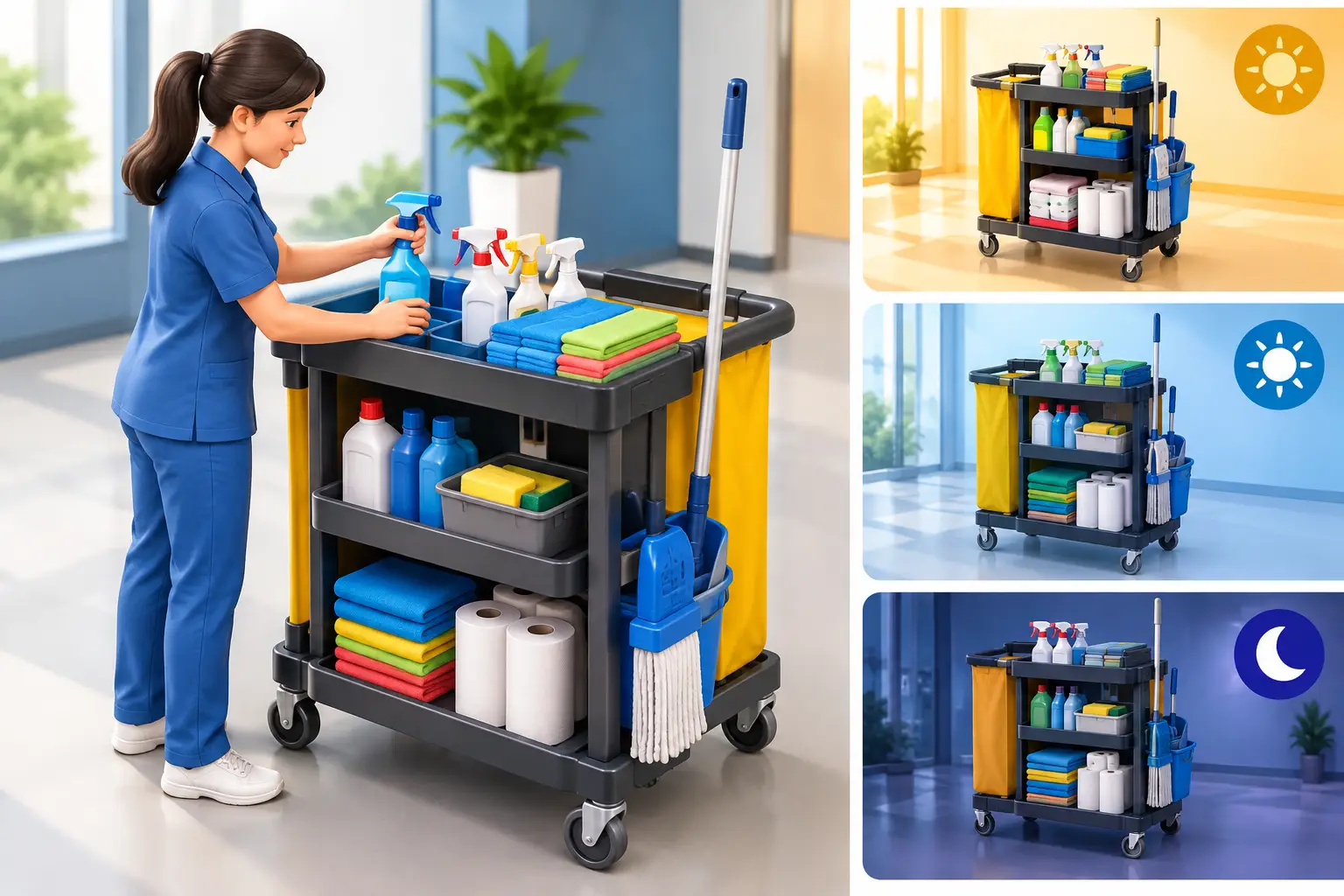
A poorly stocked trolley costs time at every doorway. Cleaners end up walking back to the storeroom for bin liners, using the wrong cloth on a touchpoint, or leaving a washroom half-finished while they hunt for consumables. Knowing how to stock cleaning trolleys properly gives your team what they need at the point of use, keeps tasks moving, and presents a more professional standard to clients and building occupants.
The best setup is not about loading every available product onto the trolley. It is about building a practical mobile workstation for the site, shift and cleaning programme in front of you.
Start with the cleaning task, not the trolley
Before choosing chemicals or filling shelves, consider where the trolley will be used. An office cleaner working through desks, kitchens and washrooms needs a different loadout from a cleaner servicing a school, medical practice, hotel or retail site.
Look at the rooms on the roster, the expected foot traffic, the number of rubbish bins, and the hygiene requirements. A daytime cleaner in a busy facility may need more washroom consumables and quick-response products. An after-hours team may need more bin liners, floor-care equipment and general-purpose cleaner for a complete service.
The trolley itself also matters. A compact trolley is easier to manoeuvre through narrow corridors and lifts, but it cannot safely carry bulk stock. A larger janitorial trolley offers more storage, waste collection space and room for a mop bucket, but may be unsuitable for tight sites. Choose the size around the job, rather than trying to make one trolley suit every building.
How to stock cleaning trolleys by zone
A simple zoning system prevents cross-contamination and makes products faster to find. Keep clean consumables separate from chemicals, and separate washroom tools from general cleaning tools. Staff should be able to see immediately where an item belongs when restocking at the end of a shift.
Store frequently used items at waist height or in open top trays. This is the easiest area to reach and should hold products such as ready-to-use spray bottles, microfibre cloths, gloves and hand towels. Heavier items, including chemical bottles and spare liners, belong lower down to reduce the chance of the trolley becoming top-heavy.
Dedicate one section to washroom cleaning. This may include toilet cleaner, disinfectant, colour-coded cloths, toilet paper, hand towels, soap refills and sanitary bin liners where required. Keep these items well away from kitchen or desk-cleaning supplies. Colour coding is especially useful on larger sites, where multiple cleaners may share equipment across shifts.
Use a separate area for general cleaning supplies: neutral cleaner, glass cleaner, dusting cloths, scourers, wipes and rubbish bags. If the site includes food preparation areas, keep food-safe products and their designated cloths clearly separated from washroom stock.
Carry the essentials without overloading
Every trolley needs a reliable core range, but excess stock makes it harder to push, harder to organise and more likely to spill. The aim is to carry enough for the scheduled run, plus a sensible buffer for unexpected spills or busy washrooms.
For most commercial cleaning rounds, a well-stocked trolley will include:
- Colour-coded microfibre cloths and cleaning wipes
- Disposable gloves in suitable sizes
- General-purpose cleaner, glass cleaner and disinfectant appropriate to the site
- Toilet cleaner and washroom consumables
- Bin liners in the correct sizes and grades
- Hand towels, toilet paper and soap refills
- Scrapers, scourers, sponges and small detailing tools
- Wet floor signs and a small spill-response kit
This is a starting point, not a fixed rule. A medical or aged-care setting may need approved infection-control products and stricter separation of equipment. Hospitality venues often require extra stock for washrooms and public areas. For a small office, carrying large quantities of every consumable may simply waste space.
Where possible, use correctly labelled spray bottles rather than carrying large chemical containers on the trolley. Always follow the manufacturer’s dilution instructions and safety data requirements. Decanting chemicals into unlabelled bottles is never acceptable. It creates a serious safety risk and makes it difficult for staff to use the product correctly.
Put safety equipment where it can be used quickly
A trolley should make cleaning safer, not introduce new hazards. Wet floor signs need to be easy to grab before mopping begins, not buried under liners or cartons. Keep gloves accessible so cleaners do not handle rubbish or chemicals without appropriate protection.
Check that every chemical is sealed, upright and stored in a stable holder or basket. Do not place incompatible chemicals together, and never mix products to save time. Bleach-based products, acids and other concentrated chemicals require particular care. The product label and your site procedures should always guide handling and storage.
Weight distribution is another practical safety point. Heavy stock on the top shelf can make a trolley difficult to control, especially on ramps, uneven surfaces or when moving between buildings. Load heavier products down low, keep the rubbish bag holder clear, and do not stack cartons where they can fall when the trolley turns.
Build a restocking routine that actually works
The best trolley setup will fail if it is not reset between shifts. Restocking should be a standard part of the close-down routine, not a job left for the next cleaner when they are ready to start work.
At the end of each shift, remove rubbish, used cloths and empty bottles. Wipe down the trolley, inspect wheels and handles, and return any equipment that needs washing, charging or repair. Then replenish supplies to agreed minimum levels. For example, your team may set a minimum of two rolls of bin liners, a full glove box, a defined number of clean cloths and enough washroom paper for the next scheduled area.
A short trolley checklist helps create consistency, particularly when staff rotate across sites. It also makes stock use more predictable for supervisors and facility managers. Rather than discovering halfway through a shift that hand towels are low, the team can identify replenishment needs before leaving the storeroom.
For multi-site cleaning contractors, standardising the trolley layout can save real time in training and handovers. A cleaner who knows that chemicals are always on the lower left and washroom consumables are always in the top caddy can work efficiently at any contracted site. There may be exceptions for site-specific stock, but the basic layout should remain familiar.
Match chemicals and consumables to the surfaces on site
A trolley is only as effective as the products it carries. One all-purpose chemical may be suitable for routine wipe-downs, but it is not automatically the right option for glass, stainless steel, toilets, greasy kitchen surfaces or floor maintenance.
Choose products based on the surface, soil level and hygiene outcome required. Neutral cleaners suit many routine surfaces, while a dedicated glass cleaner helps avoid streaks on mirrors and partitions. Washrooms may require toilet-specific products and an approved disinfectant for touchpoints. High-traffic entrances can need floor products and pads selected for the flooring material and machine in use.
Consumables deserve the same attention. Thin bin liners can be cost-effective for light office waste but may split in food-service or high-volume areas. Paper towel and toilet roll sizes must suit the dispensers installed on site. Buying the wrong refill can turn a straightforward service visit into an avoidable return trip.
If you are unsure which chemical, liner, floor pad or washroom refill suits your operation, ask for advice before ordering in bulk. WesKleen Supplies can help Perth cleaners, businesses and facility teams select practical products that suit the work, budget and equipment already in place.
Keep a small reserve nearby
A trolley should carry the working stock, not become a storeroom on wheels. Keep reserve cartons and bulk chemicals in a secure, clearly organised supply area. This makes stocktaking simpler and prevents staff from overloading their trolleys with products they may not use.
The right reserve level depends on delivery schedules, site access and consumption. A busy venue heading into a weekend needs a stronger buffer than a low-traffic office with regular deliveries. Review what runs out most often, then adjust your trolley par levels and storeroom quantities accordingly.
A clean, organised trolley signals that the cleaning operation is under control. More importantly, it helps cleaners work with fewer interruptions, safer chemical handling and the right supplies ready for the next room. Set a clear standard, make restocking part of every shift, and let the trolley do the job it was designed for: keeping professional cleaning moving.