


Blog
Robotic Cleaning Trends for Smarter Facilities

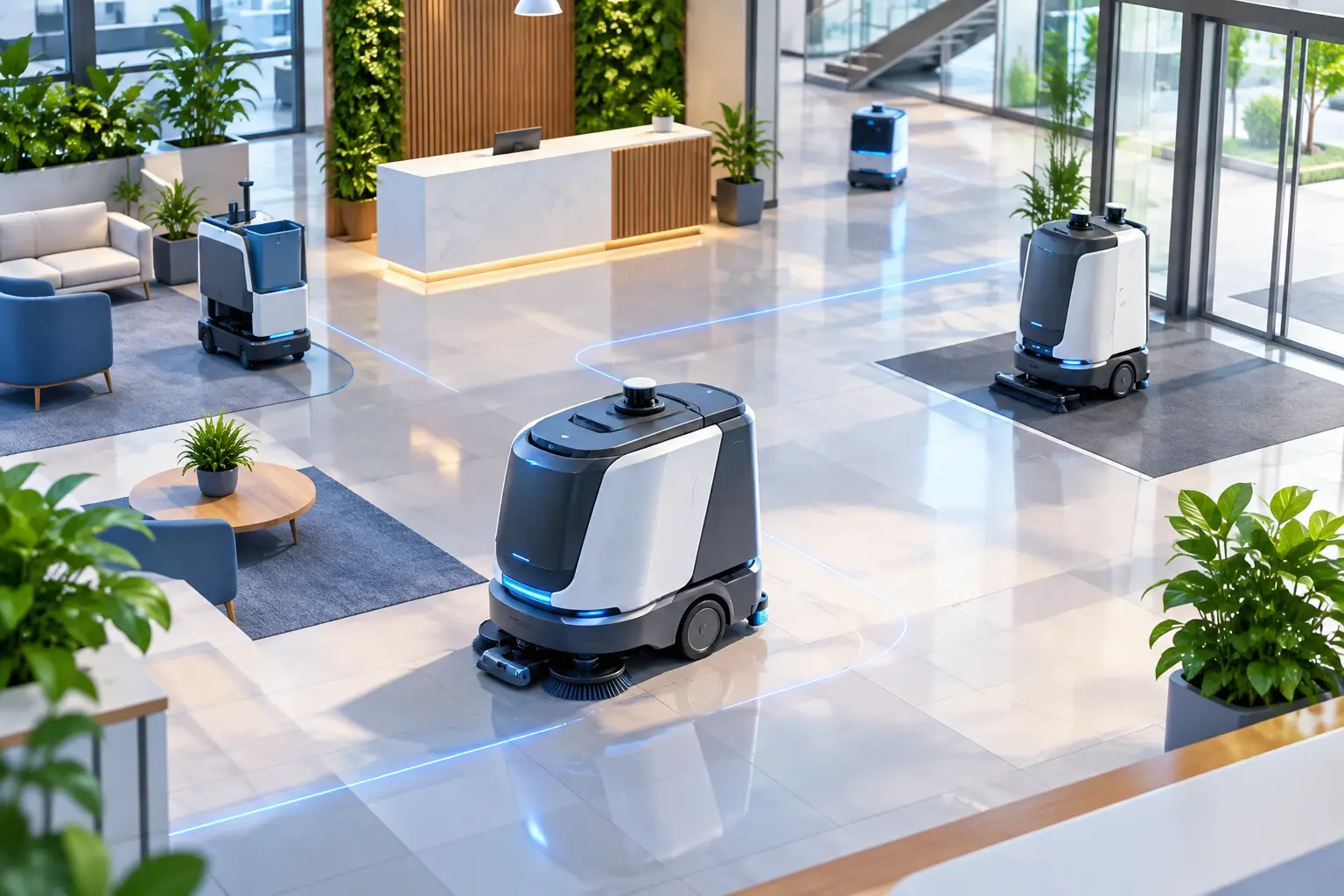
A scrubber that can clean a supermarket aisle before opening, or vacuum an office after staff leave, is no longer a futuristic talking point. Robotic cleaning trends are becoming a practical consideration for Perth businesses facing higher labour costs, larger floor areas and rising expectations around hygiene. The question for most facility managers is not whether robots can clean. It is whether they can improve their operation without creating more work for the team.
For the right site, autonomous cleaning equipment can deliver more consistent floor care and free cleaners for the detailed work machines cannot do. For the wrong site, it can be an expensive machine waiting for a clear path. Getting value comes down to understanding the task, the environment and the support equipment that still sits behind every good cleaning result.
Why robotic cleaning trends are gaining ground
Autonomous floor scrubbers and robotic vacuums are gaining traction because they address a specific operational problem: repetitive cleaning over large, predictable areas. Shopping centres, warehouses, schools, medical facilities, airports, offices and hospitality venues all have spaces where floors need regular attention, often at inconvenient hours.
A robot can follow a mapped route, avoid many fixed and moving obstacles, and repeat the same cleaning programme night after night. That consistency matters. Missed sections, rushed passes and uneven chemical application can shorten floor life and leave a poor impression on visitors. A well-set-up robotic scrubber helps standardise the routine work, particularly on hard floors with long, open runs.
There is also a stronger focus on reporting. Many commercial robotic machines record run time, coverage, water use, battery status and service alerts. For contract cleaners and facility teams, this information can help demonstrate that scheduled cleaning has taken place. It is useful for managing standards, but it should not be mistaken for proof that every cleaning outcome was perfect. A coverage map does not show whether a greasy spill needed pre-treatment or whether a floor pad was due for replacement.
The best jobs for autonomous machines
Robots perform best when the cleaning task is structured. Clear floors, consistent layouts and repeatable routes make their work easier. A large warehouse aisle, school corridor, retail floor or office walkway is a far better fit than a crowded dining area with chairs moving throughout service.
Open hard-floor maintenance
Autonomous scrubber dryers are designed for routine maintenance cleaning on sealed hard floors. They can dispense solution, scrub, recover dirty water and leave the area dry enough for normal traffic when correctly configured. This is where they can save genuine labour time, especially when daily cleaning includes hundreds or thousands of square metres.
The machine still needs the right pad or brush, chemical dilution and water flow for the floor and soil level. Too aggressive a pad can damage a finish. Too little detergent may leave oily soil behind. A robot does not remove the need for cleaning knowledge – it makes the daily process more repeatable once that knowledge has been applied.
Routine vacuuming in predictable areas
Robotic vacuums can assist with daily dust, grit and light debris on carpet tiles and hard floors. They are most useful in offices, accommodation corridors and other areas where furniture stays in place. They are less suitable where cables, loose stock, floor-level displays or heavy debris are common.
For commercial sites, the key word is assist. A robotic vacuum can maintain appearance between deeper cleans, but edge work, stairs, upholstery and spill response still require a cleaner with the right vacuum attachments and tools.
Overnight and low-traffic cleaning
One of the clearest advantages is the ability to run a programmed clean outside peak trading or operating hours. This can reduce disruption in busy sites and allow staff to focus on washrooms, touchpoints, rubbish removal, spot cleaning and detailed work during the shift.
That does not mean a machine should operate without supervision policies. Sites need procedures for charging, emergency stops, storage, access control and responding to faults. In public areas, managers must also consider pedestrian safety and how the machine works around people, trolleys and temporary hazards.
Where robots still fall short
Cleaning is not a single task. It is a mix of floor maintenance, spill response, washroom servicing, waste handling, disinfection, high-dusting and presentation work. Current robots are most capable in the first category and far less useful in the others.
They cannot restock toilet paper, clean a basin properly, remove chewing gum from an entryway or assess whether mould around a grout line needs specialist treatment. They also struggle with cluttered spaces, sudden layout changes, thresholds, ramps, narrow gaps and surfaces that require manual detailing. A cleaner can see an unexpected issue and make a judgement call. A robot works within the instructions and sensors it has been given.
There is a practical labour point too. Autonomous equipment is not labour-free equipment. Someone must map the site, prepare the area, fill tanks, empty recovery water, clean filters, inspect squeegees, charge batteries and carry out daily checks. If those steps are skipped, cleaning quality drops quickly and downtime rises.
Choosing equipment around the site, not the hype
Before considering an autonomous machine, measure the actual cleaning task. Look at the floor area, type of surface, traffic level, obstacles, cleaning frequency and the hours available. A large open area cleaned every day has a very different business case from a small tenancy with frequent spills and changing furniture.
Start by asking which work is repetitive enough to automate. Then identify what the team would do with the time saved. If cleaners can move into detail cleaning, washroom checks, infection control tasks or customer-facing support, the investment may improve the whole standard of the facility. If the robot simply adds set-up duties to an already stretched team, the gain may be limited.
It is also worth checking the basics before buying:
- whether there is a secure, accessible charging and storage area
- whether the site has reliable Wi-Fi if the machine requires it
- whether floor transitions, lifts, doorways and ramps suit the machine
- whether staff have time and training for daily maintenance
- whether local access to consumables, pads, chemicals and spare parts is available
These details influence total cost far more than the purchase price alone. A machine with an impressive feature list is not automatically the best option if replacement parts take weeks to arrive or the site cannot support its daily routine.
Chemicals, pads and maintenance still matter
Robotic cleaning equipment works within a broader cleaning system. Use a floor chemical that is compatible with the machine, the surface and the expected soil. Low-foam formulations are often required for scrubber dryers because excess foam can interfere with recovery performance. Dilution should be controlled, both for results and to avoid wasting product.
Pads and brushes deserve the same attention. A red maintenance pad, a more aggressive scrub pad and a soft brush all perform differently. The right choice depends on whether the goal is daily cleaning, deeper soil removal or maintaining a protective floor finish. Using the wrong accessory can leave marks, reduce cleaning effectiveness or increase wear on the machine.
Daily care protects the investment. Empty and rinse recovery tanks, clean the squeegee, check hoses and filters, inspect brushes or pads, and charge batteries as specified by the manufacturer. These are straightforward jobs, but they are the difference between dependable equipment and recurring call-outs.
What robotic cleaning means for cleaning teams
The strongest approach is not replacing people with machines. It is using each for the work they do best. Robots can take on repetitive floor runs; trained cleaners can focus on judgement-based, high-contact and presentation-critical tasks. This can make a team more productive without lowering standards.
For contractors, robotic equipment may also become part of a more transparent service offer. Clients increasingly want proof of cleaning activity, predictable outcomes and sensible cost control. The technology can support those expectations when it is matched with skilled staff, clear quality checks and dependable supplies.
For Perth facilities considering the change, start with a trial area rather than an entire site. Track cleaning time, water and chemical use, manual touch-ups, downtime and staff feedback over several weeks. WesKleen Supplies can help teams source the floor chemicals, pads, accessories and everyday consumables needed to keep both manual and machine cleaning programmes running properly.
The most useful technology is the kind that makes cleaning easier to manage, not harder to explain. Choose a machine for a real, repeatable task, keep the basics of floor care in place, and give your team the tools to finish the work that only people can see.