


Blog
Electrostatic Spraying Trends for Perth Cleaners

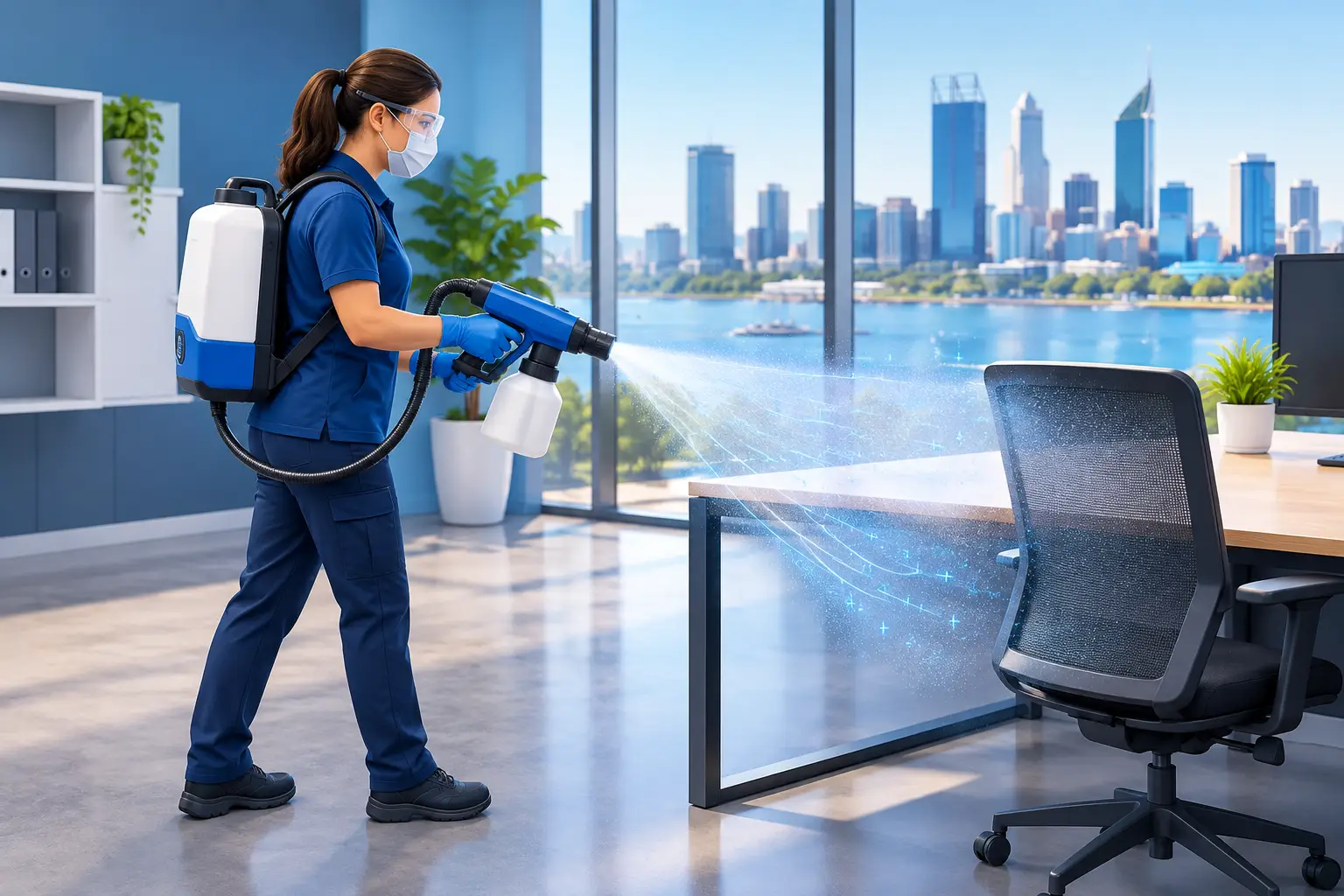
A cleaner can cover a meeting room, classroom or vehicle interior much faster with an electrostatic sprayer than with a trigger bottle alone. That practical advantage is why electrostatic spraying trends remain relevant for Perth cleaning contractors, facilities teams and businesses managing high-touch environments. The key is understanding what the equipment actually improves: application coverage and speed, not the cleaning or disinfecting performance of a chemical on its own.
For many sites, electrostatic spraying is now a targeted tool rather than an all-purpose replacement for hands-on cleaning. Used properly, it can support a more consistent hygiene process. Used poorly, it can waste chemical, leave surfaces insufficiently cleaned and create a false sense of security.
Electrostatic spraying trends are becoming more selective
The biggest shift is not that every facility wants a sprayer. It is that buyers are becoming more specific about where spraying fits into their cleaning programme. Early demand was often driven by a need to treat large spaces quickly. Now, experienced operators are asking better questions about dwell time, surface preparation, ventilation and the cost of each application.
Electrostatic equipment gives liquid droplets an electrical charge. As the spray is directed at a grounded object, droplets are attracted to and wrap around suitable surfaces. This can help reach awkward angles on chair frames, desk legs, handrails, trolley handles, gym equipment and other irregular objects that are slower to treat manually.
That wraparound effect is useful, but it is not magic. The operator still needs to move methodically, maintain the correct distance and apply enough product to wet the target surface without soaking it. Large flat areas may be quicker and more economical to clean with a microfibre mop or cloth, particularly where soil is visible.
Hygiene expectations have moved beyond a quick spray
Commercial customers are increasingly focused on proof of process. Facility managers want their cleaning contractor or internal team to be able to explain what product was used, which areas were treated, how long the product remained wet and whether staff followed the label directions. A sprayer can be part of that process, but it cannot replace it.
This matters because dirt, grease and organic material can reduce the performance of many disinfectants. If a lunchroom table has food residue or a washroom touchpoint is visibly soiled, clean it first. Spraying disinfectant over grime may look efficient, but it is not the same as preparing a surface correctly.
A more mature approach separates the job into stages: remove soil, apply the appropriate sanitiser or disinfectant where required, allow the stated contact time, then return the area to service according to the product instructions. Electrostatic application may suit the second stage, especially in spaces with many touchpoints, but it does not remove the need for the first.
Where electrostatic sprayers make practical sense
The best applications tend to be repeatable, detailed and time-sensitive. Think of a childcare centre after closing, an office fit-out before staff arrive, a gym with lots of equipment frames, shared fleet vehicles, accommodation rooms, education facilities and hospitality seating areas. In these settings, the operator is dealing with many contours and contact surfaces in a defined area.
It can also help teams standardise coverage across shifts. When staff are trained on a set route through a room, with defined surfaces and a suitable product dilution, spraying can reduce variation between operators. That is valuable for contract cleaners who need dependable results across multiple client sites.
However, not every job warrants the investment. For a small shopfront, occasional home cleaning or a site with mainly open floors and benches, quality microfibre tools, a well-chosen chemical and good technique may offer better value. The right equipment depends on the site, the frequency of cleaning and the surfaces being treated.
High-touch detail remains the priority
There is a tendency to treat broad surface coverage as the same thing as risk control. It is not. Door handles, taps, flush buttons, lift controls, shared keyboards, EFTPOS terminals and handrails deserve deliberate attention. Some of these items may need to be wiped rather than sprayed, particularly around electronics or where excess moisture could cause damage.
For public-facing premises, it is often smarter to combine methods. Spray suitable hard surfaces and hard-to-reach equipment, then use colour-coded microfibre cloths for detailed touchpoints, screens and areas with visible soil. This approach gives staff speed without sacrificing control.
Chemical compatibility is driving better buying decisions
One of the most useful electrostatic spraying trends is greater attention to chemical and equipment compatibility. Not every cleaner, sanitiser or disinfectant is suitable for every sprayer. Some formulations can affect seals, filters, pumps or nozzles. Others may not atomise as intended, while certain products should not be aerosolised at all.
Before filling a tank, check the sprayer manufacturer’s guidance and the chemical label and Safety Data Sheet. Confirm the approved dilution, required personal protective equipment, ventilation requirements, contact time and any surface restrictions. Never assume that a product suitable for wiping is automatically suitable for electrostatic application.
This is particularly relevant for Perth businesses working in mixed environments. A product that suits a tiled washroom may not be the right choice for painted surfaces, sensitive electronics, food-preparation areas or soft furnishings. If surfaces or chemical requirements vary across a site, a single spraying routine may create more problems than it solves.
Lower waste is a goal, not a guarantee
Electrostatic sprayers are often promoted as a way to reduce chemical use. They can reduce overspray and improve placement when the unit is correctly set up and the operator uses a consistent technique. But savings depend on the chemical, nozzle setting, room layout and staff behaviour.
Over-application is still possible. So is spraying surfaces that do not need treatment, or redoing areas because nobody is sure whether the first pass was complete. A team that measures product use, records tank mixes and trains operators on coverage will get a clearer picture of actual consumption than one that relies on claims alone.
Battery-powered units are also becoming more common because they make it easier to move between rooms, vehicles and sites without trailing a cord. For mobile contractors, battery run time, recharge time, tank capacity and unit weight are practical buying factors. A lightweight unit with a smaller tank may be easier to use in tight spaces, while larger sites may justify higher capacity and spare batteries.
Training and safety are part of the equipment purchase
A sprayer changes the way chemical is applied, so it should come with a clear work method. Staff need to know how to prepare the area, choose the correct PPE, avoid occupied spaces where appropriate, keep spray away from food and electronics, and allow treated surfaces to remain wet for the required time.
Poor ventilation is another common concern. Fine droplets can travel beyond the intended target, especially in small rooms or where air movement is strong. Good practice includes following the label, controlling access during application when required, ventilating the area appropriately and avoiding unnecessary spraying into the air.
Equipment maintenance matters too. Tanks should be emptied or stored according to manufacturer instructions, nozzles checked for blockages, batteries charged correctly and filters inspected. A poorly maintained sprayer can deliver uneven coverage and turn a useful piece of equipment into an expensive delay.
How to assess whether a sprayer suits your site
Before buying or deploying electrostatic equipment, start with the cleaning problem rather than the machine. Ask how many rooms need treatment, what surfaces are involved, whether staff can allow the necessary dwell time and how often the process will be repeated. Then match the equipment and chemical system to the actual task.
For a sensible comparison, look at four areas: the sprayer’s compatibility with your chosen products, battery and tank capacity for the size of your jobs, availability of spare parts and local support, and the time needed to train staff properly. The cheapest unit is not always the lowest-cost option if it is difficult to maintain or does not suit the products your team already uses.
For commercial teams, having ready access to compatible chemicals, PPE, microfibre cloths, replacement parts and advice makes the rollout far easier. WesKleen Supplies can help Perth customers consider the broader cleaning system, rather than treating the sprayer as a stand-alone purchase.
Electrostatic spraying is most useful when it solves a real coverage or productivity problem while fitting safely into an existing cleaning routine. Start with one defined area, document the method, monitor chemical use and ask staff what is working in practice. That is how a promising trend becomes a dependable part of daily facility care.