


Blog
Carpet Cleaning Machine Guide: Choosing the Right Equipment for Perth Businesses

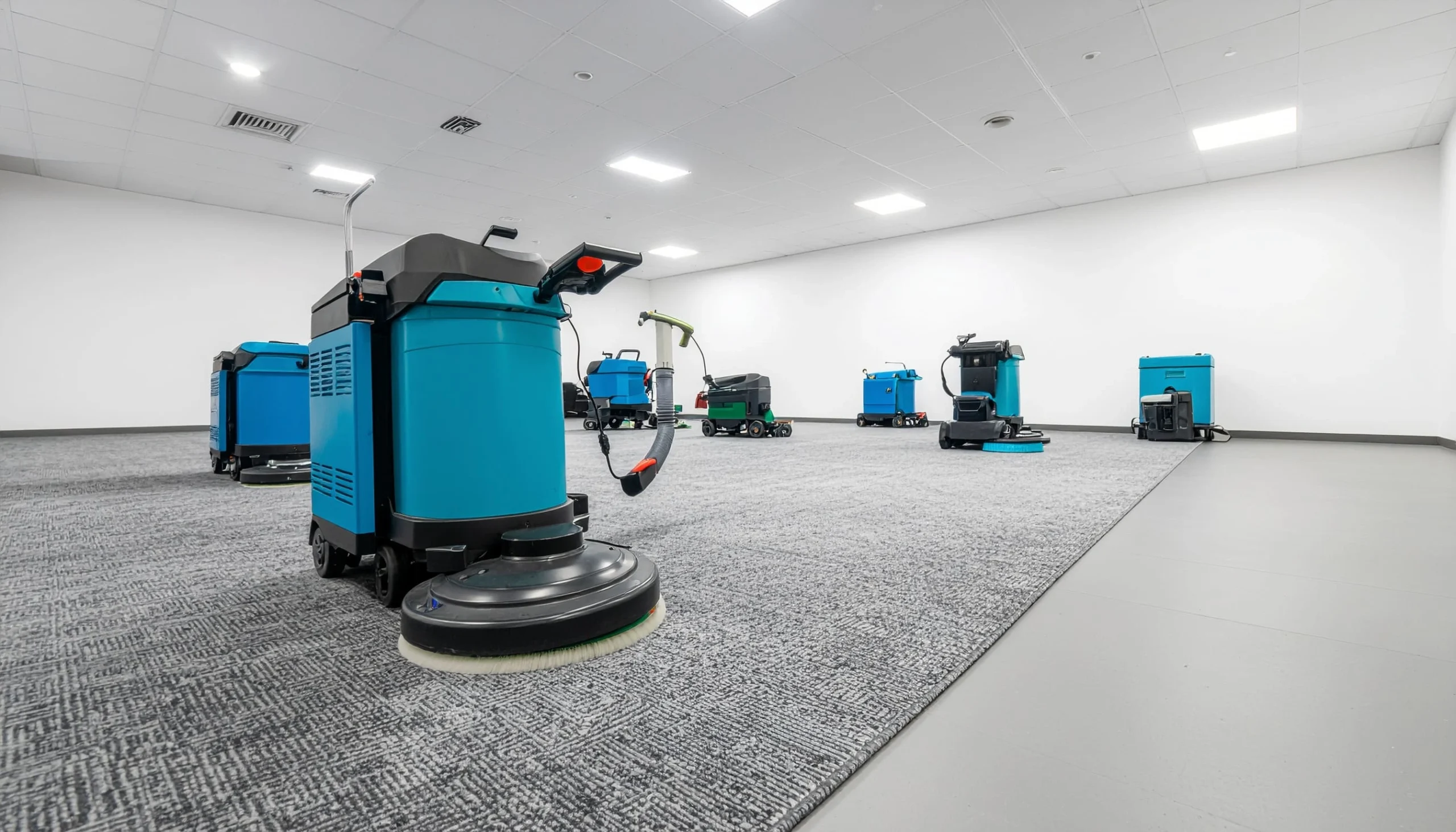
Perth’s commercial cleaning sector faces a persistent challenge: carpets in high-traffic environments deteriorate faster than most facility managers anticipate. A reception area that looks pristine at 8 AM can show visible wear patterns by lunchtime, and traditional vacuuming only addresses surface debris whilst embedded soil continues to degrade carpet fibres from within.
The difference between adequate carpet maintenance and professional-grade results comes down to equipment choice. We’ve seen businesses invest thousands in premium carpet installations only to replace them prematurely because they relied on consumer-grade cleaning machines that couldn’t match the demands of commercial use. The right commercial carpet cleaning machine doesn’t just clean surfaces; it extends asset life, protects indoor air quality, and maintains the professional appearance that clients expect when they walk through your doors.
Understanding Commercial Carpet Cleaning Requirements
Commercial carpets endure punishment that residential fibres never encounter. A busy office corridor might see 500-800 foot traffic passes daily, each depositing microscopic soil particles that work their way deep into the carpet backing. These particles act like sandpaper, cutting fibres with every footfall and creating the worn pathways that signal neglect to visitors.
Professional extraction machines address this through three core mechanisms: agitation, extraction, and drying. Agitation loosens embedded soil that vacuuming can’t reach. Extraction removes both the cleaning solution and the suspended dirt. Drying speed determines how quickly the space returns to service, which is critical for businesses that can’t afford extended downtime.
The challenge for Perth businesses is selecting equipment that matches their specific usage patterns. A medical clinic with 30 square metres of carpeted waiting room has vastly different needs than a 2,000-square-metre corporate office or a hotel with 80 guest rooms. Get the specification wrong, and you’ll either overspend on capacity you don’t need or underperform with equipment that can’t keep pace with soil accumulation. Is your current commercial cleaning supplies perth setup actually capable of handling your specific traffic load?
Types of Commercial Carpet Cleaning Machines
Portable Extractors
Portable extractors represent the entry point for most businesses. These units combine a cleaning solution tank, pump, and vacuum system in a compact package that one person can transport. They’re ideal for spot cleaning, small areas, and businesses where carpet represents less than 30% of total floor space. The Steamvac HP Auto 2 carpet steam cleaner exemplifies this category; powerful enough for professional results but sized for versatility.
Truck-Mounted Systems
Truck-mounted systems deliver the highest extraction power available, using vehicle-mounted engines to generate heat and vacuum pressure that portables can’t match. These systems excel in large-scale applications like hotels, convention centres, and office complexes where hundreds of square metres need regular attention. The trade-off is obvious: you need vehicle access near the work area, and the capital investment runs significantly higher.
Walk-Behind Extractors
Walk-behind extractors occupy the middle ground. They provide greater productivity than portables whilst remaining more manoeuvrable than truck-mounted units. For businesses with 200-1,000 square metres of commercial carpet, these machines often represent the optimal balance of performance and practicality.
Consider a Perth accounting firm we work with: 450 square metres of medium-pile carpet across three floors. They initially used a portable extractor as their primary office carpet cleaner, which meant their staff spent 6-7 hours completing the monthly deep clean. Switching to a walk-behind commercial cleaning equipment unit cut that time to 2.5 hours whilst delivering superior extraction; the carpet dried faster and stayed cleaner longer.
Key Specifications That Determine Performance
Water lift measures the vacuum motor’s suction power, typically expressed in inches or millimetres of water column. Professional machines should deliver at least 80 inches (2,032mm) of water lift. Anything less leaves moisture in the carpet backing, extending dry times and creating conditions for mould growth, a serious concern in Perth’s humid summers. Think of water lift like a sponge; a weak vacuum is like a damp sponge that just smears water around, while a powerful vacuum is a bone-dry sponge that pulls every last drop out of the fibres.
Solution pressure determines how effectively cleaning agents penetrate carpet fibres. Most commercial applications require 100-150 PSI at the spray jet. Higher pressure isn’t always better; excessive force can damage delicate fibres or oversaturate backing materials that take days to dry properly.
Tank capacity directly impacts productivity. A machine with a 15-litre solution tank might need refilling every 50 square metres, whilst a 40-litre unit can cover 150 square metres between fills. For small areas, frequent refilling is manageable. For large facilities, it’s a productivity killer that can double your labour costs.
The commercial extractors we supply are specified with these metrics clearly stated because they determine real-world performance. A machine with impressive marketing claims but inadequate water lift will leave carpets damp for 12-18 hours, completely unacceptable for most commercial environments.
Matching Equipment to Perth’s Commercial Environment
Perth’s climate creates specific challenges for carpet maintenance. Summer humidity slows evaporation, whilst winter’s cooler temperatures extend dry times even further. Coastal businesses face additional salt aerosol deposits that accelerate soil accumulation and require more frequent deep cleaning cycles.
Retail environments need rapid turnaround times. A shopping centre can’t cordon off sections for extended periods, so machines with heated cleaning solutions and powerful extraction become essential. Heat accelerates chemical reactions and evaporation; a heated system might dry carpet in 4-6 hours compared to 12-18 hours for cold water extraction.
Healthcare facilities require equipment that can deliver true sanitisation, not just visual cleaning. This means machines capable of maintaining solution temperatures above 70°C at the spray jet and extraction powerful enough to remove 95% of applied moisture. Bacteria thrive in damp environments, so thorough drying isn’t optional; it’s an infection control requirement.
Hospitality venues face the highest scrutiny because guests form impressions within seconds of entering. Carpet appearance directly impacts perceived quality, which means these businesses need equipment that can restore pile height and eliminate traffic patterns, not just remove surface soil. This typically requires rotary brush agitation combined with powerful extraction.
We’ve worked with a Perth hotel that was replacing corridor carpets every 3-4 years despite spending thousands on cleaning. The issue wasn’t the carpet quality; it was inadequate equipment that cleaned surfaces whilst leaving embedded soil to continue its destructive work. Upgrading to professional-grade commercial cleaning equipment extended their replacement cycle to 7-8 years, saving more than the equipment cost in the first avoided replacement alone.
Essential Features for Professional Results
Heated cleaning systems deliver measurably better results than cold water alternatives. Heat reduces cleaning solution viscosity, allowing deeper penetration into carpet fibres. It also accelerates the chemical reactions that break down soil bonds. Most importantly, heat speeds evaporation; the difference between a 6-hour dry time and a 14-hour dry time often determines whether you can clean during business hours or need costly after-hours scheduling.
Adjustable pressure controls let operators match machine output to carpet type. Dense, commercial-grade nylon can handle aggressive cleaning that would damage softer polypropylene blends. Without pressure adjustment, you’re forced to either under-clean durable carpets or risk damaging delicate ones.
Transparent recovery tanks seem like a minor feature until you’ve experienced the alternative. Being able to see when the tank approaches capacity prevents overflow situations that can damage the vacuum motor, an expensive repair that often exceeds $800-1,200 for professional machines.
When selecting an office carpet cleaner, dual-wand capability transforms productivity for businesses with both large open areas and tight spaces like boardrooms. You can switch from a wide cleaning path for corridors to a detail tool for edges and corners without changing machines or making multiple passes.
Maintenance Considerations for Long-Term Performance
Professional extraction units represent significant investments, typically $2,000-8,000 depending on specification and capacity. Protecting that investment requires consistent maintenance that goes beyond emptying tanks after each use.
Pump systems need regular inspection for worn seals and valves. These components endure constant pressure cycling, and failure typically happens gradually rather than catastrophically. We recommend professional pump servicing every 200-250 hours of operation, which for most businesses means annual maintenance. Neglect this, and you’ll face pump replacement costs of $600-900 instead of $150-200 for preventive servicing.
Vacuum motors benefit from clean filter maintenance. Most commercial machines use multi-stage filtration to protect the motor from moisture and fine particles. When filters become clogged, the motor works harder to maintain suction, generating excess heat that shortens bearing life. Check filters after every use and replace them at the first sign of damage or persistent odours.
Heating elements in hot water systems accumulate mineral deposits from Perth’s relatively hard water supply. These deposits reduce heat transfer efficiency and eventually cause element failure. Annual descaling with citric acid solution maintains performance and extends element life from 3-4 years to 6-8 years.
The Pacvac Superpro 700 Backpack Vacuum demonstrates professional-grade durability in daily-use equipment. Whilst it’s not a carpet extractor, the maintenance principles apply universally: protect motors with clean filtration, service mechanical components proactively, and address small issues before they cascade into major failures.
Cost Analysis: Investment vs. Operational Savings
The temptation to purchase consumer-grade equipment for commercial applications is understandable; the initial price difference can reach 50-70%. But cost analysis requires looking beyond purchase price to operational expenses and asset longevity. What’s the real price of having to replace your entire fleet of machines every single year?
A consumer unit might cost $400-600 and last 12-18 months under commercial use before motor or pump failure. That’s $400-600 annually in replacement costs. A professional machine costing $3,500 typically delivers 8-12 years of service with proper maintenance, roughly $290-440 annually when amortised over its working life. Sourcing reliable commercial cleaning supplies perth upfront eliminates this endless replacement cycle.
Labour efficiency creates additional savings that often exceed equipment costs. If professional equipment cuts cleaning time by 40% (common when upgrading from consumer to commercial grade), a business spending $60/hour on cleaning labour saves $24/hour. For a facility requiring 10 hours monthly of carpet cleaning, that’s $2,880 annually; enough to pay for professional equipment in 15 months.
Carpet longevity represents the largest financial impact. Commercial carpet installation typically costs $45-85 per square metre including preparation and labour. For a 400-square-metre facility, that’s $18,000-34,000. If professional cleaning equipment extends carpet life from 5 years to 8 years, you’ve delayed a $20,000+ expense by 3 years, a financial benefit that dwarfs equipment costs.
Selecting the Right Machine for Your Perth Business
Start with an honest assessment of your carpet area and soil load. A 200-square-metre office with 30 employees creates different demands than a 200-square-metre retail space with 300 daily visitors; choosing the right office carpet cleaner depends heavily on these traffic variables. Traffic intensity matters more than total area for determining cleaning frequency and equipment requirements.
Soil type influences both machine selection and cleaning chemistry. Perth’s sandy soils create abrasive challenges that require strong agitation. Coastal areas add salt deposits. Food service environments introduce organic soils that need enzymatic treatment. Your equipment needs sufficient versatility to handle your specific soil profile.
Budget constraints are real, but they shouldn’t drive false economy. If professional-grade equipment exceeds your capital budget, consider refurbished machines from reputable suppliers. A well-maintained 3-year-old commercial extractor typically outperforms a new consumer unit whilst costing less. We’ve seen businesses achieve excellent results with refurbished equipment that delivers 5-7 additional years of service.
Training requirements deserve consideration. Professional equipment offers more capability but requires proper technique to achieve optimal results. Under-trained operators can oversaturate carpets, use incorrect cleaning solutions, or damage fibres through improper brush pressure. Factor in training time when implementing new equipment; the performance difference between competent and expert operation can reach 30-40%.
Chemical Compatibility and Cleaning Solutions
The best commercial carpet cleaning machine delivers mediocre results when paired with inappropriate cleaning chemistry. Professional equipment requires professional-grade solutions formulated for commercial soil loads and extraction systems.
pH-neutral cleaners suit regular maintenance cleaning where soil hasn’t become heavily embedded. These solutions clean effectively whilst minimising rinse requirements, important for operational efficiency. The Mr. Bean 5L All-Purpose Cleaner represents this category, though carpet-specific formulations often deliver better results for textile applications.
Alkaline cleaners tackle heavier soil loads and oil-based contamination. These solutions excel in commercial environments with significant foot traffic but require thorough rinsing to prevent residue that attracts rapid resoiling. Most professional carpet cleaning follows a two-step process: alkaline cleaning followed by acidic rinsing to neutralise pH and remove all chemical residues. For deeply ingrained sticky stains, spot treating with Goof Off adhesive remover prior to general extraction can save significant scrubbing time.
Enzyme treatments address organic soils like food spills, beverage stains, and biological contamination. These solutions work slowly, often requiring 10-15 minutes dwell time, but they break down organic compounds that other chemicals can’t touch. Healthcare and hospitality environments benefit significantly from enzyme-based protocols.
Compatibility matters because some cleaning solutions create excessive foam that can overwhelm recovery systems or damage vacuum motors. Professional machines typically include defoaming agents in their design, but using non-approved chemicals can still cause problems. Always verify that your chosen cleaning solutions are rated for extraction equipment use.
When to Consider Professional Cleaning Services
Owning equipment makes sense for businesses with regular, predictable cleaning needs. But some situations favour professional service contracts over equipment ownership.
Seasonal businesses that need intensive cleaning during peak periods but minimal maintenance off-season often find service contracts more economical than owning equipment that sits idle for months. A Perth tourism venue might need weekly carpet cleaning from October through March but only monthly attention during winter.
Multi-site operations face equipment allocation challenges. If you operate four locations each requiring monthly carpet cleaning, do you buy four machines (expensive but ensures availability) or one machine that rotates between sites (economical but creates scheduling complexity)? Service contracts eliminate this dilemma whilst ensuring consistent quality across all locations.
Specialised applications sometimes require equipment that’s too expensive to justify for occasional use. Carpet tiles with moisture-sensitive backing, antique rugs in heritage buildings, or specialised fibres in medical environments might need equipment and expertise that’s more practical to contract than develop in-house.
That said, businesses with 300+ square metres of commercial carpet used daily typically achieve better economics through equipment ownership. The break-even point usually occurs around 12-18 months of regular professional service costs compared to equipment purchase plus maintenance.
Making the Investment Decision
Choosing the right commercial carpet cleaning machine requires balancing immediate budget constraints against long-term operational needs. The cheapest option rarely delivers the lowest total cost of ownership, whilst the most expensive equipment might include capabilities you’ll never use.
Start by calculating your true carpet cleaning costs under your current approach, whether that’s inadequate equipment, excessive labour time, or contracted services. Then model how professional equipment would change those costs through improved efficiency, extended carpet life, and reduced replacement frequency. For most Perth businesses with significant carpet areas, the financial case for professional equipment becomes clear within the first year.
Consider equipment from established manufacturers with local service support. A machine that requires interstate shipping for repairs creates extended downtime that can cost more than the repair itself. Weskleen Supplies maintains Perth-based support specifically to minimise this disruption for commercial clients upgrading their commercial cleaning supplies perth.
The right carpet cleaning machine transforms maintenance from a necessary expense into a strategic investment that protects assets, enhances appearance, and supports the professional image your business deserves. If you’re ready to move beyond inadequate results and frequent carpet replacement, call 1800 728 926 to discuss equipment options matched to your specific requirements and operational environment.