


Blog
Your Practical Guide to Hand Soap Refills

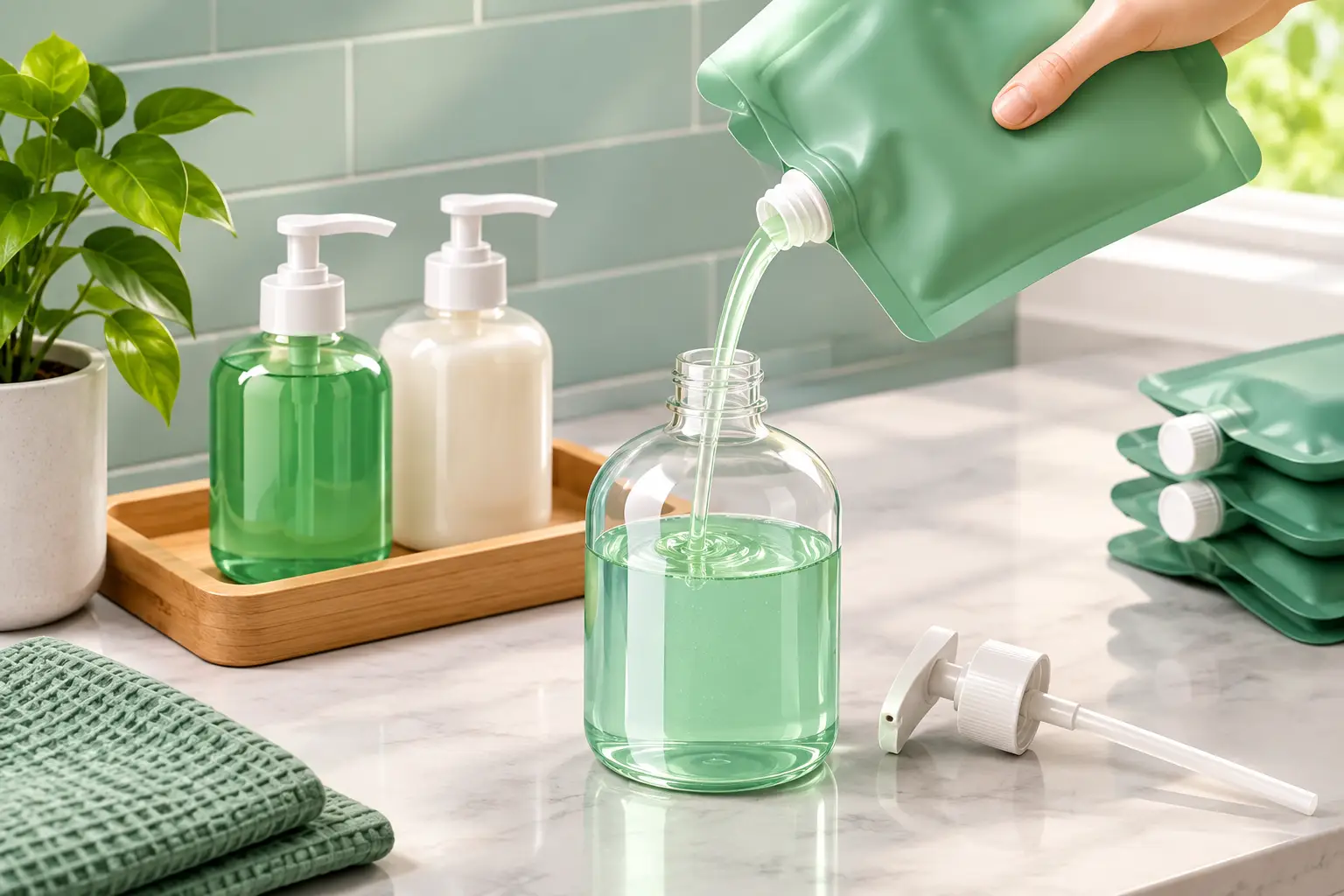
An empty soap dispenser during a busy service period, school day or office shift is a small problem that quickly becomes a hygiene issue. This guide to hand soap refills is designed to help Perth households, cleaners and facility teams select the right format, avoid incompatible products and keep handwashing stations ready without overspending.
Hand soap refills are not all interchangeable. The lowest upfront price is not always the lowest cost per wash, and a refill that looks suitable can leak, block a pump or produce poor foam if it does not match the dispenser. A practical choice starts with the dispenser already on the wall or bench, then considers traffic, skin comfort, storage and replenishment routines.
Start with the dispenser, not the refill
Before ordering refills, check what type of dispenser you have. Most hand soap systems fall into three groups: bulk-fill dispensers, sealed cartridge dispensers and foam dispensers. Each has different advantages, and each needs the appropriate product viscosity and fit.
Bulk-fill dispensers are filled directly from a larger container of liquid soap. They are common in smaller offices, workshops, cafes and homes because they are simple, flexible and often economical. The trade-off is that they need regular cleaning and careful topping up. If old soap is left in the reservoir, it can thicken, affect fragrance and create a hygiene concern.
Sealed cartridges are designed for specific dispensers. They are usually quick to replace, reduce spills and offer a clean, consistent result. For busy washrooms, healthcare-adjacent settings, hospitality venues and high-traffic public areas, this reliability can justify the higher unit cost. Check the cartridge shape, valve, pump connection and volume before buying, as similar-looking cartridges are not necessarily compatible.
Foam soap systems dispense pre-foamed soap rather than liquid. They typically use less product per handwash, which can reduce consumption in busy facilities. However, a foam pump needs foam soap. Adding standard liquid hand soap to a foam dispenser can lead to poor output or pump failure. Likewise, diluting regular soap to make it foam is not a reliable fix and can compromise product performance.
Choose the right hand soap refill for the setting
The best refill depends on who uses the washroom and how often. A family bathroom, a warehouse amenities block and a restaurant hand basin all have different demands.
For general offices, retail counters and home use, a quality everyday liquid or foam hand soap is usually the sensible choice. Look for a pleasant but not overpowering fragrance, good lather and a formula that rinses cleanly. When staff or family members wash their hands frequently, mildness matters. A harsh product may seem effective, but dry or irritated hands can discourage proper handwashing.
For hospitality, food preparation areas and care environments, fragrance-free options are often worth considering. Strong perfume can be undesirable around food, while sensitive skin is more common where repeated washing is required. The right choice may also be guided by your site procedures or customer expectations.
Antibacterial hand soap can suit particular commercial applications, but it is not automatically necessary for every washroom. Routine handwashing technique, adequate product supply and clean dispensers remain the foundations of good hand hygiene. If a workplace requires a product with a particular claim or standard, check the label, manufacturer directions and any relevant site policy before changing products.
For industrial sites, workshops or maintenance areas where hands are exposed to grease and grime, standard hand soap may not be enough. A purpose-made heavy-duty hand cleaner is generally a better option at the appropriate wash station. It is usually not suitable for every bathroom dispenser, so keep general hand soap and specialist cleaners clearly separated.
Calculate cost per wash, not just cost per bottle
A five-litre refill container can look like the obvious value choice, and often it is. But the real comparison is how much product each dispenser delivers and how much waste occurs. A pump that dispenses too much soap can make even an affordable refill expensive over time.
To compare options, consider the refill volume, the dose delivered per pump and the estimated number of uses. Foam systems often deliver a smaller dose than liquid systems, while sealed cartridges may help reduce overuse and spills. In a low-traffic staff bathroom, bulk liquid soap may offer excellent value. In a busy public washroom, a controlled-dose cartridge or foam system may provide better overall cost control.
Also factor in labour. A cleaner who can replace a sealed cartridge in seconds may save meaningful time across a large site. On the other hand, a small business with a few dispensers may prefer bulk refills because staff can top them up easily and keep fewer product lines on hand.
A clean refill process protects the dispenser
Refilling is not just a matter of pouring soap into a container. A few minutes of care can extend dispenser life and improve the user experience.
First, use the correct refill for the system. Then, when dealing with a bulk-fill dispenser, empty it fully rather than continuously adding fresh product over old soap. Clean and dry the reservoir, lid and pump components according to the dispenser instructions before refilling. Wipe away spills from the outside of the unit and test the first few pumps.
Avoid mixing brands or formulas in the same dispenser unless the products are confirmed compatible. Different fragrances, thickening agents and formulas can separate or clog the pump. This is particularly relevant when changing from a creamy liquid soap to a clear liquid, or from one foam product to another.
For commercial sites, assign responsibility for soap checks as part of the washroom cleaning schedule. A dispenser may still contain product but fail to dispense properly because of a blocked nozzle, damaged pump or empty cartridge. Testing each unit is more reliable than a quick visual check.
Store refills properly and plan your stock levels
Hand soap refills should be stored upright in a clean, dry area away from direct heat and sunlight. Keep lids tightly closed and labels visible, particularly where several washroom chemicals and cleaning products are stored together. This makes it easier for staff to identify the right product and follow any handling directions.
For workplaces, establish a simple minimum stock level based on usage. A small office may only need a backup carton or two. A school, gym, restaurant, cleaning contractor or multi-site facility should hold enough stock to cover normal demand plus a buffer for busy periods, events and delayed deliveries.
A useful washroom stock check includes four practical items:
- Soap refill levels and compatible replacement cartridges
- Working pumps, locks and dispenser covers
- Paper towel or hand dryer availability
- Bin liners and rubbish removal around handwashing areas
These items work together. There is little benefit in a full soap dispenser if users have no way to dry their hands or dispose of used paper towels properly.
When to replace the dispenser itself
Sometimes the problem is not the refill. If pumps regularly clog, units leak onto benches, locks are broken or replacement cartridges are difficult to source, replacing the dispenser may be more cost-effective than continuing to patch it up.
Standardising on one dispenser system across a site can simplify ordering, staff training and stock control. This is especially useful for cleaning contractors and facility managers responsible for multiple amenities areas. The right system should balance refill cost, ease of servicing, appearance, security and local availability.
For homes, a refillable benchtop dispenser can reduce packaging and look tidy, but choose a pump designed for the soap type you intend to use. For commercial locations, wall-mounted dispensers are usually easier to keep clean, reduce bench clutter and are less likely to be moved or misplaced.
WesKleen Supplies can help Perth customers match hand soap refills, dispensers and wider washroom consumables to the needs of their site. A little planning around compatibility and usage means fewer empty dispensers, less product waste and a handwashing area people can rely on every day.