


Blog
Reusable Versus Disposable Gloves: Which Fits?

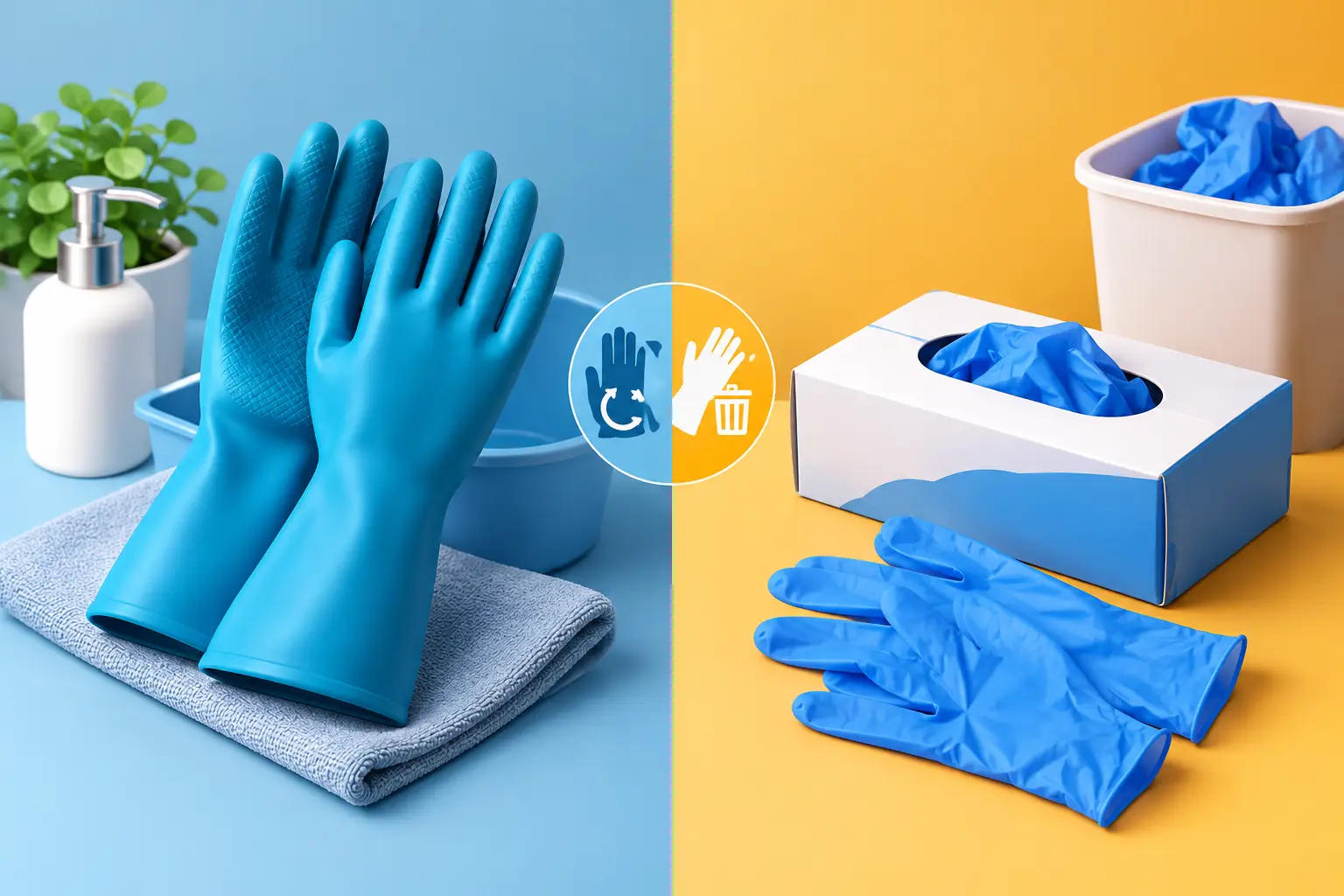
A glove box beside the sink is not automatically the best answer to every cleaning job. The choice between reusable versus disposable gloves affects chemical safety, cross-contamination control, staff time and ongoing supply costs. For Perth cleaners, facility teams and households, the right option depends less on habit and more on the task in front of you.
Disposable gloves are fast, convenient and ideal where frequent glove changes matter. Reusable gloves offer stronger protection and better value for longer cleaning work. Both have a proper place in a well-organised cleaning cupboard or commercial supply room.
Reusable versus disposable gloves: the key difference
Disposable gloves are designed for short-term, single-use work. They are typically made from nitrile, vinyl or latex and are supplied in boxes for quick access. Once contaminated, torn or removed, they should be discarded rather than washed and reused.
Reusable gloves are thicker, more durable gloves made for repeated wear. Common materials include natural rubber, PVC, nitrile and neoprene. Many feature flock-lined interiors for comfort and textured palms or fingers for grip when handling wet equipment, mops, chemical bottles or washroom fixtures.
The practical difference is simple: use disposable gloves when the risk of spreading contamination is high or when a task is brief and changes are frequent. Choose reusable gloves when you need dependable hand protection through a longer job involving water, dirt, detergents or stronger cleaning chemicals.
When disposable gloves make the most sense
Disposable gloves suit tasks that need speed, hygiene and a fresh pair between jobs. A cleaner servicing several office bathrooms, for example, may change gloves between rooms or between toilet cleaning and touchpoint disinfection. A food business may use them for low-risk food handling where gloves are changed often and hands are washed correctly.
Nitrile disposable gloves are a popular all-round choice. They generally offer good puncture resistance, a close fit and good sensitivity for detailed work such as wiping small fixtures, handling cleaning cloths or refilling dispensers. They are also a useful option for people with latex sensitivities.
Vinyl gloves are often a more economical choice for short, low-risk tasks where flexibility and chemical resistance are not the main concern. They can be suitable for light cleaning, but are usually less durable than nitrile. Latex gloves provide good fit and dexterity, although allergy considerations mean many workplaces now favour nitrile instead.
Disposable gloves are especially useful for spot cleaning bodily-fluid spills, emptying sanitary bins, handling contaminated rubbish or carrying out infection-control procedures. In these situations, the ability to remove and dispose of gloves immediately helps reduce the chance of transferring contamination to door handles, cleaning equipment, vehicles or other areas of the site.
There is a catch: disposable does not mean indestructible. Thin gloves can tear when used for scrubbing, moving rough waste, cleaning sharp-edged fixtures or working with abrasive pads. They may also provide inadequate protection against concentrated chemicals if the glove material is not compatible with the product.
Where reusable gloves provide better value
For routine washroom cleaning, kitchen wash-up, mopping, outdoor work and general maintenance, reusable gloves are often the more sensible choice. Their heavier construction gives hands better protection from prolonged wet work, grime and repeated contact with cleaning solutions.
A quality reusable glove can make a long shift more comfortable. Thicker material reduces the risk of skin irritation from constant detergent contact, while a cuff that extends beyond the wrist offers more protection against splashes. This matters when cleaning toilets, wash basins, floors, bins or greasy back-of-house surfaces.
They are also a strong option for household cleaning. One pair for bathrooms, another for dishes or kitchen cleaning, and a separate pair for outdoor jobs is an easy way to keep tasks organised without going through boxes of single-use gloves.
From a purchasing perspective, reusable gloves can lower the cost per use when they are properly cared for. A commercial cleaner doing hours of wet cleaning each day may use far fewer gloves over a month compared with relying on disposables for every task. The savings are not automatic, though. Gloves that are left wet, shared between workers or used beyond their safe condition will not last as intended.
Match glove material to the job and chemical
The word “chemical-resistant” is not a universal guarantee. A glove that handles diluted detergent well may not be suitable for degreaser, bleach, solvent, disinfectant concentrate or acidic toilet cleaner. Always read the product label and Safety Data Sheet for the recommended personal protective equipment before starting work.
Nitrile is widely used for a broad range of cleaning tasks and is available in both disposable and reusable styles. PVC gloves are commonly chosen for wet cleaning and some general chemical work. Neoprene can suit more demanding applications where a higher level of chemical resistance is required. Natural rubber gloves offer flexibility and good grip, but are not appropriate where latex allergy is a concern.
The concentration and contact time matter as much as the product itself. A diluted floor cleaner used briefly is very different from decanting or using a concentrated chemical over a long period. If a task involves stronger chemicals, check that the glove material, thickness and cuff length are suitable. When in doubt, choose the glove specified by the chemical manufacturer rather than the cheapest available option.
Hygiene is about glove changes, not just glove type
Gloves can carry contamination just as easily as bare hands. A worker who cleans a toilet then touches a spray bottle, mobile, trolley handle or door with the same gloves can spread germs across the site. This is why good glove practice is as important as selecting the right material.
For disposable gloves, change pairs between contaminated and clean tasks, after handling rubbish, and whenever gloves tear or become heavily soiled. Remove them without touching the contaminated outer surface, then clean or sanitise hands before putting on a new pair.
Reusable gloves need a simple cleaning routine. Rinse off visible soil, wash the outside according to workplace procedures, and allow them to dry fully with the cuffs positioned so water can drain. Store pairs away from direct sunlight, heat and chemical spills. If the material becomes sticky, cracked, brittle, punctured or permanently stained, replace the gloves.
Colour coding helps in busy sites. Using one colour for washrooms and another for kitchen or general cleaning makes it easier for staff to avoid mix-ups. It is a low-cost control that works particularly well in schools, hospitality venues, aged-care settings and multi-site cleaning contracts.
Cost, waste and stock control
Disposable gloves create a predictable ongoing consumable cost. They are easy to distribute, hygienic when used correctly and convenient for fluctuating workloads. They are also necessary for certain contamination-control tasks, so the goal is not to eliminate them completely.
Reusable gloves reduce single-use waste and can be more economical for repeat cleaning work. However, they need to be sized correctly, assigned appropriately and replaced when worn. Buying one heavy-duty glove for every job can be just as inefficient as using disposables for every job.
For commercial buyers, a mixed glove supply is usually the most practical approach. Keep disposable nitrile gloves available for quick changes, detailed work and contamination-sensitive jobs. Stock durable reusable gloves for washrooms, floor care, kitchen wash-up and maintenance. This gives staff the right level of protection without overspending on the wrong product.
Choose gloves your team will actually wear
A glove only protects hands when it is worn correctly. Poor fit leads to torn fingertips, reduced grip and workers taking gloves off halfway through a task. Disposable gloves should fit snugly without restricting movement. Reusable gloves need enough room for comfort but should not be so loose that they slip when wet.
Consider cuff length, grip, lining and thickness alongside the material. A cleaner working with buckets and mops may value a longer cuff and textured grip. Someone wiping desks, cleaning glass or restocking washroom dispensers may need a thinner, more flexible glove for precision.
WesKleen Supplies can help Perth customers select practical glove options for routine cleaning, washroom care, infectious-control tasks and facility maintenance. The best choice is rarely one glove for every job – it is a clear, easy-to-follow system that gives people the protection they need when they need it.
Start by looking at the jobs your team performs most often, the chemicals they use and where glove changes are needed. A small adjustment to your glove selection can make cleaning safer, cleaner and easier to manage every day.