


Blog
Medusa Battery Sweepers for Rapid Retail Floor Maintenance

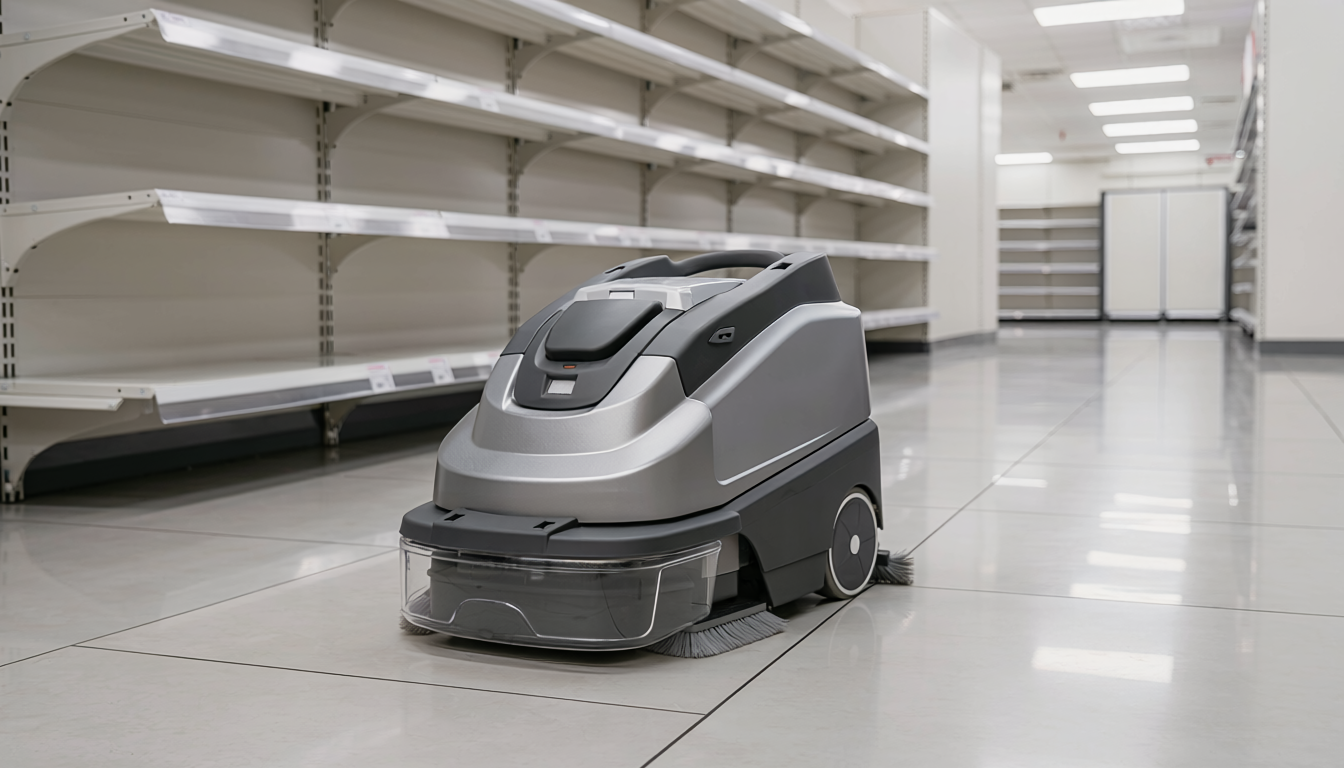
Retail floor maintenance is a constant operational challenge, not just a matter of appearances. Dirty floors don’t wait for closing time, and customer expectations around cleanliness have never been higher. Battery-powered sweepers are redefining how retail spaces handle the constant challenge of debris, foot traffic, and presentation standards without disrupting the shopping experience.
Traditional sweeping methods create problems in busy retail environments. Push brooms kick up dust, corded machines limit movement, and manual cleaning during peak hours frustrates customers and staff alike. Battery-powered sweepers eliminate these issues by offering cordless freedom, quiet operation, and the ability to clean continuously without power outlets or extension cords creating trip hazards.
Why Retail Floors Demand Different Cleaning Approaches
Walk into any busy shopping centre on a Saturday afternoon. Within minutes, you’ll spot food wrappers near the food court, dirt tracked in from the car park, and product packaging scattered across aisles. Retail environments generate debris constantly, and retail floor debris removal becomes a continuous challenge as customer expectations rise.
High foot traffic means floors get dirty quickly. A supermarket might see 2,000 customers daily, each tracking in outdoor contaminants. Compare this to an office building where the same 200 people walk the same paths; retail cleaning operates on a completely different scale.
Customer perception forms within seconds. Research shows shoppers judge store quality based on floor cleanliness before examining products. A visibly dirty floor suggests poor management, stale inventory, or compromised hygiene standards.
Safety concerns multiply in retail settings. Spilled liquids, dropped produce, or scattered packaging create slip hazards. The faster you can address these issues, the lower your liability risk. Manual sweeping takes 15-20 minutes for a typical retail floor. A battery sweeper covers the same area in 5-7 minutes. So how do you maintain cleanliness when shutting down for a thorough clean simply isn’t an option?
How Battery-Powered Sweepers Work Differently
Battery sweepers aren’t just cordless versions of traditional equipment. They’re designed around mobility and continuous operation. The Medusa battery sweeper uses a rotating brush system that captures debris into an internal hopper, eliminating the need to push dirt into piles before collection.
Brush mechanics matter more than most operators realise. The sweeper uses counter-rotating brushes that work like conveyor belts, lifting debris from floor surfaces and directing it into the collection bin. This differs from vacuum cleaners, which rely on suction alone and often struggle with heavier items like bottle caps or small stones.
Battery technology has transformed over the past decade. The lithium-ion sweeper runtime of 60-90 minutes on a single charge is enough to clean a 5,000-square-metre retail space twice. Older lead-acid batteries required 8-12 hours to recharge; lithium versions reach full charge in 3-4 hours.
Weight distribution affects manoeuvrability significantly. The Medusa battery sweeper positions the battery low in the chassis, creating a stable centre of gravity. This design choice means operators can navigate around displays, endcaps, and checkout queues without the machine tipping or requiring excessive force to steer.
Think of it like the difference between pushing a shopping trolley with one wonky wheel versus a well-balanced one. The balanced trolley responds to slight pressure; the wonky one fights you constantly. Proper weight distribution in cleaning equipment reduces operator fatigue by roughly 40% over a full shift.
Real-World Application: A Supermarket Case Study
Consider a mid-sized supermarket in Perth’s northern suburbs. Before switching to battery sweepers, the store employed two staff members for floor maintenance during operating hours. Each used push brooms and dustpans, working in 20-minute rotations to avoid blocking customer access.
The problems were clear: dust clouds from sweeping irritated customers with allergies, the process was slow, and staff couldn’t keep pace during peak hours (10 am-2 pm and 4 pm-7 pm). The store manager noticed customer complaints increased by 23% during busy periods, with floor cleanliness being the primary concern.
After implementing the Medusa battery sweeper, the same two staff members could maintain the entire floor in half the time. The quiet operation (around 65 decibels, similar to normal conversation) meant cleaning could happen continuously without disturbing shoppers. Customer complaints dropped by 67% within the first month.
The financial impact extended beyond customer satisfaction. Reduced cleaning time freed up staff for other duties like restocking and customer service. The store calculated a return on investment within 14 months based purely on labour efficiency, not accounting for improved customer retention.
Key Features That Matter in Retail Environments
Not all battery sweepers suit retail applications equally. Specific features determine whether a machine enhances or hinders operations. Here’s what separates effective retail cleaning equipment from general-purpose alternatives:
Compact footprint: Retail spaces pack maximum product into available floor area. A sweeper that’s too wide can’t navigate between clothing racks or around promotional displays. The Medusa’s 38cm cleaning path strikes the right balance; wide enough for efficiency, narrow enough for tight spaces.
Quick-release hopper: When the collection bin fills, you can’t spend five minutes figuring out how to empty it. Understanding cordless sweeper hopper capacity helps determine how often operators need to stop and empty during a shift. Look for designs with one-hand release mechanisms that let operators dump debris and resume cleaning within 30 seconds. This matters during rush periods when every minute counts.
Multiple surface compatibility: Retail environments rarely feature uniform flooring. You might transition from polished concrete in the entrance to vinyl tiles in grocery aisles to carpet runners near checkouts. The machine’s brush pressure should adjust without manual intervention, maintaining consistent cleaning across surface types.
Visibility features: Operating around customers requires awareness. Some sweepers include LED indicators showing battery status and forward-facing lights that improve visibility in dimly lit areas like stockrooms or early morning pre-opening cleaning.
Comparing Battery Sweepers to Alternative Methods
Understanding how battery sweepers stack up against other cleaning approaches helps justify the investment. Here’s a look at the realistic alternatives:
Traditional broom and dustpan: Costs almost nothing upfront but requires significant labour time. A 2,000-square-metre retail space takes approximately 45 minutes to sweep manually. That’s 5.5 hours weekly for daily maintenance, or roughly $165 in labour costs at $30/hour. Annual labour cost: $8,580.
Corded vacuum cleaners: Effective for fine dust but struggle with larger debris like packaging materials or product spills. The cord creates trip hazards and limits movement; you’re constantly unplugging and moving to new outlets. Cleaning the same 2,000-square-metre space takes about 35 minutes due to cord management. Annual labour cost: approximately $6,630.
Battery sweeper (Medusa): Initial equipment cost around $1,500-2,000, but cleaning time drops to 15 minutes for the same area. That’s 1.8 hours weekly, or $54 in labour costs. Annual labour cost: $2,808. The equipment pays for itself through labour savings within 4-6 months, then continues saving $5,700+ annually.
These calculations don’t account for quality differences. Battery sweepers remove retail floor debris more thoroughly, reducing the frequency of deep cleaning sessions that require closing sections of the store. They also eliminate dust dispersion, which means less frequent dusting of shelving and products.
Maintenance Requirements and Operational Costs
Professional equipment requires maintenance, but battery sweepers demand less attention than most operators expect. Understanding the actual requirements prevents surprises and ensures longevity.
Daily tasks:
- Empty the hopper after each use
- Remove any tangled debris from brushes
- Wipe down the exterior to prevent dust build-up
- Plug in the charger
Weekly tasks:
- Check brush wear (replace when bristles reach the wear indicator)
- Inspect battery connections for corrosion
- Clean or replace filters if equipped
- Verify wheel movement and steering response
Monthly tasks:
- Remove brushes completely and clean the housing
- Inspect belts for wear or cracking
- Check all fasteners and tighten as needed
- Test safety features like emergency stops
Battery sweeper brush maintenance is straightforward but essential. Brushes typically last 6-12 months depending on usage intensity and floor abrasiveness. Budget around $80-120 for a brush set. Batteries maintain 80% capacity for 3-5 years before requiring replacement, costing approximately $300-400.
Compare this to corded equipment requiring regular cord replacement ($50-80 annually) or manual methods requiring new brooms every 2-3 months ($15-25 each). The total cost of ownership for battery sweepers remains competitive whilst delivering superior results.
Integration with Existing Cleaning Protocols
Battery sweepers don’t replace your entire cleaning programme. They enhance it. Smart integration means understanding where rapid sweeping fits within broader maintenance strategies.
Pre-opening preparation: Many retailers use the Medusa battery sweeper for quick floor passes before opening. This removes overnight dust accumulation and any debris from restocking activities. The process takes 10-15 minutes for an average store, ensuring customers enter a pristine environment.
Mid-day maintenance: During peak shopping hours, spot cleaning becomes essential. Battery sweepers excel here because operators can quickly address specific areas without disrupting the entire floor. A spill near the deli counter or scattered produce in the fruit section gets resolved in 2-3 minutes.
Closing procedures: End-of-day cleaning often involves more intensive work like mopping or floor scrubber use. Running a battery sweeper first removes loose debris, making subsequent wet cleaning more effective. Mops and scrubbers work better when they’re not pushing around dirt and packaging materials.
Integration with mop systems: For retailers using squeegees and mops, the sequence matters. Always sweep first with the battery sweeper, then mop. This prevents pushing wet debris around and reduces the frequency of changing mop water. The result is cleaner floors with less water and chemical usage.
Operator Training and Safety Considerations
Battery sweepers appear simple to operate, but proper training prevents equipment damage and ensures optimal results. Most operators become proficient within 30 minutes of instruction.
Basic operation covers starting procedures, speed control, and steering techniques. The Medusa uses intuitive controls – typically a trigger or paddle for activation and a handle for steering. Operators learn to maintain consistent forward movement rather than stopping and starting, which improves cleaning efficiency and battery life.
Safety protocols focus on awareness. Operators must watch for customers, especially children who might not notice the machine. Training should emphasise stopping immediately if someone steps into the cleaning path. The machine’s quiet operation is an advantage for customer experience but requires extra visual awareness from operators.
Battery handling involves understanding charge cycles and safe storage. Lithium batteries perform best when kept between 20-80% charge for daily use, with full discharge and recharge cycles performed monthly. Storage in extreme temperatures (below 0°C or above 45°C) degrades battery capacity over time.
Avoid these common mistakes:
- Running the machine until the battery completely dies (reduces battery lifespan)
- Attempting to pick up liquids (damages the motor and brush system)
- Ignoring brush wear indicators (causes uneven cleaning and potential floor damage)
- Storing with a full hopper (creates odours and attracts pests)
Making the Business Case for Battery Sweepers
What does the true cost of traditional floor cleaning actually look like? Convincing management to invest in new equipment requires demonstrating clear value beyond “it’s better.” Here’s how to build a compelling argument using concrete metrics.
Labour cost analysis: Calculate current time spent on floor sweeping weekly. Multiply by your average labour cost per hour. Compare this to projected time using battery sweepers. For most retail environments, the time reduction ranges from 60-75%. Present this as annual savings – typically $5,000-8,000 for a single location.
Customer experience metrics: If you track customer satisfaction scores or online reviews, analyse comments mentioning cleanliness. Establish a baseline, then project improvement based on increased cleaning frequency that battery sweepers enable. Even a 10% improvement in satisfaction scores often correlates with measurable sales increases.
Safety incident reduction: Review slip-and-fall incidents from the past 12 months. Calculate associated costs including workers’ compensation claims, lost productivity, and potential legal fees. Demonstrate how faster retail floor debris removal reduces these risks. The average retail slip-and-fall claim costs $20,000-50,000 when legal action occurs.
Staff satisfaction: Cleaning floors manually is physically demanding and often frustrating work. Equipment that makes jobs easier reduces turnover in cleaning positions. Calculate your cost to recruit and train replacement staff (typically $3,000-5,000 per position). If battery sweepers help retain even one employee annually, the equipment pays for itself.
Competitive positioning: If competitors in your retail category maintain visibly cleaner floors, you’re losing customers. Mystery shopping data shows 34% of consumers choose between similar retailers based on store cleanliness. Quantify potential revenue loss from customers choosing competitors.
Selecting the Right Battery Sweeper for Your Space
Not every retail environment has identical needs. Matching equipment capabilities to your specific situation prevents buying too much or too little machine.
Floor area considerations: Spaces under 1,000 square metres can use entry-level battery sweepers with 30-45 minute runtime. Medium spaces (1,000-3,000 square metres) benefit from models like the Medusa with 60-90 minute capacity. Larger spaces might require multiple machines or models with swappable batteries.
Debris type matters: Grocery stores deal with organic matter, packaging, and occasional liquid spills. Clothing retailers face primarily dust and fibre debris. Hardware stores encounter heavier items like screws, small tools, and packaging materials. The Medusa handles mixed debris types effectively, but extremely heavy items might require pre-collection.
Operating hours: The lithium-ion sweeper runtime and recharge speed matter most for stores open 12+ hours daily. The Medusa’s 3-4 hour charge time means you can recharge during mid-day slow periods or overnight. Twenty-four-hour operations might need two machines to ensure continuous availability.
Cordless sweeper hopper capacity: Consider how frequently your operators can realistically stop to empty debris. Larger hopper capacity means fewer interruptions during busy trading periods. Match capacity to your floor size and debris volume rather than defaulting to the largest available model.
Staff capabilities: Consider who’ll operate the equipment. Battery sweepers require minimal physical strength compared to pushing traditional brooms, making them accessible to a broader range of staff members. Lightweight design (typically 15-25kg) means most adults can manoeuvre them comfortably.
Long-Term Performance and Reliability
Equipment that fails during peak retail periods creates serious problems. Understanding reliability factors helps set realistic expectations and maintenance schedules.
Build quality indicators: Check the chassis construction; plastic housings crack under stress, whilst metal frames withstand impacts from shopping trolleys and displays. The Medusa uses reinforced polymer construction that balances durability with manageable weight.
Brush system durability: Quality sweepers use brush cores that resist warping and bristles that maintain stiffness throughout their lifespan. Cheap brushes lose effectiveness within weeks, requiring frequent replacement. Consistent battery sweeper brush maintenance – including regular inspection and timely replacement – extends the life of the brush system considerably. Expect 6-12 months from professional-grade brushes under normal retail conditions.
Battery longevity: Lithium-ion batteries typically deliver 500-1,000 full charge cycles before capacity drops to 80%. For daily use, this translates to 3-5 years. Proper charging habits extend this significantly; avoid leaving batteries on chargers indefinitely after reaching 100%.
Motor reliability: Brushless motors last significantly longer than brushed alternatives (10,000+ hours versus 2,000-3,000 hours). They also run more quietly and efficiently. Check specifications before purchasing. The motor type dramatically affects long-term costs.
Warranty coverage: Standard warranties range from 12-24 months for battery sweepers. Extended warranties or service plans make sense for high-use environments. Calculate the cost of downtime if equipment fails, and for most retailers, having a backup plan justifies the warranty investment.
Environmental and Health Benefits
Modern retail operations increasingly consider environmental impact and indoor air quality. Battery sweepers offer advantages in both areas compared to traditional methods.
Dust control: Traditional sweeping disperses fine particles into the air, where they remain suspended for hours. This affects customers with respiratory sensitivities and settles on merchandise, requiring additional dusting. Battery sweepers contain debris immediately, improving air quality measurably.
Chemical reduction: Effective dry sweeping reduces the frequency of wet mopping, which typically involves chemical cleaners. Less frequent mopping means lower chemical usage and reduced water consumption. For large retail chains, this scales to significant environmental and cost benefits.
Noise pollution: Corded vacuum cleaners typically operate at 75-85 decibels, creating an unpleasant shopping environment. The Medusa battery sweeper runs at approximately 65 decibels, roughly the level of normal conversation. This seemingly small difference significantly improves customer comfort.
Energy efficiency: Battery sweepers use substantially less energy than corded alternatives. A typical cleaning session consumes 0.5-0.8 kWh of electricity for charging, compared to 1.5-2.5 kWh for corded vacuums covering the same area. Annual energy savings might seem modest per location but multiply significantly across retail chains.
Getting Started with Battery Sweeper Implementation
Transitioning from traditional cleaning methods to battery sweepers requires planning beyond simply purchasing equipment. Here’s a practical implementation approach:
Start with a pilot programme: Select one location or section of your retail space to test the equipment for 2-4 weeks. Track cleaning times, staff feedback, and customer comments. This provides real data for broader rollout decisions.
Train thoroughly: Invest 30-60 minutes training each operator properly. Rushed training leads to equipment misuse, poor results, and staff frustration. Cover operation, safety, maintenance, and troubleshooting basics.
Establish maintenance schedules: Create simple checklists for daily, weekly, and monthly tasks. Assign responsibility clearly; equipment that’s “everyone’s job” often becomes no one’s priority. Consider appointing a lead operator responsible for maintenance oversight.
Monitor performance metrics: Track cleaning times, battery runtime, and any issues that arise. This data helps identify problems early and demonstrates value to management. Simple logbooks work fine; fancy software isn’t necessary.
Plan for contingencies: Keep contact information for Weskleen Supplies readily available for technical support or parts ordering. Having a backup manual cleaning method ready prevents panic if equipment issues arise during critical periods.
Conclusion
Retail floor maintenance demands speed, efficiency, and minimal disruption to customers. The Medusa Battery-Powered Sweeper addresses these requirements through cordless operation, quiet performance, and rapid retail floor debris removal that outpaces traditional methods by 60-75%.
The business case for battery sweepers extends beyond cleaning efficiency. Labour cost savings typically recover equipment investment within 4-6 months, whilst improved customer experience and reduced safety incidents provide additional value that’s harder to quantify but equally important. The environmental benefits of reduced dust dispersion and lower chemical usage align with modern retail sustainability goals.
Successful implementation requires proper training, consistent maintenance, and realistic expectations about equipment capabilities. Battery sweepers excel at rapid debris removal on hard floors but don’t replace comprehensive cleaning programmes. They enhance them by enabling more frequent maintenance without additional labour costs.
For retail operations struggling with floor cleanliness during operating hours, battery sweepers like the Medusa represent a practical solution backed by proven results across diverse retail environments. The technology has matured beyond early limitations, offering reliable performance that justifies the investment for serious retail operations.
If you’re ready to transform your retail floor maintenance, Weskleen Supplies stocks the Medusa Battery-Powered Sweeper along with a full range of professional cleaning equipment suited to retail environments of every size. Call 1800 728 926 to speak with the team about the right solution for your store.