


Blog
Professional Applications for Goof Off Aerosol in Commercial Cleaning

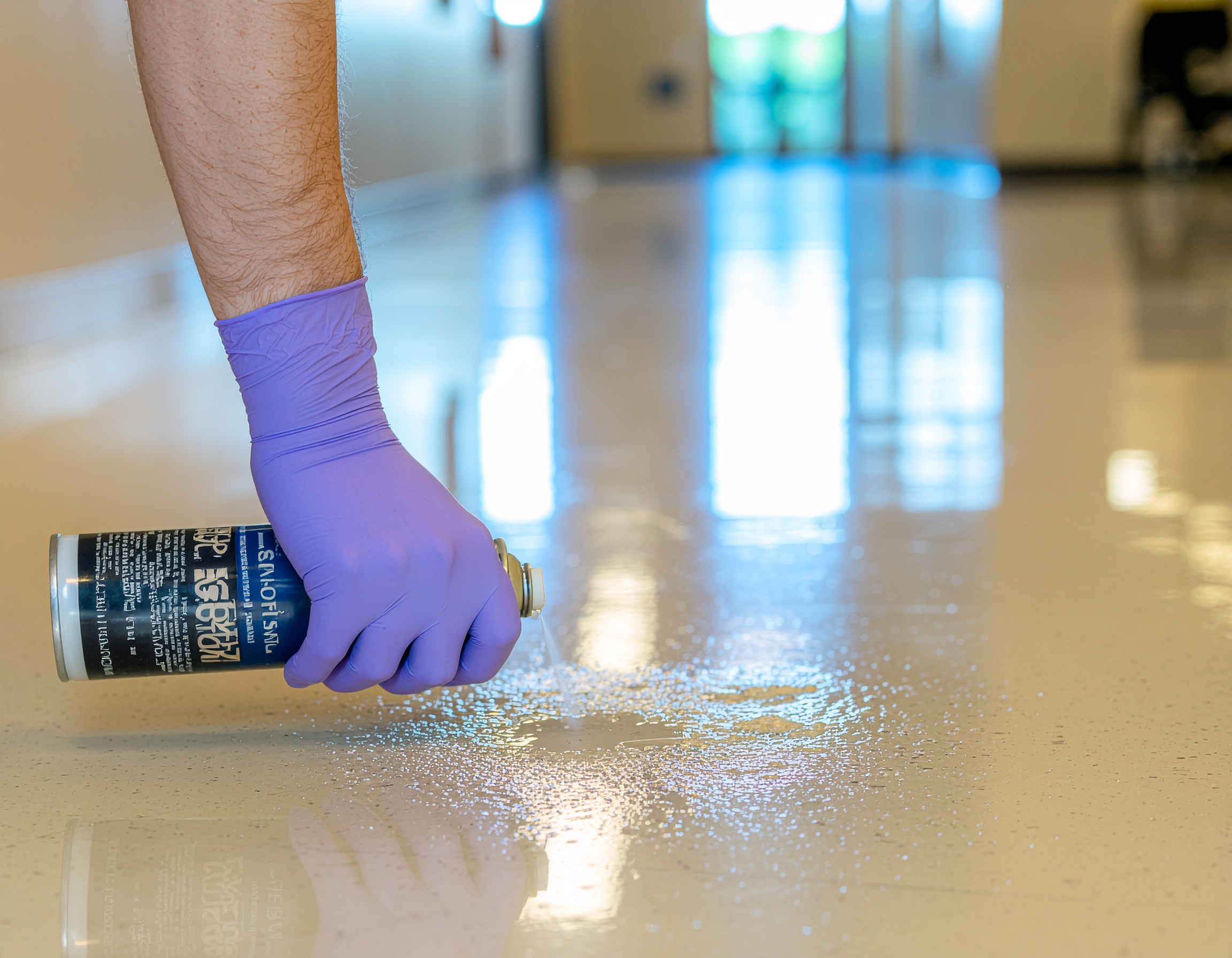
Commercial cleaning professionals face a persistent challenge: adhesive residue, label remnants, and stubborn marks that standard cleaners can’t touch. These aren’t cosmetic issues – they’re obstacles to maintaining professional standards in high-visibility spaces. A retail manager discovers price tag residue on glass displays. A facility supervisor confronts construction tape marks on newly installed fixtures. A janitorial team battles graffiti on bathroom stalls. Each scenario demands a solution that works quickly without damaging the underlying surface.
Goof Off aerosol application addresses this specific gap in commercial cleaning arsenals. Unlike multi-purpose cleaners that dilute effectiveness across too many tasks, this specialised solvent targets what adhesives, inks, and petroleum-based marks have in common: molecular bonds that water-based cleaners can’t break. The aerosol delivery system matters here – it provides controlled application, reduces waste, and allows technicians to treat vertical surfaces without drips or runs.
Understanding Solvent-Based Cleaning Chemistry
Water-based cleaners work through surfactants that surround and lift dirt particles. They’re excellent for organic soils and general grime, but they’re fundamentally incompatible with adhesive chemistry. Adhesives cure into cross-linked polymer chains designed to resist moisture. Trying to remove cured adhesive with water-based cleaners is like trying to open a combination lock with the wrong sequence – the mechanism simply doesn’t engage, no matter how much force you apply.
Solvent-based cleaners like Goof Off aerosol approach the problem differently. They contain compounds that penetrate and swell the polymer matrix, breaking the adhesive’s grip on the substrate. This isn’t brute force – it’s chemistry matching chemistry. The solvent molecules infiltrate the adhesive structure, disrupting intermolecular forces until the bond fails.
Professional-grade Goof Off aerosol application requires understanding these mechanisms. A technician who knows why a solvent works can predict its behaviour on different surfaces and contaminants. This knowledge prevents the common mistake of applying more product when the issue is contact time, not quantity.
The aerosol format delivers additional advantages beyond convenience. The propellant creates a fine mist that maximises surface contact while minimising product use. For vertical applications – removing stickers from glass doors or tape marks from painted walls – this controlled delivery prevents the pooling and running that occurs with liquid solvents. The result is less product waste and more predictable adhesive residue removal outcomes.
Primary Commercial Applications
Retail Environment Maintenance
Retail spaces generate constant adhesive challenges. Price tags, promotional stickers, and anti-theft labels leave residue on glass, metal, and plastic surfaces. These marks accumulate quickly in high-turnover environments, and customers notice them immediately. A single price tag ghost on a display case signals neglect.
Goof Off aerosol application in retail follows a systematic approach. Spray the affected area from 15-20 centimetres away, allowing the solvent to penetrate for 30-60 seconds. This dwell time is critical – rushing to wipe immediately reduces effectiveness by half. The solvent needs time to break down the adhesive’s molecular structure. After adequate penetration, wipe with a clean microfibre cloth, working from the outside edges toward the centre to prevent spreading.
Glass and mirror surfaces respond particularly well to adhesive residue removal using this method. The non-porous nature of glass means the solvent stays on the surface rather than absorbing into the substrate. One application typically removes even aged adhesive residue. Follow up with a standard glass cleaner to remove any remaining solvent film and restore clarity.
Facility Management and Building Maintenance
Construction and renovation projects leave behind tape marks, adhesive labels from fixtures, and paint overspray on surfaces that need to look pristine. Facility managers inherit these problems when contractors depart, and standard cleaning protocols don’t address them.
What’s the most reliable label remover surface technique for painted walls? The answer starts with testing. Apply the solvent on an inconspicuous area first – not all paints respond identically. Once compatibility is confirmed, apply the aerosol lightly and work in small sections. The goal is to dissolve the adhesive without saturating the paint film underneath. Excessive application or aggressive scrubbing can dull or damage paint finishes.
Metal fixtures, door frames, and handrails often accumulate adhesive residue from temporary protective films and installation labels. These surfaces tolerate Goof Off aerosol application well, but oxidation and finish type matter. Brushed stainless steel, powder-coated aluminium, and chrome-plated brass each require slightly different approaches. The solvent itself is compatible, but wiping techniques vary to prevent scratching or dulling the finish.
Healthcare and Education Settings
Schools and medical facilities face unique adhesive challenges. Temporary signage, floor markings for social distancing, and equipment labels create residue on floors, walls, and furnishings. These environments demand both effectiveness and safety – cleaning can’t introduce hazardous residues or strong odours that linger.
Floor marks present particular difficulty. Adhesive tape used for temporary layouts leaves residue that attracts dirt and creates slip hazards. Goof Off aerosol application cuts through these marks quickly, but solvent-based cleaner ventilation is non-negotiable in these settings. Work in well-ventilated areas and ensure the floor is dry before allowing foot traffic.
Desks, lockers, and furniture in educational settings accumulate sticker residue from students personalising their spaces. Rather than scraping (which damages finishes), a targeted aerosol application dissolves the adhesive cleanly. This approach extends furniture life by preventing the surface damage that mechanical removal causes.
Specialised Removal Scenarios
Graffiti Ink Removal Method
Permanent marker, spray paint, and ink present some of the most challenging removal scenarios. These substances bond chemically with porous surfaces, making complete removal difficult without specialised solvents. The most effective graffiti ink removal method begins with timing – treating the mark while it’s relatively fresh before deep surface penetration occurs.
Bathroom stall graffiti typically involves permanent markers on laminate or powder-coated metal surfaces. Apply the aerosol directly to the mark, allow 60 seconds of contact time, then wipe with firm pressure using a clean cloth. Multiple applications may be necessary for heavy marks, but patience yields better results than aggressive scrubbing. This graffiti ink removal method works best when the surface is approached systematically, treating one area at a time.
Whiteboards and glass surfaces marked with permanent ink respond particularly well. The non-porous substrate prevents ink penetration, so the solvent can work entirely on the surface layer. This scenario often achieves complete removal with a single application.
Label and Decal Removal from Equipment
Commercial equipment arrives with safety labels, specification stickers, and shipping decals that need removal before the equipment enters service. These labels use industrial-strength adhesives designed to withstand environmental exposure, making them notoriously difficult to remove cleanly.
The most effective label remover surface technique combines two stages. Start by heating the label with a heat gun or hairdryer to soften the adhesive, then peel away as much material as possible. The remaining adhesive residue is where Goof Off aerosol application excels. Apply generously to the residue, wait for penetration, then wipe clean. This two-stage approach proves faster and more effective than either method alone.
A facilities manager at a Perth medical centre recently had this confirmed firsthand. When a delivery of diagnostic equipment arrived plastered in international shipping labels, the team spent the first hour scraping and scratching with minimal success. Switching to a heat-then-solvent approach, they cleared the remaining adhesive residue removal tasks across eight units in under 20 minutes – with no surface damage to the equipment housings.
Equipment with textured or painted surfaces requires additional care. Use a soft-bristle brush after applying the solvent to work it into the texture. This mechanical action, combined with the solvent’s chemical effectiveness, achieves thorough removal without surface damage.
Automotive and Fleet Maintenance
Commercial fleets accumulate adhesive residue from temporary signage, parking permits, and identification decals. Vehicle surfaces present unique challenges – paint, glass, chrome, and plastic all respond differently to solvents.
Glass surfaces on vehicles tolerate aggressive solvent application well. Windows, mirrors, and windscreens can be treated directly without concern for damage. For weathered adhesive that has become brittle, increase dwell time to 90-120 seconds and consider a second application if the first doesn’t achieve complete removal.
Vehicle paint requires more caution. Modern automotive finishes are durable, but clear coats can be affected by prolonged solvent exposure. Apply Goof Off sparingly to painted surfaces, limit dwell time to 60 seconds maximum, and wipe thoroughly. Follow up with a car wash to remove any solvent residue that could dull the finish over time.
Application Techniques for Different Surfaces
Hard Non-Porous Surfaces
Glass, metal, and hard plastics represent the easiest category for Goof Off aerosol application. These surfaces don’t absorb the solvent, so all the product’s effectiveness stays on the surface where it’s needed. The risk of substrate damage is minimal, allowing more aggressive treatment when necessary.
Standard protocol: hold the aerosol 15-20 centimetres from the surface and apply an even coat over the adhesive or mark. Wait 30-60 seconds for penetration, then wipe with a clean microfibre cloth. For stubborn residue, apply a second coat rather than scrubbing harder – patience outperforms pressure.
Chrome and polished metal surfaces benefit from an additional step. After removing the adhesive, wipe the area with isopropyl alcohol to remove any solvent film, then polish with a dry cloth. This prevents the slight haze that can develop if solvent residue dries on highly reflective surfaces.
Painted and Finished Surfaces
Painted walls, furniture finishes, and powder-coated equipment require more careful label remover surface technique. The solvent can soften some paint formulations if left in contact too long, particularly latex-based paints and lacquer finishes. Always test in an inconspicuous area before treating visible surfaces.
For painted surfaces, reduce dwell time to 30-45 seconds and work in small sections. Apply the aerosol lightly – a thin coat penetrates adhesive effectively while minimising paint exposure. Wipe gently with a microfibre cloth, using straight strokes rather than circular motions that can dull the finish.
If the adhesive doesn’t release easily on the first attempt, wait several minutes before reapplying. This pause allows the paint to re-harden fully, preventing the cumulative softening that occurs with rapid repeated applications.
Textured and Porous Surfaces
Textured plastics, unfinished wood, and porous stone present the greatest challenge. These materials can absorb the solvent, reducing effectiveness and potentially causing discolouration. Goof Off aerosol application can still work in these scenarios, but technique becomes critical.
Apply sparingly and work quickly. The goal is to dissolve the adhesive before the substrate absorbs significant solvent. Use a soft brush to work the product into textured surfaces, then wipe immediately. Multiple light applications work better than a single heavy application that allows deep penetration.
For porous materials like unfinished wood or natural stone, consider whether the adhesive residue justifies the risk of discolouration. Sometimes mechanical removal with a plastic scraper, followed by light sanding, proves safer than solvent application. Professional judgement matters here – understanding when not to use a product is as important as knowing how to use it effectively.
Safety Protocols and Ventilation Requirements
Solvent-based products demand respect and proper handling. Goof Off aerosol contains compounds that are effective precisely because they’re chemically active. Solvent-based cleaner ventilation is the first non-negotiable requirement in any professional application setting.
Work in well-ventilated areas whenever possible. Open windows, use exhaust fans, and position yourself upwind of the application area. The aerosol propellant and solvent vapours are heavier than air, so they accumulate in low areas. Ground-floor or basement applications require particular attention to air circulation. For enclosed or poorly ventilated spaces, treat solvent-based cleaner ventilation as a safety prerequisite rather than an optional consideration – use a respirator with organic vapour cartridges before beginning work.
Personal protective equipment should include chemical-resistant gloves – nitrile gloves work well and are readily available. Safety glasses prevent aerosol mist from contacting eyes during application.
Store the aerosol away from heat sources and direct sunlight. The pressurised container can rupture if exposed to temperatures above 50°C, creating both a physical hazard and a chemical hazard from the released contents. A cool, dry storage area away from ignition sources is essential.
Integration with Broader Cleaning Protocols
Goof Off aerosol application isn’t a daily-use product – it’s a specialised tool for specific challenges. Professional cleaning operations integrate it strategically within broader protocols that include general-purpose cleaners, disinfectants, and maintenance products. Understanding where it fits prevents both overuse and underutilisation.
Cleaning caddies for commercial teams should include Goof Off aerosol as a standard item, positioned alongside all-purpose cleaners and disinfectants. A cleaning hand caddy keeps products organised and portable, allowing teams to respond immediately to adhesive residue removal tasks rather than deferring them for later treatment. Accessibility drives compliance – when the right tool is within reach, technicians use it.
Training protocols should cover not just how to use Goof Off aerosol, but when to use it. Technicians need to recognise adhesive residue, ink marks, and petroleum-based stains as distinct from water-soluble soils. Documentation matters in commercial settings. When Goof Off aerosol application is used, particularly on client property or in sensitive environments, note the application in cleaning logs. This documentation protects both the cleaning company and the client by establishing a clear record of what products were used where and why.
Cost-Effectiveness and Product Longevity
Specialised cleaning products often face scrutiny over cost-effectiveness. Goof Off aerosol application justifies its place in commercial operations through time savings and outcome quality. A technician who spends 20 minutes scraping and rubbing at adhesive residue with inadequate products wastes labour costs that far exceed the price of proper solvent.
The aerosol format minimises waste compared to liquid solvents. Precise application means product goes where it’s needed rather than running off surfaces or soaking into rags. A 340ml aerosol can typically handles 50-80 adhesive residue removal tasks, depending on residue severity. This translates to a cost per application of less than a dollar – negligible compared to the labour cost of the technician performing the work.
Product longevity depends on proper storage and use. Aerosols stored correctly maintain effectiveness for 2-3 years. The propellant remains stable, and the solvent doesn’t degrade significantly in sealed containers. This shelf life makes it practical to stock Goof Off aerosol even in operations that use it infrequently.
Environmental and Disposal Considerations
Solvent-based products require responsible disposal practices. Goof Off aerosol contains volatile organic compounds that shouldn’t enter stormwater systems or be disposed of in regular waste streams.
Used rags and cloths containing solvent residue should be stored in sealed metal containers until disposal. Solvent-soaked materials can generate heat through oxidation, creating fire hazards if stored improperly. Many commercial waste services offer specialised collection for solvent-contaminated materials – use these services rather than mixing contaminated materials with general waste.
Empty aerosol cans should be completely depressurised before disposal. Most jurisdictions allow empty aerosol cans in metal recycling streams, but regulations vary. Check local requirements and establish clear protocols for your operation. Partially full cans require hazardous waste disposal – never puncture or incinerate pressurised containers.
Proper solvent-based cleaner ventilation during application also contributes to responsible environmental practice. Controlling vapour release through adequate airflow reduces the concentration of volatile organic compounds in occupied spaces, protecting both staff and the indoor environment.
Professional Results and Client Expectations
Commercial cleaning contracts often include quality standards that general cleaning can’t meet. Visible adhesive residue, label remnants, and ink marks signal incomplete work, regardless of how thoroughly other tasks were performed. Clients notice these details, and they factor them into contract renewals and service evaluations.
Goof Off aerosol application demonstrates professional capability. When a cleaning team arrives equipped to handle specialised challenges, they distinguish themselves from competitors who defer difficult tasks or claim certain problems are impossible to resolve. This capability becomes a competitive advantage in bid situations and client retention.
Documentation of specialised services adds value beyond the immediate cleaning outcome. Photographing before-and-after results for adhesive residue removal, graffiti ink removal method outcomes, or equipment label cleaning provides tangible evidence of value delivered. These records support contract justifications and help clients understand why professional-grade products and techniques command appropriate pricing.
Training investment pays dividends here. A cleaning technician who understands Goof Off aerosol application – when to use it, how to apply it safely, and what results to expect – delivers consistently superior outcomes. This consistency builds client confidence and reduces the callbacks and complaints that erode profitability.
Conclusion
Professional cleaning demands tools that match the complexity of real-world challenges. Goof Off aerosol application fills a specific but critical gap – addressing adhesive residue, ink marks, and petroleum-based stains that water-based cleaners can’t touch. Its effectiveness comes from targeted chemistry that breaks down adhesive bonds at the molecular level, delivered through an aerosol format that provides control and minimises waste.
Commercial applications span retail maintenance, facility management, healthcare settings, and fleet operations. Each scenario benefits from understanding not just how to apply the product, but why it works and what variables affect outcomes. Surface type, adhesive age, environmental conditions, and solvent-based cleaner ventilation requirements all influence results. Professional cleaning teams that master these variables deliver superior outcomes consistently.
Weskleen Supplies provides the professional-grade products that commercial cleaning operations depend on. For questions about Goof Off aerosol application, surface compatibility, or building comprehensive cleaning protocols, Weskleen Supplies can help you develop tailored approaches for your specific operational needs. 1800 728 926 to discuss how the right specialised products can raise the standard of your cleaning outcomes.