


Blog
Reducing Cross-Contamination: Cleaning Protocols That Work

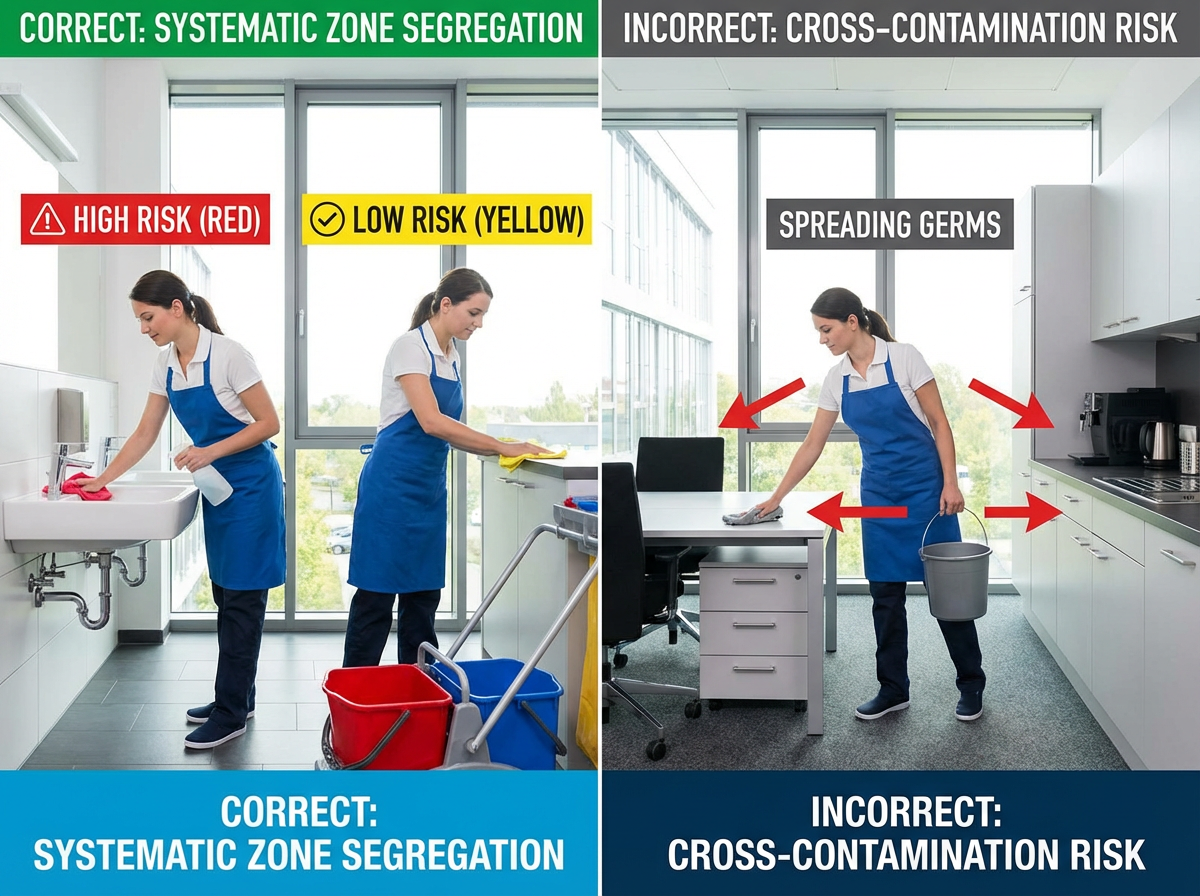
Cross contamination cleaning protocols are not jargon. They are the difference between a space that looks clean and a space that protects people. When tools, hands, or chemicals move contaminants from one area to another, cleaning becomes counterproductive. With a structured approach, the right equipment, and consistent habits, prevention is straightforward. To ground everything in practice, you can explore the full range of professional cleaning solutions from WesKleen Supplies to align protocols with proven tools.
A quick reality check. A mop that touches a toilet floor and then a kitchen carries risk. A cloth that moves from a door handle to a keyboard spreads whatever it picked up. The remedy is a clear system that blocks transfer at every step and proves it with routine checks.
The Hidden Failure of Standard Routines
Visual results are not a safety guarantee. Traditional routines often recycle soil.
Single-bucket mopping spreads diluted contamination from room to room.
Reused cloths transfer microbes between high-touch points.
Incorrect dilution or rushed dwell times undermine sanitising claims.
Fix the process, not just the outcome. Build cross contamination cleaning protocols that stop transfer before it starts.
The Colour-Coding System That Actually Prevents Transfer
Colour coding turns intent into action. Assign tools by risk zone and never mix them.
Red: Toilets, urinals, and sanitary fixtures.
Yellow: General washroom areas outside immediate sanitary fixtures.
Green: Food preparation and kitchen spaces.
Blue: Low-risk areas such as offices and reception.
Make compliance easy with physical separation. Store each colour in its zone. Equip mobile teams with a dedicated, colour-segregated Cleaning Hand Caddy so the wrong tool never enters the wrong room. Train every operative on the map, not just the colours.
Analogy: Think of colour coding like dedicated chopping boards in a kitchen. Meat never touches the salad board. Tools should follow the same logic.
Microfibre That Traps, Not Spreads
Microfibre’s split fibres hook and hold fine particles, oils, and microbes far better than cotton. That advantage only holds with correct technique.
Fold and flip: Fold into quarters to create eight clean panels. One panel per surface, then refold.
No dunking back: Retired cloths go to laundry, not back into solution.
Hot laundering: Wash at 60°C or higher, no fabric softener, separate from cotton.
Upgrade mops: A commercial-grade head such as the Enduro Microfibre Mop Head maintains particle capture after repeated cycles.
Used correctly, microfibre reduces transfer rates dramatically and speeds up cleaning with fewer chemical passes.
Two-Bucket and Flat-Mop Systems
Stop seeding dirty water across floors.
Two-bucket method: One for solution, one for rinse. Change rinse water frequently. The 16L Mop Bucket is a practical size for amenities and small zones.
Flat-mop systems: Prefer single-use or laundered pads for defined areas. Use one pad per room or risk level, then remove from service.
Large areas: For higher throughput and better hygiene assurance, consider compact scrubber-dryers that apply clean solution and recover soil in one pass, preventing re-deposition.
High-Touch Surface Protocol That Holds Up Under Pressure
High-touch points are contamination highways. Treat them as a separate task stream.
Frequency: Multiple cycles per day in busy areas.
Dedicated kit: A small bottle of sanitiser and a microfibre cloth reserved only for high-touch points.
Technique: One cloth panel per touch point, then fold.
Contact time: Keep surfaces visibly wet for the labelled dwell time.
Small adjustments to method deliver outsized reductions in transmission.
Equipment Hygiene Is Non-Negotiable
Tools either remove contamination or move it around. Maintenance decides which.
Mop heads and cloths: Launder after each session. Air-dry fully. Never store damp.
Brushes and holders: Rinse, sanitise, drain. Closed, wet holders breed bacteria.
Vacuum hygiene: Empty away from food or care areas, replace filters on schedule, and use HEPA where air quality matters. A backpack unit with sealed filtration, such as the Pacvac Superpro 700 Backpack Vacuum, captures fine particles that standard systems recirculate.
Well-kept equipment is a control measure, not just an asset.
Chemical Selection, pH, and Compatibility
Match chemistry to risk and surface. Prevent chemical cross contamination.
Neutral cleaners: Ideal for routine soil, low-residue.
Sanitisers and disinfectants: Required in high-risk zones and for high-touch cycles.
No mixing: Keep concentrates in original, labelled containers. Never mix products unless the manufacturer says so.
Dwell time matters: Cleaning removes soil. Disinfection needs time in contact with the surface.
For high-hygiene applications where cling and contact time are critical, a foaming solution such as Comet Foaming Cleaner and Sanitiser improves coverage on vertical and textured surfaces.
Room-to-Room Sequencing That Prevents Back-Contamination
Work from clean to dirty, high to low, inward to exit.
Within rooms: Vents and high ledges first, then fixtures and furniture, floors last.
Across sites: Offices and low-risk zones before toilets and waste areas.
In amenities: Mirrors and counters before bowls and floors.
In kitchens: Food-contact benches before floors and waste stations.
One route, every time. That is how teams maintain consistency at speed.
Floors: The Most Contaminated Surface in the Building
Everything falls to the floor. Choose methods that remove, not smear.
Carpet: Vacuuming is not enough. Periodic hot-water extraction removes embedded soil and reduces microbial load. Units like the carpet cleaning machines deliver heat and flush action that routine vacuuming cannot match.
Hard floors: On textured surfaces and large footprints, mechanical agitation with recovery prevents dirty-water halos. A compact orbital machine such as the Polystar Orbital Floor Scrubber lifts ingrained soil without relying on aggressive chemistry.
If automated scrubbers are impractical, flat-mop pads changed per zone are the next best line of defence.
Staff Hygiene and Personal Factors
People can bridge your colour barriers without noticing. Control the human vectors.
Hand hygiene: Before start, between zones, after amenities, before food areas.
Glove protocol: Change between risk zones. Do not wash disposable gloves for reuse.
Uniform practice: Aprons or over-garments for amenities must not enter kitchens.
Personal items: Phones and keys spread contamination. Keep out of workflow or sanitise during breaks.
Build simple habits that are easy to follow on a busy shift.
Verification and Proof of Control
Trust the process, then verify it.
Spot ATP testing: Quick checks validate soil removal on high-risk points.
Photo logs: Before and after records reinforce training and accountability.
Weighted scores: Track hygiene-critical items separately from cosmetic issues.
Trend reviews: Weekly for busy sites, monthly for lower risk.
These practices demonstrate due diligence to clients and regulators and highlight where to focus training.
Common Mistakes That Undermine Protocols
Colour-coded tools with no training: The palette exists, compliance does not.
Single-bucket mopping in high-risk zones: Spreads contaminants efficiently.
Ignoring dwell times: Surfaces look clean but remain contaminated.
Reusing cloths across touch points: Transfers everything you just removed.
Damp storage: Tools become microbe incubators overnight.
Tighten these five and performance lifts quickly.
Brief Fictional Anecdote: The Clinic That Kept Getting Sick Days
A suburban clinic had spotless floors and shining counters yet staff sick days kept spiking. A short audit found the issue within an hour. High-touch disinfection was scheduled once daily at closing, and cloths were reused across rooms. The fix was simple. Introduce a midday high-touch cycle with dedicated cloths and enforce contact time. Within three weeks, absenteeism dropped and patient feedback improved.
Implementation Roadmap for Cross Contamination Cleaning Protocols
Week 1: Foundations
Map zones by risk and assign colours.
Issue colour-coded tools and segregated storage.
Train on microfibre fold-and-flip and dwell times.
Select paper or digital log forms.
Weeks 2-3: Pilot and Adjust
Run two-bucket or flat-mop in pilot zones.
Add a dedicated high-touch cycle.
Start weekly trend reviews and photo logs.
Week 4: Scale and Lock
Extend to all zones, standardise routes.
Introduce spot ATP checks on priority touch points.
Publish zone scores where teams can see improvements.
Month 2+: Optimise
Consider mechanical floor solutions for large areas.
Refresh training on laundering standards and filter changes.
Fold cross-contamination checks into your hygiene audits for one integrated system.
Starter Kit Suggestions for Reliable Separation
Colour-coded Cleaning Hand Caddy for portable segregation.
Enduro Microfibre Mop Head for durable, launderable floor control.
16L Mop Bucket to support two-bucket workflows in smaller zones.
Comet Foaming Cleaner and Sanitiser for high-hygiene verticals and textured surfaces.
Pacvac Superpro 700 Backpack Vacuum with HEPA filtration for particle control in sensitive environments.Want this mapped to your site with zone-by-zone checklists and training briefs? You can contact us today for a tailored, risk-based plan.