


Blog
Scaling Your Cleaning Fleet: The ROI of Battery-Powered Backpack Vacs for WA Offices

Most facility managers in Western Australia don’t realise they’re losing 20 to 30 percent of their cleaning productivity to equipment downtime and inefficient vacuum systems. This is not a theoretical estimate; it is what commercial operators consistently report before transitioning to a standardised backpack vacuum fleet built around battery-powered units.
A traditional upright vacuum requires constant cord management, limits mobility, and creates trip hazards that slow down every cleaning session. A cleaner covering 5,000 square metres per shift spends roughly 40 minutes per week just managing power cords: unplugging, re-plugging, and untangling. Understanding the return on investment of a modern fleet means accounting for this hidden productivity loss. Over a year, that translates to 35 hours of lost productivity per cleaner. Multiply that across a team of 10, and your operation has lost 350 billable hours to cord wrestling.
Battery-powered backpack vacuums eliminate that waste entirely. However, the return on investment goes far beyond saved time.
Why WA Offices Are Moving to Battery-Powered Backpack Systems
Perth’s commercial property sector has grown significantly over the last several years, with most new builds featuring open-plan layouts, hot-desking zones, and minimal power outlets in public areas. Traditional corded vacuums were not designed for modern commercial cleaning equipment standards. The inflexible power infrastructure of corded tools fundamentally conflicts with contemporary office design principles. To combat these challenges, many Western Australian managers rely on sourcing professional commercial cleaning supplies perth to support their field teams.
We have seen this firsthand with clients managing multi-tenant office buildings in the CBD. Reputable suppliers like Weskleen Supplies consistently observe that property managers face significant friction trying to clean modern, dynamic office spaces with restrictive corded machines. One manager told us his team was spending 15 minutes per floor just locating available power points during after-hours cleaning. Battery-powered systems eliminate this constraint, directly improving cordless cleaning efficiency across the entire facility.
The building’s hot-desking setup meant desks were constantly rearranged, and power access changed weekly. After switching to a modular cordless backpack, his team cut floor cleaning time by 35 percent. No more hunting for outlets. No more dragging cords across workstations. Just continuous, uninterrupted cleaning. That is the core advantage of a commercial vacuum fleet designed around battery power: operational flexibility. Running a robust setup lets your team move at the speed of the work, not the speed of available power points.
The True Cost of Running a Corded Vacuum Fleet
Let’s break down what most facility managers don’t account for when calculating vacuum costs.
- Cord replacement and repair: A standard commercial vacuum cord lasts 18 to 24 months under heavy use. Replacement costs $45 to $80 per unit, plus labour. For a 10-vacuum fleet, that is $450 to $800 every two years.
- Trip hazard liability: WorkSafe WA reported a significant rise in slips, trips, and falls across commercial sites in recent years. Vacuum cords are a leading cause of these incidents in commercial environments. The true cord management productivity loss extends beyond direct time; it includes trip hazards that create workers’ compensation claims costing $15,000 to $50,000 in direct expenses, not including the administrative burden.
- Reduced cleaning speed: Cord management productivity loss slows cleaners by 12 to 18 percent compared to cordless operation. For a team billing 40 hours per week, that is 5 to 7 hours of lost productivity, every single week.
- Limited access to modern office layouts: Open-plan offices, breakout zones, and collaboration spaces rarely have convenient power access. Corded vacuums force cleaners to work backwards from outlet locations rather than following logical cleaning paths, amplifying the cord management productivity loss problem.
Now compare that to a battery-powered system. A professional backpack vacuum runs for 45 to 60 minutes per battery. With four batteries in rotation, a single cleaner can operate continuously for a full shift without touching a power outlet. The elimination of cord management productivity loss translates directly to increased cordless cleaning efficiency and job satisfaction. When your tools aren’t tethered, the overall procurement of commercial cleaning supplies becomes highly streamlined.
Calculating ROI: A Real-World Perth Example
One of our clients manages cleaning contracts for three mid-size office buildings in West Perth, representing a total cleanable area of 12,000 square metres. They were running eight corded upright vacuums and experiencing constant cord damage, slow cleaning times, and cleaner complaints about shoulder strain from pushing heavy units. Beyond these operational costs, the facility also faced ongoing workers’ compensation trip hazard liability exposure from cord-related accidents.
We worked with them to transition to a commercial vacuum fleet of six battery-powered backpack units. Sourcing high-quality commercial cleaning supplies perth proved to be the ultimate turning point for their operational budget. By eliminating cords entirely, they addressed the workers’ compensation trip hazard liability problem at its source. Here is what changed:
Traditional Equipment:
- Initial investment: Eight corded uprights at $600 per unit = $4,800
- Cleaning time per week: 22 hours
- Labour cost (at $32 per hour): $704 per week
- Annual labour cost: $36,608
- Cord replacement: $380 per year
- Equipment replacement cycle: Every 3 years at $600 per unit = $1,600 per year depreciation
- Total annual cost: $38,588
Battery-Powered Backpack System:
- Initial investment: Six units with battery kits at $1,400 per unit = $8,400
- Cleaning time per week: 16 hours (28% faster)
- Labour cost (at $32 per hour): $512 per week
- Annual labour cost: $26,624
- Cord replacement: $0 (no cords)
- Equipment cost: $8,400 upfront, lifespan 7 to 8 years = $1,200 per year depreciation
- Reduced workers’ compensation premiums: $1,200 per year savings
- Total annual cost: $29,024
Net Savings:
- Total annual cost reduction: $9,564 per year (25% reduction)
The battery backpack vacuum ROI calculation becomes even more compelling when you extend the analysis beyond year one. With a payback period of only 8.5 months, the transition pays for itself completely by month nine.
Why Backpack Design Matters for Fleet Efficiency
The ergonomic advantage of backpack vacuums isn’t just about cleaner comfort; it directly impacts your bottom line by maximising cordless cleaning efficiency.
Ergonomic Design and Productivity
A cleaner using a traditional upright vacuum moves at roughly 0.8 to 1.0 metres per second while vacuuming. They’re pushing a 7 to 10kg machine, managing a cord, and frequently stopping to reverse direction around furniture.
Now consider a cleaner equipped with an ergonomic commercial vacuum cleaner. They move at 1.2 to 1.4 metres per second. Think of it like carrying heavy groceries in your arms versus wearing a properly fitted hiking pack; the weight is the same, but the latter allows you to move freely without fatigue. Their hands are free for dusting or spot-cleaning simultaneously, and there’s no cord to manage. They simply walk and clean. This 20 to 40 percent speed increase compounds across every shift, every week, and every year. For a 40-hour cleaning operation, that’s the equivalent of adding 8 to 16 hours of productive capacity without hiring additional staff.
Staff Retention and Tenures
We’ve also seen this translate to reduced turnover. Cleaners genuinely prefer backpack systems because they are less physically demanding. One client reported their average cleaner tenure increased from 14 months to 22 months after switching to backpack units. This represents a significant improvement in an industry where turnover costs run $2,500 to $4,000 per replacement hire.
Battery Runtime and Multi-Shift Operations
The most common concern we hear about battery-powered systems: “What if the battery dies mid-shift?”
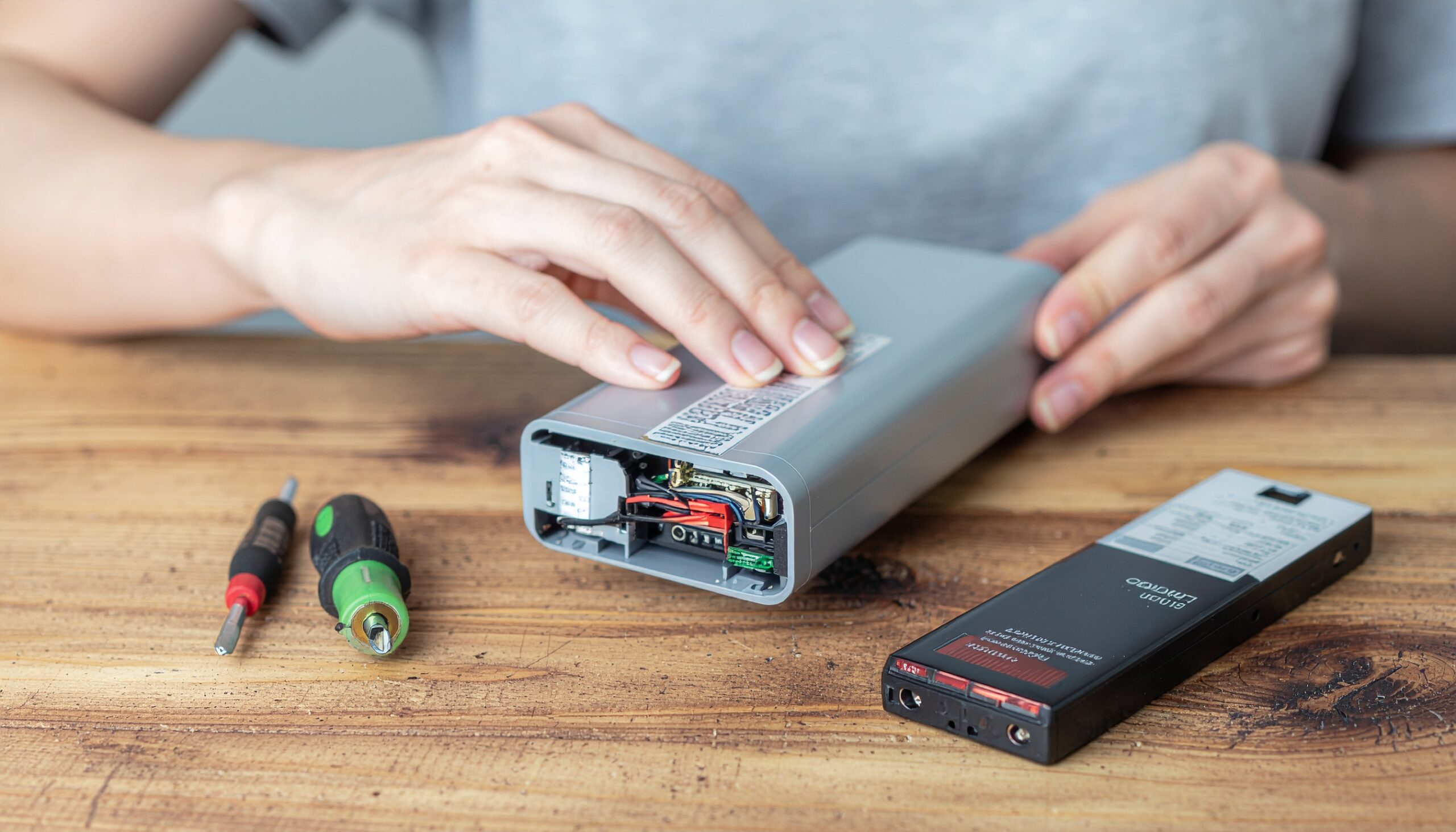
It is a valid question, but the battery kit system solves this completely. A professional cordless system includes multiple batteries and a multi-bay charger. Each battery delivers 45 to 60 minutes of runtime depending on surface type and suction settings.
For a typical 4 to 6-hour cleaning shift, a cleaner starts with two charged batteries on their person and two more charging at base. Swapping a battery takes 15 seconds, faster than walking to a new power outlet with a corded unit.
We’ve tested this extensively with clients running double shifts (early morning and evening cleaning). The four-battery rotation supports both shifts without issue. Batteries charge fully in 90 minutes, so the evening crew always has fresh batteries ready when they arrive.
This is where battery-powered uptime reliability becomes important. If you’re managing a backpack vacuum fleet across multiple sites or shifts, you need equipment that supports operational continuity. Battery systems with proper rotation protocols deliver battery-powered uptime reliability without the infrastructure limitations of corded equipment.
Maintenance Costs: Backpack vs. Upright Fleet Comparison
Over a five-year ownership period, maintenance costs tell the real story of fleet economics.
Preventive Maintenance Budgets
Compare these typical maintenance costs per unit over a five-year lifespan:
- Corded Upright: Cord replacements ($120–$180), belt replacements ($75), brush roll replacements ($120), motor repairs ($180–$250), and housing repairs ($80–$120). Total: $575 to $745.
- Battery Backpack: Battery replacements over 5 years ($560), annual filter replacements ($125), harness adjustments ($45), and a minor motor service ($120). Total: $850.
Operational Uptime Calculations
At first glance, the backpack system appears slightly more expensive to maintain. However, this doesn’t account for the productivity difference.
A corded upright delivers approximately 85 to 90 percent uptime when you factor in cord issues, wheel failures, and repair downtime. A battery-powered backpack delivers 95 to 98 percent uptime because there are fewer mechanical failure points, and hot-swappable batteries prevent work stoppage.
For a 10-unit fleet operating 40 hours weekly, that 8 to 10 percent uptime difference equals 32 to 40 additional productive hours per week. At $32 per hour labour cost, that is $1,024 to $1,280 in recovered productivity weekly, or $53,248 to $66,560 annually. The maintenance cost difference becomes irrelevant when the productivity gains are up to 75 times larger.
Integration With Existing Cleaning Systems
Switching to a battery-powered cleaning fleet doesn’t require overhauling your entire operation. The transition is straightforward if you approach it methodically.
We recommend a phased rollout approach: replace 30 to 40 percent of your corded units in quarter one, another 30 to 40 percent in quarter two, and complete the transition by quarter three. This spreads the capital investment across multiple budget periods and gives your team time to adjust procedures.
For teams using high-quality commercial squeegees and mops alongside vacuum equipment, the cordless system actually improves workflow coordination. Cleaners can move from dry sweeping or vacuuming straight into wet mopping without tripping over power lines or dragging bulky cords through wet zones. It integrates seamlessly into your established commercial cleaning supplies protocols.
Why WA’s Climate Makes Battery Systems More Reliable
Western Australia’s dry climate and temperature stability actually favour battery-powered commercial cleaning equipment over corded alternatives.
Lithium-ion batteries perform optimally in temperatures between 15°C and 30°C. Perth’s average indoor office temperature sits comfortably in that range year-round. We don’t see the cold-weather battery degradation that affects equipment in southern states, nor the extreme heat issues that impact outdoor equipment in northern regions.
Corded equipment, conversely, faces challenges in WA’s low-humidity environment. Static electricity buildup is more common, which can damage sensitive motor components over time. Dust infiltration is also higher in dry climates, requiring more frequent filter changes and motor cleaning.
Battery systems are sealed units with superior dust protection. Modern commercial vacuums use multi-stage filtration systems that prevent fine dust from reaching the motor housing, extending motor life significantly compared to traditional uprights. We’ve tracked this with clients operating in Kalgoorlie and other Goldfields locations where dust is a constant challenge. Battery-powered backpack units consistently outlast corded uprights by 18 to 24 months in those environments.
Fleet Standardisation and Training Efficiency
One often-overlooked advantage of building your equipment fleet around a single platform: training becomes dramatically simpler.
When you’re running a mix of corded uprights, canister vacuums, and backpack units from different manufacturers, every new hire needs training on multiple systems. Each piece of equipment has different controls, different maintenance requirements, and different troubleshooting procedures.
Standardising on one platform, like the Pacvac Superpro 700 battery kit, means every cleaner learns one piece of equipment. Training time drops from 2 to 3 hours to 30 to 45 minutes. New hires reach full productivity faster. Cross-site deployment becomes effortless because every location uses an identical commercial vacuum cleaner. This is a major factor when procuring commercial cleaning supplies perth to build scale.
This also simplifies your parts inventory. Instead of stocking filters, belts, and components for five different vacuum models, you stock parts for one, vastly simplifying your commercial cleaning supplies inventory. Bulk purchasing becomes possible, reducing per-unit costs by 15 to 25 percent.
Environmental Impact and Sustainability Reporting
If your organisation tracks sustainability metrics or reports environmental impact, battery-powered equipment offers measurable advantages.
Energy Consumption and Costs
A high-efficiency commercial backpack draws significantly less power in battery mode compared to traditional 1200 to 1400-watt upright vacuums. For clients running battery-powered fleets, that’s a 30 to 40 percent reduction in energy consumption.
Across a 10-unit fleet operating 40 hours weekly, that translates to roughly 14,000 to 18,000 kWh saved annually. At WA’s average commercial electricity rate, that represents several thousand dollars in annual energy savings, another ROI component most facility managers don’t initially consider.
Cord Waste and Battery Recycling
Battery systems also eliminate the cord waste stream. Commercial vacuum cords typically contain PVC and copper, neither of which is easily recycled. A 10-unit fleet generates 10 to 15kg of cord waste every 18 to 24 months. Battery systems eliminate that entirely.
Lithium-ion batteries are highly recyclable through established programs. When batteries reach end-of-life (typically after 500 to 800 charge cycles), they can be returned to battery recycling facilities where lithium, cobalt, and other raw materials are recovered and reused. For organisations pursuing Green Star ratings or sustainability certifications, these metrics contribute directly to environmental performance scores.
Making the Business Case to Leadership
When presenting a commercial vacuum fleet upgrade to senior management or budget holders, focus on three numbers:
- Payback period: Based on productivity gains and reduced maintenance, most battery-powered backpack fleet transitions pay for themselves in 8 to 14 months.
- Annual cost savings: After payback, typical annual savings run $8,000 to $12,000 per 10-unit fleet when you account for productivity, energy, maintenance, and reduced workers’ compensation claims.
- Risk reduction: Eliminating cord-related trip hazards and reducing repetitive strain injuries directly lowers your organisation’s liability exposure and insurance costs.
Frame the investment as operational improvement, not just equipment replacement. You are not buying vacuums; you are buying 20 to 30 percent more productive capacity from your existing team.
Most finance teams approve capital expenditures that deliver sub-12-month payback periods without hesitation. The challenge is presenting the data clearly and quantifying the productivity gains accurately. The key is using your own operational data: current cleaning times, labour costs, and maintenance expenses, to build site-specific ROI projections.
Building a Future-Ready Cleaning Operation
The commercial cleaning industry is shifting rapidly. Labour costs are rising annually in WA, client expectations for hygiene and cleanliness have increased permanently, and competition for contracts is intensifying. The operations that win in this environment are those that maximise productivity per labour hour. Equipment choices drive that productivity directly.
An equipment fleet built around battery-powered backpack systems positions your operation for sustainable growth. You can take on larger contracts without proportional increases in headcount. You can deliver faster turnarounds and higher quality results. A high-performance commercial vacuum cleaner reduces operational costs while improving worker satisfaction and retention.
For comprehensive facility maintenance, your battery-powered vacuum fleet integrates seamlessly with other commercial cleaning equipment. When preparing carpets, you can pre-vacuum before running deep commercial carpet cleaning machines. This layered approach maximises both efficiency and cleaning quality.
If you’re managing cleaning operations across multiple sites in Western Australia, or if you’re preparing to scale your business, the technology is proven, the economics are clear, and the operational advantages are immediate.
Conclusion
The shift to backpack vacuums represents one of the highest-ROI equipment upgrades you can make. The numbers do not lie, and neither do the facilities managers who’ve already made the switch. If you are ready to reduce strain and improve outcomes across your operations, choose Weskleen Supplies as your commercial partner.
Contact our West Australian support team on 1800 728 926 to calculate your exact fleet ROI. We will work with your actual operational data to project realistic savings and design a transition plan that fits your budget and timeline perfectly.