


Blog
Why Retail Managers in WA Prefer Orbital Scrubbers Over Traditional Rotary Discs

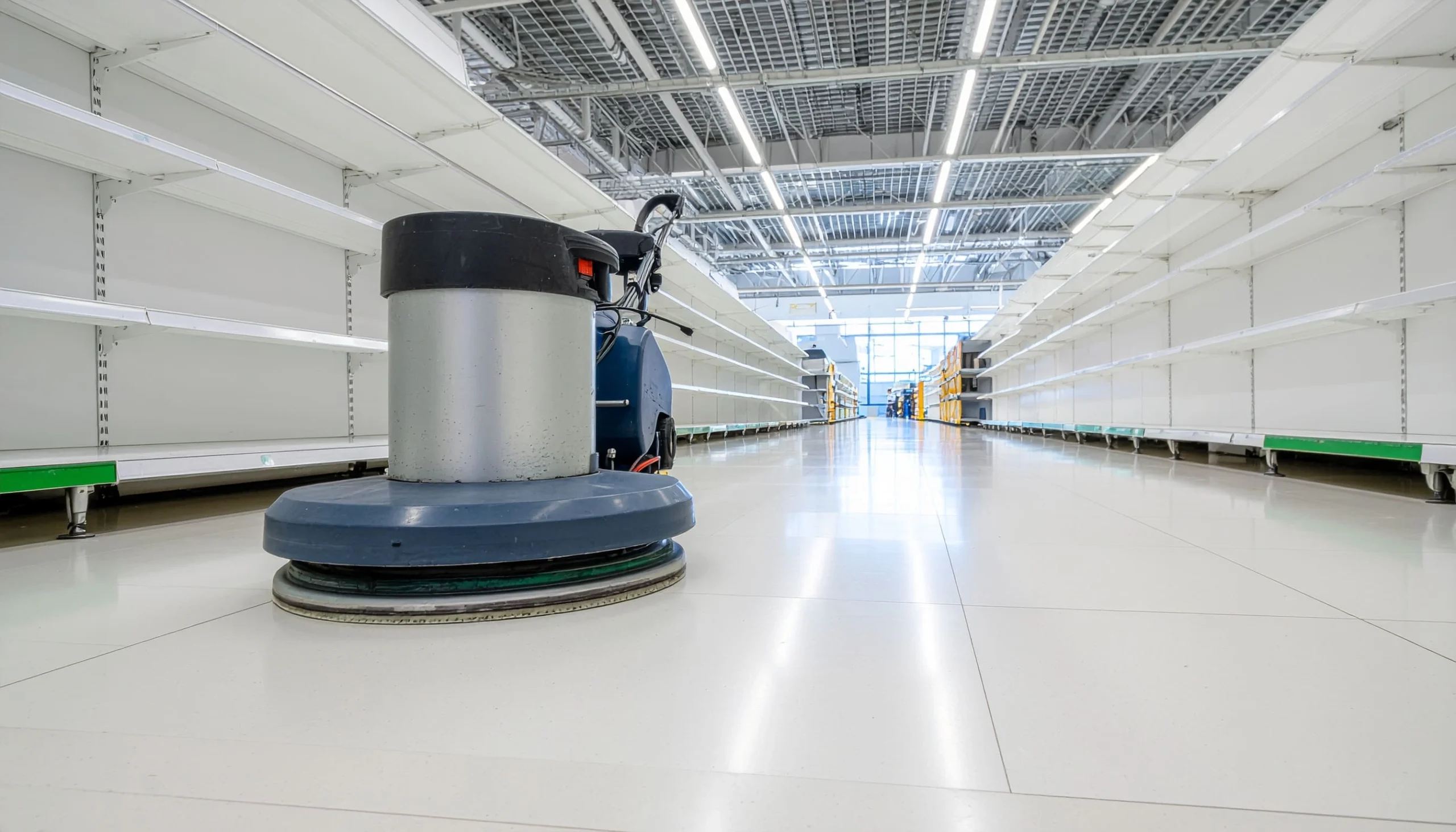
Walk into any busy shopping centre in Perth on a Saturday afternoon and you’ll notice something: the floors shine, even in the food court. That’s not accidental. Behind that appearance is a shift in how retail managers across Western Australia approach floor maintenance.
The change from traditional rotary disc machines to orbital scrubbers has been driven by practical requirements-the need to clean more efficiently, reduce maintenance issues, and maintain hygiene standards in high-traffic retail environments. Understanding why this shift has occurred requires examining how the two technologies differ in real-world conditions.
The Traditional Rotary Disc: A Workhorse with Limitations
Rotary disc floor machines have been the backbone of commercial cleaning for decades. They’re simple, reliable, and effective for many applications. The rotating pad or brush spins at high speed, scrubbing dirt from floors with consistent circular motion.
But here’s the catch: that circular motion creates a predictable pattern of wear. The centre of the pad works harder than the edges, leading to uneven cleaning and faster pad degradation. In retail environments with heavy foot traffic, this means more frequent pad changes and inconsistent results across large floor areas.
Traditional rotary machines also demand a certain level of operator skill. Inexperienced staff can leave swirl marks, especially on polished surfaces or when using the wrong pad-to-floor pressure. For retail managers juggling tight budgets and high staff turnover, this creates a training burden that’s hard to sustain.
How Orbital Scrubbers Changed the Game
The Polystar Orbital Floor Scrubber represents a different approach entirely. Instead of spinning in one direction, orbital machines move the pad in multiple directions simultaneously-think of a figure-eight motion happening hundreds of times per minute.
This multi-directional action distributes pressure evenly across the entire pad surface, delivering superior retail floor maintenance consistency. The result? More consistent cleaning, longer pad life, and significantly reduced risk of surface damage. For retail managers responsible for everything from polished concrete to vinyl composite tile, that versatility matters.
One Perth-based retail operations manager described the difference this way: “With our old rotary machines, we’d get complaints about streaks near the entrance every few weeks. Since switching to orbital, those complaints stopped. The floors look uniform, and our cleaning team spends less time re-doing areas.” Quality squeegees and mops complement orbital scrubbers perfectly for comprehensive floor care.
Why WA Retail Environments Demand Better
Western Australia’s retail sector faces unique challenges. The state’s climate means dust and sand constantly track into stores, particularly in coastal areas. High foot traffic during peak shopping periods grinds that debris into floor surfaces, creating a cleaning challenge that goes beyond simple mopping.
Retail managers need equipment that can handle this reality without shutting down aisles for hours. Orbital scrubbers excel here because they clean more thoroughly in a single pass. The multi-directional pad movement ensures even pad wear distribution that lifts embedded dirt, reducing the need for repeat cleaning.
There’s also the safety factor. Wet floors in retail spaces are a liability risk. Orbital machines typically require less water than traditional rotary scrubbers because the pad action is more efficient. Less water means faster drying times, which means shoppers can safely return to cleaned areas sooner.
The Economics of Switching: What the Numbers Show
Initial cost often stops managers from upgrading equipment. It’s true that orbital scrubbers typically carry a higher upfront price than basic rotary machines. But the total cost of ownership tells a different story.
Consider pad longevity. A rotary machine might burn through pads every 10-15 operating hours in a high-traffic retail environment. Orbital machines, with their even pad wear distribution, can extend pad life by 40-60%. Over a year, that’s a substantial reduction in consumable costs.
Then there’s labour efficiency. Orbital scrubbers are genuinely easier to operate. New staff can achieve professional results with minimal training because the machine does more of the work. For retail operations with high staff turnover-a reality across WA’s retail sector-this translates to real savings in training time and supervision.
One shopping centre maintenance supervisor in Joondalup tracked the numbers after switching three rotary machines to orbital units. Over 12 months, they calculated a 23% reduction in floor cleaning labour hours and a 31% drop in pad replacement costs. The machines paid for themselves in 14 months.
Surface Compatibility: One Machine, Multiple Floor Types
Retail spaces rarely feature just one type of flooring. A typical store might have polished concrete in the main area, vinyl in the back-of-house, and ceramic tile in the restrooms. Traditional rotary machines often require different pads or settings for each surface, which complicates operations. Our complete floor scrubber range in Perth addresses these varied requirements.
Orbital scrubbers handle surface transitions more gracefully. The multi-directional pad movement adapts to different textures without the aggressive single-direction force that can damage softer materials. This means cleaning crews can move from polished concrete to vinyl without stopping to change equipment or adjust technique.
For retail managers, this versatility reduces equipment inventory. Instead of maintaining separate machines or extensive pad collections for different areas, one well-chosen orbital unit can handle the entire store. That’s not just a cost saving-it’s a logistical simplification that makes daily operations smoother.
Noise Levels and Customer Experience
Here’s something that doesn’t appear in equipment spec sheets but matters enormously in retail: customer perception. A traditional rotary scrubber sounds like what it is-a powerful motor spinning a heavy pad at high speed. In a quiet store during early morning cleaning, that noise is noticeable and sometimes jarring.
Orbital scrubbers run quieter. The motor doesn’t have to work as hard because the multi-directional motion is inherently more efficient. For retail operations that clean during business hours-increasingly common as stores extend trading hours-this acoustic difference is significant.
Shoppers don’t consciously think “that’s a quieter floor machine,” but they do notice when the cleaning process doesn’t disrupt their experience. It’s the kind of operational detail that separates adequate retail management from exceptional customer service.
Maintenance and Downtime Considerations
Any piece of commercial equipment eventually needs service. The question is how often, and how disruptive those maintenance events become. Traditional rotary machines have a straightforward mechanical design, which makes them relatively easy to repair but also subjects them to predictable wear patterns.
Orbital machines, while more complex in their motion mechanism, actually experience less stress on individual components because the workload is distributed differently. The motor doesn’t strain to overcome resistance in one direction; instead, it maintains a balanced multi-directional rhythm.
Weskleen Supplies has tracked service data across both machine types in WA retail applications. Orbital units typically require professional service 30% less frequently than comparable rotary machines operating in similar environments. For retail managers, that means less downtime and fewer emergency repair calls during critical trading periods.
Training Staff: The Practical Reality
Retail cleaning staff often work early morning or late evening shifts. Turnover is high, and training time is limited. In this environment, equipment that’s intuitive to operate isn’t just convenient-it’s essential for maintaining standards.
Orbital scrubbers have a gentler learning curve. The machine’s self-levelling action means operators don’t need to master the precise angle and pressure techniques that rotary machines demand. New staff can achieve professional results from their first shift, reducing the supervision burden on experienced team members.
One retail chain manager in Perth described the difference: “We used to spend 30 minutes training someone on the rotary machine, then check their work for the first week. With the orbital unit, it’s a 10-minute orientation and they’re good to go. The machine compensates for technique variations.”
The Environmental Equation
Sustainability isn’t just a buzzword in WA retail-it’s increasingly a customer expectation and a corporate responsibility. Orbital scrubbers contribute to environmental goals in ways that aren’t immediately obvious.
First, the reduced water consumption. Orbital machines achieve better cleaning results with less water because the pad action is more effective. Over a year of daily cleaning in a medium-sized retail space, that can mean thousands of litres saved.
Second, the extended pad life reduces waste. Fewer discarded pads means less material heading to landfill. When combined with the ability to use microfibre mop heads and other reusable cleaning tools, orbital machines fit naturally into a broader sustainability strategy.
Third, the machines’ efficiency means less energy consumption per square metre cleaned. For retail operations tracking their carbon footprint, these incremental improvements add up across multiple locations.
Real-World Application: A Case Study
A national retail chain operating 17 stores across Perth and regional WA faced a common problem: inconsistent floor appearance across locations. Some stores looked immaculate; others showed visible traffic patterns and dull patches despite following the same cleaning schedule.
The operations team investigated and discovered the issue wasn’t cleaning frequency or product choice-it was equipment capability. Stores using older rotary machines struggled to maintain appearance standards, while two locations that had independently upgraded to orbital scrubbers consistently received positive feedback.
The chain rolled out orbital machines across all WA locations over six months. Within the first quarter, customer complaints about floor cleanliness dropped 67%. Staff reported the machines were easier to use, and maintenance logs showed fewer equipment-related issues.
The financial impact was equally clear. Reduced labour hours, lower consumable costs, and fewer customer complaints created a measurable return on investment that exceeded initial projections. The equipment upgrade became a case study the chain applied to its eastern states operations.
Choosing the Right Orbital Scrubber for Retail
Not all orbital machines are created equal. Retail managers considering the switch need to evaluate several factors beyond basic specifications.
Power and pad size matter for coverage efficiency. Larger retail spaces benefit from 15-inch or 17-inch pad diameters that clean more area per pass. Smaller boutique stores might find a compact 13-inch model more manoeuvrable.
Water tank capacity affects how long operators can work before refilling. In multi-level shopping centres or stores far from water sources, a larger tank reduces downtime.
Build quality determines longevity. Commercial-grade construction with metal components outlasts plastic housings in demanding retail environments. It’s worth examining the machine’s internal build, not just the exterior finish.
Parts availability in Western Australia is a practical consideration. Equipment that requires interstate shipping for common replacement parts creates unnecessary downtime. Working with local suppliers like Weskleen Supplies ensures faster service and readily available consumables.
Integration with Existing Cleaning Protocols
Switching to orbital scrubbers doesn’t require rebuilding your entire floor care program. The machines integrate naturally with existing protocols, often improving results without changing cleaning chemistry or schedules.
Most retail operations already use neutral pH cleaners suitable for multiple floor types. These products work effectively with orbital machines-in fact, the improved mechanical action often means you can reduce chemical concentration while achieving better results.
The key is matching pad selection to floor type and cleaning task. White or beige pads for light cleaning and buffing, blue or green for regular scrubbing, and brown or black for heavy-duty stripping. This colour-coded system works identically whether you’re using rotary or orbital equipment. Daily maintenance with dust control mops prevents soil from being ground into floors before wet cleaning.
For retail managers transitioning from rotary to orbital machines, the simplest approach is parallel operation. Keep one rotary machine as backup whilst staff familiarize themselves with the orbital unit. Within a few weeks, most operations find the rotary machine sitting idle-proof that the transition was smoother than anticipated.
The Future of Retail Floor Care in WA
The shift towards orbital scrubbers in Western Australian retail isn’t a temporary trend. It reflects a broader evolution in commercial cleaning towards equipment that’s more efficient, more versatile, and easier to operate.
As retail spaces continue to expand trading hours and customer expectations for cleanliness rise, the operational advantages of orbital technology become more pronounced. The machines deliver professional results with less skilled labour input, addressing one of retail’s most persistent challenges.
Battery-powered orbital models are gaining traction, eliminating cord management in large retail spaces. This cordless freedom, combined with the machines’ inherent efficiency, represents the next phase of floor care technology. Our battery kits provide extended runtime for continuous operations.
For retail managers evaluating equipment upgrades, the question isn’t whether to consider orbital scrubbers-it’s which model best fits your specific operational needs. The technology has proven itself across WA’s diverse retail environments, from small boutiques to major shopping centres.
Conclusion
The preference for orbital scrubbers among Western Australian retail managers isn’t based on marketing hype-it’s grounded in measurable operational improvements. These machines clean more effectively, reduce consumable costs, simplify training, and deliver consistent results across different floor types.
For retail operations facing the dual challenges of maintaining high appearance standards and controlling costs, orbital technology offers a proven solution. The initial investment pays back through reduced labour hours, extended consumable life, and fewer customer complaints about floor cleanliness.
The shift from traditional rotary discs to orbital scrubbers represents smart equipment management. It’s retail managers choosing tools that match the demands of modern retail environments-high traffic, diverse surfaces, limited downtime, and constant pressure to maintain appearance standards.
Whether you operate a single store or manage floor care across multiple locations, the case for orbital scrubbers is compelling. The machines work harder so your staff doesn’t have to, delivering professional results that keep customers focused on your products, not your floors.
Ready to make the switch? Call 1800 728 926 to discuss which orbital scrubber model best fits your retail floor care requirements.