


Blog
Dilution Ratios 101: Getting the Most Out of Your Concentrated Solution

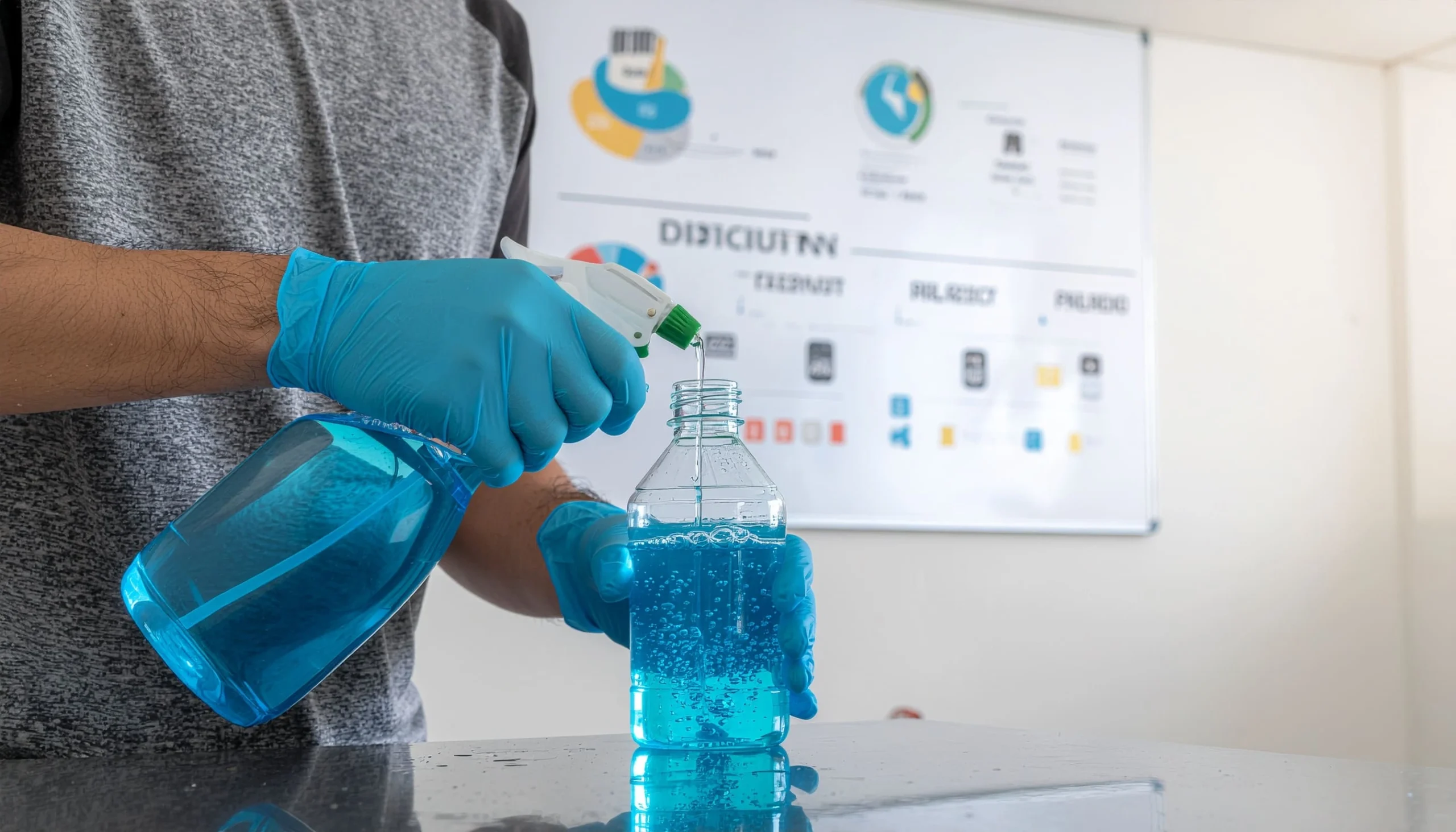
Most commercial cleaners waste money on cleaning chemicals. This does not happen because they are buying the wrong products, but because they are mixing them incorrectly.
A 5-litre bottle of concentrated cleaner can tackle hundreds of square metres when diluted properly, or it can disappear in a week if you are guessing at ratios. The difference between these outcomes is not product quality; it is understanding cleaning chemical dilution.
Professional cleaning operations run on margins that do not allow for waste. When you are mixing solutions by eye or using “a bit of this, bit of that” measurements, you are either burning through product unnecessarily or creating weak solutions that force you to clean surfaces twice. Both scenarios cost you time and money.
Here is what most people do not realise: concentrated cleaning chemicals are designed to perform at specific dilution ratios. These ratios are not arbitrary numbers printed on labels to confuse you; they are calibrated to balance cleaning power, safety, and cost-effectiveness. Understanding how to calculate and apply these ratios transforms how efficiently you work. But how do you know what concentration is right for your specific environment?
Why Dilution Ratios Matter More Than You Think
Think of concentrated cleaner like espresso. A single shot delivers intense flavour because it is concentrated. Add hot water, and you have got an Americano; still effective, but stretched further. Add too much water, and you have got dishwater that will not wake anyone up. The principle applies directly to cleaning chemicals.
When you dilute a concentrated solution correctly, you are creating the optimal chemical balance for the job at hand. Too weak, and the surfactants (the molecules that lift dirt) cannot do their work effectively. Too strong, and you are wasting product whilst potentially creating residue that attracts more dirt or poses safety risks.
A facility manager in Fremantle learned this the hard way. His team was mixing their mr bean cleaner at roughly double the recommended concentration, thinking stronger meant better. They burned through stock quickly, complained about sticky floors, and still were not seeing better results. When they switched to proper ratios, their product costs dropped by 40 percent and the sticky residue problem vanished entirely.
Decoding Dilution Ratio Labels
Dilution ratios appear on product labels in formats like 1:20, 1:40, or sometimes as percentages. Here is what these numbers actually mean when dealing with commercial cleaning supplies perth.
A ratio of 1:20 means one part concentrated chemical to 20 parts water. If you are filling a 1-litre spray bottle, you would add approximately 48ml of concentrate and top it up to 1,000ml with water. The total volume is 21 parts (1 part concentrate plus 20 parts water), so your concentrate represents roughly 5 percent of the final solution.
Common dilution ratios and their applications:
- 1:10 (10% solution): Heavy-duty degreasing, stripping, or sanitising high-contamination areas
- 1:20 (5% solution): General-purpose cleaning for moderate soil levels
- 1:40 (2.5% solution): Light cleaning, maintenance, or delicate surfaces
- 1:100 (1% solution): Glass cleaning or final rinses
The product you are using determines which ratio suits your task. Reputable providers of commercial cleaning supplies, such as Weskleen Supplies, include clear dilution guidelines because different formulations work at different concentrations. A concentrated formula, for instance, performs brilliantly as an all-purpose cleaner at moderate dilutions but can be adjusted stronger for tough jobs or weaker for daily maintenance.
The Mathematics of Mixing Made Simple
You do not need to be a chemist to calculate dilutions accurately. Here is the straightforward approach professionals use to manage their commercial cleaning supplies perth effectively.
For spray bottles (typically 500ml or 1L), divide the bottle capacity by the total ratio parts. For a 1-litre bottle at 1:20 dilution, you have 21 total parts (1 concentrate plus 20 water). Divide 1000ml by 21 to get approximately 48ml of concentrate, topped up with water to the 1-litre mark.
For bucket mixing (typically 10L or 15L), the same principle applies at a larger scale. A 10-litre bucket at 1:40 dilution means 41 total parts. Divide 10,000ml by 41 to get approximately 244ml of concentrate, filled to 10 litres with water.
Most professionals use measuring cups or dosing pumps calibrated to their most common container sizes. Once you have calculated your ratios, mark your containers or create a quick-reference chart. A cafe owner we work with keeps laminated cards showing exact measurements for her three most-used bucket sizes, ensuring no calculation is needed on busy mornings.
Matching Dilution Strength to Cleaning Tasks
Not every surface needs the same cleaning power. Adjusting your dilution ratios based on soil levels and surface types maximises efficiency whilst protecting materials.
Light Soil Daily Maintenance
Weaker dilutions (1:40 to 1:60) handle routine cleaning of surfaces that are not heavily soiled. Office desks, lightly-used floors, and daily bathroom touch-ups fall into this category. You are removing dust, light fingerprints, and surface-level dirt. Using stronger solutions here wastes product and can leave residue that attracts dirt faster. Using an Enduro Microfibre Mop Head with a weak solution ensures the fine fibres are not clogged with excess chemical.
Moderate Soil General Cleaning
Standard dilutions (1:20 to 1:30) tackle most commercial cleaning situations. This range handles foot traffic on floors, kitchen surfaces between deep cleans, and bathroom facilities with regular use. It is the sweet spot where cleaning power meets economy for standard mr bean cleaning tasks.
Heavy Soil Deep Cleaning
Stronger dilutions (1:10 to 1:15) cut through grease, grime, and built-up soil. Commercial kitchens, workshop floors, and heavily-trafficked entrance areas often need this concentration. You will use more product per litre of solution, but you will clean faster and more effectively than making multiple passes with weak solutions.
Delicate Surface Treatment
Some materials require gentler treatment regardless of soil level. Polished stone, certain plastics, and finished wood may need weaker dilutions (1:50 or lighter) to avoid damage or dulling. Always test on inconspicuous areas first.
A contract cleaner who manages several Perth office buildings keeps three pre-mixed solutions in colour-coded spray bottles: green for light daily work, yellow for standard cleaning, and red for problem areas. This system prevents her team from wasting strong solution on light tasks or struggling with weak solution on tough jobs.
Common Dilution Mistakes That Cost You Money
Even experienced cleaners fall into these traps. Recognising them saves immediate costs.
Eyeballing measurements is the most expensive habit in commercial cleaning. That splash of concentrate you add to your bucket varies every time. Some days you are mixing at 1:15, others at 1:35, and you have got no consistency in results or costs. Buy measuring tools and use them every time.
Mixing too strong just to be safe doubles or triples your chemical costs for minimal cleaning benefit. Once you have reached the concentration needed to break down soil, adding more concentrate does not clean faster or better. It just leaves residue and empties bottles. Why waste money on over-concentration when precision saves both product and labour time?
Using hot water incorrectly can either boost or ruin your dilution. Some chemicals activate better with warm water, increasing cleaning power. Others break down or become less effective when mixed with hot water. Check product specifications; most all-purpose mr bean cleaning products work brilliantly with cold or lukewarm water, saving you the energy costs of heating.
Storing pre-mixed solutions too long degrades their effectiveness. Most diluted cleaning solutions maintain peak performance for 24-48 hours. After that, surfactants can separate, water can evaporate (concentrating the solution unpredictably), or the mixture can lose potency. Mix what you will use in a day or two, not a week’s worth.
Tools and Techniques for Consistent Dilution
Professional operations do not rely on guesswork. They use systems that deliver consistency across their commercial cleaning supplies perth.
Dosing Pumps
Dosing pumps attach directly to concentrate bottles and dispense precise amounts with each pump stroke. A pump calibrated to deliver 10ml per stroke means you can count out exact measurements into any container. Five pumps into a bucket, top with water to your mark, and you have got perfect dilution every time.
Measuring Jugs
Measuring jugs with multiple scales let you read volumes quickly without calculation. Look for jugs marked in millilitres and fluid ounces with clear graduation lines. Keep dedicated jugs for chemicals; do not cross-contaminate with food or drink containers.
Dilution Control Systems
Dilution control systems represent the professional standard for larger operations. These wall-mounted or portable units connect to water supplies and chemical concentrates, delivering pre-set dilutions at the push of a button. Initial investment is higher, but the consistency and labour savings pay back quickly in facilities using significant chemical volumes.
Colour-Coded Bottles
Colour-coded bottles and labels prevent mix-ups when you are maintaining multiple dilution strengths. Use consistent colours across your operation: perhaps blue bottles for glass cleaner, green for all-purpose, and red for heavy-duty. Label everything with the dilution ratio, mixing date, and product name. A cleaning hand caddy keeps your tools organised and accessible, ensuring you have the right dilution for each task without running back to storage.
Getting Maximum Value From Concentrate
A versatile formula like a mr bean cleaner works as an exceptional all-purpose solution when diluted correctly. Here is how to maximise your investment in this product.
For general floor cleaning with commercial squeegees and mops, mix at 1:20 to 1:30 in your bucket. This concentration cuts through foot traffic, spills, and daily grime without leaving residue. A 5-litre bottle yields 100-150 litres of cleaning solution at this ratio, enough to clean several thousand square metres of floor space.
For spray-and-wipe applications on benches, tables, and non-porous surfaces, dilute to 1:40 or 1:50 in spray bottles. This lighter concentration is perfect for surfaces that do not see heavy soiling but need regular cleaning.
For heavy-duty jobs like degreasing kitchen surfaces or tackling built-up grime, strengthen the mix to 1:10 or 1:15. Apply, let it dwell for a minute to break down soil, then wipe or rinse. You will use more concentrate per litre, but you will clean effectively in one pass rather than scrubbing repeatedly with weak solution.
Safety Considerations With Concentrated Chemicals
Concentrated cleaning chemicals demand respect. They are safe when handled correctly, but concentrated formulations are more potent than ready-to-use commercial cleaning supplies.
Always add concentrate to water, never water to concentrate. This principle prevents splashing and ensures even mixing. Fill your container partway with water, add the measured concentrate, then top up with water to your final volume whilst agitating gently.
Wear appropriate PPE when handling concentrates. Gloves protect skin from prolonged exposure, and safety glasses prevent splashes reaching eyes. Most diluted solutions at working strength are gentle enough for brief skin contact, but concentrates can cause irritation.
Never mix different chemical types unless specifically instructed by manufacturers. Combining different cleaners, especially acids and alkalis, can create dangerous reactions. If you need to switch products on a surface, rinse thoroughly between applications. For facilities requiring sanitising alongside cleaning, products like the Comet Foaming Cleaner & Sanitiser have specific dilution requirements to achieve proper sanitisation. These ratios are not flexible; you must mix to the specified concentration to meet health and safety standards.
Calculating Cost Savings Through Proper Dilution
The financial impact of correct dilution becomes clear when you run the numbers on your commercial cleaning supplies perth.
A 5-litre bottle of concentrate costs significantly less per litre of working solution than ready-to-use cleaners. At 1:20 dilution, that 5-litre bottle produces 105 litres of cleaning solution. Compare this to buying 105 litres of ready-to-use product, and the savings are substantial, often 60-80 percent lower cost per litre of usable cleaner.
For a small business cleaning 200 square metres of floor space daily, proper dilution of concentrate versus using ready-to-use products can save $300-500 annually on just one product. Scale this across multiple cleaning chemicals and larger facilities, and the savings reach thousands.
Reduced packaging waste adds environmental and disposal cost benefits. One 5-litre concentrate bottle replaces dozens of ready-to-use spray bottles, cutting plastic waste and storage space requirements.
Building Dilution Into Your Cleaning Workflow
Consistency comes from systems, not willpower. Build dilution into your standard operating procedures.
Pre-shift preparation: Start each work period by preparing the solutions you will need. If you know you will clean three offices and two bathrooms, mix your all-purpose cleaner and sanitiser to the appropriate ratios before you begin. This prevents rushing or guessing mid-job.
Station-based systems: For fixed locations like commercial kitchens or facilities with dedicated cleaning cupboards, keep measuring tools and dilution charts at the mixing station. Mount a laminated reference card showing common dilution ratios for your most-used products.
Quality checks: Periodically verify that dilutions are correct. If cleaning results change (surfaces are not coming clean as easily, or you are noticing residue), check your mixing ratios before blaming the product. For teams using heavy machinery like a Polystar Orbital Floor Scrubber, consistent chemical dilution ensures the machine performs optimally. Too-strong solutions can create excess foam that interferes with scrubbing action, whilst too-weak solutions force the machine to work harder for the same results.
Troubleshooting Dilution Issues
When results are not meeting expectations, dilution is often the culprit. Here is how to diagnose and fix common problems.
Streaking or residue after cleaning typically indicates over-concentration. The excess chemical is not fully removed during wiping or rinsing, leaving a film that attracts dirt. Reduce your dilution ratio (use less concentrate, more water) and ensure you are rinsing or wiping thoroughly.
Poor mr bean cleaning performance despite following ratios might mean your specific soil type needs stronger concentration, or you are dealing with a different kind of contamination. Before strengthening your solution, verify you are using the right product for the soil type. Grease needs degreasers, mineral deposits need acids, and protein-based soils need alkaline cleaners.
Inconsistent results between team members suggests mixing procedures are not standardised. Implement measuring tools and written procedures that remove guesswork. Make mixing a step that is checked, not assumed.
Conclusion
Professional cleaning is not about using the strongest chemicals or the most expensive equipment. It is about understanding how products work and using them intelligently.
Cleaning chemical dilution represents one of the simplest ways to control costs whilst maintaining quality. The difference between guessing and measuring is the difference between profitable efficiency and wasteful spending. Start with one product. Calculate your optimal dilution ratio for your most common task, invest in proper measuring tools, and track your results for a month. You will see the financial impact immediately in reduced product consumption and improved cleaning outcomes.
The concentrated solutions provided by Weskleen Supplies are designed to deliver professional results when used correctly. Whether you are managing a commercial facility, running a contract cleaning business, or maintaining your own premises to professional standards, understanding dilution ratios transforms how efficiently your cleaning budget works. If you are unsure about optimal dilution ratios for your specific applications, contact us on 1800 728 926 for expert advice to stretch your budget further.