


Blog
Seasonal Timber Care: Preventing Winter Moisture Damage in Perth Commercial Spaces

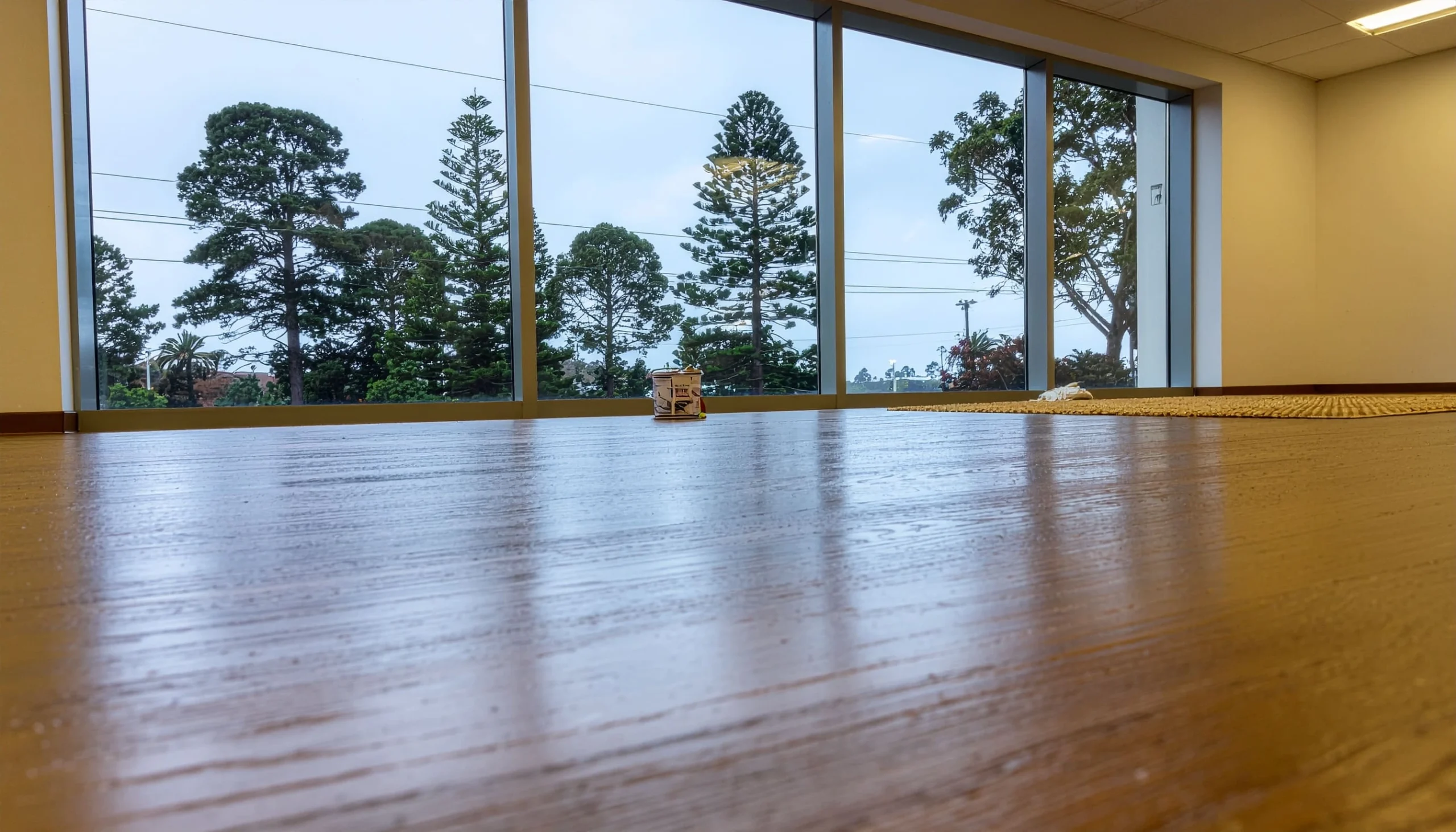
Perth’s winter months bring a unique challenge for commercial spaces with timber flooring. The combination of increased rainfall, higher humidity, and temperature fluctuations creates conditions that can wreak havoc on even the most well-maintained hardwood surfaces. Unlike residential properties where foot traffic is predictable and controlled, commercial environments face constant movement, tracked-in moisture, and the added complexity of maintaining professional aesthetics whilst protecting significant capital investments.
The reality is that hardwood floor moisture protection isn’t just about preserving appearance; it is about preventing structural damage that can cost businesses tens of thousands in repairs. But how much is ignored moisture actually costing your business? A café owner once shared how they had ignored early signs of moisture damage during winter, only to discover by spring that their entire entrance area required complete refinishing. The bill exceeded $12,000, and they had to close for four days during peak trading hours. For facility managers looking to secure reliable Weskleen Supplies, adopting professional preventive measures is essential.
Understanding Perth’s Winter Moisture Dynamics
Perth experiences what many consider a mild winter, but the seasonal shift brings specific moisture-related challenges. From June through August, average rainfall increases dramatically, and indoor spaces experience higher humidity levels as heating systems interact with damp air from outside.
Timber responds to these changes immediately. Wood is hygroscopic; it absorbs and releases moisture based on surrounding conditions. When humidity rises, timber expands. When conditions dry out, it contracts. This constant movement creates stress on flooring systems, particularly at joints and seams.
Commercial spaces amplify these issues. Every time a door opens, moisture-laden air enters. Staff and customers track in rainwater. Cleaning routines that work perfectly in summer can introduce excess moisture during winter months. The cumulative effect is significant moisture exposure that residential properties simply do not experience.
The temperature differential matters too. Heated indoor spaces meeting cold, damp air create condensation, which is often invisible until damage appears. We have seen this particularly in retail spaces near entrances and hospitality venues where kitchen heat meets dining areas with frequent door access.
Early Warning Signs of Moisture Damage
Recognising moisture damage early makes the difference between simple intervention and costly replacement. Cupping is typically the first visible sign. Individual boards curve upward at the edges, creating a concave surface. This happens when the bottom of the boards absorbs more moisture than the top, causing uneven expansion.
Crowning presents the opposite profile, with board centres rising higher than the edges. This often develops after cupping if flooring dries too quickly or if moisture has been present long-term and the wood’s cellular structure has permanently changed.
Buckling represents severe damage where boards lift entirely from the subfloor. This occurs when expansion forces exceed the space available, literally pushing the flooring upward. By this stage, you are looking at replacement rather than restoration.
Discolouration tells its own story. Dark stains, particularly between boards or in specific patterns, indicate water penetration. Black staining suggests mould development, a serious concern requiring immediate professional attention.
Do not overlook subtle changes. A slightly sticky feel underfoot, boards that sound different when walked on, or gaps that appear and disappear signal moisture fluctuation even before visible damage occurs.
The Science Behind Effective Moisture Protection
Hardwood floor moisture protection relies on controlling three variables: surface moisture, ambient humidity, and substrate conditions. Think of it like protecting your skin; you need the right barrier (surface protection), the right environment (humidity control), and healthy underlying conditions (proper subfloor installation).
Surface protection starts with appropriate sealants. Commercial-grade polyurethane creates a moisture barrier whilst allowing minimal vapour transmission. This is essential because completely sealing timber can trap moisture underneath, causing worse problems than it prevents. The key is balance.
Humidity control requires active management. Timber performs best when relative humidity stays between 35-55%. Perth’s winter can push indoor humidity above 60%, particularly in poorly ventilated spaces. This is where mechanical intervention, such as dehumidifiers or improved HVAC systems, becomes necessary rather than optional.
Substrate conditions matter more than many realise. Moisture rising through concrete subfloors accounts for significant timber damage. Proper moisture barriers during installation prevent this, but existing floors without adequate protection remain vulnerable. Testing subfloor moisture levels should be part of any comprehensive winter protection strategy.
Practical Winter Protection Protocols
Entrance management provides your first line of defence. Commercial-grade entrance matting should extend at least three metres inside from external doors. Research shows this distance captures approximately 80% of tracked-in moisture and debris. The matting itself must be moisture-absorbent with a design that prevents water from flowing underneath onto timber surfaces.
We recommend a two-zone approach: outdoor scraper mats to remove heavy debris and moisture, followed by indoor absorbent mats. Both require daily maintenance during wet weather, as saturated mats become part of the problem rather than the solution.
When implementing seasonal floor cleaning, your protocols need adjustment. Summer’s weekly damp mopping might work fine, but winter requires different thinking. Excess water is your enemy. Switch to spray-and-wipe methods using a microfibre mop head that releases minimal moisture whilst effectively capturing dirt.
Your cleaning solution matters too. Products designed for timber should maintain the floor’s existing moisture balance rather than introducing additional water. We have seen facilities switch to concentrated solutions applied via spray bottles, using barely damp microfibre to clean. This approach reduces moisture introduction by approximately 70% compared to traditional mopping.
Daily maintenance should include immediate attention to any water spills or tracked moisture. Waiting until the evening cleaning routine allows water to penetrate timber grain and seams. A simple protocol, such as equipping staff with absorbent cloths and instructions to address moisture immediately, prevents most weather-related damage.
Equipment Selection for Winter Maintenance
The right equipment transforms winter maintenance from reactive damage control to proactive protection. When sourcing commercial cleaning supplies perth, remember that floor scrubbers designed for timber require specific features: adjustable water flow, soft brush options, and effective vacuum systems that remove rather than spread moisture.
Orbital floor scrubbers in perth offer particular advantages for timber maintenance. Their multi-directional cleaning action works with minimal water whilst effectively removing winter grime, salt residue, mud, and organic matter that standard mopping often just redistributes. The key is using them correctly with minimal solution, multiple passes if needed, and immediate drying.
For facilities requiring deep cleaning, carpet steam cleaners might seem counterintuitive for moisture protection, but modern systems designed for hard floors use controlled steam that cleans and evaporates quickly without saturating timber. This technology particularly suits spaces where hygiene standards demand deeper cleaning than dry methods provide.
Vacuum systems deserve attention too. Winter brings more debris, and grinding dirt particles into timber accelerates wear and creates pathways for moisture penetration. Backpack vacuums offer manoeuvrability for daily debris removal before it becomes embedded, which is particularly valuable in high-traffic commercial environments where traditional upright vacuums prove cumbersome. Finding appropriate cleaning equipment perth businesses trust is a fundamental step in damage prevention.
Chemical Solutions for Moisture Management
Not all timber cleaning products perform equally in high-moisture conditions. pH-neutral cleaners preserve timber’s natural moisture balance without stripping protective finishes. This is crucial because compromised sealant allows direct moisture penetration.
Avoid products containing excessive water or those requiring dilution beyond manufacturer specifications. Concentrated solutions applied sparingly outperform diluted products requiring larger volumes. This isn’t just about moisture protection; it is more economical and environmentally responsible. Providing access to quality commercial cleaning supplies safeguards your assets.
Multi-purpose cleaners formulated for commercial use should specify suitability for sealed timber. Products designed primarily for other surfaces might contain ingredients that degrade polyurethane or penetrating oil finishes, creating vulnerabilities that manifest during high-humidity periods.
Sanitisation requirements in hospitality and healthcare environments add complexity. Foaming cleaners and sanitisers offer solutions. Their foam consistency provides dwell time for effective sanitisation whilst minimising liquid contact with flooring. Application technique matters: spray onto cleaning tools rather than directly onto floors, then work in controlled sections.
Humidity Monitoring and Environmental Control
Professional moisture management requires measurement, not guesswork. Digital hygrometers should be standard equipment in any commercial space with timber flooring. Place them at floor level, as humidity near the ground differs significantly from ambient room measurements.
Target relative humidity between 40-50% during Perth’s winter months. Below 35%, timber can dry excessively and shrink. Above 55%, expansion and potential mould growth become concerns. These aren’t arbitrary numbers; they are based on timber’s equilibrium moisture content and the conditions that maintain dimensional stability.
When monitoring reveals humidity consistently above 55%, intervention becomes necessary. Portable dehumidifiers work for smaller spaces, but larger commercial environments benefit from integrated HVAC solutions with humidity control. The investment typically pays for itself by preventing a single major moisture damage incident.
Ventilation strategy requires winter adjustment. Simply opening windows during rainfall introduces moisture. Instead, ventilate during dry periods, even if temperatures are cool. Air circulation prevents moisture accumulation and helps maintain consistent humidity levels throughout the space. When purchasing commercial cleaning equipment perth professionals use, factor environmental monitors into your budget.
Addressing Existing Moisture Issues
Discovery of moisture damage demands immediate assessment. Minor cupping affecting individual boards might respond to environmental correction, which means reducing humidity and allowing timber to stabilise. This process takes weeks, not days, and requires patience.
Professional moisture meters determine damage extent. Surface readings tell part of the story, but deep readings reveal whether moisture has penetrated the timber’s core. This information guides whether you are looking at monitoring and environmental adjustment versus active intervention.
For moderate damage, controlled drying using commercial dehumidifiers and fans can reverse cupping if caught early. The key is gradual reduction. Rapid drying often causes worse problems, including cracking and permanent deformation. We have seen facility managers panic and introduce industrial drying equipment, only to create damage that did not exist before their intervention.
Severe buckling or widespread cupping requires professional refinishing or replacement. There is no DIY solution that adequately addresses structural timber damage. The good news is that proper winter protection protocols prevent reaching this point. High-quality commercial cleaning supplies perth providers offer can mitigate early-stage surface issues before they penetrate deeper.
Long-Term Protection Strategies
Seasonal resealing provides enhanced protection for high-traffic commercial spaces. Applying fresh polyurethane before winter creates a renewed moisture barrier exactly when you need it most. This does not mean complete refinishing; light screening to create adhesion followed by a maintenance coat extends protection significantly.
Staff training represents perhaps the most cost-effective protection strategy. Everyone from cleaning crews to front-of-house staff should understand moisture’s impact on timber and their role in protection. A restaurant server who immediately addresses a spilled water glass prevents damage that even the best cleaning protocols cannot reverse after the fact.
Documentation creates accountability and reveals patterns. Logging daily humidity readings, moisture incidents, and maintenance activities helps identify problem areas before major damage occurs. This data also proves invaluable when evaluating whether current protocols are working or need adjustment.
Consider keeping a cleaning hand caddy stocked with appropriate tools and products positioned strategically throughout your facility. When staff do not need to search for moisture management tools, they are more likely to use them promptly.
Cost Analysis: Protection Versus Repair
The economics of moisture protection are straightforward. Preventive maintenance costs a fraction of damage repair. A comprehensive winter protection program, including appropriate commercial cleaning supplies, products, and staff training, typically runs $2,000-5,000 for a medium-sized commercial space. Refinishing damaged timber flooring in that same space starts at $15,000 and can easily exceed $30,000 for severe damage requiring board replacement.
Beyond direct costs, consider business disruption. Most refinishing work requires closing affected areas for 3-7 days. For retail or hospitality businesses, lost revenue often exceeds the repair costs themselves.
Insurance considerations matter too. Many commercial policies include specific exclusions for moisture damage resulting from inadequate maintenance. Documentation of preventive protocols can prove crucial if claims arise.
The return on investment for proper moisture protection typically exceeds 300% when calculated over a five-year period. That is not accounting for the extended lifespan of well-maintained flooring. Properly protected timber floors in commercial settings can last 20-30 years versus 8-12 years when moisture damage occurs repeatedly. Sourcing effective cleaning equipment perth operators recommend limits your long-term liabilities.
Building a Comprehensive Winter Care Program
Effective hardwood floor moisture protection requires integrated thinking rather than isolated interventions. What are your specific moisture risks based on your space configuration, traffic patterns, and current flooring condition?
Develop written seasonal floor cleaning protocols that specify daily, weekly, and monthly tasks. Daily protocols focus on immediate moisture response and basic maintenance. Weekly tasks include thorough cleaning with appropriate commercial squeegees and mops and humidity monitoring. Monthly activities involve detailed inspection, documentation, and any necessary adjustments to protection strategies.
Assign clear responsibilities. In our experience, programs fail not because protocols are inadequate but because nobody owns implementation. Whether that is a facilities manager, cleaning contractor, or designated staff member, accountability drives results.
Budget appropriately for equipment and products. Trying to protect valuable timber flooring with inadequate tools is false economy. Quality commercial cleaning supplies perth businesses depend on pay for themselves through extended flooring life and reduced repair costs.
Partner with suppliers who understand commercial moisture management challenges. Expert distributors provide not just products but guidance on appropriate selection and use, which is particularly valuable when developing winter protection strategies specific to Perth’s conditions.
Conclusion
Perth’s winter presents genuine challenges for commercial timber flooring, but moisture damage isn’t inevitable. Understanding how timber responds to seasonal humidity changes, implementing appropriate protection protocols, and using professional-grade commercial cleaning supplies perth professionals trust creates effective defence against winter moisture.
The difference between facilities that maintain beautiful timber floors year after year and those facing repeated damage comes down to proactive management. Waiting until cupping or discolouration appears means you are already addressing damage rather than preventing it.
Start with the basics: control entrance moisture, implement seasonal floor cleaning protocols for winter conditions, monitor humidity levels, and respond immediately to any moisture incidents. Layer in appropriate equipment, from microfibre mops for daily maintenance to orbital scrubbers for periodic deep cleaning, and you have built a system that protects your investment.
The cost of protection remains minimal compared to repair expenses, business disruption, and the shortened lifespan of poorly maintained flooring. If you need assistance selecting the correct products, reach out to Weskleen Supplies for tailored advice. For specific product recommendations or guidance on developing moisture protection protocols suited to your commercial space, contact us on 1800 728 926 to discuss your particular requirements and challenges today.