


Blog
How to Choose Between 12ft and 18ft Ettore Poles for Your Cleaning Business

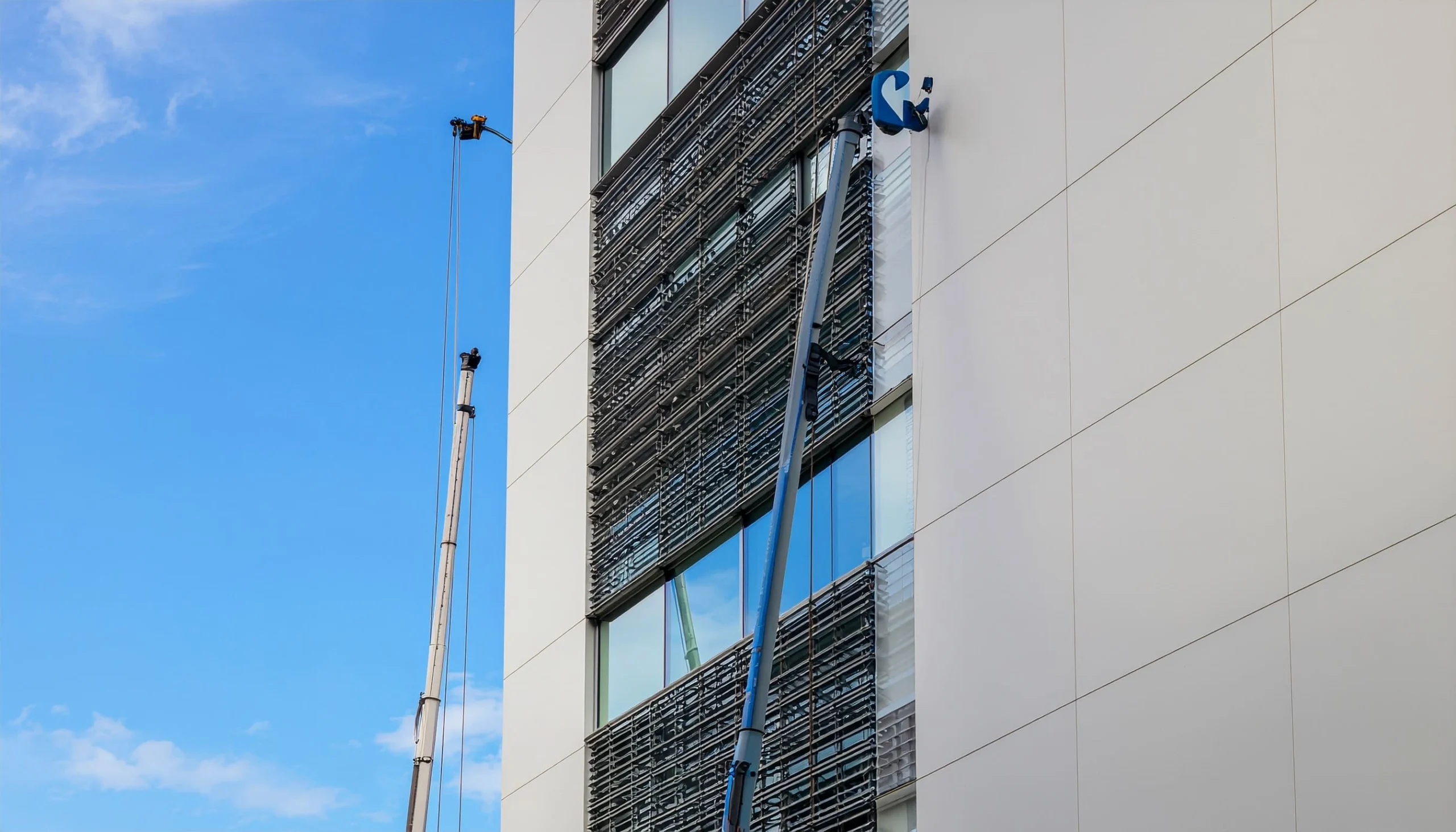
Professional window cleaning hinges on one decision most operators overlook until they are staring up at a four-storey shopfront with the wrong equipment in hand. The gap between a 3.6-metre Ettore system and its 5.5-metre counterpart isn’t just a couple of metres of aluminium; it is the difference between winning high-value commercial contracts and watching them go to competitors with the right gear. Choosing the correct length is fundamentally about operational integrity, protecting significant physical capital, and ensuring that daily workflows are not hindered by equipment that is either too short for the task or too heavy for the operator to handle effectively.
We have watched cleaning businesses lose significant contracts because their equipment couldn’t safely reach second-floor windows without the use of ladders. Conversely, we have seen operators waste money on excessive reach they will never use, carrying around extra weight that leads to unnecessary physical strain. The decision matters, and it is more technical than most suppliers admit. It requires an understanding of true working heights, the physics of leverage, and the economic reality of Western Australian commercial rates. Achieving a level of cleanliness that meets Australian industrial standards requires a systematic approach to surface chemistry and mechanical agitation. This specific mindset shift is what separates elite cleaning professionals from the rest of the market.
Understanding True Working Height vs Pole Length
Here is what the spec sheets do not tell you: a 5.5-metre pole does not give you 5.5 metres of cleaning reach. Factor in your own height, your arm extension, and the tool head, and you are looking at actual working heights that differ significantly from the advertised measurement. As a leading provider of professional hygiene solutions, Weskleen Supplies understands that the unique conditions of WA require a specific approach to equipment selection. We know that in the competitive world of Perth property management, the condition of your glass is a silent communicator of your operational standards.
A typical operator stands about 1.8 metres tall and holds the pole roughly at shoulder height. When using a 12ft (3.6m) pole with a squeegee head, you reach approximately 5.5 metres from ground level. That same person with an 18ft (5.5m) pole is working at roughly 7.5 metres. This difference covers an entire building storey in most commercial applications. But how do you quantify the “sweet spot” when your arms are beginning to burn after three hours of overhead work? The answer lies in the window pole reach you choose. If you are constantly reaching at the absolute limit of your pole, you lose the ability to apply consistent pressure, which is the primary driver of a streak-free finish.
The Physics of High-Reach Control
Imagine holding a broomstick at arm’s length. Now imagine that broomstick is three times longer and you’re trying to write your name on a window twenty feet up. That is the reality of extended pole work. The Ettore 3.6m Extension Pole weighs roughly 1.2kg fully extended, whereas the 5.5m model sits around 1.8kg. That 600g difference multiplies exponentially when you’re working overhead for hours. This is because every centimetre of pole length increases the torque on your shoulder joint, requiring more muscular effort to maintain a steady squeegee path.
Ettore constructs their professional poles using anodised aluminium sections with precise internal locking mechanisms. Each section maintains a consistent outer diameter while using graduated inner diameters that create overlap without adding unnecessary bulk. This design achieves two critical outcomes: it distributes stress evenly across the pole’s length and keeps the overall weight manageable. This engineering prevents the “wobble” that characterises inferior products. When you are applying pressure to a window at height, the window pole reach must be stable enough to transmit your hand movements accurately into clean, consistent pressure on the glass surface.
The Impact of Pole Flex on Efficiency
Flex is the enemy of a commercial cleaner. When a pole bends mid-stroke, you lose the even contact needed to pull the water and residue from the glass. The squeegee blade will skip, leaving “ghost” lines that require rework. In Western Australia’s harsh conditions, where grit and heat are constants, the rigidity of your gear is paramount. If your pole flexes under pressure, you cannot generate the force needed to clean effectively, and you will end up compensating with awkward body positions that lead to shoulder and back strain. This is why having a professional squeegee kit paired with a rigid pole is a non-negotiable requirement for high-end handover cleans.
Matching Pole Length to Your Client Base
Your pole choice should mirror your revenue sources. Pull your last quarter’s invoices and categorise them by building height. The pattern will tell you everything you need to know. For single-storey commercial and residential work, the 12ft pole handles ninety-five per cent of jobs. You will reach first-floor windows, clean gutters, and maintain signage without the unwieldy nature of excessive length. Operators work faster, experience less fatigue, and can transition between jobs without breaking down extended sections.
However, if your business focuses on two-storey buildings and mixed-height commercial properties, the 18ft pole earns its keep. Second-floor windows on standard commercial buildings sit between five and seven metres from ground level. The longer pole provides the reach while keeping you safely on the ground, eliminating the cost and time of ladder work or scaffolding. We worked with Mark, a window cleaner in Joondalup who serviced a mix of retail strips and office complexes. He had been using 3.6m poles exclusively until he lost a major contract because he couldn’t efficiently service second-floor windows. After adding the 5.5m poles to his kit, he recaptured similar contracts and increased his commercial revenue by thirty per cent within a single season.
The Logistics of the Two-Pole Strategy
For growing businesses, a tiered investment is often the smartest move. Start with the 3.6m workhorse for your residential and retail base. Add the 5.5m system when your contract revenue justifies the reach. This allows you to deploy the lighter tool for the majority of your work while having the “heavy hitter” available for specialist high-access tasks. Carrying a professional squeegee kit alongside both poles ensures your team is equipped for any architectural challenge that Perth’s property market can throw at them.
Fatigue Management and Ergonomic Efficiency
Professional window cleaning is not a sprint; it is a marathon. The operator who can work efficiently for eight hours outperforms someone who is exhausted by lunch, regardless of their pole’s maximum reach. The 12ft pole’s lighter weight and shorter lever arm reduce shoulder and lower back strain significantly. On a recent commercial contract, we tracked operator fatigue using a standardised scale. With 12ft poles on appropriate-height buildings, operators reported high productivity throughout the day. The same operators using 18ft poles unnecessarily reported significantly higher fatigue and requested additional breaks.
Experienced cleaners develop technique to minimise fatigue: working in shorter bursts, alternating arms, and positioning themselves to use body weight rather than pure arm strength. But even perfect technique cannot compensate for poorly balanced equipment. A pole that is front-heavy or flexes excessively forces you to overcorrect constantly, exhausting your forearms within an hour. This is why the window pole reach of a professional Ettore system is so highly regarded; the weight distribution is optimised to keep the centre of gravity close to the operator’s grip.
Storage and Transport Considerations
The 12ft pole collapsed measures approximately 1.2 metres, while the 18ft pole is roughly 1.8 metres. That sixty-centimetre difference determines whether it fits in a standard sedan or requires an industrial van. We have consulted with operators running multiple vehicles across Perth. Those servicing primarily residential properties equipped their sedans with 12ft poles and maintained one van with 18ft poles for specialist commercial jobs. This approach saved significantly on vehicle overhead costs while ensuring the right tools were available for every site.
If you are a sole operator using a hatchback, the 18ft pole will likely protrude into your passenger area or require roof racks. The 12ft pole fits neatly in most boots alongside your cleaning hand caddy and other supplies. Protecting your equipment from transit-related abrasions is also easier with a shorter pole. Dents in the outer section of a telescopic window pole can prevent smooth extension, essentially ruining the tool. Carrying a professional squeegee kit and ensuring your poles are secured in horizontal racks is the best way to ensure their longevity in a busy mobile operation.
Cost Analysis: Investment vs Utilisation
The 18ft pole costs more than the 12ft model, and that premium is justified only if you are using the extra reach regularly. We suggest that if at least thirty per cent of your jobs require the extra reach, the 5.5m model is essential. Calculate your cost per use. If you are paying for an 18ft pole but only need that reach on ten per cent of jobs, your cost per specialised use is high. However, compare that to the cost of ladder hire or the safety risk of climbing, and the pole pays for itself in just a few uses.
Equipment failure has hidden costs too. When a pole breaks mid-job, you’re not just replacing the pole; you are managing client disappointment, rescheduling, and potentially losing the contract entirely. Professional clients in Perth expect professional reliability. This is why investing in a professional squeegee kit and a high-quality window pole reach solution is better than relying on budget hardware store alternatives. The upfront cost difference disappears when measured against avoided site downtime and improved operational efficiency.
ROI on High-Access Residential Work
We have also seen the 18ft pole prove essential for high-access residential work in areas like the Perth hills or coastal suburbs with split-level homes. A home built on a slope might have windows seven metres from ground level on the lower side. The 18ft pole handles these situations with ease, whereas the 12ft model simply wouldn’t reach. Solar panel cleaning is another application where the extra reach justifies the investment. Residential solar installations on two-storey homes often sit in that six-to-seven-metre range, and the 18ft pole allows you to service this growing market safely from the ground.
Maintenance and Longevity Factors
Professional equipment earns its cost through longevity, but only if you maintain it properly. Extension poles face specific challenges: they are exposed to cleaning chemicals, moisture, and abrasive dust while being repeatedly extended and collapsed. After each use, wipe down the pole sections with a clean, damp cloth before collapsing them. This removes abrasive salt and grit before they are compressed into the locking mechanisms, extending the life of the internal seals. This is especially critical in coastal WA, where salt air can corrode inferior metals in weeks.
The locking collars need occasional inspection. If you notice resistance when twisting to lock or unlock your pole, check for grit in the threads. A small brush can remove most contamination. Do not use oil-based lubricants on the threads, as they attract dust and create a grinding paste that accelerates wear. A light silicone spray on the cam mechanism every three months is recommended to prevent corrosion and keep the action smooth. Pairing your high-reach gear with a sturdy mop bucket ensures you have a mobile, centralised station for all your cleaning solutions and tools.
Proper storage is also vital. Do not leave poles fully extended when not in use, as the constant tension can deform the locking mechanisms over time. Collapse the pole to its shortest length and store it horizontally in your vehicle or workshop. Leaning poles against walls for long periods invites bending, especially in Western Australia’s extreme summer heat when metal becomes more malleable. Taking these small steps will ensure your equipment remains a reliable asset for many years, supporting your reputation for quality and safety.
Building a Sustainable Maintenance Culture
The most successful cleaning companies are those that treat maintenance as a shared responsibility. When your team is equipped with the right tools, they work faster and achieve better results. This leads to higher employee retention and more satisfied clients. A professional window pole reach solution is more than just a piece of aluminium; it is a tool for professional excellence that allows you to bid for larger, more complex commercial contracts with confidence. It transforms the way you view architectural challenges.
Every professional squeegee kit should contain a mix of tools for different substrates. By selecting high-performance products and training your staff in their correct use, you protect your business reputation and your bottom line. The investment in quality supplies pays for itself through increased efficiency and the long-term preservation of your equipment. This commitment to excellence ensures that your business remains a benchmark for quality in the Western Australian market.
Ultimately, achieving a flawless glass finish requires the right combination of strategy, staff training, and high-performance hardware. By treating high-reach window cleaning as a specialised skill rather than a generic task, you reduce long-term costs and create a better outcome for your clients. This proactive approach ensures that your reputation is never hindered by streaky windows or equipment failure. A safe, ground-level operation is the clearest indicator of a healthy, productive business that is ready for the future.
If you are struggling with persistent safety concerns or are looking to upgrade your current maintenance protocols, we invite you to speak with us at 1800 728 926 today. Our team of experts can help you select the ideal equipment for your specific building types and surface materials. We understand the unique challenges of the WA commercial landscape and provide tailored solutions that work in the real world. For all your professional cleaning needs, trust Weskleen Supplies to provide the solutions that keep Western Australia moving forward safely. Our commitment to quality ensures that your facility remains safe, compliant, and professional-looking for years to come.
Whether you are managing a small workshop in Osborne Park or a massive logistics hub in Welshpool, having a toolkit essential like a reliable telescopic window pole on hand ensures that tough jobs never slow you down. For all your professional cleaning needs, trust us to provide the solutions that keep your business moving forward. Choosing the right partners ensures your equipment remains a valuable asset that supports your broader business objectives. This is our promise for WA’s professional cleaning industry.