


Blog
Degreasing 101: How to Use Orbital Scrubbers on Greasy Kitchen Tiles

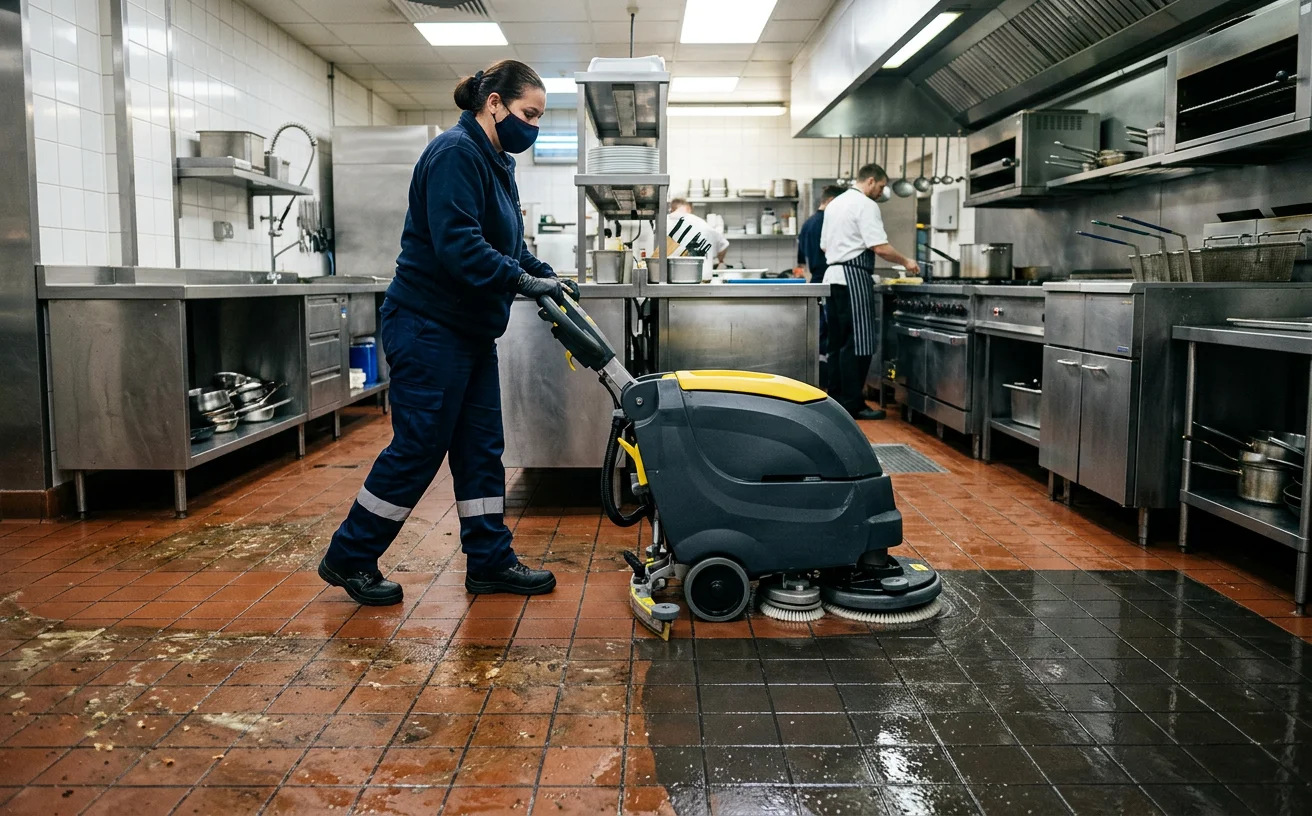
Greasy kitchen tiles are difficult because the problem is often thinner than it looks. A surface may appear clean after mopping, then turn slick once staff start moving again.
A kitchen degreasing tool works properly when it combines chemical action, agitation, and recovery. An orbital scrubber can help, but only when the method is controlled.
What Grease Does To Kitchen Tiles
Grease behaves differently from ordinary dirt. It spreads under warm water, clings to texture, and can settle into grout lines.
That is why a grease removal machine should not be used like a wet broom. The goal is to loosen the film and collect it before it resets.
Heat Can Hide The Problem
During service, warm floors and airborne oils can soften residue. The floor may feel different when the room cools after closing.
This change can fool cleaning teams. A tile that felt acceptable during pack-down may feel greasy the next morning.
Grout Lines Hold Old Soil
Grout sits below the tile surface. Grease, flour, and dirty water can settle there when cleaning is rushed.
Repeated mopping may darken the grout without removing the source. A kitchen degreasing tool gives staff more agitation across those low areas.
Why Orbital Scrubbers Help With Degreasing
An orbital machine creates repeated movement against the floor surface. That action helps break the bond between the tile and the greasy layer.
We stock compact scrubber options that can be compared against real kitchen conditions. The right match depends on floor texture, storage, and cleaning frequency.
Agitation Reaches More Of The Surface
A mop mainly follows the top of the texture. Orbital action can work more evenly across small variations in the floor.
This does not remove the need for edges and corners. It simply gives the main traffic area a stronger, repeatable clean.
Recovery Stops Grease From Returning
Dirty water needs somewhere to go. If it stays on the floor, it can dry into another film.
A grease removal machine should support recovery through suction, controlled solution use, or a paired wet pick-up method. Recovery is not optional in greasy zones.
Operator Speed Matters
Moving too fast reduces dwell and agitation. The machine may pass over the tile without giving the chemical time to work.
Heavy grease areas need slower work. Light traffic areas may not need the same attention.
Setting Up A Safe Degreasing Process
A safe process begins before the machine touches the floor. Staff need the area prepared, product selected, and route planned.
Clear Dry Debris First
Food scraps, paper, grit, and packaging fibres should be removed before wet cleaning. Otherwise, they mix into sludge and slow the job.
Dry sweeping also makes hazards visible. Staff can see cracked tiles, loose mats, and blocked drains.
Choose The Right Chemical
The product must suit the soil, floor material, and site procedure. Staff should follow label directions and the site’s safety data sheets.
The Comet Foaming Cleaner and Sanitiser is a useful reminder that labels matter. Cleaning, sanitising, and degreasing are related but not identical tasks.
Control Access While The Floor Is Wet
Wet floors can create immediate risk. Signage, timing, and staff communication should be part of the plan.
The clean should avoid peak movement where possible. If that is impossible, the route needs tight control.
Using The Scrubber Without Spreading Grease
A kitchen degreasing tool can still spread contamination if used poorly. The machine should move through the room in a planned pattern.
Work From Cleaner To Dirtier Areas
Start with lower-soil zones, then move toward heavy grease areas. This reduces the chance of carrying soil across the kitchen.
The route should also respect drains and exits. Staff should not trap themselves inside a wet area.
Give Heavy Areas A Second Pass
A fryer line may need a separate pass from the general floor. The first pass can loosen soil, while the second focuses on recovery.
This is where an orbital scrubber earns its place. It can support repeated, controlled agitation without making staff hand-scrub the entire floor.
The Polystar Orbital Floor Scrubber is relevant for compact kitchen routes. It should be paired with the correct pad, brush, and chemical process.
Empty And Rinse After Use
Grease left inside tanks or around pads can create odour and poor performance. The machine should not be stored dirty.
Post-use cleaning protects the next shift. It also stops old grease from being reintroduced during the next clean. Keep pad and chemical notes from Weskleen Supplies with that routine.
How To Judge Whether Degreasing Worked
The floor should be judged after it dries, not only while it is wet. Wet tiles can look clean even when residue remains.
Look For Patchy Shine
Grease often shows as a patchy shine under overhead lights. It may appear near fryers, dishwasher exits, or prep tables.
If shine remains, review chemical dose, dwell time, and recovery. The answer is rarely just stronger scrubbing.
Check Footwear Feedback
Staff can often feel when a floor is still greasy. That feedback should be recorded instead of ignored.
A simple near-miss note can point to the area that needs extra attention. It can also show when the cleaning time is too short.
Review Mop Water And Recovery Waste
Dirty recovery water tells a story. If the water is extremely greasy every night, the site may need more frequent cleaning.
The 16L Mop Bucket remains useful for detail zones. It should not become the only grease-control method in large traffic areas.
Common Degreasing Mistakes
Most failures come from shortcuts. Greasy floors need patience and a process that staff can repeat.
Using One Product For Every Task
A general cleaner may suit light soil, but heavy kitchen grease can need a different approach. Staff should not guess.
Safety data sheets and product labels should guide the decision. Supervisors should make the approved products clear.
Skipping Dwell Time
Chemical dwell time is the quiet part of cleaning. It lets the product loosen the film before the machine agitates.
Skipping dwell time makes the grease removal machine work harder. It can also leave residue in textured areas.
Over-Wetting The Floor
More water does not mean more cleaning. Excess liquid can move grease into drains, grout, or other zones.
Controlled solution flow is safer and more effective. It also helps the floor dry within the expected time.
Staff Training Tips For Busy Kitchens
Training should be practical enough for a real kitchen. It should show staff what to do, what to avoid, and when to report issues.
Use A Short Route Card
A route card can show the order of zones, product used, and machine setting. It should fit on one page.
This helps new staff follow the same method as experienced cleaners. It also reduces confusion during shift changes.
Keep Pads And Brushes Separated
Pads used in greasy zones should not be moved to clean zones without washing or replacement. Cross-use can spread residue.
Storage should make this obvious. Colour coding can help if the site already uses it.
Ask For Fault Reports Early
Weak suction, poor brush contact, or unusual noise should be reported. Small faults can quickly affect cleaning quality.
A machine that performs badly becomes a false comfort. Staff may think the floor is cleaned when recovery has failed.
When To Review The Whole System
Sometimes the floor problem is bigger than one clean. If greasy patches return after every shift, the site should review timing, product choice, and floor condition.
The review should include the people who clean the floor. They often know which drain blocks, which area dries slowly, and which route is awkward.
A kitchen degreasing tool should make the routine easier to repeat. If staff avoid using it, storage, training, or machine fit may be the real issue.
A grease removal machine also needs enough support supplies. Pads, brushes, buckets, and approved chemicals should be available before peak weeks.
This wider review keeps cleaning practical. It also prevents managers from blaming effort when the process itself needs adjustment.
If the answer is unclear, supervisors can run a short comparison clean. One section can use the current method, while another uses slower dwell and recovery.
The result should be judged after drying. That is when greasy film becomes easier to spot.
FAQ
Can An Orbital Scrubber Remove Old Grease Build-Up?
It can help, especially when paired with correct chemistry and dwell time. Severe build-up may need repeated cleaning or specialist surface assessment.
Is A Degreaser Always Needed On Kitchen Tiles?
Not always. Product choice depends on soil type, floor material, and site procedure. Labels and safety data sheets should guide use.
Should Greasy Floors Be Rinsed After Scrubbing?
Some products and sites require rinsing. Others rely on controlled recovery. The correct answer depends on product instructions and hygiene rules.
How Often Should Scrubber Pads Be Changed?
Pads should be inspected after use and replaced when worn, contaminated, or ineffective. Greasy pads should not be stored wet and dirty.
Conclusion
Greasy kitchen tiles need chemical control, steady agitation, and proper recovery. Match dwell time, agitation and recovery to the greasiest lanes first. Contact us if you need that shortlist checked against current stock.