


Blog
Slip-and-Fall Prevention: Maintaining Non-Slip Floors in WA Commercial Kitchens

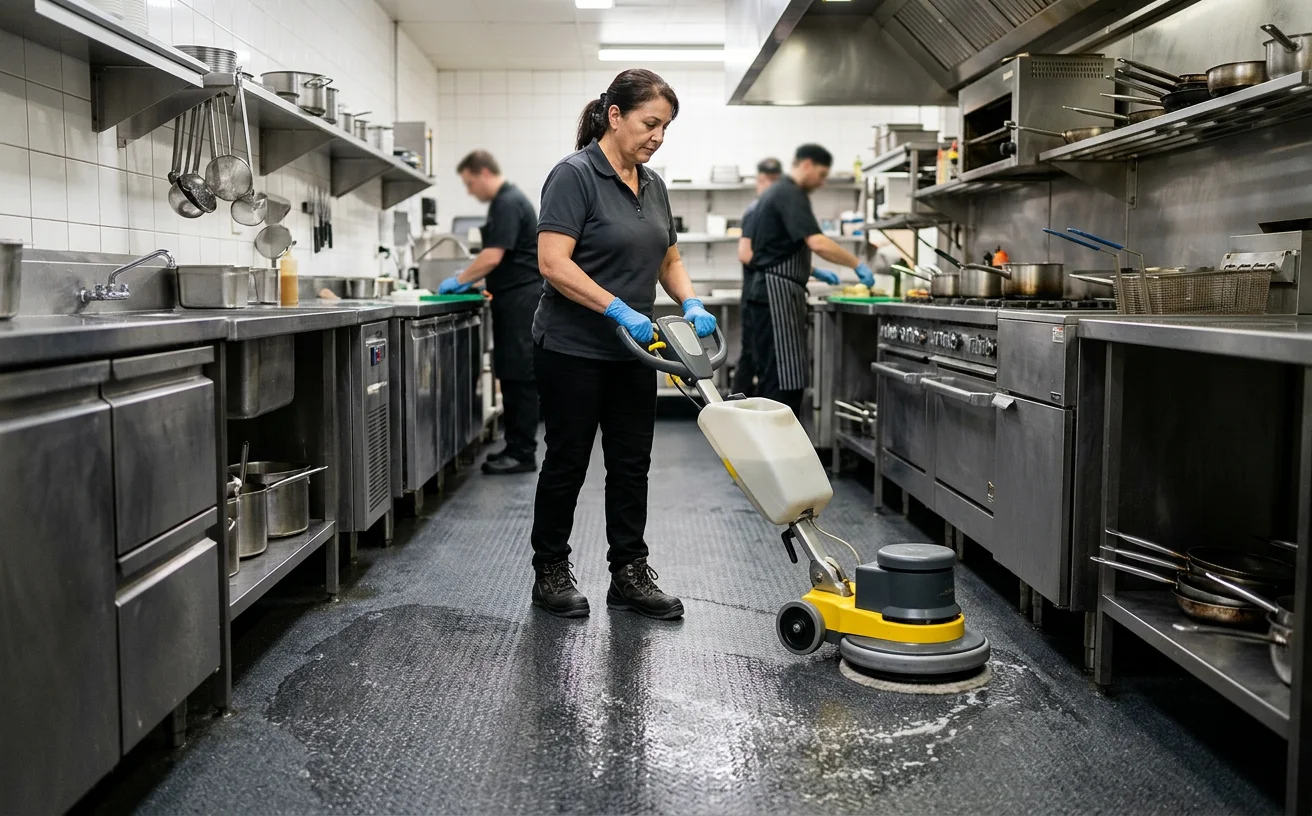
Slip risk in a commercial kitchen usually builds slowly. Grease film, rinse water, flour dust, and rushed foot traffic can turn a safe surface into a problem area.
Non slip floor care is the routine that keeps that risk controlled. It is not only about grip products or warning signs, because the cleaning method matters every day.
Why Kitchen Floors Lose Grip
Commercial kitchens are designed for work, not perfect conditions. Staff move between hot equipment, wash-up zones, cool rooms, and packing benches under pressure.
Commercial kitchen safety depends on keeping those paths predictable. A floor that changes grip during service creates risk for cooks, cleaners, and delivery staff.
Grease Builds In Thin Layers
Grease does not always look like a spill. It can sit as a thin layer that becomes more slippery once water or detergent hits it.
That is why non slip floor care must include the right degreasing method. A quick mop can spread the layer rather than remove it.
Texture Can Hide Soil
Many kitchen floors use textured safety tiles. The raised surface helps grip, but the low points can hold residue.
If those low points fill with grease, the surface stops doing its job. The floor may still look patterned, but the grip is weaker.
Building A Practical Slip-Control Routine
A slip-control routine should be simple enough for staff to follow during busy weeks. It should also be specific enough to reduce guesswork.
We stock practical cleaning equipment for Perth kitchens. The strongest plan starts with the actual areas where slips are most likely.
Mark The High-Risk Zones
Start by identifying cooklines, dishwashing entries, cool-room doors, bin areas, and handwash stations. These zones receive water, grease, or sudden movement.
The cleaning frequency should match the risk. A back corridor may need daily cleaning, while a fryer approach may need several checks.
Separate Spill Response From Scheduled Cleaning
Spills need immediate control. Scheduled cleaning is different because it removes the film that builds over time.
Commercial kitchen safety improves when staff know which task they are doing. Spill response should not replace deeper floor maintenance.
Use Tools That Suit The Surface
Textured floors often need agitation. Smooth sealed floors may need careful chemical choice and controlled recovery.
The floor scrubber range in Perth gives teams options for routine floor work. Machine choice should reflect surface type and available staff time.
Cleaning Method Matters More Than Effort
Hard work can still fail if the method is wrong. A team can mop all night and still leave a slippery film by morning.
Remove Dry Debris First
Dry debris can mix with cleaning solution and create slurry. Flour, crumbs, packaging dust, and grit should be swept before wet cleaning begins.
This step protects the floor and the cleaning equipment. It also helps staff see stains, damaged grout, and uneven areas.
Dose Chemicals Correctly
Too much chemical may leave residue. Too little may fail to break grease.
Labels and safety data sheets should guide the dose. Non slip floor care depends on repeatable dilution, not a rough splash into a bucket.
The Comet Foaming Cleaner and Sanitiser shows why product selection needs care. Cleaning, sanitising, and degreasing goals should not be blurred.
Recover Dirty Solution
Dirty solution should be removed before it dries. If it dries on the floor, the film can return.
A scrubber or wet recovery process helps control this step. The result should be a floor that dries evenly, without greasy patches.
Using Equipment To Support Commercial Kitchen Safety
Equipment should reduce risk, not add more tasks that staff ignore. The right tool is the one that fits the kitchen’s space and shift pattern.
Compact Scrubbers For Routine Routes
A compact scrubber can help where mopping is inconsistent. It can give regular agitation and recovery across the main traffic lanes.
The Polystar Orbital Floor Scrubber suits discussions about smaller hard-floor areas. It still needs correct pads, chemical choice, and operator care.
Mops For Detail Work
Mops remain useful for corners, edges, and small spills. They should be clean, colour-controlled where required, and stored to dry.
A worn mop can spread residue. The Enduro Microfibre Mop Head is relevant where teams need absorbent detail cleaning support.
Buckets And Signage Still Matter
Simple tools can make the difference between a controlled clean and a messy one. Buckets, wringers, and signs keep water use more disciplined.
The point is not to buy every product. It is to build a kit from Weskleen Supplies that staff can use consistently.
Checking Whether The Floor Is Improving
Slip prevention should be checked through observation, records, and staff feedback. A cleaner floor should change how the room feels underfoot.
Watch The Drying Pattern
A floor that dries in patchy streaks may still have residue. Dull film near fryers can signal poor degreasing or weak recovery.
Staff should note these patterns after cleaning. They are useful signs before a formal incident occurs.
Review Incident Near-Misses
Near-miss notes can show where cleaning needs to improve. They can also reveal poor timing, missing signage, or footwear issues.
Commercial kitchen safety is wider than floor cleaning. Still, floor condition is one part that managers can improve quickly.
Inspect Grout And Damaged Tiles
Cleaning cannot fix a damaged floor. Cracked tiles, missing grout, and uneven thresholds can hold soil and create trip points.
If those issues appear, cleaning teams should report them. Maintenance and cleaning need to work together.
Training Staff Without Creating Confusion
Training should focus on what staff do at the start, during, and after cleaning. Short steps are easier to remember than long manuals.
Give Each Zone A Method
A laminated zone guide can show what product, tool, and frequency apply. It can also show when a machine is required.
This prevents staff from treating every spill and every scheduled clean the same way. It makes non slip floor care more consistent.
Keep Chemical Bottles Clear
Unlabelled bottles create risk. Staff may use the wrong product, wrong dilution, or wrong process.
Labels should be readable and matched to the site’s safety records. Training should include what not to mix.
Make End-Of-Shift Checks Normal
The final floor check should be part of closing. Staff should look for residue, wet areas, and tools left in walkways.
A two-minute check can prevent the next shift from walking into a hazard. It also keeps cleaning standards visible.
Supply Planning For Safer Floors
Kitchen safety is easier when replacement supplies are available before staff need them. A missing mop head or worn pad can force poor workarounds.
Managers should keep a small floor-care stock list. It can include the approved chemical, spare mop heads, pads, buckets, gloves, signage, and machine parts.
This list should match the actual cleaning method. If a product is not approved for the kitchen floor, it should not sit beside the floor kit.
Check Tools During Ordering
Ordering should include a quick condition check. Staff can inspect mop heads, brush wear, bucket condition, and scrubber recovery parts.
This prevents small failures from becoming routine. It also helps the team maintain non slip floor care without last-minute changes.
Keep Substitutions Controlled
A substitute product can change dilution, dwell time, smell, or residue. Supervisors should approve substitutions instead of leaving staff to guess.
If the approved item is unavailable, the replacement should be checked against the floor and site procedure. Notes should be added to the cleaning record.
Review After Busy Periods
Public holidays, school events, and catering peaks can change kitchen traffic. Floors may need extra checks after these periods.
The review does not need to be complicated. Look at grease zones, cool-room thresholds, and wash-up entries after the floor has dried.
If risk rises in the same place, adjust the cleaning frequency. This keeps commercial kitchen safety tied to actual site behaviour.
A small monthly stock review also helps. It catches worn tools before staff are forced to improvise during a shift.
The review should include storage access as well. Hidden or blocked tools often lead to rushed mopping instead.
If the same shortcut appears twice, the storage layout should be fixed before habits form.
FAQ
What Causes Slippery Kitchen Floors After Cleaning?
Common causes include excess chemical, poor rinsing, weak recovery, dirty mop water, and grease left in textured surfaces.
Is A Floor Scrubber Enough For Slip Prevention?
No. It supports the routine, but staff still need spill response, correct chemicals, detail cleaning, signage, and surface checks.
How Often Should Non-Slip Floors Be Deep Cleaned?
Frequency depends on soil load and kitchen use. High-grease zones may need regular machine cleaning plus spot checks during service.
Can Cleaning Products Damage Non-Slip Floors?
Yes, if the wrong product or dilution is used. Labels, safety data sheets, and floor manufacturer guidance should be followed.
Conclusion
Good grip comes from routine cleaning, fast spill response, and clear staff habits. Match machine cleaning, mopping and spill control to the rooms that actually get wet or greasy. Contact us if you need that shortlist checked against current stock.