


Blog
Polystar Orbital Scrubbers for Commercial Kitchen Floor Cleaning

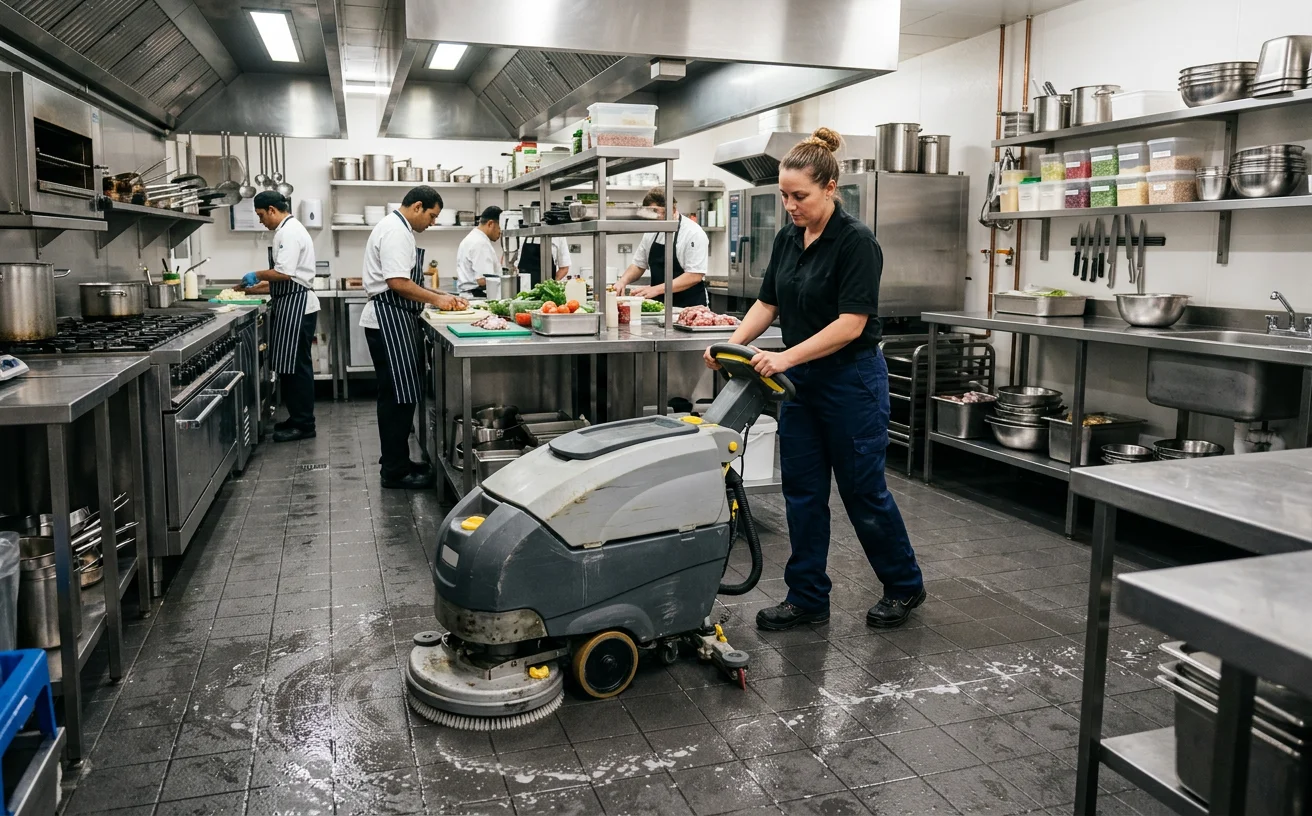
Kitchen floors in food service areas collect grease, flour, water, and foot traffic across every shift. A clean-looking tile can still hold residue in grout lines and textured safety surfaces.
HACCP floor cleaning works better when the process is consistent. Staff need the right machine, clear steps, and proof that cleaning can be repeated during busy service periods.
Why Orbital Scrubbing Suits Kitchen Floors
A commercial kitchen is not a flat showroom floor. It has drains, uneven tiles, hot work zones, cool-room entries, and areas that receive constant splash-back.
An orbital scrubber helps by applying controlled agitation. It can work across textured surfaces where a mop may only skim the high points.
Mechanical Action Reduces Guesswork
Manual scrubbing depends heavily on the person doing the work. One cleaner may scrub hard, while another may hurry through the same area.
A kitchen floor scrubber gives teams a more repeatable process. The machine provides the agitation, while the operator controls route, speed, and recovery.
That repeatability supports HACCP floor cleaning because supervisors can train the method. It becomes easier to show how the floor is cleaned each shift.
Recovery Is Part Of Hygiene
Scrubbing without recovery can spread dirty liquid. The floor may look wet and fresh, but soil can settle again as it dries.
Recovery removes the loosened slurry before it turns into a film. That is especially important near fryers, dishwashing zones, and preparation entries.
Where Polystar Fits The Decision
We stock cleaning equipment for buyers who need practical site fit, not just catalogue claims. The decision should start with the kitchen layout.
The Polystar Orbital Floor Scrubber is relevant where compact control matters. It can suit kitchens that need mechanical cleaning without oversized equipment.
Compact Spaces Need Controlled Movement
Many kitchens have narrow paths around benches, racks, and preparation tables. A machine that is too wide may stay in storage because staff avoid using it.
A compact kitchen floor scrubber is easier to work into routine cleaning. Operators can clean high-traffic lanes, then finish edges by hand.
Grease Zones Need A Clear Sequence
Greasy tiles need a cleaning sequence, not a single pass. Dry debris should be removed first, then chemical action and machine agitation can do their work.
The operator may need slower movement around heavy-soil zones. If the scrubber moves too quickly, the brush or pad cannot break the film properly.
Building HACCP Floor Cleaning Into Daily Routines
HACCP floor cleaning should not feel like a special event before an inspection. It should be part of the normal rhythm that keeps the kitchen safe.
Divide The Kitchen Into Risk Areas
A simple map can separate dry storage paths, wet preparation zones, cookline grease areas, and dishwashing entries. Each area may need a different frequency.
This also helps staff understand priorities. A quiet back hallway may not need the same attention as a fryer approach or cool-room threshold.
Match Chemistry To The Soil
Kitchen soils vary. Fat, starch, sugar, and protein can behave differently under water, heat, and cleaning chemicals.
The site should use chemicals according to label directions and safety data sheets. A scrubber improves application, but it does not replace correct product selection.
The Comet Foaming Cleaner and Sanitiser shows why exact product context matters. Cleaning and sanitising claims must match the product label and the site’s procedure.
Keep Wet Areas Controlled
Wet cleaning can create a slip risk if timing is poor. Kitchens should plan scrubbing outside peak movement where possible.
Where cleaning must happen during trading, staff need signage, route control, and quick recovery. A kitchen floor scrubber helps only when the water is managed.
What To Check Before Shopping
Buying a machine should be based on the room and routine. A stronger machine is not useful if staff cannot store, empty, or maintain it.
Floor Surface And Grout Condition
Textured tiles need a different approach from sealed vinyl or smooth epoxy. Grout condition also affects how much residue stays behind.
If grout is damaged, the floor may keep trapping soil. The scrubber can improve cleaning, but it cannot repair the surface.
Noise And Timing
Some kitchens clean while staff are still packing down. Noise, space, and power access can affect which machine is practical.
A battery unit may help with cord management in some settings. A corded unit may suit others where runtime is predictable and power points are safe.
Staff Strength And Storage
Operators should be able to move the machine without strain. Storage should allow the machine to dry, charge if needed, and stay away from food handling areas.
A machine stored badly will not stay hygienic. Tanks, brushes, and pads need air flow after cleaning.
Training Staff To Use Orbital Scrubbers Properly
A clear method protects the machine and the floor. It also helps new staff learn without creating inconsistent results. Keep the model notes from Weskleen Supplies with that method.
Start With A Pre-Use Check
The operator should inspect pads or brushes, tank condition, cords or batteries, and recovery parts. Any visible damage should be reported before use.
This check can take less than two minutes. It prevents many problems that appear during the middle of a cleaning shift.
Use Measured Product
Chemical dilution should not be guessed. Too much chemical can leave residue, while too little may fail to break down greasy soil.
Measured product also supports HACCP floor cleaning records. It gives supervisors a clear baseline when reviewing cleaning performance.
Clean The Machine After Use
After use, the tank should be emptied and rinsed. Pads or brushes should be removed where the machine design requires it.
The operator should leave parts to dry according to the site’s procedure. A dirty scrubber should not be returned to a clean storage area.
Practical Signs The Method Is Working
Floor cleaning success is visible in small details. The floor should dry more evenly, smell neutral, and feel safer under normal footwear.
Less Film After Drying
A greasy film often appears after the floor dries. It may look dull, patchy, or slightly smeared under strong light.
If film remains, staff should review chemical dose, dwell time, brush choice, and recovery. The problem is usually method, not effort alone.
Better Control Around Problem Zones
Fryer lines, dishwashing entries, and bins need regular attention. These areas should not be left until they become difficult.
The 16L Mop Bucket still has a place for detail work. Machine cleaning and manual cleaning should support each other.
Cleaner Audit Notes
A simple cleaning record can note the machine used, areas completed, exception points, and product used. That record helps managers track patterns.
The goal is not paperwork for its own sake. The goal is a floor routine that survives busy weeks.
Keeping The Method Audit-Friendly
Kitchen cleaning records should be easy to explain. If a supervisor cannot describe the route and product choice clearly, staff will struggle as well.
A short audit-friendly note can list the area cleaned, the machine used, the product mixed, and any exception found. This keeps HACCP floor cleaning connected to real work.
The note should not claim more than the team can prove. It should show that the kitchen floor scrubber was used as part of a planned method.
Photos can help during internal reviews. A quick image of a problem zone, worn pad, or damaged tile can support the next maintenance decision.
Perth kitchens also need supply continuity. Pads, chemicals, brushes, and spare parts should be ordered before the last item is used.
That stock control prevents rushed substitutions. It also keeps the cleaning method steady when a busy week strains the roster.
A spare pad or brush can stop a minor supply gap from breaking the routine. The same applies to labelled bottles, gloves, and wet-floor signs.
Supervisors should also check whether the machine is easy to access. If staff must move boxes before cleaning, the task is more likely to be skipped.
The final check is drying time. A floor that stays wet too long needs a route, product, or recovery review.
That review should happen before the next audit period, not after a complaint or near-miss.
FAQ
Is An Orbital Scrubber Suitable For A Small Commercial Kitchen?
Yes, if the machine fits the route, storage area, and cleaning frequency. Compact units can suit smaller kitchens where large scrubbers are impractical.
Does HACCP Require A Specific Scrubber Brand?
No. HACCP focuses on risk control and documented procedures, not a single brand. Equipment should suit the cleaning task and be maintained properly.
Can A Scrubber Remove All Grease From Tiles?
It can remove a lot when paired with the right chemical and method. Heavy build-up may need repeated cleaning or surface repair.
Should Staff Still Mop After Scrubbing?
Sometimes. Mops remain useful for corners, edges, spills, and tight areas that machines cannot reach.
Conclusion
A reliable kitchen floor routine depends on equipment, chemistry, and operator discipline working together. Match the machine to the layout, recovery and chemical process. Contact us if you need that shortlist checked against current stock.