


Blog
Commercial Floor Scrubbers for Perth Food Processing Plants

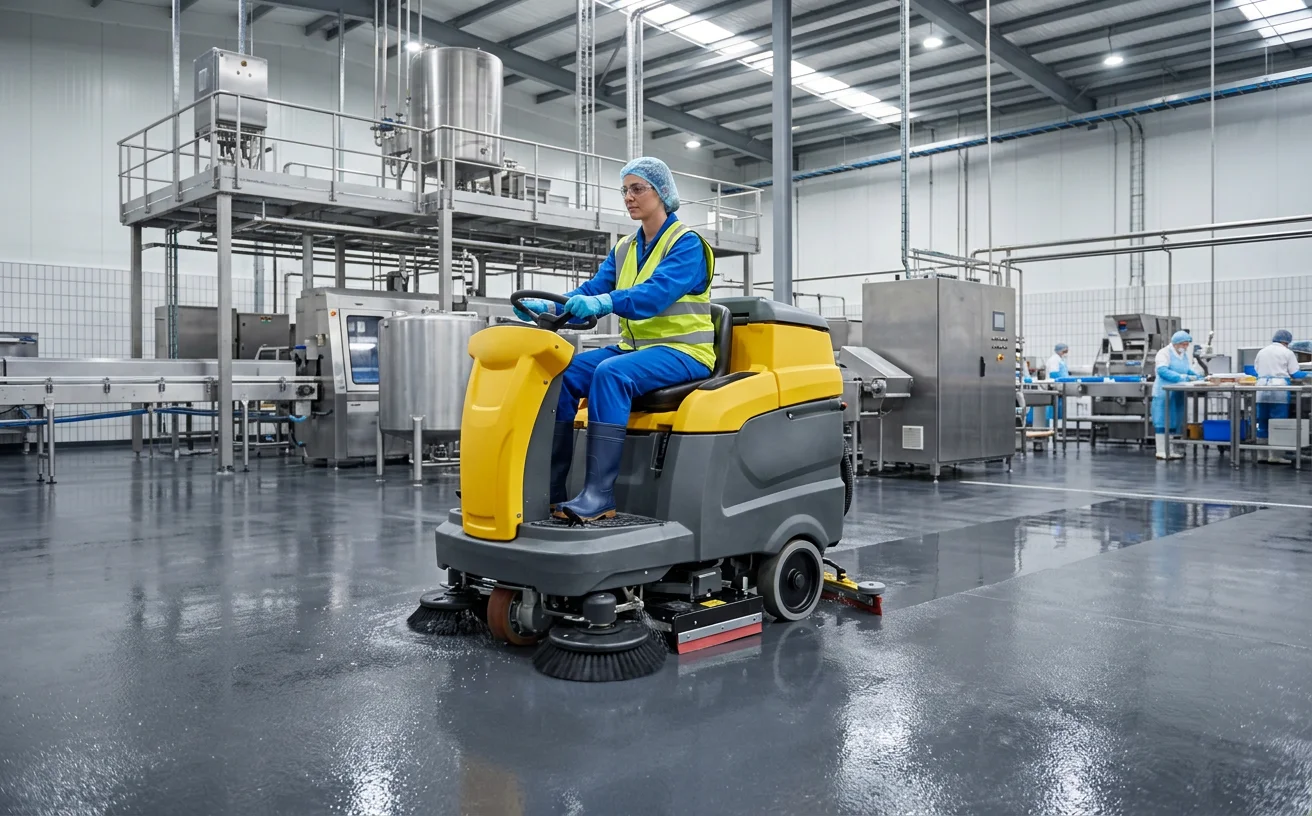
A Perth food processing plant cannot treat floor cleaning like ordinary mopping. Oils, starch, dust, packaging residue, and constant trolley traffic can build a film that looks clean but still affects grip and hygiene.
A food grade scrubber gives the cleaning crew a more controlled way to remove that film. It helps teams separate wet work, dry pick-up, brush action, and chemical dwell time instead of relying on manual effort alone.
Why Processing Floors Need Machine-Controlled Cleaning
Food production floors carry risk from two directions. Visible soil affects inspection readiness, while hidden residue can make routine movement less safe.
A mop may move contamination from one area to another. A well-matched food grade scrubber applies mechanical agitation and recovery in the same pass.
Residue Needs More Than Water
Many production soils are sticky, greasy, or protein-based. Warm water can loosen some residue, but it rarely removes build-up from textured flooring by itself.
Scrubber action helps lift material from low points in the surface. The recovery system then collects slurry before it dries back onto the floor.
That matters for WA food hygiene because floors are part of the wider cleaning programme. They may not touch food directly, but they affect movement, drainage, and pest control.
Manual Cleaning Can Miss Edges
Edges around benches, cool rooms, drains, and packing zones can collect residue quickly. Staff often clean the open walkway first because it is easier to see.
A machine plan should still include hand detailing. The difference is that the machine handles the repeatable floor area, so staff can spend time on edges.
Matching A Scrubber To Plant Layout
A processing plant does not need the largest machine by default. It needs a machine that fits the actual route, floor surface, storage space, and shift pattern.
We stock equipment that Perth buyers can match to site fit before ordering. The practical question is simple: can the operator use it daily without fighting the building?
Start With The Route
Map the cleaning route before choosing a food grade scrubber. Include doorway widths, tight turns, drain locations, cool-room entries, and storage access.
A compact orbital unit may suit smaller production zones better than a bulky ride-on machine. The operator can work around benches and return for detail cleaning.
Plants with larger open areas may need wider coverage. Even then, recovery performance and operator control matter more than machine size alone.
Check Floor Texture And Drainage
Textured safety floors need enough agitation to reach low points. Smooth sealed floors may need gentler pads to avoid unnecessary wear.
Poor drainage changes the cleaning plan. If water sits around production equipment, staff need controlled solution flow and careful recovery.
The floor scrubber range in Perth gives facility teams a place to compare scrubber formats. It also keeps the discussion tied to local supply and support.
Food Grade Scrubber Selection Criteria
The phrase food grade scrubber should not be treated as a magic label. Buyers still need to check whether the machine suits the site, chemical programme, and cleaning frequency.
Brush Or Pad Action
Brushes can help textured floors, grout lines, and uneven safety surfaces. Pads can suit smoother floors where polish or coating protection matters.
The wrong choice wastes time. Too soft may leave film behind, while too aggressive can mark the surface or wear coatings early.
Tank And Recovery Capacity
Small tanks are easier to move, empty, and store. Larger tanks reduce refill time but can be awkward in tight rooms.
For WA food hygiene, the recovery side deserves close attention. Leaving dirty solution behind defeats the purpose of machine cleaning.
A good recovery routine includes emptying, rinsing, and air-drying tanks after use. That prevents odour and reduces the risk of old slurry contaminating the next clean.
Chemical Compatibility
Food processing plants often use different chemical families across degreasing, sanitising, and odour control. The scrubber must suit the chemical selected for the floor and soil.
Staff should follow product labels and the site’s safety data sheets. They should also avoid mixing chemicals in machine tanks.
The Comet Foaming Cleaner and Sanitiser is an example of why product choice matters. A chemical can suit one hygiene task but not every floor-machine process.
Building A Practical Cleaning Method
A food grade scrubber works properly when the team has a method. Without a method, even strong equipment becomes another inconsistent tool.
Pre-Sweep Before Wet Cleaning
Dry debris should be removed before the scrubber starts. Cardboard fibres, food particles, and packaging clips can clog recovery systems or smear across the floor.
A pre-sweep also lets staff spot spills, damaged tiles, or drain problems. Those issues should be handled before the normal cleaning route begins.
Use The Correct Dwell Time
Some chemicals need contact time to loosen soil. Running the scrubber too quickly can waste product and leave residue behind.
A practical method may use a first wet pass in heavy-soil zones. The operator then returns for agitation and recovery after the chemical has worked.
That approach must still respect site safety. Wet areas need control, signage, and timing around staff movement.
Rinse Where The Site Requires It
Some sites require a rinse step after chemical cleaning. Others use products designed for controlled no-rinse use in specific situations.
The label and site procedure decide the answer. A food grade scrubber is only part of the system. Keep the machine and chemical details from Weskleen Supplies with that procedure.
Training Operators Without Overcomplicating The Job
Operators do not need a textbook before using a floor scrubber. They do need a clear routine that fits the plant’s risk areas.
Keep The Checklist Short
A useful checklist covers inspection, tank filling, pad or brush fit, chemical dose, route, recovery, emptying, and storage. That is enough for daily use.
The checklist should also tell staff when to stop. Unusual noise, weak suction, poor recovery, or chemical confusion should trigger a supervisor check.
Put Maintenance Into The Shift Routine
A scrubber that is not cleaned after use becomes a hygiene problem. Tanks, squeegee blades, brushes, and filters need simple post-use care.
The Polystar Orbital Floor Scrubber is a useful example for compact machine planning. Operators still need to clean and store it properly after every use.
Record Exceptions
Food plants often already record cleaning tasks. Floor-scrubber exceptions should fit that system, not become a separate paperwork burden.
A short note can record heavy soil, chemical changes, machine faults, or missed areas. That helps supervisors see patterns before an audit.
Common Mistakes In Food Plant Floor Cleaning
The equipment choice matters, but daily habits decide the result. Small mistakes can undo the value of a good machine.
Using Too Much Chemical
More chemical does not mean a cleaner floor. It can leave residue, create foam, affect recovery, and increase slip risk.
Correct dilution is part of WA food hygiene because the cleaning process must be repeatable. Guesswork makes it hard to prove consistency.
Skipping Detail Areas
A scrubber improves the main floor area. It does not replace manual detailing around legs, drains, corners, and wall junctions.
Teams should assign these areas clearly. If nobody owns them, they become the first places an auditor or manager notices.
Letting Dirty Water Dry
Recovery matters as much as scrubbing. Dirty solution left behind can dry into a dull film and attract more soil.
A suitable scrubber should leave the floor controlled, not just wet and shiny. If recovery is weak, check squeegee condition, tank seals, and operator speed.
How Supervisors Can Keep The Routine Practical
Supervisors should make the floor routine visible without turning it into a long manual. A simple wall chart can show the route, product, machine setting, and post-use care.
The chart should also name the person who signs off the clean. That keeps responsibility clear during handover between day, afternoon, and night crews.
Short spot checks help more than occasional panic cleans. Supervisors can check under benches, around drains, and beside packing lines after the floor dries.
If the same residue appears each week, the issue may be process design. The answer might be slower passes, more detail work, or better dry debris removal.
This keeps WA food hygiene grounded in daily behaviour. The machine supports the system, but the site still needs disciplined review.
FAQ
Is A Food Grade Scrubber Different From A Normal Floor Scrubber?
The machine may be similar, but the selection and method are stricter. Food processing sites need equipment that suits hygiene routines, chemical controls, and wet-floor risk.
Can A Scrubber Replace Manual Cleaning In A Food Plant?
No. It handles repeatable floor areas well, but edges, drains, corners, and equipment bases still need manual detail work.
How Often Should Food Processing Floors Be Scrubbed?
Frequency depends on production type, soil load, traffic, and audit requirements. Many plants need scheduled machine cleaning plus spot cleaning during shifts.
What Should Perth Plants Check Before Buying?
Check route width, surface texture, recovery performance, chemical compatibility, storage space, and operator training needs. Local support also matters when downtime affects production.
Conclusion
A suitable scrubber should make floor hygiene easier to repeat, not harder to manage. Match the machine to the route, recovery and chemical process the plant actually uses. Contact us if you need that shortlist checked against current stock.