


Blog
HEPA Filter Vacuums for NDIS Support Settings

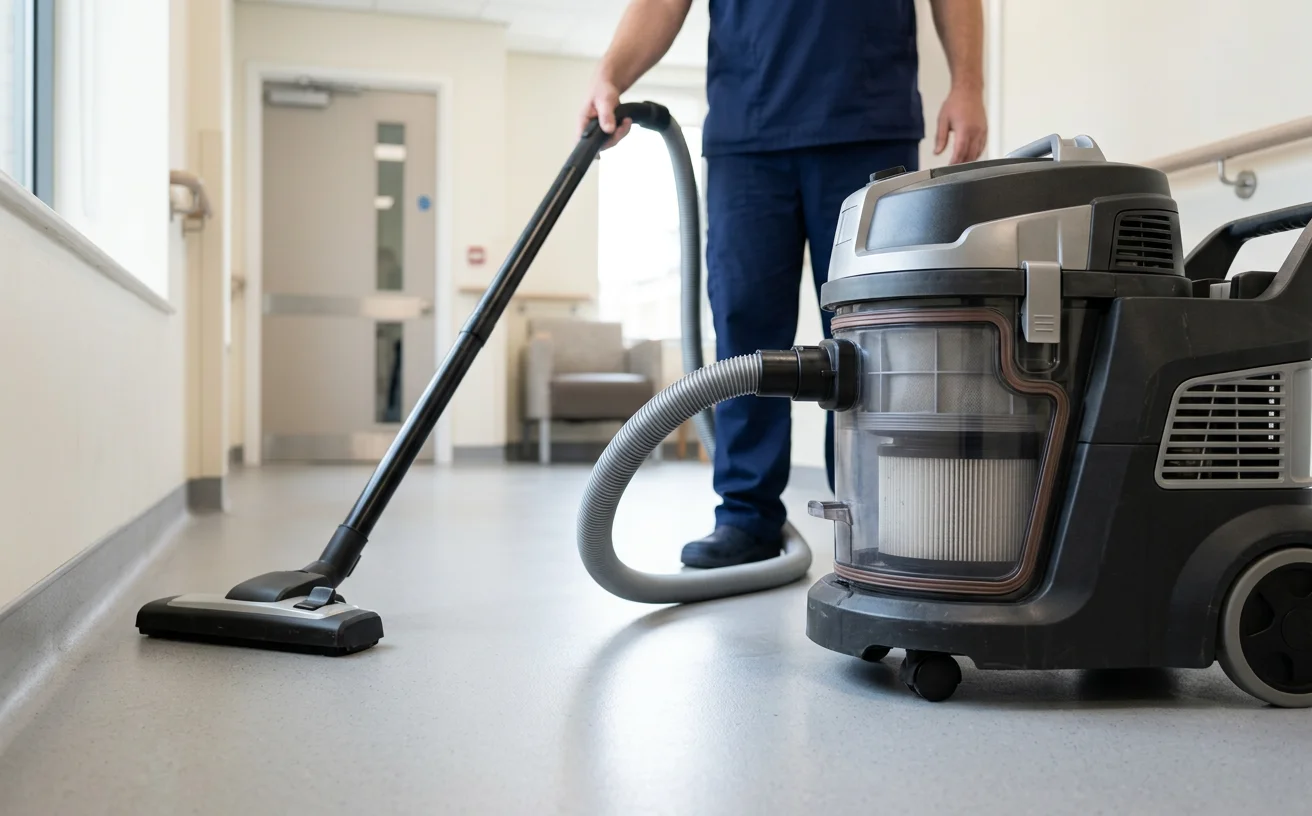
A HEPA filter vacuum is often discussed as if the filter alone solves every dust issue. That is too simple. In NDIS environments, filtration works only when the whole vacuum system is maintained. The cleaning routine also needs the right floor tool and respect for allergy, asthma, sensory, or respiratory concerns. Allergy safe cleaning depends on the machine, the method, and the records behind it.
Support homes and disability facilities are not laboratory spaces, but they still need careful dust control. Dust can build up in carpets, skirting edges, curtains, vents, and soft furnishings. When cleaning disturbs that material, the vacuum needs to capture particles instead of pushing them around the room.
What HEPA Filtration Actually Means
HEPA stands for High Efficiency Particulate Air. In plain terms, a HEPA filter is designed to capture very small particles that ordinary filters may miss. That can include dust mite waste, pollen, mould fragments, and fine debris from carpet fibres.
The first buyer step is to match filtration claims to a real product and cleaning setting. We stock commercial vacuum options and related cleaning supplies that can be compared against the site. That matters because a HEPA filter vacuum should be selected against the site’s risk profile, not only a product headline.
A genuine filtration plan also asks how the vacuum is used. Fast passes over carpet do less than slow, overlapping strokes. A good filter cannot compensate for rushed technique, blocked hoses, damaged seals, or an overfull bag.
Filtration Is a System
The filter is only one part of the machine. Air has to move through the bag, motor path, seals, and exhaust without leaking. If a hose is cracked or a bag is fitted badly, fine dust can escape before it reaches the filter.
Think of the vacuum like a water bottle with a filter in the lid. If the bottle is cracked, the filter no longer controls what leaves the container.
Why NDIS Settings Need Extra Care
Some participants may spend far more time indoors than the average office worker. Others may have personal routines that make cleaning timing sensitive. If cleaning causes airborne dust, strong odour, or loud disruption, the process can affect comfort as well as hygiene.
A HEPA filter vacuum helps support allergy safe cleaning by reducing fine-particle escape during normal vacuuming. It does not replace ventilation, correct storage, or participant communication.
Choosing a Commercial Vacuum for Fine Dust
A commercial setting needs durability as well as filtration. A residential vacuum might work for occasional cleaning, but repeated daily use can expose weak hoses, small bags, fragile tools, and poor serviceability. NDIS support providers should think about the lifetime routine, not only the first purchase.
The Pacvac Superpro 700 Vacuum Cleaner is a useful comparison product for commercial backpack cleaning. Its backpack format can help cleaners move around furniture and support equipment without dragging a barrel through the room.
What to Check Before Buying
A buyer should ask:
- Is the filter type clear in the product documentation?
- Are replacement bags and filters easy to source?
- Can staff access the filter without damaging it?
- Does the harness suit the operator?
- Is the floor tool suitable for carpet, vinyl, or mixed surfaces?
- Is the machine serviceable if suction drops?
These checks make the HEPA filter vacuum decision more practical. They also create a simple record for internal review.
Corded or Battery Operation
Corded units suit long cleaning sessions when power access is easy. Battery units can suit homes where cords create trip concerns or cleaning has to move across several rooms quickly.
The Pacvac Superpro Go Battery gives providers a cordless comparison point. The filter question stays the same, but the operating routine changes. Battery charging, spare packs, and charger storage become part of the cleaning procedure.
Allergy Safe Cleaning Beyond the Vacuum
A vacuum controls dry dust. It does not solve sticky residue, damp carpet, chemical sensitivity, or poor storage. Allergy safe cleaning needs a broader routine that covers surfaces, floors, tools, and timing.
For hard floors, dust control can happen before wet cleaning. Dry microfibre work captures fine debris without adding chemical residue. Our dust control fringe mops are relevant for this kind of first pass, especially in hallways, offices, and low-moisture areas.
Avoiding Chemical Overload
Allergy-sensitive spaces are often affected by fragrance and residue as much as dust. A room can be technically clean and still uncomfortable if the product smell is strong. Staff should use the lowest suitable product strength, apply chemicals to cloths where practical, and ventilate enclosed areas.
The goal is clean air, not a strong smell. A space should not need to smell like chemicals to be hygienic.
Cleaning Order Matters
The order of cleaning can improve results. High ledges and vents should be dusted before floors are vacuumed. Hard floors can be dust-mopped before wet mopping. Carpeted areas should be vacuumed slowly enough for the machine to lift debris.
A simple top-to-bottom sequence prevents recontamination. It also gives staff a routine they can repeat without guessing.
Maintaining Filtration Performance
A HEPA filter vacuum can lose effectiveness when it is treated as a set-and-forget tool. Bags fill. Filters clog. Hoses split. Floor tools collect hair. Staff may keep using the machine because it still turns on, even when suction is poor.
A maintenance rhythm prevents that problem. The rhythm does not need specialist software. A label, checklist, or shared log can show the inspection date and the person responsible. Keep the bag and filter details from Weskleen Supplies with that log.
Maintenance Checklist
Use a simple checklist:
1. Check bag fill before high-dust work.
2. Inspect filter condition at the set interval.
3. Look for cracks in hose and wand connections.
4. Remove hair and thread from floor tools.
5. Check cord or battery condition.
6. Record faults before the next shift.
This helps support allergy safe cleaning because staff can show the machine was kept serviceable.
When to Escalate a Fault
Loss of suction is not always a motor failure. It can be a blocked hose, full bag, clogged filter, or worn floor tool. A staff member should know the first checks before reporting the vacuum as broken.
If the issue continues, remove the unit from use. A poorly performing machine can make fine dust worse by stirring material without collecting it properly.
Carpets, Upholstery and Deep Soil
Carpets behave differently from hard floors. They hold dust, fibres, pollen, grit, and residue below the visible surface. Vacuuming is still essential, but periodic extraction may be required when the issue is odour, staining, or deeper contamination.
Our carpet cleaning machines provide a separate category for deeper carpet care. A support provider should not expect a dry vacuum to do the same job as a carpet extractor.
A practical plan can separate daily, weekly, and periodic tasks. Daily vacuuming controls loose debris. Weekly edge work targets skirting and corners. Periodic extraction handles deeper carpet needs when the site requires it.
Managing Drying and Moisture
Moisture control matters because damp carpets can create odour and mould risk. Deep cleaning should be scheduled when the area can dry properly. Ventilation, extraction strength, and drying time should be considered before the work starts.
A rushed extraction job can create a different hygiene problem. The record should note when the area was cleaned and whether drying was completed.
Documenting the Filtration Decision
Procurement notes should avoid overclaiming. A provider can document that a HEPA filter vacuum was chosen to reduce fine dust escape during routine cleaning. It should not claim to treat medical conditions or guarantee symptom prevention.
A useful note might say the machine supports dust control in shared accommodation, has serviceable filters, and fits the staff cleaning route. If the purchase relates to a specific participant, the provider should also consider plan requirements and professional advice where relevant.
What to Keep in the File
The file can include:
- Product name and URL.
- Filter and bag replacement details.
- Cleaning areas and floor types.
- Maintenance checklist.
- Staff training note.
- Fault and replacement procedure.
That evidence makes the purchase easier to explain during an internal review.
Keeping Supplies Together
Filtration performance often fails for boring reasons. Spare bags cannot be found. Filters are stored in a damp cupboard. The floor tool sits in another building. A cleaner borrows the wrong attachment and never returns it.
A cleaning hand caddy helps with small accessory organisation, while larger vacuum parts should have their own labelled storage. The same principle applies to every site. If the parts are easy to find, staff are more likely to maintain the system.
Good storage also protects staff time. A cleaner who spends ten minutes looking for filters is less likely to check them properly before a busy shift.
FAQ
Is Every HEPA Vacuum Suitable for NDIS Settings?
No. The machine must suit the rooms, staff, noise needs, storage routine, and maintenance plan. Filtration is important, but it is not the only selection factor.
Does HEPA Filtration Remove All Allergens?
A HEPA filter vacuum can reduce fine-particle escape during vacuuming. It does not replace proper dusting, ventilation, chemical control, or deep carpet cleaning.
How Often Should Filters Be Checked?
Follow the product guidance and adjust for dust load. High-use support homes may need more frequent checks than low-traffic office areas.
What Should Providers Avoid Claiming?
Avoid medical or official approval claims unless documented evidence supports them. Focus on suitability, dust control, and serviceability.
Conclusion
Filtration only works when the vacuum, operator, maintenance routine, and cleaning order support the same dust-control goal. Compare vacuum, mop and carpet-care options against the rooms and dust load, then keep the filter notes with the machine. Contact us if you need that shortlist checked against current stock.