


Blog
Low-Noise Cleaning with the Pacvac 700 for Sensory-Sensitive Homes

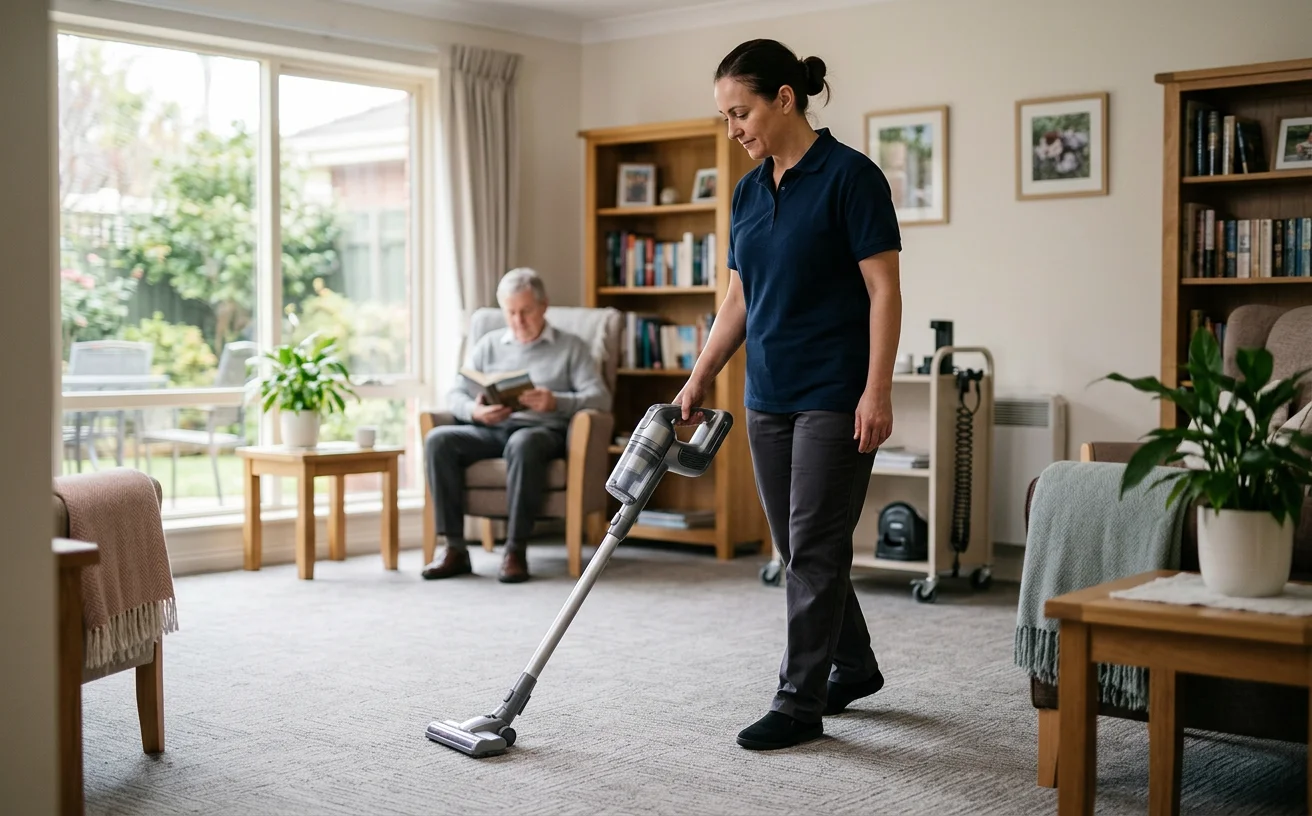
A silent vacuum cleaner sounds attractive, but the phrase needs careful handling. No commercial vacuum is truly silent. The real goal in sensory friendly cleaning is lower disruption, predictable timing, steady movement, and equipment that does not add avoidable stress to the space. For disability support settings, the cleaning method matters as much as the machine.
Sensory-sensitive clients may react to sound, vibration, movement, chemical smell, visual clutter, or sudden changes in routine. A vacuum that is acceptable in an empty office may feel overwhelming in a small support home. The buying question should be practical. Which machine and work method reduce unnecessary noise while still keeping the space clean?
What Low-Noise Cleaning Really Means
Low-noise cleaning is not only about a decibel number. It is the full experience of how cleaning happens. A machine that starts suddenly beside a bedroom door can cause real distress. A slightly louder machine may be easier when used at a predictable time elsewhere.
The first product decision should be linked to the site routine. We stock commercial vacuum and cleaning equipment that can be compared against real support environments. That matters because a silent vacuum cleaner claim should not replace a careful site assessment.
A low-disruption routine looks at timing, room order, communication, and staff technique. It also looks at whether a backpack unit, battery unit, or hard-floor dust-control tool is more suitable for each area.
Sound Is Only One Trigger
Noise can be the most obvious issue, but it is rarely the only trigger. Some people dislike the vibration of a motor in nearby rooms. Others are affected by cords crossing walkways, staff moving furniture, or the smell of cleaning products after vacuuming.
Sensory friendly cleaning should reduce avoidable surprises. A predictable schedule and a clear room order can make the same machine easier to tolerate.
Avoiding False Promises
It is better to say low-noise, quieter, or less disruptive than to promise silence. A vacuum still produces motor sound, airflow sound, and contact noise from floor tools. Honest language protects the provider and gives staff a realistic target.
Why Backpack Design Can Help
A backpack vacuum can reduce some of the banging and dragging associated with barrel machines. The cleaner carries the motor and controls the wand, so there is less equipment rolling into furniture, skirting boards, and door frames. That can make the cleaning process feel smoother in a small home.
The Pacvac Superpro 700 Vacuum Cleaner is a relevant example for providers comparing backpack cleaning. Its value for sensory friendly cleaning is not only the machine itself. It is the way the format can support steady movement and fewer equipment collisions.
Harness Fit and Operator Control
A poorly fitted backpack can create noise through awkward movement. If the harness slips, the cleaner adjusts constantly. If the hose catches, the wand bumps furniture. A short fit check before use can reduce these problems.
Staff should be shown how to adjust the harness, hold the wand, and move through narrow rooms. Technique can make a noticeable difference to the sound and rhythm of cleaning.
Floor Tool Choice
The floor tool affects noise. A worn or unsuitable head can scrape across hard floors, chatter over thresholds, or fail to pick up debris properly. When staff make multiple passes because the tool is wrong, the total sound exposure increases.
The equipment file should include floor types. Carpet, vinyl, tile, mats, and rugs can need different handling.
Battery Operation and Predictable Movement
A battery unit can help where cords create visual clutter, trip concerns, or interruptions. The cleaner can move from room to room without stopping to change power points. That can make the routine feel more predictable for residents and support staff.
The Pacvac Superpro Go Battery provides a cordless comparison point for support homes. A battery setup may suit sensory-sensitive clients when the main issue is cord movement, start-stop disruption, or access around tight furniture.
Battery Planning Still Matters
Battery equipment can create its own problem if it is not charged. A cleaner who has to stop halfway through a bedroom and search for another battery creates avoidable disruption. The charging routine must be part of the plan.
A simple charging checklist can show which batteries are ready, which are charging, and which need inspection. Labels and storage location matter because support homes often have shared cupboards.
Matching Runtime to the Home
Runtime should be compared with the actual cleaning route. A five-room support home and a small office do not create the same demand. The provider should check whether one battery set covers the routine without rushing.
Rushing defeats the purpose. Fast cleaning can be louder, less careful, and less effective.
Hard-Floor Dust Control Without Constant Vacuuming
A silent vacuum cleaner may not always be the right first tool. On hard floors, dust-control mopping can remove surface debris without motor noise. This can be useful for morning spot cleans, quiet hours, or rooms where a participant is resting nearby.
Our dust control fringe mops support this kind of quiet first pass. They are not a replacement for vacuuming every surface, but they can reduce how often a machine is needed for light dry debris.
Building a Quiet Cleaning Sequence
A quiet sequence might start with dry dust control, then spot vacuuming, then wet mopping where required. This avoids running a vacuum over areas that only need a quick dust pass.
A site manager can also set quiet zones. For example, bedrooms may be cleaned when the resident is out, while hallways are handled with dust-control tools during quieter periods.
Reducing Chemical and Visual Triggers
Sound is only part of the sensory picture. A cleaning session can also bring strong product smells, wet-floor signs, open cupboards, bright bottles, and staff movement. The cleaner may be doing a good job, but the total environment can still feel busy.
Organised supplies help. The cleaning hand caddy keeps products in one place and reduces the visual spread of bottles across benches or floors. That small detail can support sensory friendly cleaning because the work area looks calmer and more controlled.
Use Less Product Where Suitable
More chemical smell does not mean a better clean. Staff should follow dilution instructions, apply products directly to cloths where appropriate, and ventilate rooms without creating uncomfortable drafts.
In sensitive settings, cleaning should leave the space calm. A strong fragrance can become another trigger even when the room looks spotless.
Communicating the Cleaning Routine
Predictability is one of the strongest controls for sensory-sensitive clients. Staff should know when cleaning will happen, which room comes first, and how to pause if the resident becomes distressed. The routine should be explained in a way that suits the home.
Some homes use a written schedule. Others use a picture card or a simple verbal reminder. The method matters less than the consistency. The same rule applies to equipment from Weskleen Supplies: the routine comes first.
Room-by-Room Planning
A room plan can include:
- Vacuuming only when the participant is out or prepared.
- Starting away from bedrooms during rest periods.
- Using dust-control mops for light debris during quiet times.
- Closing doors to reduce sound travel where safe.
- Pausing if a participant asks for a break.
This turns cleaning from a surprise event into a managed routine.
Staff Handover Notes
A handover note can record preferences. One person may tolerate vacuuming in the hallway but not near a bedroom. Another may prefer cleaning before lunch. A third may be comfortable with the vacuum but sensitive to product smell.
Those notes are not extra decoration. They are part of respectful support.
Maintaining the Pacvac 700 for Quieter Operation
A vacuum can become louder when it is poorly maintained. Blocked filters, full bags, cracked hoses, loose tools, and worn floor heads can all increase noise or reduce suction. Staff may then make extra passes, which lengthens the disruption.
Maintenance is part of low-noise cleaning. A machine that works efficiently usually finishes the job faster and with less effort.
Quick Maintenance Checks
Before regular use, staff can check:
1. Bag fill and filter condition.
2. Hose connection and wand fit.
3. Floor tool wear.
4. Harness adjustment.
5. Cord condition or battery charge.
6. Storage of spare bags and accessories.
These checks take little time. They can prevent a noisy, frustrating clean that affects both staff and residents.
When Deep Cleaning Is Needed
Low-disruption daily cleaning does not remove every deeper issue. Carpets can hold odour, allergens, and fine soil below the surface. A quiet daily routine should be paired with periodic deeper work when the site needs it.
Our carpet cleaning machines give providers a separate option for planned extraction work. Deeper carpet cleaning should be scheduled carefully because machine sound, moisture, and drying time can affect residents.
Scheduling Deep Work
Deep cleaning should happen at a planned time, ideally when the space can dry and residents can avoid the area. Staff should explain the change before the day starts. If a room will smell different or feel damp, that should not be a surprise.
This is especially important for sensory friendly cleaning because the unexpected change can be harder than the cleaning itself.
Avoiding Overclaiming in Procurement Notes
A support provider should avoid saying that a vacuum is ideal for every sensory-sensitive client. The better note is that the machine supports a lower-disruption cleaning method when matched with timing, staff training, and maintenance.
The product file can state why the equipment was chosen. It might mention reduced cord movement, backpack control, serviceability, and compatibility with a predictable cleaning schedule. That is stronger than relying on a single silent vacuum cleaner phrase.
FAQ
Is the Pacvac 700 Silent?
No commercial vacuum is silent. The aim is lower disruption through appropriate equipment, steady technique, timing, and maintenance.
Why Does Cordless Cleaning Help Some Homes?
Cordless cleaning can reduce cable movement and power-point changes. That can make the cleaning route feel calmer and more predictable.
Can Dust-Control Mops Replace Vacuuming?
No. They can reduce light hard-floor dust quietly, but carpets and deeper debris still need appropriate vacuuming or extraction.
What Should Be Written in the Support File?
Record the cleaning need, equipment choice, charging or maintenance routine, and any participant preferences that affect timing or room order.
Conclusion
Low-disruption cleaning depends on honest product selection, predictable timing, staff technique, and maintenance that keeps equipment running smoothly. Compare backpack vacuums, battery options and quieter floor-care tools against the home’s actual triggers. Contact us if you need that shortlist checked against current stock.