


Blog
Meeting Hygiene Audits with Cleaning Equipment for WA NDIS Providers

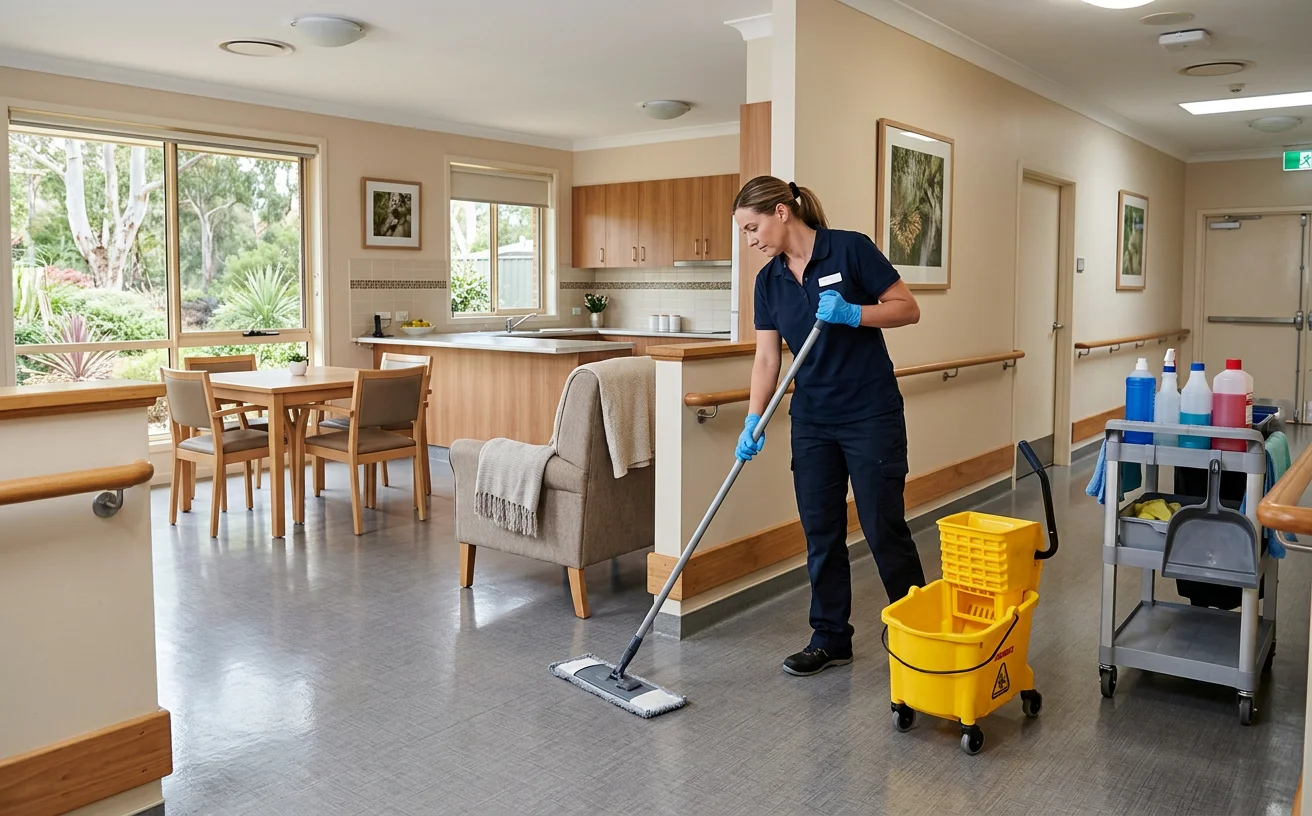
Hygiene audit cleaning starts long before an auditor reads a folder. It starts with the tools, products, labels, staff routines, and cleaning records used every week. For WA providers, hygiene audit tools are not only forms and checklists. They include colour-coded mops, sanitiser records, equipment maintenance notes, and the everyday supplies that make safe cleaning repeatable.
A hygiene audit can expose a simple problem very quickly. The site may look clean, but the storage cupboard may tell another story. It may hold unlabelled bottles, mixed mop heads, missing Safety Data Sheets, and no vacuum-filter record. Those gaps are avoidable when the cleaning system is built around clear equipment choices.
What Hygiene Audits Usually Look For
A hygiene audit is not only a visual inspection. It checks whether the provider can prove that cleaning is controlled, consistent, and suitable for the people using the space. That matters in supported accommodation, respite settings, offices, clinics, and shared community facilities.
The first equipment review should connect the cleaning task to an actual product and method. We stock commercial products that can support documented cleaning routines. That support matters because Hygiene audit cleaning depends on repeatable systems, not one-off deep cleans before inspection day.
An auditor or internal reviewer may ask how the site prevents cross-contamination. They may also check whether high-touch surfaces are sanitised. Staff should know which chemical to use, and tools should stay in usable condition.
Evidence Is Practical, Not Decorative
Useful evidence can be simple. A laminated cleaning schedule, a signed training sheet, a stock list, and a product invoice can be enough to show that a system exists. The mistake is assuming that visible cleanliness alone will prove control.
Think of cleaning evidence like a vehicle logbook. A car may look polished, but a missing service history still raises questions. A facility can smell fresh and still fail a process check if records and supplies are unclear.
What Equipment Adds to the Record
Equipment gives the cleaning plan something concrete. A listed mop head, bucket, sanitiser, vacuum, or caddy can be tied to a room, task, and staff instruction. That makes the audit trail easier to follow.
Colour Coding and Mop Control
Cross-contamination is one of the easiest hygiene risks to create by accident. The wrong mop head can move soil from a bathroom to a kitchen. It can also carry material from a higher-risk zone into a common room. A colour-coded system reduces that risk when staff follow it properly.
Our squeegees and mops give providers a practical category for building that system. The key is not simply owning different colours. The colours need to be matched to a site rule that staff understand.
A Simple Colour Plan
A provider might use a basic plan like this:
- Red equipment for toilets and washroom areas.
- Green equipment for kitchens and food preparation.
- Blue equipment for general rooms and offices.
- Yellow equipment for isolation or higher-risk cleaning when required.
The plan should be written where supplies are stored. Staff should not have to remember a private system that changes by house.
Mops, Buckets and Drying Space
A mop system also needs drying space. Damp mop heads left in a sealed bucket can create odour and hygiene problems. The Enduro Microfibre Mop Head is useful as an example because it can be used with or without chemicals.
The 16L Mop Bucket adds a simple control point for solution handling. A bucket with a wringer helps staff avoid soaking floors, which can create slip risks and longer drying times.
Sanitiser Records and High-Touch Areas
High-touch points need more than a quick wipe. Door handles, taps, handrails, light switches, desks, and shared equipment can carry visible soil and invisible residue. Hygiene audit cleaning should identify those points and set a sensible cleaning frequency.
The Comet Foaming Cleaner & Sanitiser can be used as a reference product when the cleaning task requires a cleaner and sanitiser. A foaming format helps with controlled application because the product stays closer to the surface. That can be useful when staff are trying to avoid misting product into the air.
Avoiding Vague Cleaning Notes
A note that says “bathroom cleaned” is weak. A better note says which bathroom was cleaned, which high-touch points were sanitised, and whether any issue was found. The improved note takes only a little longer, but it gives the hygiene audit tools a stronger evidence trail.
This also helps managers spot trends. If one bathroom regularly needs extra attention, the issue may be ventilation, fixture condition, heavy use, or poor product storage.
Vacuum and Floor Equipment Checks
Dust control is often under-documented. A site might have a good vacuum, but no one records bag changes, filter checks, or hose condition. That is a gap because dusty machines can push particles back into the space.
A commercial vacuum used in support settings should have a visible maintenance habit. Staff can check bag fill, filter condition, floor-tool wear, cord condition, and storage location. For battery machines, the battery and charger routine should also be checked.
Why Floor Care Matters to Audits
A hygiene audit may not test every floor with a meter, but floors tell a story. Sticky vinyl, dusty skirting lines, and dull high-traffic areas suggest that routine cleaning is not matching use. Regular floor work can also reduce slip risk when cleaning solution is controlled correctly.
For hard floor areas, our floor scrubber range in Perth gives providers a category to compare deeper cleaning options. A floor scrubber does not replace daily mopping. It supports periodic cleaning when manual mopping cannot remove embedded soil.
Storage, Labels and Chemical Safety
A cupboard can pass or fail the mood of a hygiene review before any room is inspected. If chemicals are scattered, labels are damaged, and tools are wet, the system looks uncontrolled. If supplies are grouped, labelled, and easy to check against stock from Weskleen Supplies, the cleaning routine looks far more credible.
A good storage system keeps chemicals upright, separates wet tools from dry stock, and keeps Safety Data Sheets easy to access. Staff should be able to identify a product without guessing. Decanted bottles need complete product labels, not handwritten mystery names.
Caddies and Daily Setups
The cleaning hand caddy is a small item, but it solves a real workflow problem. It keeps daily-use products together, reduces searching time, and lowers the chance of leaving a spray bottle in the wrong room.
A caddy also helps supervisors check readiness before a shift. If the right cloths, gloves, labels, and product are present, the cleaner can begin with fewer interruptions.
Building a Provider Checklist
Hygiene audit tools work properly when they are specific. A generic checklist from the internet often misses the exact risks in a disability support setting. A provider should build the checklist around the rooms, residents, product range, and staff routine.
A practical checklist might include:
1. Confirm room-by-room cleaning frequency.
2. Check high-touch surface tasks.
3. Confirm colour-coded mop allocation.
4. Review sanitiser and chemical labels.
5. Check vacuum filters, bags, and tools.
6. Confirm wet equipment has drying space.
7. Record faults, shortages, or participant preferences.
Each item should be easy to answer. A checklist that needs a manager to interpret every line will not survive normal staff turnover.
Staff Training Notes
Training does not have to be complicated, but it must be visible. A short induction can cover colour coding, chemical labels, dilution, PPE, participant respect, and incident reporting. A refresher can happen after an audit, complaint, product change, or cleaning incident.
A useful training note records the staff member, date, topics covered, and the supervisor. It is not glamorous, but it is one of the strongest ways to show that the provider treats hygiene seriously.
Avoiding Misleading NDIS Language
Providers should avoid phrases that imply official product endorsement unless there is evidence. Equipment can support an NDIS cleaning routine, but a mop, bucket, or sanitiser should not be presented as automatically approved by the scheme. The safer language is that the product supports a documented cleaning procedure.
This distinction matters for Hygiene audit cleaning because misleading wording can create procurement and marketing risk. A provider can say that a product was chosen for a support environment after checking the cleaning need, staff use, and documentation requirements. That is clearer and safer than claiming blanket approval.
FAQ
What Are Hygiene Audit Tools?
They are the practical items and records that support a cleaning system. Examples include schedules, colour-coded equipment, product labels, SDS access, and maintenance logs.
Do NDIS Providers Need Commercial Equipment?
Not always. The equipment should match the cleaning risk, room type, staff capability, and documentation need. Commercial products often make repeatable cleaning easier.
How Often Should Cleaning Tools Be Checked?
High-use tools should be checked before or after each shift. Less frequent equipment can follow a weekly or monthly inspection rhythm.
Can a Site Pass an Audit Based on Appearance?
Appearance helps, but it is not enough. A site also needs records that show what was cleaned, which products were used, and how risks are managed.
Conclusion
A strong hygiene system comes from clear products, trained staff, labelled storage, and records that match the cleaning work. Match equipment to the rooms, labels and records the site actually uses. Contact us if you need that checklist checked against current stock.