


Blog
Pacvac Superpro Go Battery Units for NDIS Home Maintenance in WA

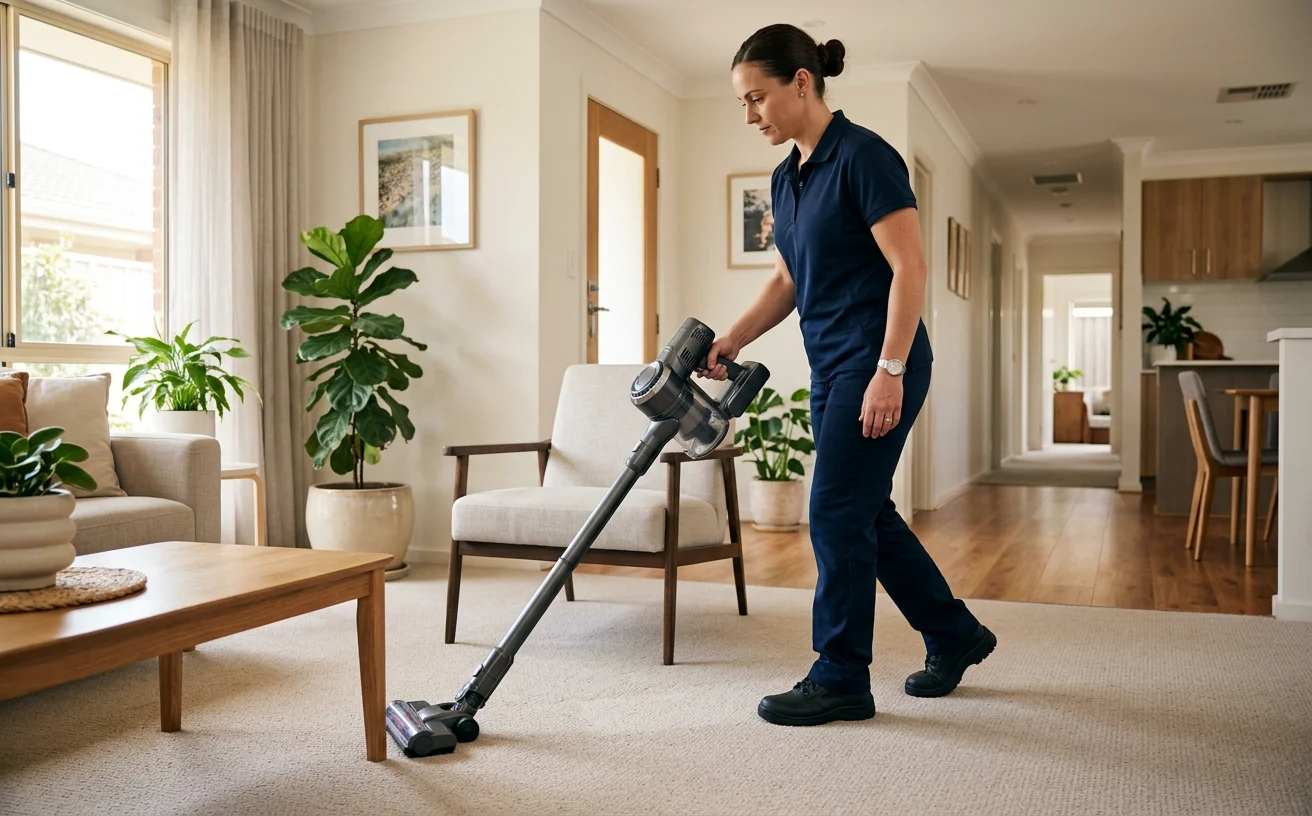
An NDIS vacuum cleaner purchase for home maintenance work has to balance movement, dust control, charge routine, and storage. It also has to protect the comfort of the person living in the home. A battery backpack vac can make cleaning easier around beds, mobility aids, furniture, ramps, and tight hallways. It only works well when the provider has checked the actual site routine. The safest buying decision is not simply the most powerful unit on the shelf. It is the unit that fits the cleaner, the home, and the support documentation.
For WA disability support providers, battery equipment also changes how daily work is planned. There is no cord to manage across a doorway or around a wheelchair. There is also a new responsibility to manage batteries, charging times, spare packs, and safe storage. That trade-off should be written down before the purchase is approved.
Why Cordless Backpacks Suit NDIS Home Maintenance
A home maintenance round in supported accommodation rarely looks like an empty office clean. A cleaner may work around a participant having breakfast or a support worker preparing medication. The same room may also hold therapy items, visitors, or mobility aids. A corded machine can still work, but the cable becomes another thing to manage.
The first practical comparison should happen before a product is chosen. We stock commercial cleaning equipment that can be compared against the way a support home actually runs. That matters because an NDIS vacuum cleaner has to fit the environment, not only the catalogue description.
A battery backpack vac helps most when the cleaner needs steady movement. It can reduce stops for power-point changes. It can also reduce the chance of a cable lying across a doorway, bedroom entry, or bathroom threshold. Those points are simple, but they are useful in homes where residents, carers, and staff move through the same space.
Movement Around Real Homes
A support home can have narrow bedroom corners, low furniture, recliner chairs, walking frames, pet bedding, and equipment storage in the same path. The cleaner needs to move carefully without bumping walls or dragging a barrel unit behind. Backpack equipment keeps the motor on the worker, which can make the floor path clearer.
That does not mean every worker should carry one. The harness needs to sit correctly, and the job should suit the person’s strength and posture. A site manager should treat fit and training as part of the purchase file.
Cord Risk and Work Timing
Cordless equipment is useful when cleaning has to happen while people are nearby. The cleaner still needs to manage noise, dust, and timing, but there is one less physical hazard on the floor. In small homes, that can be the difference between a smooth fifteen-minute clean and a job that keeps stopping.
The note in the file can be short. It might say that cordless operation was chosen to reduce cable movement in shared living areas and to support safer room-to-room cleaning.
Comparing the Pacvac Battery Option
The Pacvac Superpro Go Battery is a relevant option for providers comparing cordless backpack cleaning. It gives the buyer a known platform, a battery setup, and a clear product record for procurement notes. For an NDIS vacuum cleaner, that product record is important because the buyer may need to show why the machine was selected.
Battery units should be judged on more than convenience. Runtime, charging rhythm, battery handling, serviceability, filter access, wand comfort, and storage space all matter. A cordless backpack vacuum that is easy to carry but poorly charged will fail during routine work. A heavier unit that is well planned may perform better across a predictable roster.
Questions to Ask Before Ordering
Use a short checklist before committing to a cordless model:
- How many rooms need vacuuming on a normal visit?
- Is the home carpeted, hard floor, or mixed surface?
- Will the cleaner work while residents are present?
- Where will batteries be charged and stored?
- Who checks filters, bags, hoses, and floor tools?
- Is there a fallback machine if a battery is flat?
These questions make the purchase easier to defend. They also stop the equipment from becoming a novelty item that only works on easy days.
When a Corded Unit Still Makes Sense
A corded commercial backpack remains useful when the cleaning round is long and power access is reliable. It also suits work that happens when the space is clear. The Pacvac Superpro 700 Vacuum Cleaner gives providers a corded comparison point. The decision is not battery against cord as a fashion choice. It is battery against cord as a work-method choice.
Think of it like choosing between a cordless drill and a workshop drill press. The cordless tool wins on movement. The fixed power option wins when the work is long, repetitive, and close to power.
Building a Battery Charging Routine
A cordless backpack vacuum adds a new maintenance habit. Providers need a charging routine that is clear enough for every shift. If the process depends on one careful staff member, it will eventually fail. The routine should be visible, repeatable, and linked to the cleaning schedule.
The strongest setup is usually simple. Batteries are returned to the same charging point after each use. A staff member checks the charger lights at the end of a shift. The next cleaner knows which batteries are ready. Damaged batteries or chargers are taken out of service and reported.
Storage and Inspection
Batteries should be stored in a dry, stable area away from wet mops, chemical bottles, and loose tools. That sounds obvious until a support-house cupboard starts holding everything from toilet rolls to spray bottles. A small shelf label can prevent confusion.
A battery inspection routine can include:
1. Check that terminals and casing look undamaged.
2. Confirm the charger and cable are not frayed.
3. Record any sudden runtime drop.
4. Keep spare bags and filters near the vacuum.
5. Remove damaged equipment from the cleaning area.
This routine supports practical risk management. It also helps the buyer show that the battery backpack vac was introduced with controls, not just handed to staff. Keep the model details from Weskleen Supplies with that file.
Dust Control, Filters and Participant Comfort
A cordless machine still needs to clean properly. Dust control depends on bags, filters, seals, floor heads, operator speed, and maintenance. A high-quality vacuum can perform poorly when the bag is full or the floor tool is worn.
In disability support environments, dust and noise can affect comfort. Some people are sensitive to airborne particles. Others dislike sudden machine noise or the feeling of cleaning happening too close to their personal space. The equipment choice should sit inside a broader cleaning plan that respects those needs.
A useful cleaning plan sets out when vacuuming happens, which rooms are cleaned first, and how residents are told. It can also specify when carpets need deeper extraction rather than repeated dry vacuuming.
For periodic carpet work, our carpet cleaning machines sit in a different category from daily vacuuming. This distinction matters. A vacuum removes dry soil and surface debris. Carpet extraction targets deeper soil, staining, and trapped odour.
Making the Purchase File Audit Friendly
NDIS purchasing language should be careful. A vacuum cleaner is not automatically approved by the NDIS because it is commercial grade or battery powered. The better wording is that the equipment is suitable for a documented cleaning need and supports safer home maintenance work.
The purchase file should connect the battery backpack vac to the support setting. It can include the quote, product URL, model name, site reason, operator notes, and maintenance routine. If the purchase relates to a participant environment, the file should avoid medical claims that the product cannot prove.
Practical Evidence to Keep
A tidy purchase file might include:
- Product name and supplier URL.
- Cleaning environment and room types.
- Reason for cordless selection.
- Battery charging and storage routine.
- Staff training note for harness fit and maintenance.
- Filter, bag, and accessory replacement plan.
This evidence is not paperwork for its own sake. It helps a provider explain why the product was chosen if the purchase is later queried.
Accessories That Keep the System Working
The vacuum itself is only one part of the system. Bags, filters, floor tools, chargers, extension leads for backup machines, and storage caddies affect how well the unit performs day after day. A provider that buys the machine but forgets consumables will quickly lose the benefit.
A cleaning hand caddy can help keep small items organised, even when the main article focus is a vacuum. The point is not that a caddy cleans the floor. The point is that good cleaning equipment fails when support items are scattered across cupboards.
For NDIS home maintenance in WA, organisation matters because staff may rotate between houses. The next cleaner should not have to guess where spare bags are stored or which filter fits the machine.
FAQ
Is a Battery Backpack Vac Better for Every NDIS Clean?
No. It is better when cordless movement solves a real site problem. A corded backpack may suit longer, empty-site cleaning where power access is simple.
Can a Vacuum Cleaner Be Called NDIS Approved?
Use cautious wording. A provider can document that an NDIS vacuum cleaner suits a support need, but product approval should not be implied without evidence.
How Should Batteries Be Managed?
Store batteries in a dry, labelled area. Check charging after each use, keep chargers away from wet cleaning gear, and remove damaged parts from service.
What Else Should Be Ordered With the Vacuum?
Bags, filters, floor tools, and a clear storage routine should be planned with the machine. The vacuum performs better when consumables are easy to find.
Conclusion
Cordless backpack cleaning works well when movement, charging, filtration, and staff fit are planned before the equipment arrives. Compare battery and corded options against the real cleaning routine, then keep the charging and filter notes with the purchase file. Contact us if you need that shortlist checked against current stock.