


Blog
Brush Selection for Kitchen Floors: Polypropylene vs Abrasive for Food Safety

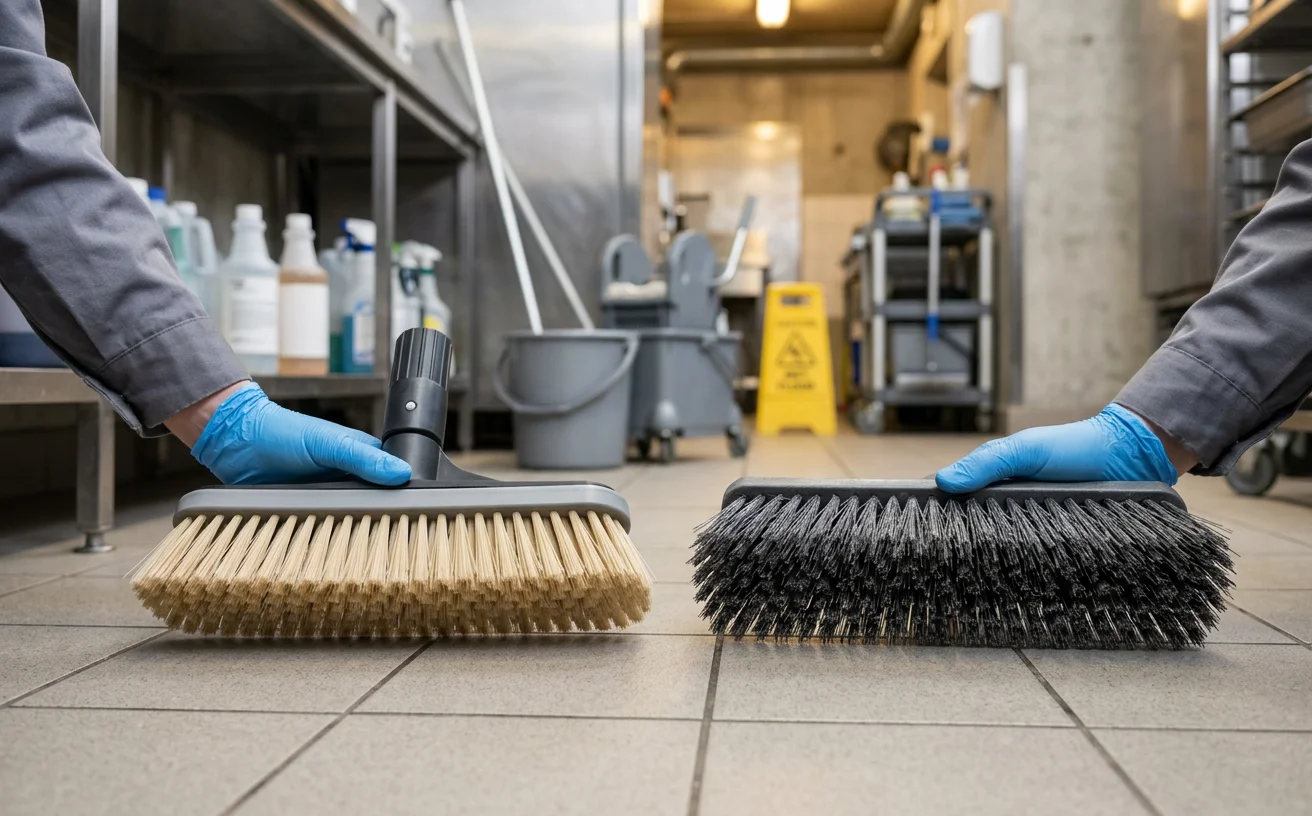
Kitchen floor cleaning can fail even when the right machine is used. The brush or pad underneath the machine decides how much contact reaches the floor.
Scrubber brush types matter because kitchen surfaces vary. A smooth sealed area, textured safety tile, and greasy grout line do not need the same contact.
Why Brush Choice Affects Food Safety
Food safety brushes are part of the wider cleaning system. They do not create hygiene by themselves, but they help the cleaning process reach the soil.
A poor brush choice can leave residue behind. It can also damage the surface, which creates more places for soil to collect.
Texture Needs Contact
Textured kitchen floors are designed to improve grip. The same texture can trap grease, flour, and dirty water in low points.
A brush must reach enough of that surface to loosen soil. If it skims across the high points, the floor may look cleaner than it really is.
Aggression Needs Control
Abrasive action can help on stubborn residue. It can also wear coatings, mark tiles, or damage grout when used badly.
That is why scrubber brush types should be chosen by surface and soil, not by frustration. Harder is not always smarter.
Polypropylene Brushes Explained
Polypropylene brushes are common because they offer a balanced cleaning action. They can suit many routine commercial floor tasks.
We stock practical cleaning tools that can be compared against actual site conditions. For kitchens, the floor material and residue type should guide the decision.
When Polypropylene Makes Sense
Polypropylene can suit daily cleaning where soil is moderate. It can work across textured surfaces without being overly aggressive.
This makes it a useful starting point for many food preparation spaces. It still needs the right chemical and machine speed.
Where It May Struggle
Heavy grease, old build-up, or damaged grout can reduce performance. The brush may not cut through stubborn residue quickly enough.
That does not mean the brush is wrong for every task. It may mean the site needs dwell time, better pre-cleaning, or a periodic deeper process.
Abrasive Brushes Explained
Abrasive brushes or pads create stronger mechanical action. They are used when the surface can handle extra bite.
Food safety brushes in this group should be used carefully. The cleaning benefit must be balanced against possible surface wear.
When Abrasive Action Helps
Abrasive contact can help with heavy film, built-up soil, and stubborn traffic marks. It can support periodic restorative cleaning.
This may suit back-of-house zones where ordinary cleaning no longer shifts residue. It should still be tested in a small area first.
When Abrasive Action Is Risky
Some floor coatings, soft surfaces, or damaged grout can be harmed by aggressive tools. Once the surface is roughened, it may trap more soil.
Abrasive options should not become the daily default without review. The site should confirm that the floor can tolerate them.
Matching Brushes To Common Kitchen Zones
A kitchen is not one surface in practical terms. Different zones carry different soil and movement patterns.
Fryer And Cookline Areas
Fryer approaches often carry warm grease and foot traffic. These areas may need stronger agitation than dry storage paths.
A compact scrubber with the correct brush can help keep the main lane controlled. The Polystar Orbital Floor Scrubber is a relevant option for small hard-floor routes.
Dishwashing Entries
Dishwashing zones combine water, detergent, food scraps, and constant movement. The issue is often wet residue rather than heavy grease alone.
The brush should support cleaning without pushing water across nearby traffic paths. Recovery and drying time matter here.
Cool-Room Thresholds
Cool-room entries may collect moisture and grit. Staff often move quickly through these areas with full hands.
A brush that leaves residue behind can affect grip. The cleaning method should include drying and inspection after use.
Building A Selection Process
Choosing between polypropylene and abrasive brushes should be a small test, not a guess. Kitchen teams need enough evidence to make the choice repeatable.
Start With The Least Aggressive Effective Option
Begin with a brush that cleans the soil without damaging the floor. Increase aggression only when the result is not acceptable.
This approach protects the surface. It also reduces the chance of creating long-term cleaning problems. Keep the chosen brush details from Weskleen Supplies with the floor note.
Test In A Real Soil Zone
A clean corner is not a useful test. The brush should be tested where the floor actually gets greasy or wet.
Check the result after drying. Residue often appears once the shine from wet cleaning disappears.
Record The Result
A short note can record brush type, chemical, dwell time, and result. It helps the next supervisor understand why the choice was made.
This is useful for food safety brushes because staff turnover can otherwise reset the process. Records keep the method stable.
Pairing Brushes With Chemicals And Recovery
Brush choice is only one part of the result. Chemical action and recovery decide whether the loosened soil leaves the floor.
Use The Right Product For The Soil
Greasy floors need products selected for the soil and surface. Labels and safety data sheets should guide use.
The Comet Foaming Cleaner and Sanitiser is an example of why product role matters. Staff should not assume every chemical is right for every machine task.
Avoid Over-Wetting
Too much solution can carry soil into grout, drains, and low spots. It can also extend slip risk during service.
Controlled application helps the brush work better. It also makes recovery more reliable.
Keep Manual Tools Clean
Detail cleaning around corners and equipment bases still needs manual tools. Dirty mops or buckets can undo machine cleaning.
The Enduro Microfibre Mop Head can support detail work where absorbency matters. It should be rinsed, stored, and replaced before it spreads residue.
Maintenance For Brushes And Pads
Food safety brushes must be treated as cleaning equipment, not disposable afterthoughts. Poor storage can turn them into a source of odour and soil.
Rinse After Use
Brushes should be rinsed after greasy cleaning. Soil trapped in bristles can harden and reduce contact next time.
The brush should then dry in a clean storage position. Leaving it wet in a closed tank or dirty corner is poor practice.
Inspect Wear Regularly
Worn bristles can reduce cleaning pressure. Uneven wear can also make the machine harder to control.
Staff should inspect brushes as part of the post-use routine. Replacement should happen before performance collapses.
Separate Heavy-Soil Tools
Brushes used in heavy grease zones should not be casually moved to lighter hygiene areas. Site procedures should prevent cross-use where needed.
Colour coding or labelled storage can help. The system should be obvious at the end of a busy shift.
Creating A Simple Brush Decision Chart
A brush decision chart helps staff choose the right tool without asking a supervisor every time. It should use plain language, not supplier jargon.
The chart can list the floor zone, soil type, approved brush, chemical, and cleaning frequency. It can also state when abrasive action needs approval.
This is useful where several people share cleaning duties. It keeps scrubber brush types tied to the floor, not personal preference.
Include A Test Area
Each brush choice should have a small test area. Staff can check cleaning result, drying pattern, and surface marking before wider use.
The test area should match the real problem zone. A quiet office corridor will not prove how a kitchen brush handles fryer residue.
Train With Real Tools
Training should include the actual brush, machine, and floor zone. Photos can help, but handling the tool gives staff better judgement.
Food safety brushes should be shown clean and worn. That helps staff recognise when a brush is ready for replacement.
Review The Chart After Changes
A new menu, new flooring, or altered cleaning product can change the floor routine. The brush chart should be reviewed after those changes.
This keeps the system current. It also prevents old instructions from staying in use after the kitchen has changed.
A short quarterly review is usually enough for stable kitchens. Higher-risk sites can review after menu, flooring, chemical, or roster changes.
The aim is steady control. Staff should know which brush to choose, why it suits the floor, and when to stop for advice.
FAQ
Are Polypropylene Brushes Safe For Kitchen Floors?
They can be suitable for many routine kitchen floors. The final choice depends on surface texture, soil load, and chemical process.
When Should Abrasive Brushes Be Used?
Use them when the floor can tolerate stronger action and ordinary brushing leaves residue. Test first in a representative area.
Do Brushes Replace Chemicals?
No. Brushes provide mechanical action, while chemicals loosen or suspend soil. Both need correct recovery after use.
How Should Brushes Be Stored?
They should be rinsed, dried, and stored away from food handling areas. Damaged or heavily contaminated brushes should be replaced.
Conclusion
Brush selection affects cleaning quality, floor life, and day-to-day grip in busy kitchens. Start with the least aggressive brush that still cleans the soil, then review after the floor dries. Contact us if you need that shortlist checked against current stock.