


Blog
Carpet care 101: Extending the Life of your Office Flooring

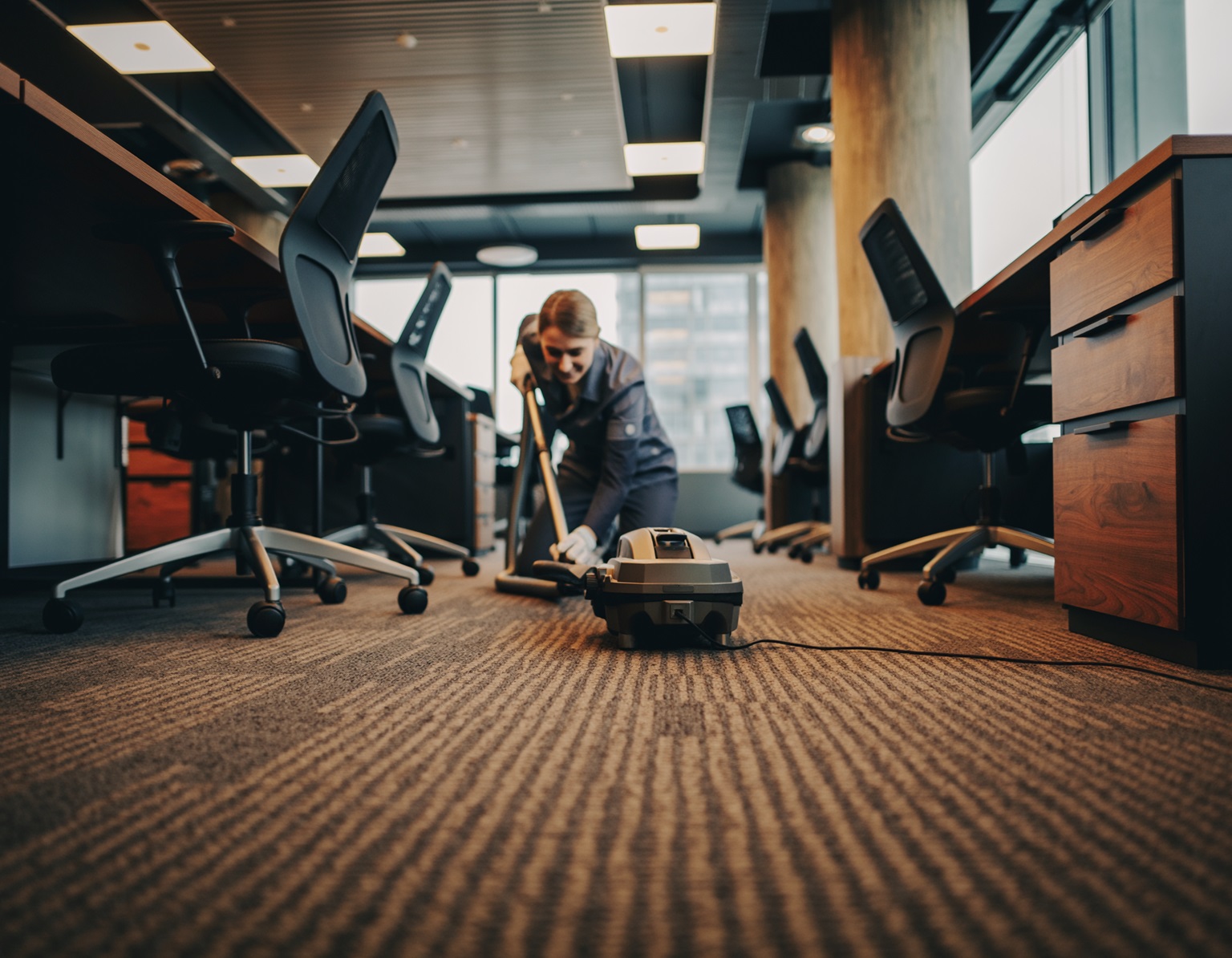
Office carpets endure more punishment than most people realise. Between foot traffic, spills, dirt tracked in from outside, and the occasional coffee catastrophe, commercial carpeting faces constant assault. Yet with proper carpet care office flooring maintenance, quality carpet can last 10 to 15 years rather than requiring replacement after just five or six years.
The difference isn’t luck – it’s methodology. Facility managers who’ve doubled their carpet lifespan have done so by implementing consistent maintenance protocols. The cost savings are substantial, but there’s another benefit that’s harder to quantify: a well-maintained carpet creates an impression of professionalism that affects how clients perceive your business from the moment they walk through the door.
The Real Cost of Neglect
Carpet replacement represents one of the largest facilities expenses most businesses face. For a medium-sized office of 500 square metres, you’re looking at £15,000 to £30,000 for quality commercial-grade carpet and installation. That’s a significant capital expense that can be deferred – sometimes for years – through proper maintenance.
The deterioration isn’t always obvious until it’s too late. Carpet fibres break down gradually under the weight of embedded grit, which acts like sandpaper with every footstep. By the time the wear patterns become visible, substantial damage has already occurred beneath the surface.
Think of it like tooth decay: the cavity you can see started forming long before it became apparent. The damage compounds over time, invisible at first but devastating in the long run.
What’s particularly frustrating is that much of this damage is preventable. The grit causing the abrasion typically enters the building on people’s shoes and could be captured at entry points with proper matting systems. The stains that seem permanent often could have been removed if addressed within the first 24 hours using appropriate cleaning agents.
Commercial-grade equipment and methods make the difference between maintaining an asset and watching it deteriorate. Understanding the distinction between professional and consumer-grade solutions is fundamental to effective maintenance.
Prevention Starts at the Door
Entry matting isn’t just about aesthetics – it’s your first line of defence against carpet care office flooring degradation. Research from facility management studies indicates that properly sized entry mats can capture up to 80% of dirt and moisture before it reaches your carpet. The key word there is “properly sized.”
A mat needs to be long enough for people to take at least three steps on it. That typically means a minimum of 4.5 metres for main entrances. Anything shorter and you’re not giving the mat enough opportunity to scrub debris from shoe soles.
Businesses invest in beautiful entrance mats that are only 1.5 metres long, which is essentially decorative rather than functional. They look professional. They don’t work.
The mat material matters too. For outdoor areas, you’ll want scraper mats with aggressive textures that can dislodge heavy soil and stones. For the interior immediately inside the door, absorbent mats capture moisture and finer particles.
Using squeegees and mops around entry areas during wet weather provides an additional barrier against moisture being tracked onto carpeted areas. A proactive approach during rainy seasons can prevent weeks of deep-seated moisture damage that shows up months later.
Multi-Layer Defence Systems
The most effective entry systems use multiple mat types in sequence. The outdoor scraper mat removes heavy debris and stones. The interior moisture-absorbing mat captures water and fine particles.
A third mat positioned 3 to 4 metres inside the entrance catches anything that’s made it past the first two barriers. This might seem excessive, but compare the cost of three quality mats – perhaps £800 total – against replacing carpet prematurely at £15,000 or more. It’s not even close.
Daily Maintenance That Actually Works
Vacuuming seems straightforward, but there’s a significant difference between running a vacuum over carpet and actually removing embedded soil. Commercial spaces need commercial equipment – residential vacuums simply don’t have the suction power or filtration systems required for high-traffic environments.
The Pacvac Superpro 700 Backpack Vacuum exemplifies what professional-grade equipment should deliver: powerful suction, HEPA filtration, and ergonomic design that allows operators to cover large areas efficiently. The backpack design isn’t just about convenience. It allows for more thorough cleaning because the operator isn’t pushing a heavy unit around furniture and obstacles.
Frequency matters more than most people realise. High-traffic areas need daily vacuuming, not weekly. Moderate-traffic zones should be vacuumed three times per week at minimum.
Low-traffic areas can go to twice weekly, but never less. This isn’t about visible dirt – it’s about removing the abrasive particles before they work their way deep into the carpet pile where they cause fibre damage.
Proper Vacuuming Technique
Vacuuming technique deserves attention too. Multiple passes in different directions lift the carpet pile and remove more embedded soil than a single pass. For particularly soiled areas, a slower pace allows the vacuum more dwell time to extract particles.
You’re not racing to finish – you’re investing time now to avoid replacement costs later. A thorough vacuum of a 100-square-metre office space should take 20 to 25 minutes, not the 5 minutes that some cleaning crews allocate.
Proper carpet care office flooring maintenance through vacuuming should include:
- Daily attention to all high-traffic areas including corridors, reception areas, and around workstations
- Overlapping passes to ensure complete coverage without missed strips
- Edge cleaning using crevice tools to remove soil buildup along walls and furniture
- Scheduled maintenance of vacuum equipment including filter changes and bag replacements
The edges and corners of rooms accumulate more soil than centre areas because airflow patterns deposit dust particles there. These areas need specific attention with appropriate attachments.
Spot Cleaning Before Stains Set
Red wine spilled on cream carpet during client meetings can set into permanent stains within three days if not properly addressed. The replacement cost for a small section of carpet can exceed £800, all because the right cleaning agent wasn’t available when needed. This scenario occurs in offices across the country every week.
Every office needs a spot-cleaning kit positioned where staff can access it immediately. That kit should include clean white cloths, a pH-neutral cleaner for general spills, a solvent-based cleaner for oil and grease, and a specialised product for tannin stains from coffee, tea, and wine. The Goof Off Adhesive Remover handles sticky residues that would otherwise attract dirt and create dark spots.
The Right Spot-Cleaning Technique
The technique for spot cleaning is counterintuitive for most people. The instinct is to rub vigorously, which actually damages carpet fibres and spreads the stain. Instead, blot from the outside of the spill towards the centre, applying cleaning solution to a cloth rather than directly to the carpet.
This prevents over-wetting, which can lead to mould growth in the carpet backing and pad. Over-wetting also causes the carpet backing to separate from the pad, creating permanent buckles and waves that are expensive to repair.
Timing is everything in carpet care office flooring maintenance. Most spills can be completely removed if addressed within the first hour. After 24 hours, success rates drop dramatically.
After 72 hours, many stains become permanent. Staff training on immediate spill response delivers significant value – it’s not about perfection, it’s about quick action that prevents permanent damage.
Common Spills and Solutions
Different spills require different approaches:
- Coffee and tea: Blot immediately, apply pH-neutral cleaner, and work from the outside in
- Red wine: Absorb excess liquid, apply cold water, then use a tannin-specific cleaner
- Ink: Don’t use water, which spreads ink; use a solvent-based cleaner on a cloth
- Grease and oil: Apply absorbent powder first to draw out the oil, then clean with degreaser
- Mud: Allow to dry completely, vacuum away the dried particles, then clean any remaining residue
The cleaning supplies needed aren’t exotic or expensive. A comprehensive spot-cleaning kit costs less than £100 to assemble but can save thousands in carpet replacement costs.
Deep Cleaning Schedules That Make Sense
Vacuuming removes surface soil, but it can’t extract the oils, residues, and deeply embedded particles that accumulate over time. This is where periodic deep cleaning becomes essential. The question isn’t whether to deep clean, but how often and using which method.
For most office environments, quarterly deep cleaning provides the right balance between maintenance needs and budget constraints. High-traffic areas might need attention every two months, while private offices and low-traffic zones can extend to twice yearly. The carpet should be deep cleaned before it looks like it needs it – by the time visible soiling appears, you’re already behind.
Hot Water Extraction: The Gold Standard
Hot water extraction, commonly called steam cleaning, remains the most effective method for commercial carpet. The process injects heated cleaning solution deep into the carpet pile, then immediately extracts it along with dissolved soil and contaminants. When performed correctly with professional equipment like the Steamvac HP Auto 2 Carpet Steamer, this method can restore carpet appearance dramatically.
The key phrase there is “performed correctly.” Over-wetting is a common problem with inexperienced operators or inadequate equipment. If carpet remains damp for more than 12 hours, you’re risking mould growth, backing deterioration, and that musty smell that’s nearly impossible to eliminate.
Professional equipment includes powerful extraction capabilities that remove the vast majority of moisture, allowing carpet to dry within 6 to 8 hours. Proper extraction makes the difference between successful deep cleaning and creating new problems.
Pre-Treatment and Post-Cleaning
Effective deep cleaning involves more than just running equipment over carpet. Pre-treatment with appropriate cleaning solutions loosens embedded soil and breaks down oils. This allows the hot water extraction process to remove contaminants that would otherwise remain in place.
After extraction, proper ventilation and air movement speed drying and prevent the musty odours associated with slow-drying carpet. Using fans and opening windows – weather permitting – creates airflow that reduces drying time significantly.
Some facilities use carpet rakes after cleaning to lift the pile and promote even drying. This simple step can improve appearance and reduce drying time by 2 to 3 hours.
Understanding Carpet Construction
Not all office carpet is created equal. Understanding what you’re working with helps you maintain it properly and set realistic expectations for its lifespan. Commercial carpet typically falls into three categories: loop pile, cut pile, or a combination of both.
Loop pile carpet features uncut loops of fibre that provide excellent durability and resistance to crushing. It’s ideal for high-traffic areas but can be more difficult to clean deeply because the tight loop structure resists extraction. This type handles heavy foot traffic without showing wear patterns as quickly as other styles.
Cut pile carpet has fibres that are cut at the top, creating a softer feel underfoot. It’s easier to deep clean than loop pile but shows traffic patterns more readily. Private offices and executive areas often use cut pile for its more luxurious appearance.
Pattern loop carpet, combining cut and uncut fibres, offers the best of both worlds: durability where needed and aesthetic appeal. The patterns also help disguise soil and wear, making this a popular choice for office environments where appearance and practicality both matter.
Fibre Types and Their Characteristics
The fibre material affects how carpet responds to cleaning and how long it lasts:
- Nylon: The most durable option, resistant to wear and easy to clean; excellent choice for high-traffic areas
- Polyester: Softer than nylon with good stain resistance but crushes more easily under heavy traffic
- Polypropylene (Olefin): Highly resistant to moisture and mildew but less resilient; works well in areas prone to spills
- Wool: Natural fibre with excellent appearance and feel but requires more careful cleaning; typically found in executive areas
Knowing your carpet’s fibre type determines which cleaning products and methods work best. Nylon tolerates aggressive cleaning well. Wool requires gentler approaches.
The wrong cleaning method on the wrong fibre type can cause permanent damage. It’s worth checking with your carpet supplier about fibre composition if you’re unsure.
Traffic Pattern Management
Traffic patterns develop wherever people walk repeatedly. These high-wear paths appear darker than surrounding areas not because they’re dirtier, but because the carpet fibres have been crushed and worn down. Once established, traffic patterns become increasingly difficult to reverse.
The solution lies in prevention through furniture placement and traffic flow design. Positioning furniture to distribute foot traffic more evenly prevents concentrated wear paths. In corridors where traffic flow can’t be altered, more frequent maintenance becomes essential.
Some facilities rotate furniture arrangements periodically to shift traffic patterns and prevent excessive wear in specific areas. While this might seem excessive, it’s far less expensive than replacing carpet sections prematurely.
Area Rugs and Carpet Tiles
Strategic placement of area rugs in the highest-traffic zones protects the underlying carpet while adding visual interest. These rugs can be cleaned more frequently or replaced at lower cost than wall-to-wall carpeting. It’s a tactical approach that extends the life of your primary carpet investment.
Carpet tiles offer another solution for high-traffic areas. Individual tiles showing excessive wear can be replaced without affecting the surrounding carpet. The modular nature of tiles provides flexibility that traditional broadloom carpet can’t match.
When specifying carpet tiles, purchasing 10% to 15% extra tiles ensures you have matching replacements available years later when individual tiles may need replacement. Carpet dye lots vary, making it difficult to find perfect matches if you run out of spares.
Addressing Odours Properly
Carpet odours rarely originate from the carpet fibres themselves – they come from substances that have penetrated into the backing and padding. This is why surface treatments and deodorisers often provide only temporary relief. The source needs to be addressed, not masked.
Pet accidents, food spills, and moisture infiltration all create odour problems that worsen over time as bacteria multiply in the organic material. If the contamination has reached the padding, surface cleaning won’t resolve the issue. In severe cases, the affected section of carpet and padding needs to be removed and replaced.
There’s simply no other permanent solution. Attempting to clean or deodorise contaminated padding wastes time and money while the problem continues to worsen.
Moisture Control and Prevention
Prevention focuses on moisture control. Any water that reaches carpet should be extracted as quickly as possible. This includes not just obvious spills but also cleaning water, humidity during wet seasons, and condensation from HVAC systems.
A wet/dry vacuum should be part of your carpet care office flooring arsenal for rapid moisture removal. When water intrusion occurs – from roof leaks, plumbing failures, or floods – immediate extraction within the first 24 hours prevents most odour and mould problems.
For general odour prevention, regular deep cleaning with hot water extraction removes the organic residues that feed odour-causing bacteria. Adding a sanitising agent to the cleaning solution provides additional protection in areas where hygiene is paramount. Products like the Comet Foaming Cleaner & Sanitiser can be used in conjunction with carpet cleaning for high-hygiene areas.
The goal is to keep the carpet environment hostile to bacterial growth rather than trying to eliminate odours after they’ve developed. Prevention costs far less than remediation.
Equipment Investment Versus Service Contracts
Every business faces the decision of whether to invest in carpet cleaning equipment and handle maintenance in-house or contract with professional cleaning services. There’s no universal right answer – it depends on your specific situation.
For smaller offices under 200 square metres, professional services typically make more economic sense. The capital investment in quality equipment isn’t justified by the limited usage, and storage of bulky machines presents its own challenges. Quarterly professional cleaning combined with daily vacuuming provides adequate maintenance without the equipment investment.
When In-House Equipment Makes Sense
Larger facilities with significant carpeted areas often benefit from owning equipment and training staff to perform regular deep cleaning. Initial costs are higher, but the per-cleaning expense drops dramatically after the equipment is paid off.
Consider the numbers: professional carpet cleaning averages £2 to £4 per square metre. For a 1,000-square-metre office, that’s £2,000 to £4,000 per cleaning session. Quality extraction equipment costs £3,000 to £6,000.
After two or three cleaning sessions, you’ve recovered the equipment cost. Everything after that is savings, minus consumables like cleaning solution and maintenance parts.
The middle ground involves owning equipment for routine maintenance while contracting annual or semi-annual intensive cleaning with professionals who have truck-mounted systems that deliver superior extraction power. This approach gives you control over day-to-day care while ensuring periodic deep cleaning reaches levels that portable equipment can’t match.
Choosing the Right Equipment
When selecting equipment, prioritise extraction power over all other features. The ability to remove moisture quickly determines how successful your cleaning will be. Inadequate extraction leaves carpets damp too long, creating mould risks and extending the time carpets are out of service.
Tank capacity matters for larger spaces. Stopping repeatedly to empty recovery tanks and refill solution tanks reduces efficiency and extends the time needed to complete the job. For facilities over 500 square metres, larger capacity equipment pays for itself through improved productivity.
Training Staff on Proper Techniques
The best equipment and products deliver mediocre results if the people using them don’t understand proper techniques. Staff training isn’t a one-time event – it’s an ongoing process that pays dividends in carpet longevity and appearance.
Start with the basics: how to properly vacuum, including multiple passes, slower speeds in soiled areas, and attention to edges where dirt accumulates. Demonstrate the difference between proper blotting technique and rubbing, which damages fibres. Show staff how to identify different types of stains and select appropriate cleaning agents.
Creating Reference Guides
Create simple reference guides that staff can consult when they encounter problems. A laminated card showing common stains and their treatments, kept with your spot-cleaning kit, ensures consistent responses even when the person who usually handles cleaning isn’t available.
Include photos if possible – visual references are more effective than text descriptions for most people. A picture showing proper blotting technique prevents more damage than a paragraph of written instructions.
Regular refresher training addresses technique drift that naturally occurs over time. People develop shortcuts and habits that seem more efficient but actually reduce cleaning effectiveness. A quarterly 15-minute refresher maintains standards and provides an opportunity to introduce new products or equipment as they’re added to your maintenance programme.
Hands-On Practice
Training should include hands-on practice with actual equipment, not just demonstrations. Let staff operate the extraction equipment, practice spot-cleaning techniques, and ask questions about specific challenges they’ve encountered. This practical experience builds confidence and competence that watching demonstrations alone can’t provide.
Consider creating a training area using carpet samples or a small carpeted space where staff can practice techniques without worry about making mistakes. The investment in a few square metres of practice carpet is negligible compared to the cost of errors on your primary office carpeting.
Warranty Compliance and Documentation
Most commercial carpet comes with warranties covering manufacturing defects and premature wear, but these warranties include maintenance requirements that must be met for the warranty to remain valid. Failing to document proper maintenance can void your warranty just when you need it most.
Manufacturers typically require professional hot water extraction at specified intervals – often every 12 to 18 months. They’ll also specify maximum time frames for addressing spills and stains. Keep detailed records of all maintenance activities, including dates, products used, and the areas serviced.
Photographs documenting carpet condition at various intervals provide additional protection. If a warranty claim becomes necessary, this documentation proves maintenance obligations have been met.
Professional Certification Requirements
If using in-house staff for deep cleaning, ensure they’re using methods and products that comply with warranty requirements. Some warranties specifically require certified cleaning technicians, which would necessitate sending staff for training and certification.
The cost of certification is minimal compared to losing warranty coverage on a £30,000 carpet installation. Most certification programmes require 1 to 2 days of training and cost £300 to £500 per person. It’s a small investment that protects a much larger one.
When problems do occur, document them immediately with photographs and detailed descriptions. Contact the carpet supplier or installer while the issue is still fresh rather than waiting until it worsens. Many problems that seem like defects are actually maintenance issues, but early intervention often allows for correction before permanent damage occurs.
Sustainable Practices That Protect Your Investment
Environmental responsibility and carpet longevity aren’t opposing goals – they’re complementary. Sustainable cleaning practices often extend carpet life while reducing chemical usage and waste.
Low-moisture cleaning methods use significantly less water than traditional hot water extraction, which means faster drying times and reduced risk of mould growth. For routine maintenance between deep cleaning sessions, these methods effectively remove surface soil without the risks associated with over-wetting.
The trade-off is that they don’t provide the same deep cleaning that hot water extraction delivers, which is why they’re best used as interim maintenance rather than replacement. Think of it as routine car maintenance versus a complete engine overhaul – both have their place.
Encapsulation Cleaning
Encapsulation cleaning represents an innovative approach where cleaning agents crystallise around soil particles, which are then removed through vacuuming. This method uses minimal water, requires no rinsing, and allows carpet to be returned to service almost immediately.
It’s particularly effective for maintaining carpet appearance between deep cleaning sessions. The crystals continue to release from the carpet fibres during normal vacuuming over several days, providing extended cleaning action. It works brilliantly.
Green Cleaning Products
Green cleaning products have evolved significantly from the early formulations that often sacrificed effectiveness for environmental credentials. Modern eco-friendly carpet cleaners deliver results comparable to traditional chemicals while reducing environmental impact and improving indoor air quality.
For businesses with sustainability commitments, these products allow maintenance of standards while supporting broader environmental goals. The Mr. Bean 5L All-Purpose Cleaner offers an effective, pleasant-scented option for general cleaning tasks that complement carpet care office flooring maintenance programmes.
Indoor air quality considerations have become increasingly important as understanding grows regarding the health impacts of volatile organic compounds (VOCs) from cleaning chemicals. Low-VOC and VOC-free products protect staff health while cleaning effectively.
Dealing with Specialised Stains
Some stains require specialised approaches beyond standard spot-cleaning methods. Understanding these situations helps you respond appropriately and increases success rates.
Chewing gum requires freezing with ice or a specialised freezing spray before carefully scraping away the hardened gum. Attempting to remove soft gum simply spreads it deeper into the carpet fibres. Patience and the right technique prevent damage while removing the offending substance.
Paint spills need immediate attention before the paint dries. Water-based paints can be removed with water and careful blotting. Oil-based paints require solvent cleaners. Once paint dries, removal becomes exponentially more difficult and may require professional intervention.
Blood stains respond to cold water and enzymatic cleaners. Hot water sets protein-based stains permanently, making them nearly impossible to remove. This is counterintuitive – most people’s instinct is to use hot water for tough stains. Resist that instinct with blood.
When to Call Professionals
Sometimes DIY efforts aren’t enough, and professional intervention becomes necessary. Large spills, particularly of substances like red wine or coffee across multiple square metres, often exceed the capacity of in-house spot-cleaning kits. Professional cleaning services have the equipment and chemicals to address extensive staining that would overwhelm standard approaches.
Recurring stains in the same location suggest an underlying issue – perhaps wicking from the pad or backing, or contamination that surface cleaning can’t reach. Professionals can identify these issues and recommend solutions that address the root cause rather than just treating symptoms.
Don’t view calling professionals as a failure. It’s recognising when specialist expertise delivers better outcomes than continued DIY attempts. The cost of professional intervention is almost always less than the cost of replacing carpet prematurely.
The Role of Carpet Protectors
Carpet protectors – fluorochemical treatments applied to carpet fibres – provide a barrier that repels liquids and resists soiling. Most new commercial carpet includes a factory-applied protector, but this protection wears away over time through traffic and cleaning.
Reapplication of the protector after deep cleaning restores this protective barrier and extends the time between necessary cleanings. The protector doesn’t prevent all staining, but it increases the window of opportunity for successful spot cleaning by preventing liquids from penetrating immediately into fibres.
Application Considerations
The protector application requires a completely clean, dry carpet. Attempting to apply protector over soiled carpet simply locks in the dirt. It’s counterproductive.
Professional application ensures even coverage and proper dilution ratios. Over-application creates sticky residues that attract soil. Under-application provides incomplete protection.
The cost of professional protector application adds roughly 20% to 30% to the cost of deep cleaning but can extend the time between necessary cleanings by several months. For high-traffic areas, this represents excellent value.
Seasonal Carpet Care Adjustments
Different seasons present different challenges for carpet care office flooring maintenance. Adjusting your approach seasonally prevents problems before they develop.
Winter brings increased moisture from rain, snow, and slush tracked in from outside. Enhanced entry matting becomes critical, as does more frequent vacuuming in entrance areas. Consider positioning additional moisture-absorbing mats during particularly wet periods.
Spring and Autumn often bring increased pollen and outdoor debris. More frequent vacuuming and attention to air filtration systems reduce the amount of particulate matter reaching carpets. These transitional seasons are ideal for scheduling deep cleaning before heavier traffic periods.
Summer typically presents fewer moisture challenges but increased foot traffic in many businesses. Focus shifts to maintaining appearance and managing increased wear from higher activity levels. This is often the best time for major maintenance projects since many offices have reduced staffing during holiday periods.
Climate-Specific Considerations
Humid climates require vigilance against mould and mildew. Ensure deep cleaning extraction is thorough, and monitor carpet in areas prone to moisture accumulation. Dehumidification may be necessary in particularly humid environments to prevent ongoing issues.
Dry climates present different challenges, primarily static electricity and dust accumulation. Anti-static treatments and more frequent dust control vacuuming address these issues. The dust control aspect is crucial – fine dust particles are highly abrasive to carpet fibres.
Technology and Smart Maintenance
Modern carpet care has benefited from technological advances that improve outcomes and efficiency. From improved vacuum filtration systems to more effective cleaning solutions, technology continues to evolve.
Moisture sensors can identify problem areas where water intrusion has occurred before visible damage appears. This allows for early intervention that prevents mould growth and backing deterioration. The sensors are particularly valuable in large facilities where visual inspection of all carpeted areas isn’t practical.
Computerised maintenance scheduling systems ensure nothing falls through the cracks. Automated reminders for vacuuming schedules, deep cleaning appointments, and warranty compliance documentation remove the human memory factor. Consistency improves dramatically when systems handle scheduling.
Monitoring and Metrics
Tracking costs and results helps refine your approach over time. Simple metrics like cost per square metre cleaned, time between necessary deep cleanings, and incidence of permanent staining provide objective data for evaluating different approaches and products.
This data-driven approach identifies what works and what doesn’t. If switching to a different cleaning solution extends the time between necessary deep cleanings from three months to four months, that’s a quantifiable value that justifies the potentially higher product cost.
When Replacement Makes More Sense
Despite best efforts, every carpet eventually reaches the end of its useful life. Recognising when to replace rather than continue maintaining saves money and maintains a professional appearance. Several indicators suggest replacement time has arrived.
Permanent staining that resists all cleaning attempts creates an unprofessional appearance that affects client perceptions. If your carpet has become a patchwork of stains despite regular maintenance, replacement delivers better value than continued attempts to restore appearance.
The labour costs of repeated cleaning attempts often exceed the cost difference between continued maintenance and replacement. At some point, you’re throwing good money after bad.
Assessing Structural Integrity
Backing deterioration manifests as buckling, ripples, or areas where the carpet no longer lies flat. This structural damage can’t be reversed through cleaning and presents trip hazards in addition to appearance problems. Once backing fails, replacement is the only solution.
Fibre loss in high-traffic areas eventually exposes the backing beneath. This represents a complete failure of the carpet’s functional purpose and requires replacement. Some wear is normal, but when you can see backing material, the carpet has exceeded its useful life.
Persistent odours that resist all treatment efforts indicate contamination in the padding or backing that can’t be remediated. Replacing just the carpet while retaining contaminated padding is futile – both must be replaced to resolve the issue permanently.
Planning for Replacement
When replacement becomes necessary, view it as an opportunity to improve your carpet specification based on what you’ve learned. If certain areas experienced premature wear, consider more durable carpet types or alternative flooring materials for those specific zones.
Carpet tiles in high-traffic areas combined with broadloom carpet in lower-traffic zones often provide the best balance of appearance, durability, and long-term cost-effectiveness. The ability to replace individual tiles as they wear without affecting surrounding areas significantly reduces long-term maintenance costs.
Integrating Hard Floor and Carpet Maintenance
Many offices combine carpeted areas with hard flooring in entrances, break rooms, and other spaces. Coordinating maintenance between these different floor types optimises results and efficiency.
Dirt and moisture removed from hard floors near carpeted areas prevent that contamination from reaching the carpet. Effective hard floor cleaning serves as an additional barrier protecting carpet investments. Equipment like the Polystar Orbital Floor Scrubber handles both hard floor and carpet maintenance, maximising equipment versatility.
Transition Areas
Special attention to transition areas between hard floors and carpet prevents soil accumulation where the floor types meet. These junctions trap dirt that then migrates onto the carpet. Regular cleaning of transitions should be part of your standard maintenance protocol.
Dust control mops effectively manage the delicate particulate matter on hard floors before it reaches carpeted areas. This proactive approach reduces the abrasive particles that cause carpet wear.
Building a Comprehensive Maintenance Programme
Effective carpet care office flooring maintenance requires a comprehensive programme that addresses daily, weekly, monthly, quarterly, and annual needs. This layered approach ensures nothing falls through the cracks while optimising resource allocation.
Daily tasks include vacuuming high-traffic areas, spot-cleaning spills immediately, and inspecting entry mats for effectiveness. These fundamental activities prevent minor issues from becoming major problems.
Weekly activities expand vacuuming to moderate-traffic areas, clean edges and corners with appropriate attachments, and replenish spot-cleaning kit supplies. This ensures you’re always prepared for whatever challenges arise.
Monthly maintenance includes detailed inspection of all carpeted areas, documentation of any issues or changes, and deep cleaning of particularly soiled spots. This systematic review catches developing problems early.
Quarterly and Annual Deep Maintenance
Quarterly deep cleaning of high-traffic areas using hot water extraction maintains appearance and removes embedded contamination. This prevents the gradual decline that occurs when deep cleaning is postponed too long.
Annual comprehensive maintenance includes deep cleaning all carpeted areas, reapplication of carpet protector, detailed inspection for warranty compliance, and evaluation of whether any sections require replacement. This thorough review ensures your carpet investment continues performing as intended.
Documentation of all these activities provides the records necessary for warranty compliance and helps identify trends that inform future decisions. A simple logbook or digital record system takes minimal time to maintain but provides invaluable data over the carpet’s lifetime.
The Financial Case for Proactive Maintenance
The numbers speak clearly: proactive maintenance costs substantially less than reactive replacement. Consider a typical scenario for a 500-square-metre office:
Minimal maintenance approach: Basic vacuuming, annual professional cleaning, minimal spot treatment. Carpet lifespan: 6 to 7 years. Total cost over 10 years: two full replacements at £25,000 each, plus minimal maintenance costs. Total: approximately £52,000.
Proactive maintenance approach: Daily proper vacuuming, quarterly deep cleaning, immediate spot treatment, and staff training. Carpet lifespan: 12 to 15 years. Total cost over 10 years: partial replacement of high-wear areas (approximately £8,000), plus proactive maintenance costs (approximately £14,000). Total: approximately £22,000.
The proactive approach saves £30,000 over 10 years. That’s not a small difference. It’s the cost of a full-time staff member for six months.
Beyond Direct Costs
The financial benefits extend beyond direct carpet costs. Professional appearance affects client perceptions and staff morale. Poorly maintained carpet signals neglect that clients consciously or unconsciously interpret as reflective of overall business quality.
Clean, well-maintained carpet contributes to better indoor air quality, which affects staff health and productivity. Reduced sick days and improved productivity have real financial value that’s harder to quantify but no less real.
Common Mistakes to Avoid
Understanding what not to do is as important as knowing proper techniques. Common mistakes undermine even well-intentioned maintenance efforts.
Over-wetting during cleaning is perhaps the most common error. Excessive moisture causes backing deterioration, promotes mould growth, and creates those stubborn musty odours. If carpet takes more than 12 hours to dry, too much moisture was applied or extraction was inadequate.
Using incorrect cleaning products damages fibres or leaves residues that attract dirt. Always verify that cleaning products are appropriate for your specific carpet type. When in doubt, test in an inconspicuous area before applying to visible areas.
Process and Technique Errors
Waiting too long between deep cleanings allows soil to become increasingly embedded and difficult to remove. By the time the carpet looks dirty, substantial damage has already occurred. Clean before visible soiling appears, not after.
Neglecting edges and corners where soil accumulates creates permanent dark borders that resist cleaning. These areas need specific attention with appropriate tools, not just the same approach used for open floor areas.
Insufficient extraction after cleaning leaves residues that attract new soil, creating a cycle where the carpet seems to get dirtier faster after cleaning. Thorough extraction and proper rinsing prevent this frustrating problem.
Resources and Continuing Education
The cleaning industry continues evolving with new products, techniques, and equipment. Staying informed ensures you’re using the most effective approaches available.
Industry associations offer training programmes, certifications, and resources that keep you current. Many equipment and product manufacturers provide free training on the proper use of their products. Take advantage of these resources.
Online communities and forums allow you to learn from others’ experiences and share your own challenges and solutions. The collective knowledge of experienced facility managers and cleaning professionals is invaluable.
Expert Support and Product Selection
Weskleen Supplies provides expertise and support for carpet care office flooring maintenance needs. The team understands the challenges facility managers face because they’ve worked through them in real-world cleaning operations.
Whether you need guidance on product selection, technique advice, or troubleshooting specific problems, knowledgeable staff can help. Don’t hesitate to get in touch when questions arise. It’s far better to ask before problems develop than to seek solutions after damage has occurred.
The right products, properly applied using correct techniques, make all the difference between carpet that lasts 6 years and carpet that serves you well for 15 years. That difference represents substantial cost savings, improved appearance, and the confidence that comes from maintaining a professional environment that reflects well on your business.