


Blog
Polishing and Protecting Natural Stone Floors

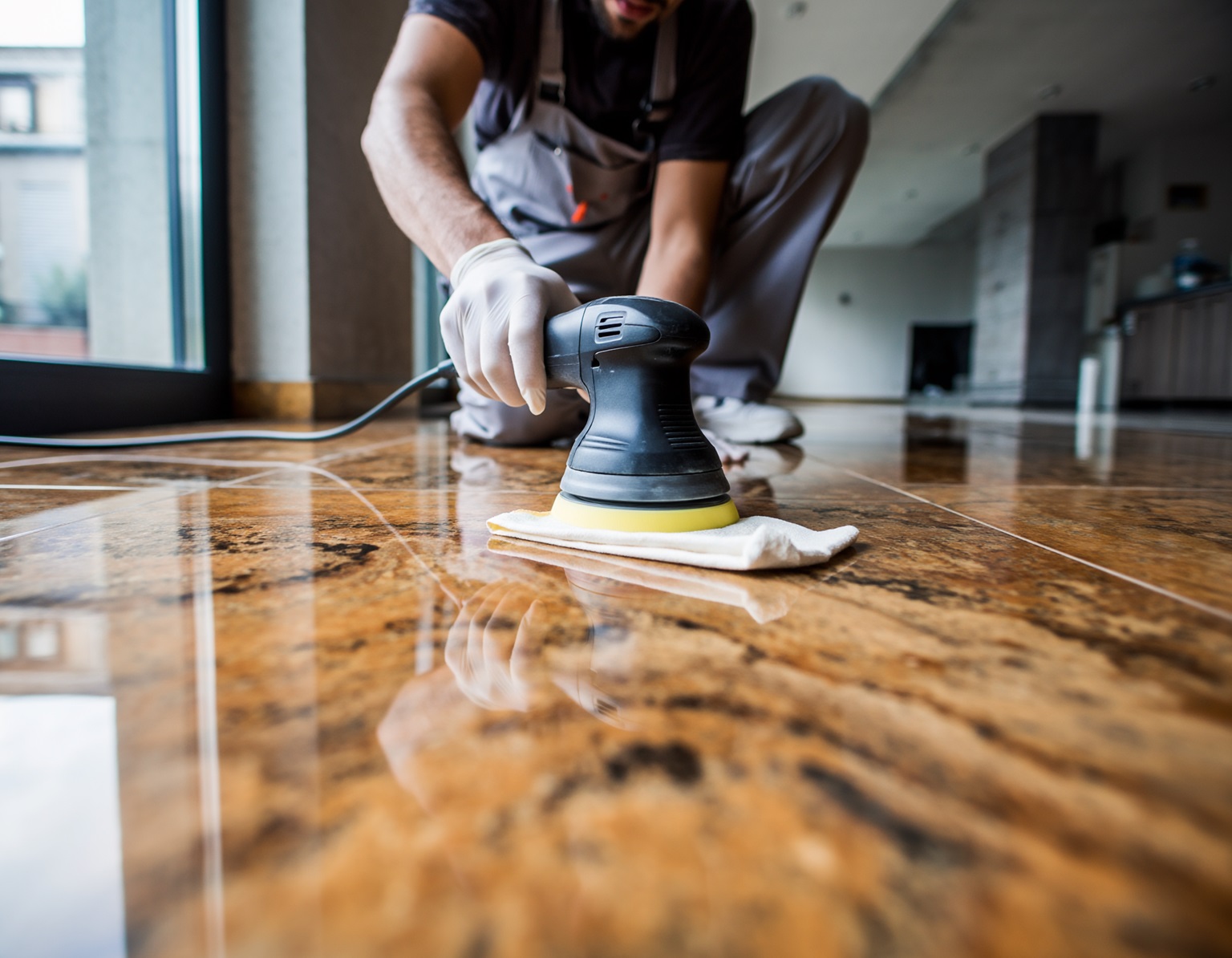
Natural stone floors demand a different approach than standard hard surfaces. The material itself (whether marble, travertine, limestone, or granite) responds to specific treatments and reacts poorly to others. Commercial spaces and homes often show dulled finishes or etched surfaces simply because the stone’s properties weren’t understood during cleaning.
Professional stone care isn’t about applying the shiniest product available. It’s about understanding what each stone type needs, how its finish was achieved, and what will preserve that finish over the years of foot traffic. The difference between a floor that maintains its lustre and one that looks progressively worse comes down to technique, product selection, and consistent maintenance habits.
How Natural Stone Differs From Other Flooring
Stone floors aren’t coated like vinyl or sealed like concrete. Most polished stone achieves its shine through mechanical polishing, literally grinding the surface to a smooth, reflective finish. This means the shine comes from the stone itself, not from a topical coating that can be stripped and reapplied.
Porosity varies dramatically between stone types. Marble and limestone are calcium-based and relatively soft, making them vulnerable to acidic cleaners and etching from spills. Granite is more complex and less porous, but still requires proper sealing. Travertine has natural pits and voids that trap dirt if not correctly filled and sealed.
The finish level matters as much as the stone type. A honed finish has a matte appearance and requires different maintenance than a high-gloss polish. Some stones are tumbled for an aged look, others are flamed for texture. Each finish responds differently to cleaning products and polishing techniques.
Assessing Your Stone’s Current Condition
Before polishing, the assessment determines what material requires attention. Pour a small amount of water on the surface and observe the reaction. If the stone darkens immediately, it’s either unsealed or the sealer has worn away. If water beads up and sits on the surface, the sealer is still functioning.
Check for etching (dull spots where the polish has been chemically damaged, usually from acidic substances). These appear as lighter areas or water rings on the surface. Etching requires mechanical correction, not just cleaning or resealing.
Look for scratches, particularly in high-traffic areas. Light scratches might polish out, but deep gouges need professional grinding. Run your hand across the surface. If it feels rough or gritty, embedded dirt or mineral deposits need removal before polishing.
Cleaning Before Polishing
Polishing dirty stone just grinds contamination into the surface. Start with a thorough cleaning using a pH-neutral cleaner specifically formulated for natural stone. Acidic cleaners (even vinegar) will etch calcium-based stones. Alkaline degreasers can damage sealers and some stone types.
A product like Mr. Bean 5L All-Purpose Cleaner works well for routine maintenance, as it’s pH-neutral and won’t compromise the stone or its sealer. For commercial spaces with heavy soiling, a more targeted approach using professional-grade stone cleaners ensures existing problems are addressed without creating new ones.
For embedded dirt in textured or porous stone, a soft-bristle brush helps dislodge particles without scratching. Never use steel wool or abrasive pads as they’ll leave metal residue that rusts and stains. After cleaning, rinse thoroughly and allow the floor to dry completely. Any moisture trapped under a sealer or polish will cause clouding.
Mechanical Polishing Techniques
True natural stone floor polishing involves diamond abrasives in progressively finer grits. This isn’t something most facility managers or homeowners need to do regularly. It’s restoration work that professionals handle when a floor has lost its factory finish. Understanding the process helps maintain what exists.
For routine maintenance polishing, machines like the Polystar Orbital Floor Scrubber can restore shine to slightly dulled surfaces using appropriate polishing pads. The orbital action prevents the swirl marks that rotary machines can leave, and it’s gentle enough for regular use on properly sealed stone.
Pair the machine with stone-specific polishing powder (a crystallisation product for marble or a diamond-impregnated pad for granite). The combination of mechanical action and chemical reaction brings back surface shine without removing material. It’s like buffing a car’s paintwork rather than repainting it.
Work in small sections, keeping the pad moving to avoid heat buildup. Too much friction generates heat that can damage some stones or cause uneven results. Seeing smoke or smelling burning indicates excessive pressure or insufficient movement speed.
Chemical Polishing and Crystallisation
Crystallisation works specifically on calcium-based stones like marble and travertine. The process uses an acidic powder that reacts with the stone’s calcium to form a thin, hard crystalline layer on the surface. This layer is more resistant to etching and provides a deep, reflective shine.
The technique requires a floor machine with a steel wool pad (one of the few times steel wool is appropriate on stone). The chemical reaction, combined with friction, creates the crystalline surface. It’s not a coating but rather a chemical conversion of the stone’s surface layer.
This isn’t a DIY project for most people. The chemicals are acidic and require careful handling. The technique demands experience to achieve even results without over-treating areas. However, understanding that stone can be crystallised helps communicate with contractors and set realistic expectations for results.
For granite and other non-calcium stones, crystallisation doesn’t work. These stones require mechanical polishing or speciality granite polishing compounds that work through different chemical mechanisms.
Choosing the Right Sealer
Sealers don’t make stone impervious. They slow down absorption, giving time to wipe up spills before they stain. There are two main types: topical sealers that sit on the surface and impregnating sealers that penetrate into the stone.
Topical sealers create a coating that can yellow, scratch, or peel over time. They’re rarely recommended for floors anymore, though they’re sometimes used on walls or countertops. When they fail, they need stripping before reapplication, which adds complexity.
Impregnating sealers soak into the stone’s pores and repel liquids from within. They don’t change the stone’s appearance (unless an enhancing formula that darkens the colour is chosen), and they don’t create a film that can wear off. They simply make the stone less absorbent.
The application is straightforward but requires attention to detail. Clean the stone thoroughly and let it dry completely (trapped moisture prevents sealer penetration). Apply the sealer liberally, let it soak in for the manufacturer’s recommended time (usually 5-15 minutes), then wipe away any excess before it dries on the surface.
Daily Maintenance That Preserves Polish
The best polishing programme is one that prevents the need for aggressive restoration. Daily dust mopping with a dust control mop removes the grit that acts like sandpaper under foot traffic. This single habit extends the life of stone polish more than any other maintenance task.
When wet mopping is needed, use minimal water and a pH-neutral cleaner. Excess water can seep into grout lines or stone pores, causing problems over time. A microfibre mop head like the Enduro Microfibre Mop Head picks up dirt effectively without requiring excessive water or chemical concentration.
Address spills immediately, especially acidic substances like wine, coffee, or citrus juice on marble or limestone. Even with a good sealer, prolonged contact can cause etching. Blot spills rather than wiping them, which can spread the liquid across a larger area.
Place walk-off mats at entrances to capture dirt and moisture before they reach stone floors. Six to eight metres of matting is ideal for commercial spaces. In residential settings, even a good-quality mat at each entrance makes a measurable difference.
When to Call for Professional Help
Some stone restoration work exceeds the scope of routine maintenance. Deep scratches, widespread etching, or lippage (uneven tiles creating trip hazards) require professional grinding and polishing equipment. Attempting these repairs without proper tools and training usually makes problems worse.
Stains that penetrate deep into porous stone might need professional poulticing. This process draws stains out using absorbent materials and appropriate solvents. Different stain types (oil, organic, metal, ink) require different poultice formulations.
Grout that’s cracked, missing, or stained beyond cleaning needs professional attention. Regrouting around natural stone requires compatible materials and techniques to avoid damaging the stone edges.
Equipment for Ongoing Stone Care
For commercial facilities or large residential installations, investing in proper equipment pays for itself quickly. A quality floor machine with variable speed control and appropriate pad selection handles both cleaning and light polishing. The Polystar Orbital Floor Scrubber mentioned earlier is versatile enough for multiple floor types, making it practical for facilities with varied flooring.
Keep separate mops and buckets for stone floors. Don’t use the same equipment on other surfaces. Cross-contamination with inappropriate cleaners happens easily when equipment is shared. A dedicated 16L mop bucket for stone maintenance ensures contaminants aren’t introduced.
For high or hard-to-reach stone surfaces like feature walls or columns, extension poles like the Ettore 3.6m Extension Pole allow safe cleaning without ladders. Stone walls accumulate dust and require regular attention to maintain their appearance.
Store stone-specific products separately from general cleaning supplies. It’s too easy to grab the wrong bottle in a busy cleaning routine, and one application of the wrong product can damage months of careful maintenance.
Protecting High-Traffic Areas
Entryways, corridors, and areas around service counters take the most abuse. These zones might need sealer reapplication annually whilst other areas last three to five years. Testing water absorption in high-traffic areas every six months indicates when resealing is needed.
Consider using runner rugs or mats in commercial corridors during wet weather. The temporary aesthetic compromise is preferable to accelerated wear from constant moisture and grit exposure. In retail or hospitality settings where mats aren’t practical, increase cleaning frequency during problem periods.
Furniture pads prevent scratches from moving chairs and tables. In commercial settings, ensure pads are checked regularly as they wear out and can trap grit that scratches more than bare furniture legs would.
For areas that can’t be protected by mats or limited access, accept that they’ll need more frequent professional attention. Budget for periodic restoration rather than expecting maintenance alone to preserve the finish indefinitely.
Common Mistakes That Damage Stone
Using acidic cleaners on calcium-based stone is the most common error observed. Products marketed as “natural” or “eco-friendly” often contain citric acid or vinegar, which etch marble and limestone immediately. Always check pH before using any product on natural stone.
Over-sealing creates a buildup that looks cloudy and attracts dirt. More sealant isn’t better. Apply only what the stone absorbs, and remove excess promptly. If the stone won’t accept more sealer (water still beads on the surface), it doesn’t need sealing yet.
Using too much water during cleaning causes multiple problems. It dilutes cleaner effectiveness, requiring more product or more passes. It can penetrate into the stone or substrate, causing stains or weakening the adhesive. It extends drying time, leaving floors unavailable for longer periods.
Mixing products creates unpredictable chemical reactions. A pH-neutral cleaner mixed with an acidic or alkaline product is no longer pH-neutral. Use products as directed, don’t combine them, and rinse between different products if multiple formulations must be used.
Long-Term Stone Floor Care Planning
Develop a written maintenance schedule that specifies daily, weekly, monthly, and annual tasks. Daily dust mopping and spot cleaning, weekly wet mopping, monthly detailed cleaning of grout lines, and annual sealer evaluation create a framework that prevents neglect.
Document stone type, finish, and sealer used. When staff changes or contractors are hired, this information ensures continuity of care. Include purchase dates for sealers and records of professional services. This history helps predict when the next intervention is needed.
Budget for professional restoration every five to ten years, depending on traffic levels. Stone floors can last generations with proper care, but expecting maintenance alone to preserve them indefinitely is unrealistic. Periodic professional attention resets the floor’s condition and extends the intervals between major work.
Train all cleaning staff on stone-specific protocols. General cleaning knowledge isn’t sufficient as stone requires a specialised understanding. Even well-intentioned staff can cause damage if they don’t understand the material they’re working with.
Matching Products to Stone Types
Marble and limestone need the gentlest approach. pH-neutral cleaners only, impregnating sealers, and prompt spill cleanup. These stones etch easily and stain readily, but they polish to a beautiful lustre when properly maintained.
Granite is more forgiving but still benefits from pH-neutral cleaning and proper sealing. It’s harder than marble, resisting scratches better, but it still requires sealer to prevent staining from oils and other substances.
Travertine’s porous nature means it needs filling (with resin or grout) and sealing to prevent dirt accumulation in its natural voids. Once properly prepared, it maintains well, but neglecting the initial filling creates ongoing maintenance challenges.
Slate is durable and relatively low-maintenance, but its textured surface traps dirt. Regular cleaning with appropriate brushes and thorough rinsing prevents buildup. Some slates are naturally oily and resist sealers. Test before applying.
Understanding Stone Polish Durability
The longevity of natural stone floor polishing depends heavily on traffic patterns and maintenance consistency. High-traffic commercial entrances might need professional re-polishing annually, whilst residential spaces with moderate use can maintain their finish for five years or more between professional interventions.
Foot traffic creates two types of wear on polished stone. The first is surface scratching from grit particles acting as abrasives. The second is gradual dulling from constant contact, which compresses and changes the stone’s surface structure microscopically. Both effects are cumulative and inevitable, but proper maintenance slows their progression dramatically.
Different stone types show wear at different rates. Marble, being relatively soft, dulls faster than granite under identical conditions. Limestone falls between marble and granite in hardness. Understanding these differences helps set realistic expectations for how often professional polishing will be needed.
The initial polish quality affects longevity significantly. Stone polished to a high standard using proper diamond abrasives and finishing steps will maintain its appearance much longer than stone finished with shortcuts or inappropriate methods. This is one reason why professional installation matters as much as ongoing maintenance.
Seasonal Considerations for Stone Care
Perth’s climate creates specific challenges for natural stone maintenance. Dry summer conditions generate dust that infiltrates buildings and settles on floors. This dust, when not removed promptly, gets ground into stone surfaces by foot traffic, accelerating wear on the polish.
Winter rainfall brings different issues. Wet weather increases the amount of moisture and grit entering buildings through doorways. Even with entrance matting, some contamination reaches the stone floors. Increasing cleaning frequency during wet months prevents buildup that damages the finish.
Humidity fluctuations affect how stone responds to sealer application. Apply sealers during moderate weather conditions when humidity isn’t extreme in either direction. Very dry conditions can cause sealers to dry too quickly, preventing proper penetration. High humidity extends drying times and can affect cure quality.
Seasonal deep cleaning during milder weather makes sense for large installations. Spring and autumn provide ideal conditions for intensive maintenance work. Floors dry faster than in humid summer conditions, and the work doesn’t conflict with peak traffic periods that many businesses experience in other seasons.
Cost Considerations in Stone Maintenance
The economics of natural stone floor polishing favour prevention over restoration. Daily maintenance with appropriate equipment and products costs a fraction of periodic professional restoration, yet proper daily care extends the intervals between costly restoration work significantly.
Equipment investment pays back quickly in commercial settings. A quality floor machine suitable for stone polishing might cost $2,000-4,000, but it eliminates or reduces contractor costs that can run $3-8 per square metre for professional polishing. In a 500 square metre facility, even one postponed professional polishing pays for much of the equipment cost.
Chemical and sealer costs are modest compared to labour and equipment. A litre of quality stone sealer, sufficient for 40-60 square metres, costs $30-60. The labour to apply it correctly represents the larger expense. This is why doing routine maintenance in-house makes economic sense for most facilities.
Professional restoration becomes necessary eventually, regardless of maintenance quality. Budget $5-15 per square metre for diamond polishing, depending on stone type and condition. This work resets the floor’s appearance and should be planned rather than treated as an emergency expense.
Training Staff for Stone Care
Proper training transforms stone maintenance from a liability into a manageable routine. Staff need to understand why stone requires different treatment than other floors, not just memorise procedures. This understanding prevents well-intentioned mistakes that damage expensive surfaces.
Develop written protocols specific to your stone types and finishes. Include photos showing proper technique, acceptable appearance standards, and common problems to watch for. These documents ensure consistency when staff changes occur and provide reference during uncertain situations.
Hands-on training with supervision prevents costly errors. Have experienced staff demonstrate proper mop technique, chemical dilution, and equipment operation. Watch new staff complete tasks independently before allowing unsupervised work. This investment prevents damage that costs far more than training time.
Regular refresher training reinforces best practices and introduces new techniques or products. Quarterly brief training sessions keep stone care top-of-mind and provide opportunities to address any developing bad habits before they become ingrained.
Troubleshooting Common Polish Problems
Cloudy or hazy appearance after polishing usually indicates product buildup. Too much polishing compound or sealer has been left on the surface rather than buffed away or wiped off. The solution is thoroughly cleaning with a pH-neutral stone cleaner and starting fresh with proper product application.
Streaky finish results from uneven product application or inadequate buffing. Work in smaller sections, apply products evenly, and buff thoroughly before moving to adjacent areas. Overlapping slightly between sections ensures uniform coverage.
Dull spots in high-traffic areas indicate sealer wear or beginning etching. Test whether water still beads on these areas. If absorption is rapid, reseal. If the surface feels rough or shows texture changes, etching has occurred and professional attention is needed.
Colour variation between stones or within individual pieces is often natural variation in the material. However, if previously uniform stone suddenly shows colour changes, this might indicate sealer failure, allowing staining, or uneven sealer application. Identify the cause before treating.
Environmental Considerations
Modern stone care products increasingly emphasise environmental responsibility without compromising effectiveness. pH-neutral cleaners, water-based sealers, and minimally-packaged polishing compounds reduce environmental impact whilst providing excellent results.
Water conservation matters in stone maintenance. Using microfibre mops and proper cleaning techniques reduces water consumption significantly compared to traditional methods. A squeegee and mop system captures and controls water use more effectively than flooding floors and wet vacuuming.
Chemical concentration directly affects environmental impact. Proper dilution systems ensure that only necessary amounts of product are used. Over-concentrated cleaning solutions waste product and increase the chemical load in wastewater without improving cleaning results.
Extending stone life through proper maintenance is itself an environmental benefit. Stone floors that last decades with appropriate care avoid the ecological cost of replacement, including quarrying new stone, manufacturing, transportation, and installation.
Setting Realistic Expectations
Natural stone develops a patina over time. High-traffic areas will show wear eventually, no matter how good your maintenance programme is. This isn’t failure but rather the nature of the material. Some owners embrace this character; others prefer periodic restoration to maintain a like-new appearance.
Matching repairs to existing stone is difficult. If a tile cracks and needs replacement, the new piece will likely look different as stone is a natural material with inherent variation. Professional restoration can blend the repair, but perfection isn’t always achievable.
Stone floors require more attention than resilient flooring or sealed concrete. If that level of care isn’t realistic for a specific situation, consider stone’s placement carefully. Use it in lower-traffic areas or spaces where proper maintenance can be committed to.
The investment in natural stone flooring is substantial, but so is its lifespan when properly maintained. Commercial installations decades old still look exceptional because they received consistent, informed care. That’s the standard to aim for.
Advanced Polishing Techniques
Professional stone restoration uses diamond abrasive pads in progressive grits, typically starting at 50-200 grit for seriously damaged stone and working up through 400, 800, 1500, and 3000 grit or higher. Each step removes the scratches from the previous grit whilst creating finer scratches that are less visible.
The polishing sequence can’t be rushed. Skipping grits leaves visible scratches that subsequent steps can’t remove. Professional restorers spend the majority of their time on lower grits, ensuring all damage is addressed before moving to finer finishing steps.
Water management during mechanical polishing is critical. Too little water causes pad glazing and excessive heat. Too much water reduces cutting efficiency and creates a mess. Professional equipment includes water feed systems that maintain optimal conditions throughout the polishing process.
Final polishing steps often use powder compounds rather than just diamond pads. These compounds provide the last degree of clarity and depth to the polish. Different stone types respond to different compound formulations, which is why stone identification matters in restoration work.
Documentation and Record Keeping
Maintaining detailed records of stone maintenance pays dividends over time. Document initial stone type, finish level, and sealer products used. Include supplier information and product batch numbers when possible. This information becomes invaluable when reordering products or troubleshooting problems years later.
Photograph floors regularly, particularly after professional work. These images provide objective records of condition over time and help identify patterns of wear or damage. They’re also useful for training new staff by showing what properly maintained stone should look like.
Track maintenance costs and intervals. Know how much is spent annually on stone care, broken down by products, equipment, labour, and professional services. This data supports budget planning and helps justify investments in equipment or products that reduce long-term costs.
Record problems and their solutions. When etching occurs, note what caused it and how it was corrected. When a particular cleaning method proves especially effective, document the technique. This institutional knowledge prevents repeating mistakes and preserves successful practices.
Professional Support and Product Selection
Natural stone floor polishing combines technical knowledge, appropriate products, and consistent execution. Success requires understanding your specific stone type, its finish, and the particular challenges your environment presents. No single approach works for all situations.
Product selection makes a significant difference in results. Using pH-neutral cleaners, appropriate sealers, and proper polishing compounds suited to your stone type prevents the damage that incorrect products cause. Quality products from Weskleen Supplies ensure compatibility with sensitive stone surfaces.
Equipment investment for larger installations makes economic sense. A quality orbital floor machine handles both routine cleaning and maintenance polishing, whilst dedicated stone care tools like separate mops and buckets prevent cross-contamination that damages stone finishes.
For specific product recommendations or technical guidance on your stone type, contact us. Professional suppliers with stone care experience can help develop a maintenance programme suited to your specific installation, preventing costly mistakes and preserving your investment in natural stone flooring.